





Bringing Dong Ho Folk Woodblock Painting to the World
WVR - Dong Ho folk painting endures much like the resilient spirit of Vietnamese village culture itself—where beauty is inseparable from morality, art is closely linked to everyday life, and creativity always goes hand in hand with labour.
Latest
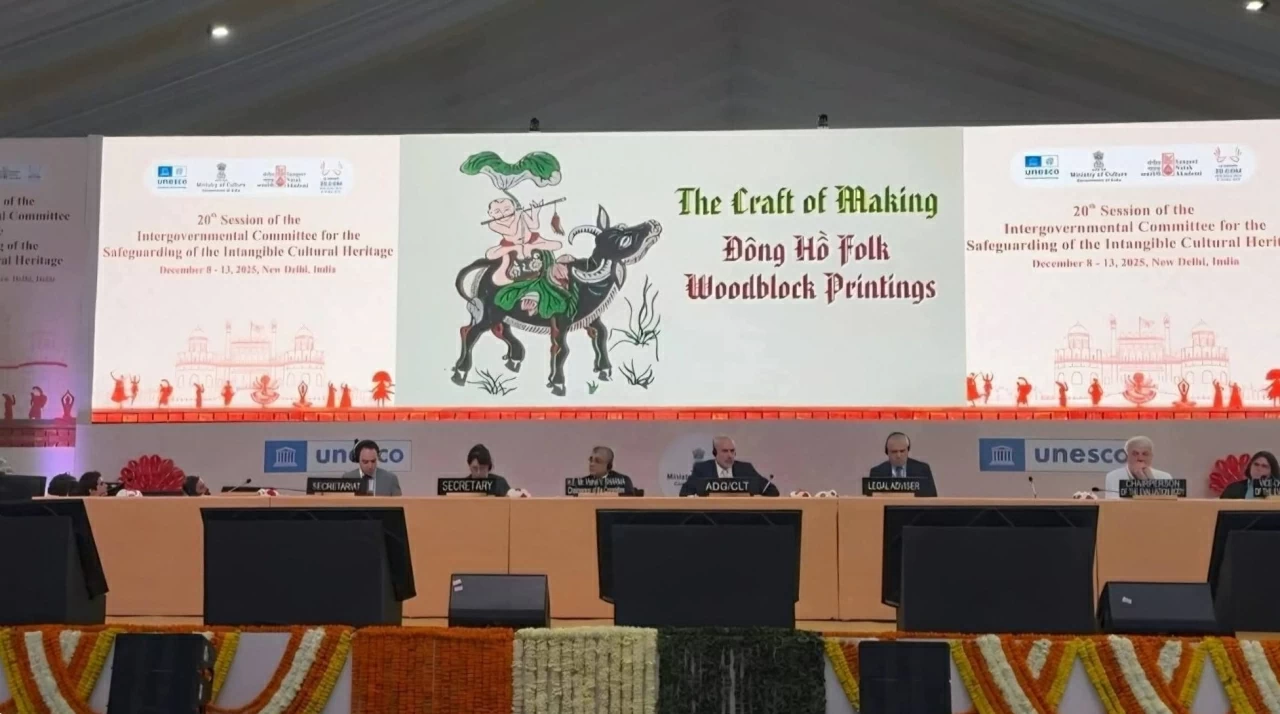 |
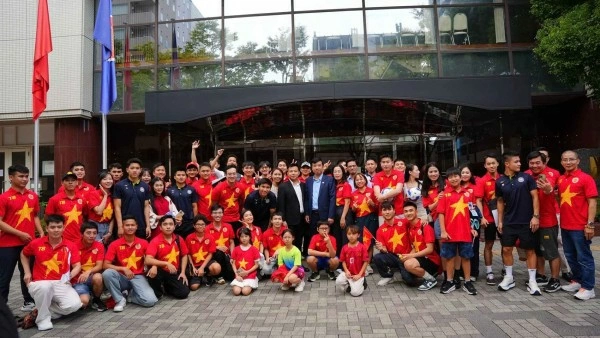
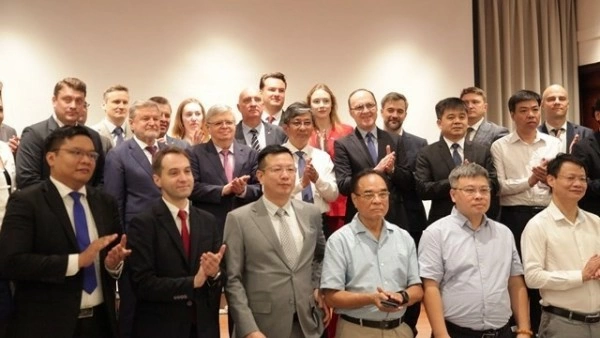
| The Dong Ho painting space was showcased at the 20th session of the Intergovernmental Committee for the 2003 Convention for the Safeguarding of the Intangible Cultural Heritage of UNESCO, on December 9. (Source: Vietnamese Embassy in India) |
On December 9, at the 20th session of the Intergovernmental Committee for the 2003 Convention of UNESCO, the Dong Ho folk woodblock painting craft was inscribed on the List of Intangible Cultural Heritage in Need of Urgent Safeguarding.
|
The official recognition of Dong Ho folk woodblock paintings by UNESCO is not only a source of pride for a craft village and a cultural region, but also a significant milestone affirming the enduring vitality of Vietnamese identity in the global cultural flow. Behind this decision is a long journey of preservation, dialogue, and persuasion, a journey to keep the soul of Diep paper alive to bring Dong Ho to the world.
A living memory of Vietnamese culture
Dong Ho folk paintings are neither loud nor elaborate, enduring like the spirit of Vietnamese village culture itself, where beauty is intertwined with morality, art with life, and creativity always accompanies labour.
Dong Ho is, first and foremost, a living cultural space. Here, paintings are not just for viewing but for hanging in homes during Tet, to convey hopes for a prosperous and peaceful new year; not just for preservation, but to tell stories about family, village, people, and nature in a harmonious worldview. Images that seem simple: yin-yang pigs, mother hen and chicks, a child holding a chicken, the rat wedding... are profound expressions of the Vietnamese philosophy of life, where happiness is measured by abundance, balance, and harmony.
The "soul" of Dong Ho paintings does not reside in a single element but in the subtle combination of materials, techniques, and folk aesthetic thinking. Diep paper, made from do tree bark and covered with shimmering seashell powder, not only creates the distinctive lustrous background but also reflects the strong bond between humans and nature. The colors in the paintings, extracted from plants, minerals, seashells, and bamboo charcoal, are both rustic and durable, carrying indigenous knowledge accumulated over generations. The woodblock printing technique, with each color requiring a separate print, demands precision, patience, and long-standing experience, showcasing the high craftsmanship and scientific labor organization of agricultural residents.
| Based on content and theme, Dong Ho paintings include seven main types: worship paintings, congratulatory paintings, historical paintings, story paintings, proverb paintings, landscape paintings, and paintings reflecting daily life. The Dong Ho folk woodblock painting craft holds high historical, cultural, and scientific value, and was included in the National Intangible Cultural Heritage List (first batch - December 2012) by the Ministry of Culture, Sports and Tourism under the category of Traditional Craftsmanship. |
More importantly, Dong Ho paintings are the product of a creative community. From making paper, mixing colours, carving woodblocks, printing paintings to passing down the craft, all are tied to the rhythm of village life, with family-clan-community relationships. It is this community that has breathed life into the painting line, allowing it to exist not as a "museum artifact" but as a cultural practice closely linked to the spiritual life of the people.
However, like many other traditional cultural heritages, Dong Ho has faced significant challenges in the context of modernization, urbanization, and the dramatic change in aesthetic tastes. There was a time when Dong Ho paintings gradually disappeared from daily life, the craft narrowed, and the number of artisans dwindled. Yet, during these difficult times, the core values of the heritage became more apparent. Dedicated artisans persisted in preserving the craft; researchers, cultural managers, and conservation programs joined forces to restore, honor, and renew approaches to this folk painting line.
Thus, preserving Dong Ho is not just about preserving a painting line but about preserving a worldview, an aesthetic and ethical value system crystallized over centuries. It is the way Vietnamese view nature as a companion, labor as a source of joy, and family and community as the foundation of happiness. In each sheet of điệp paper, each wood carving, each layer of natural color lies the cultural memory of a nation - a memory not static, but always moving, adapting, and regenerating.
From this foundation, Dong Ho paintings deserve to be preserved not only in the rural space of Northern Vietnam but also have the depth and vitality to step out into the world. For only when a heritage "lives" within its community and carries universal human values can it engage in equal dialogue with other cultures. Keeping the soul of điệp paper is about preserving Dong Ho's Vietnamese essence so that it can confidently go further, more sustainably, in the global cultural space.
| The Dong Ho painting craft originated about 500 years ago in Bac Ninh, known for its woodblock printing technique and natural colors from indigo leaves, red gravel, pagoda flowers, diep powder, bamboo ash... Themes are associated with the Lunar New Year, Mid-Autumn Festival, and ancestor worship. All stages of drawing, carving, color mixing, and printing are done manually. According to UNESCO, the heritage meets the criteria for inscription due to its deep connection with cultural life, but currently, only a few households maintain the craft; the number of skilled artisans has significantly decreased, and the younger generation is less involved; some techniques require long-term training; and the heritage has been inventoried with community participation. The protection plan includes opening training classes, inventorying, designing new models, expanding the market, supporting materials, and providing labour protection for artisans. |
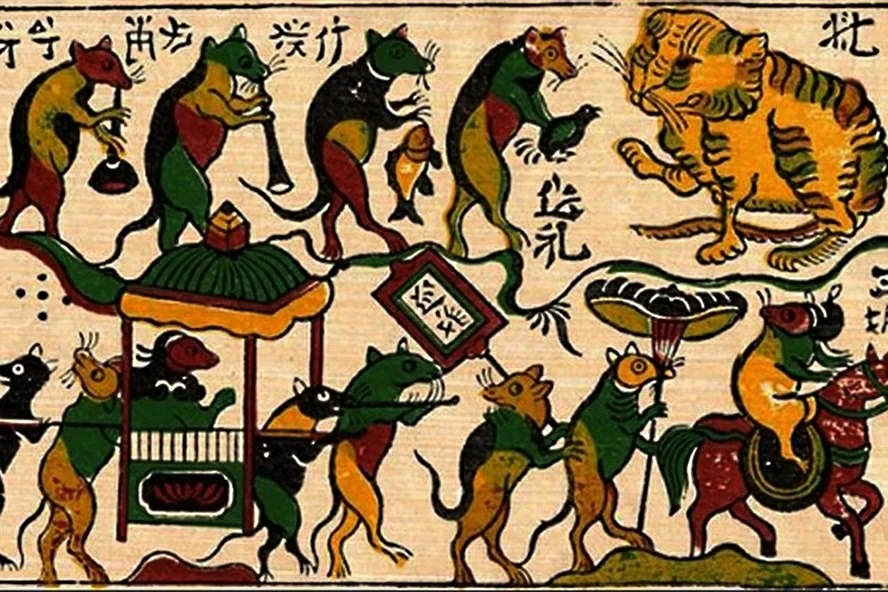 |
| Dong Ho woodblock paintings deserve to be preserved not only in the rural space of Northern Vietnam but also have the depth and vitality to step out into the world. |
From village paintings to UNESCO recognition
Bringing Dong Ho folk paintings to the world is not about "introducing" them in the usual sense but a persistent dialogue process, where each local value must be interpreted in the common language of humanity, each argument must be persuasive enough to meet UNESCO's stringent criteria. The heritage dossier is not just a collection of historical documents, images, or data, but a complete cultural story about a living heritage, with a practicing community, adaptability, and continuity in contemporary society.
| As of now, Vietnam has 12 heritages recognized by UNESCO as intangible cultural heritage of the world, including: Huế Court Music, Space of Gong Culture in the Central Highlands, Quan họ Folk Songs, Ca tru, Giong Festival, Worship of Hung Kings, Don ca tai tu, Vi and Giam Folk Songs of Nghe Tinh, Tugging Rituals and Games, Practices of the Beliefs in the Mother Goddesses of Three Realms, Xoan Singing, and Bai Choi Art of Central Vietnam. |
From the outset, the biggest challenge was ensuring Dong Ho was not perceived as a painting line "belonging to the past" but understood correctly as a cultural practice still present, despite many new context impacts. This requires a different approach than introducing an artifact or a single craft technique. The dossier must answer core questions: Who are the heritage holders? How is the heritage being practiced? What does it mean to today's community? More importantly, what does that community wish for the future of the heritage?
During the dossier preparation, the central role of the artisan community and Đông Hồ villagers was prioritized. Stories of their craft lives, commitments to teaching, efforts to preserve traditional techniques, and aspirations to continue living with the craft became the "soul" of the dossier. This genuine participation helped Dong Ho meet UNESCO's important criteria for vibrancy, continuity, and the risks facing intangible cultural heritage.
Alongside this was the process of standardizing, systematizing, and interpreting Dong Ho's values according to international criteria. Elements seemingly familiar to Vietnamese, like điệp paper, natural colors, Tet paintings, and craft village spaces, had to be placed in a broader comparative context of global folk art practices. This is where scientific knowledge, cultural management experience, and cultural diplomacy skills play their roles. Each argument in the dossier needed to be academically accurate and easily accessible to experts from different cultural backgrounds.
This process is also a journey of self-reflection. When telling the Dong Ho story to the world, we are compelled to look back at ourselves: What has been achieved, what remains limited, and the risks the heritage faces. The dossier does not shy away from Dong Ho's challenges in the market economy context, competition from industrial products, or changing aesthetic tastes. Instead, frankly identifying challenges, along with commitments and solutions to protect the heritage, contributed to increasing the dossier's persuasiveness and sustainability.
On a deeper level, the Dong Ho painting dossier is a vivid testament to how Vietnam engages with global cultural mechanisms with its unique identity. When Dong Ho is placed on UNESCO's agenda, it is also when values seemingly very "rural" of Vietnam find common ground with the international community.
The dossier's inscription is not only a recognition of a folk painting line but also an affirmation of Vietnam's ability to tell its cultural story to the world - a story both humble and confident; rooted in tradition yet forward-looking. From a small painting village by the Duong River to the global cultural forum, this journey shows that when heritage is preserved with knowledge, responsibility, and faith, local identity can indeed become a shared asset of humanity.