




Nghe An youth preserve Vi and Giam folk songs
The melodies of Vi and Giam folk songs continue to echo through classrooms and clubs across the central province of Nghe An, making the cultural current flow strong and clear into the future.
Latest
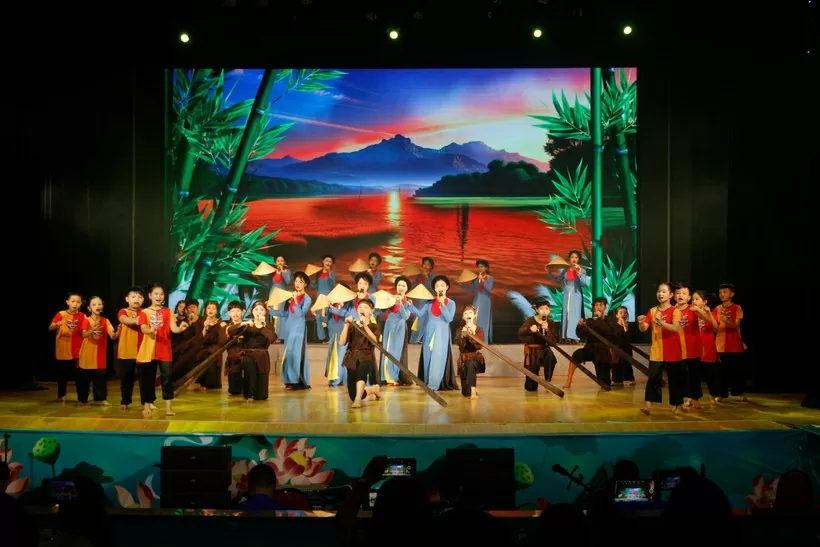 |
| Nghe An students confidently perform Vi and Giam folk songs on stage. (Source: VNA) |
These ancient folk songs, inscribed in the Representative List of the Intangible Cultural Heritage of Humanity by UNESCO in 2014, represent far more than simple melodies. They are the breath and soul of this land and its people. Yet today, these precious musical traditions stand at a crossroads, threatened by the rapid pace of modern life.
Over the past four years, Nghe An has operated classes teaching Vi and Giam folk songs to talented students at primary and secondary schools. The current 36 students from 130 communes and wards across the province were chosen for their genuine passion and natural aptitude for folk music.
With dedicated guidance from artists and experienced educators, the kids have better insights into a rich repertoire of traditional and adapted folk styles, from Vi phuong vai Truong Luu, Vi do dua song Lam, and Giam ve to newly-composed melodies like Hat khuyen, Tu hoa and Xam thap an.
Musician Tran Quoc Trung, Director of the province’s traditional art centre, said that it is incredible to see the children mastering such emotionally and technically complicated works in a short time, stating their stellar performances are not only a testament to their talent but also a sign of a bright future for traditional art.
The preservation of Vi and Giam extends beyond mere archival work to active promotion in contemporary life. Within communities, dedicated artisans have passed on the folk songs to younger generations.
People’s Artisan Vo Thi Hong Van, head of the Ngoc Son Vi – Giam folk singing club in Xuan Lam commune, has run classes for children of all ages, from ten-year-olds to teenagers, who can skilfully sing many melodies after 10–15 lessons thanks to their love for folk music and fondness for learning. Van has also collected original melodies, studied traditional instruments, and staged performances for the participants.
Schools across Nghe An have also incorporated folk singing into extracurricular activities, while local singing clubs hold regular rehearsals, performances, and exchange events to keep the art alive. Besides, the province has organised multiple festivals and competitions, creating a venue for clubs and art troupes to share experience.
Meanwhile, the province’s traditional art centre has adopted multiple solutions to preserve the traditional art, with researchers and collectors documenting melodies and lyrics in written form while digitalising the art through audio and video recordings. It is also capitalising on social networks to further popularise Vi and Giam among the public, especially the young, head of its research and collection division Ta Duong said.
Deputy Director of the provincial Department of Culture, Sports and Tourism Quach Thi Cuong noted that the sector is working out a specific roadmap to develop Vi and Giam folk songs into a tourism product to spread the value of this unique heritage.
(Source: VNA)