





Autumn Economic Forum 2025: Perspectives from C4IR representatives on Asia's digital and green economies
WVR - Representatives from the Fourth Industrial Revolution Centers (C4IR) of Oman, Kazakhstan, and Azerbaijan spoke to the World and Vietnam Report during the Autumn Economic Forum 2025, held in Ho Chi Minh City from November 25-27, 2025.
Latest
Leapfrogging
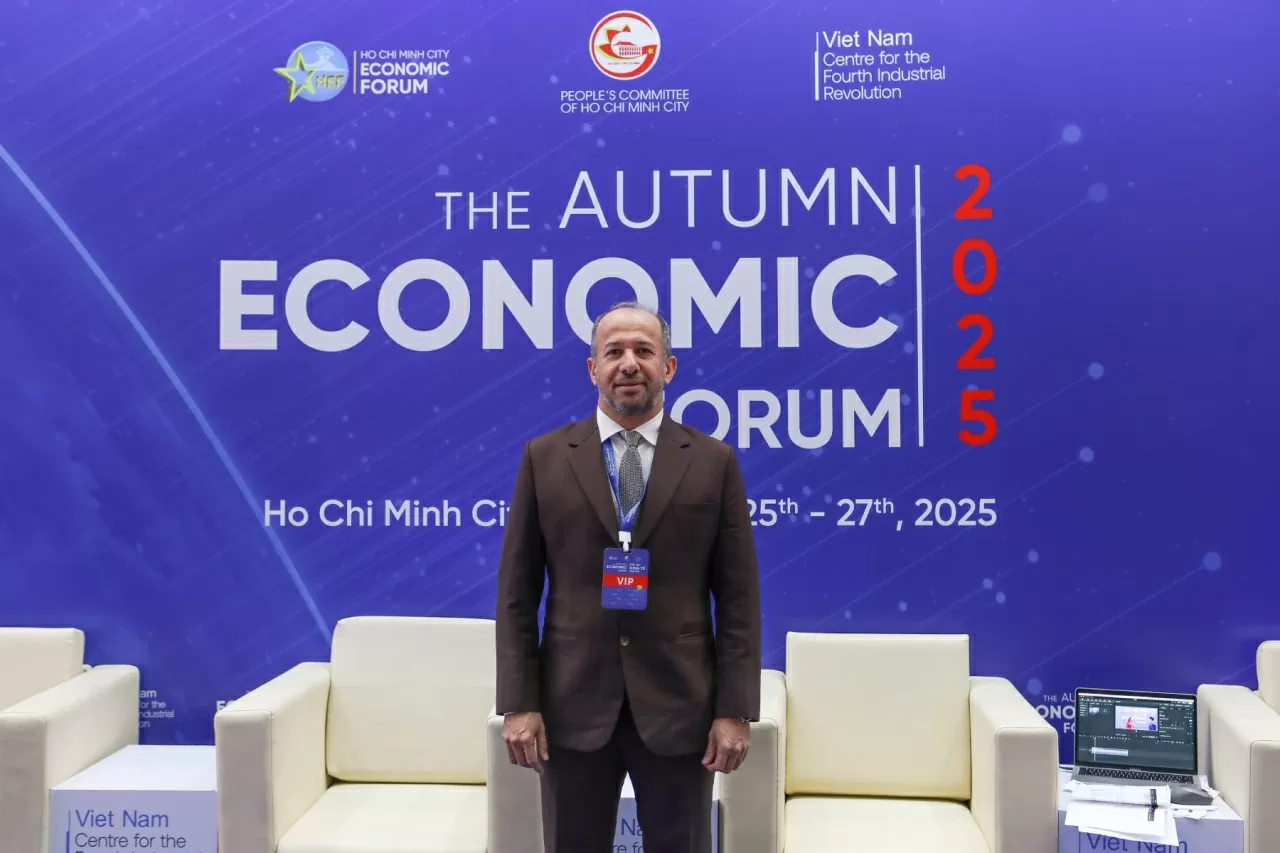 |
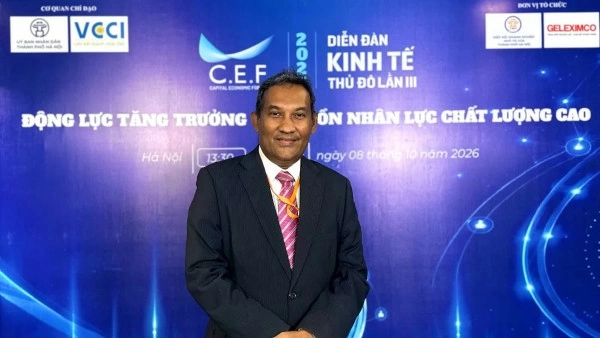
| Mr. Eng. Badar Al-Salhi, Director of the Fourth Industrial Revolution Center (C4IR) Oman. (Photo: Sy Dieu) |
Mr. Eng. Badar Al-Salhi, Director of C4IR Oman, believes that to realize the green transition, developing countries need to approach the issue with strategies of “synergy and action”. According to him, instead of undergoing costly trial phases like their predecessors, emerging economies can completely “leapfrog” by adopting proven effective green digital infrastructure models and sustainable technological solutions.
Mr. Al-Salhi emphasized that building green and shared digital infrastructure is an inevitable trend. Regions like ASEAN and Africa have begun collaborating to form common digital infrastructure platforms, optimizing costs, reducing resource waste, and accelerating the green transition. Technology – especially artificial intelligence (AI) and technologies emerging from the Fourth Industrial Revolution – will play a decisive role in optimizing energy, increasing efficiency, and reducing emissions in digital infrastructure operations.
Alongside opportunities, the representative from Oman also warned about inherent challenges faced by developing countries: a lack of digital workforce, technological access gaps, and intellectual property barriers for green technology solutions. Therefore, he particularly emphasized investing in training, enhancing skills, and proactively building science and technology policies to create space for domestic innovation.
A level playing field
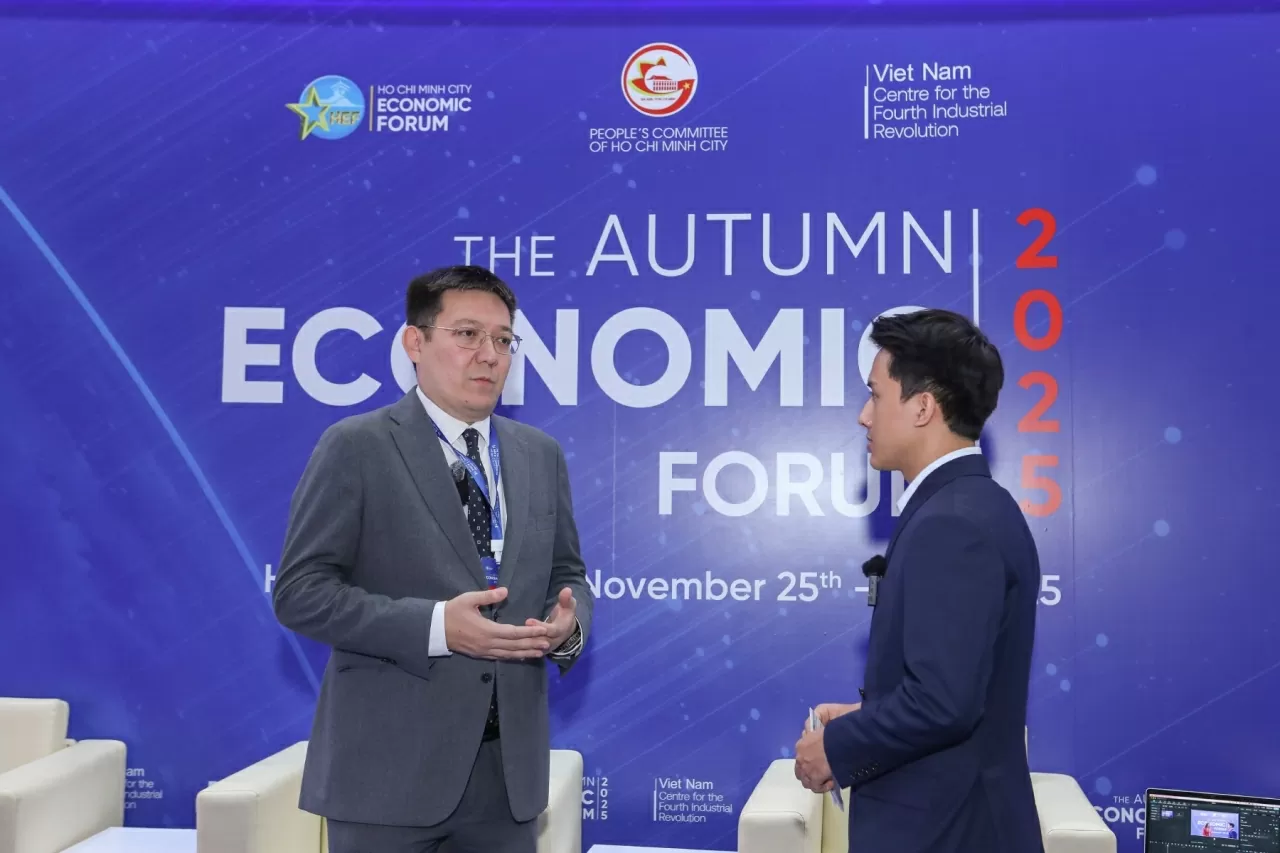 |
| Mr. Talgat Amanbayev, Director of the Fourth Industrial Revolution Center (C4IR) Kazakhstan and Director of Innovation at the Astana International Financial Center (AIFC). (Photo: Sy Dieu) |
Mr. Talgat Amanbayev, Director of C4IR Kazakhstan and Director of Innovation at the Astana International Financial Center (AIFC), highlighted the role of innovation in enhancing national competitiveness. He appreciated this year's Forum theme, noting that artificial intelligence, digitalization, and the green economy are global trends.
Sharing practical experiences, Mr. Amanbayev stated that Kazakhstan, traditionally a resource-based economy, is undergoing a significant shift by developing an international-standard financial center model, attracting foreign investment, and boosting the capital market. In recent years, the country has pioneered in the field of digital assets, including not only cryptocurrencies but also tokenized real assets. This opens up the possibility of supply chain transparency for goods ranging from oil and gas to metals and agricultural products – areas that many resource-dependent economies are focusing on.
He sees this as a significant opportunity for Vietnam, especially as Ho Chi Minh City and Da Nang are orienting towards building international financial centers. “AI creates a 'level playing field', where every nation – even without a strong research foundation – can rise through speed and technological application,” he said.
Regarding bridging the gap between developed and developing countries, the C4IR Kazakhstan leader affirmed that the number one factor is education. He noted that Kazakhstan has heavily invested in training programmers, expanding free IT education programs for youth, and recently launched a supercomputer to support the development of a "national AI". Policies supporting startups, innovation funds, experimental labs, and legal corridors protecting intellectual property are foundational in attracting investors and boosting the digital economy.
“Technology and people are the keys. In the future, citizens of Kazakhstan – and Vietnam – will work alongside digital assistants and AI agents. This is the right time to invest,” Mr. Talgat Amanbayev shared.
Not standing aside
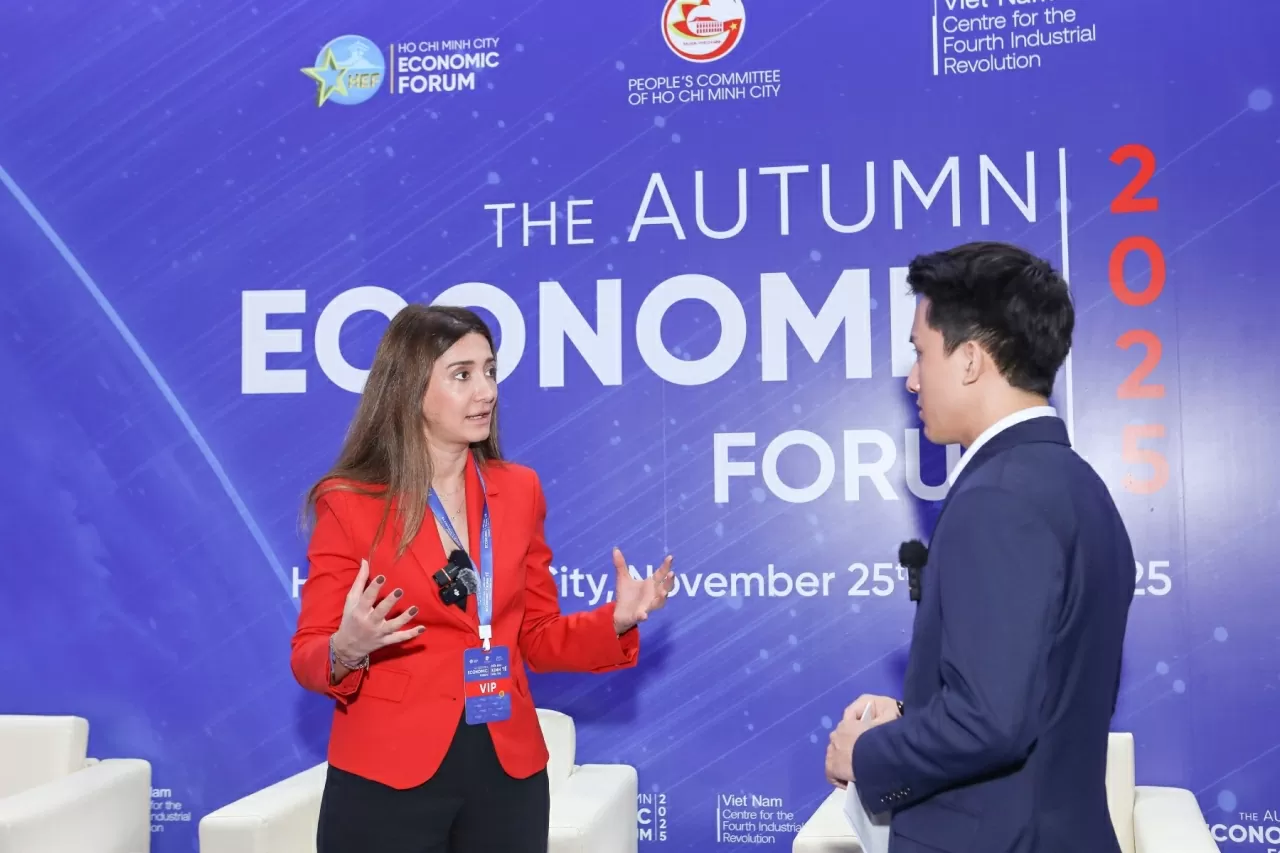 |
| Ms. Gulmina Malikzade, Project Management Head at the Fourth Industrial Revolution Center (C4IR) Azerbaijan. (Photo: Sy Dieu) |
Ms. Gulmina Malikzade, Project Management Head at C4IR Azerbaijan, praised the event organized by Vietnam and affirmed the similarity in development orientations between Vietnam and Baku. Azerbaijan joined the C4IR network just five years ago and is finalizing its national digital economy development strategy, currently awaiting approval.
C4IR Azerbaijan is leading numerous projects on AI, smart cities, Digital Twin models, and GenAI in the capital Baku – expected to become a convergence space for businesses and researchers both domestically and internationally. Notable is the Industry 4.0 Readiness Program, helping businesses determine their digitalization level, receive transformation roadmaps, and access government funding.
In digital workforce development, Ms. Malikzade shared a typical public-private partnership model with the Coursera platform. Thanks to the collaboration between the Ministry of Economy of Azerbaijan and the World Economic Forum, more than 13,000 courses from top universities like Oxford, Yale, and MIT are offered free to the public for six weeks, contributing to a broad digital skills foundation.
Assessing the prospects for cooperation with Vietnam, she noted that both sides could collaborate on joint initiatives of the World Economic Forum (WEF) such as AI in energy, e-commerce, or co-authoring reports and building transformation maps. C4IR Azerbaijan wishes to share experiences in designing operational models for centers through public-private partnerships – something Vietnam is implementing for its upcoming C4IR.
From the experiences shared by representatives from Oman, Kazakhstan, and Azerbaijan, a common message emerges: developing economies are not standing aside in the digital and green transition game. On the contrary, by leveraging technology, accelerating training, and learning from international experiences, these countries are striving to close the development gap and create breakthrough models.
For Vietnam – an economy entering the initial stages of building digital data, smart cities, and the digital economy – the experiences from C4IR centers offer valuable practical suggestions: public-private partnerships are effective models in workforce development and technological innovation; AI and green digital infrastructure are pillars for long-term development strategies; building a reliable legal framework is a prerequisite for attracting investment and fostering innovation; international connections help Vietnam access successful models, reduce trial costs, and accelerate transformation.