




'Strategic autonomy' in the New Era: Scholars offer perspectives
WVR - The draft Political Report presented at the 14th Congress emphasizes “strategic autonomy” as one of the guiding principles and key development goals. This raises the question: What should Vietnam continue to do to enhance its national self-reliance and resilience, aiming for increasingly substantial strategic autonomy in the new era?
Latest
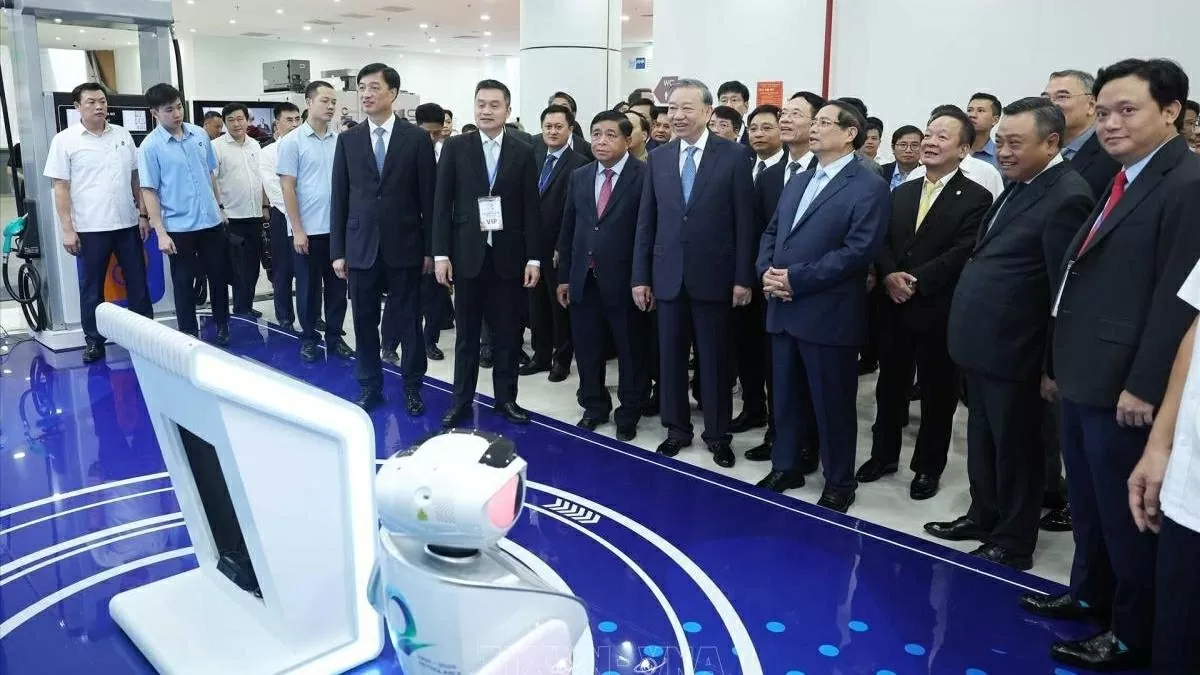 |
| General Secretary To Lam, Prime Minister Pham Minh Chinh, and delegates visit the international exhibition on innovation themed “Strategic Technology - Shaping Vietnam's Future” on October 1. (Source: VNA) |
The year 2025 witnesses many unpredictable movements, indicating that the world and the region are entering a more complex phase: U.S.-China competition continues to escalate with ongoing rounds of tariffs and countermeasures, though tensions have somewhat eased following a meeting between U.S. President Donald Trump and Chinese General Secretary and President Xi Jinping on the occasion of the recent APEC Summit; the conflict in Ukraine shows no signs of ending, while new conflicts have erupted; technology, especially in the fields of artificial intelligence (AI), automation, and quantum computing, is making new strides, increasingly penetrating economic and social life; climate change is intensifying pressure on energy security, food security, and supply chains.
What is "strategic autonomy"?
“Strategic autonomy” is the highest level of autonomy a nation can achieve. Achieving “strategic autonomy” means having the ability to independently formulate strategies, make decisions, and implement policies on critical issues, even under external pressure, coercion, or constraints, to best ensure national interests. Pursuing “strategic autonomy” is not about isolation or standing apart but about continuously enhancing internal strength and intelligently managing external engagements, expanding the “range of choices”, and ensuring the ability to independently determine the nation's destiny under any circumstances.
“Strategic autonomy” is built on three closely intertwined foundations: Strong internal capacity – including effective institutions, high-quality human resources, defense capabilities, advanced technology, and abundant financial resources to proactively respond and adapt to external environments; a broad, flexible network of foreign relations, diversified and multilateralized towards balance, harmony, and reliability; and steadfastness in international conduct principles, commitment to international law, and contributions to regional and global multilateral mechanisms.
In reality, to achieve a state of “strategic autonomy”, nations need to gradually reduce dependence on external entities while proactively participating in shaping cooperation frameworks and strategic environments both regionally and globally. In Vietnam's specific context, this goal needs to be pursued substantively and incrementally by increasing autonomy in key areas, strengthening the alignment of interests with strategic partners, regularly reviewing and adjusting policies to expand the scope of action, enhancing the ability to flexibly transition in response to changes, and ensuring the maintenance of an independent, autonomous development direction in an increasingly complex world.
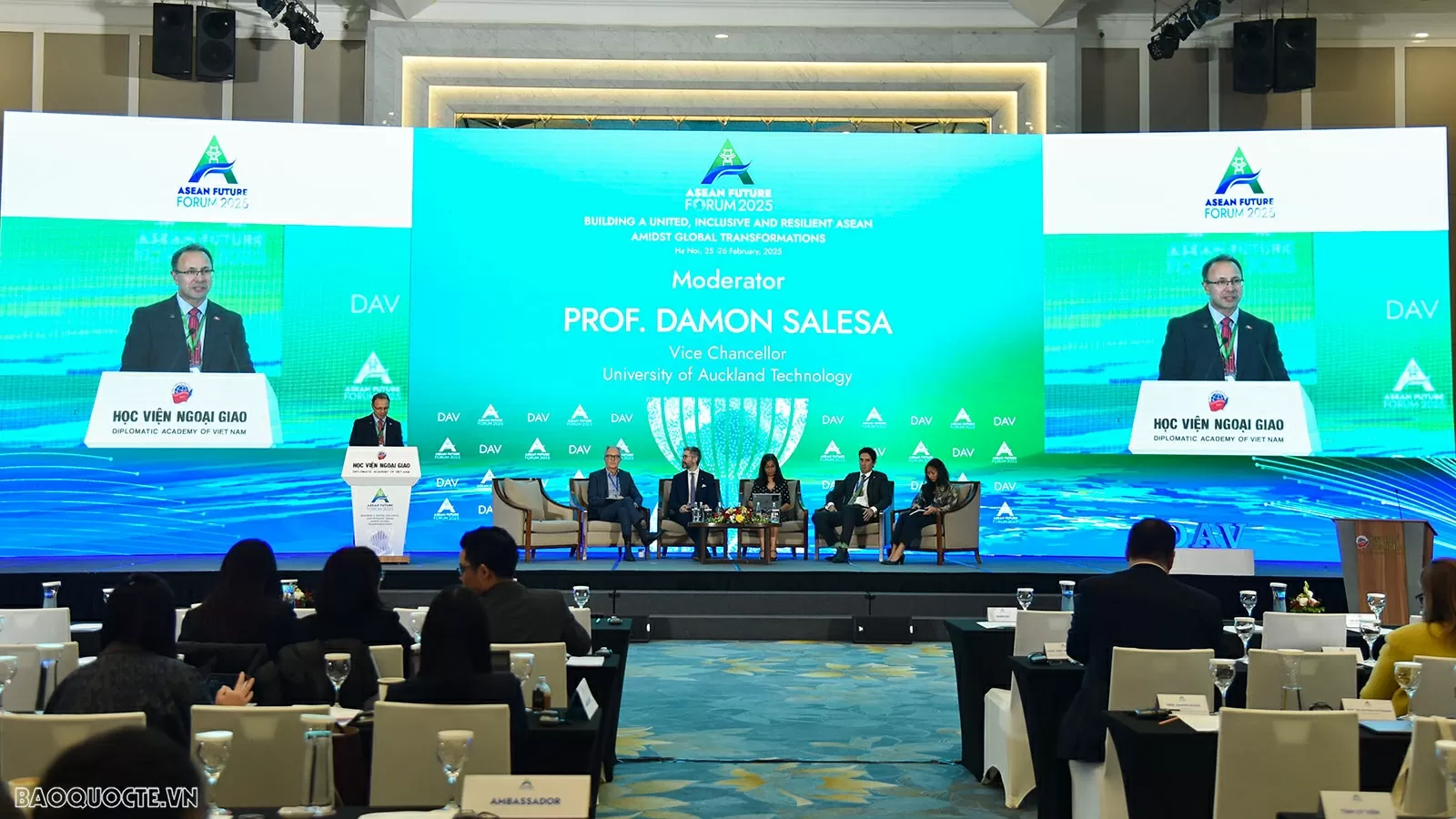 |
| The fourth plenary session: “Managing Emerging Technologies to Ensure Comprehensive Security” within the framework of the ASEAN Future Forum - ASEAN Future 2025, on February 26. (Photo: Tuan Anh) |
Spreading in external relations
Since the end of 2024, Vietnam has simultaneously implemented many diplomatic activities to expand strategic space and deepen partner networks. High-level Vietnamese delegations have continuously visited countries in South Asia, the Middle East, Oceania, and Europe; at the same time, welcoming high-level delegations from many major countries and key partners to Vietnam. Many bilateral relationships have been upgraded to Comprehensive Strategic Partnerships (notably with New Zealand, Thailand, Indonesia, and the UK), and new cooperation frameworks have been promoted with the EU, Australia, and Gulf countries. Vietnam maintains harmony and balance in relations with major powers, as demonstrated by participating in the BRICS 2025 Summit in Brazil as an official partner and attending the Shanghai Cooperation Organization (SCO) Summit as a guest of the host country.
On the multilateral front, Vietnam continues to affirm its active, proactive, and constructive role in international institutions. Successfully hosting two ASEAN Future Forums (AFF) in April 2024 and February 2025 initially lays the foundation for a new annual regional strategic dialogue mechanism, aiming to enhance collective voice and long-term thinking in policy-making. Along with being re-elected to the United Nations Human Rights Council for the 2026-2028 term, hosting the Opening Ceremony of the UN Convention against Cybercrime (Hanoi Convention), and assuming the position of Chair of the NPT Review Conference in 2026, Vietnam actively expands strategic space and participates in shaping multi-layered cooperation spaces, not standing outside any regional structure.
In defense and security, Vietnam gradually implements a strategy of diversifying partners. Vietnam strengthens substantive cooperation with countries like India, Israel, and the U.S. in coastal defense, cybersecurity, and peacekeeping training. Meanwhile, defense dialogue and technical cooperation with the Russian Federation continue at an appropriate level, in the spirit of mutual respect and serving long-term interests.
In technology and innovation, Vietnam gradually builds an autonomous foundation through AI, semiconductor, and digital infrastructure development programs, including the ViGen Project in collaboration with the National Innovation Center (NIC), Meta, and many other international technology corporations. Alongside this, Vietnam proactively anticipates supply chain shifts, positioning itself as a high-tech assembly and design hub in the region. In energy and climate, Vietnam completes the Resource Mobilization Plan for the Just Energy Transition Partnership (JETP) framework, securing many specific funding commitments from European and Asian partners, expanding the portfolio of green transition projects. The spirit of specialized, sectoral diplomacy is increasingly spreading, proving effective, and practically expanding the space for autonomy in the country's socio-economic fields such as science and technology diplomacy, climate diplomacy, food security diplomacy, human resource diplomacy... These results show that Vietnam is actively materializing the concept of “strategic autonomy”, not just in words, but through a system of oriented, methodical, and multi-layered actions.
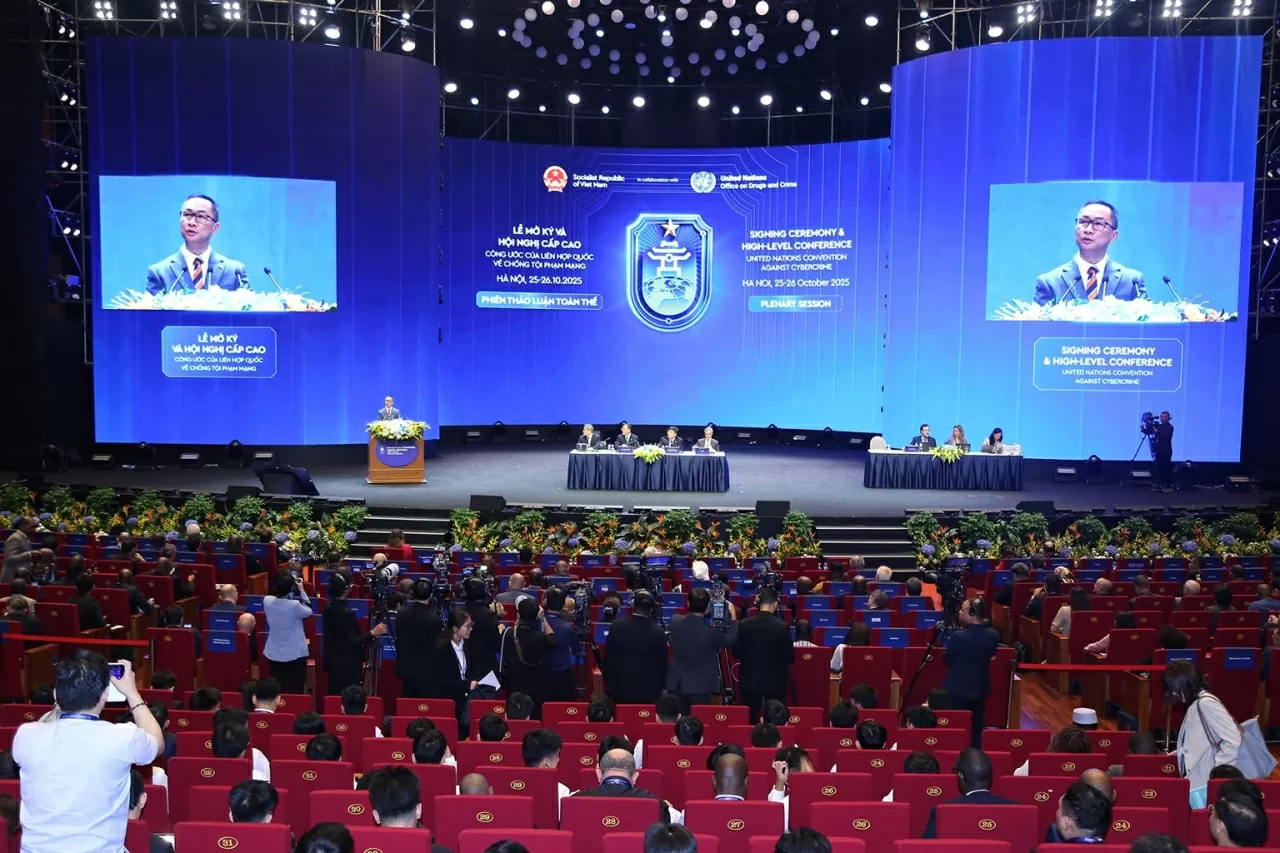 |
| The second day of the Signing Ceremony and High-Level Conference of the United Nations Convention against Cybercrime (Hanoi Convention) features a high-level discussion session. Permanent Deputy Minister of Foreign Affairs Nguyen Minh Vu and Senior Lieutenant General Pham The Tung, Deputy Minister of Public Security, co-chair the discussion. (Photo: Thanh Long) |
Towards a new era
To move closer to the goal of “strategic autonomy”, Vietnam needs to continue selectively prioritizing fields that align with actual conditions and global development trends. Spreading investments thinly will make it difficult to create breakthrough capabilities and competitive advantages. Therefore, special attention should be given to foundational and systemic sectors such as semiconductor technology, artificial intelligence, cybersecurity, and digital infrastructure. These are fields that not only drive socio-economic growth but also contribute to strengthening the nation's adaptability and proactivity in a rapidly changing strategic competitive environment.
On the diplomatic front, continuing to expand and deepen cooperation with partners sharing strategic visions remains the main direction. However, more cautious criteria should be integrated when approaching certain sensitive areas, especially those related to data, core technology, or long-term impacts on development orientation. The goal is to enhance intertwined interests without compromising control and decision-making capabilities on critical national interest issues.
In terms of institutions, a strategic governance mindset should gradually be formed, where all major decisions, from partner selection and priority sector orientation to development models, are viewed through the lens of promoting “strategic autonomy”. Encouraging the establishment of periodic review mechanisms to assess dependency levels, accumulated risks, and the system's adaptability in each phase is a direction that should be carefully considered.
The mindset of “strategic autonomy” should be deeply ingrained in fields such as education, science, media, and human resource development. These are areas that significantly impact the long-term independent policy-making capacity. Preparing a generation in both the public and private sectors with long-term thinking, multidimensional understanding, and the ability to navigate in an interdependent environment will be the foundation for maintaining autonomy, amidst the region and the world continuing to experience unpredictable fluctuations.