






Vietnam’s healthcare enters new era with massive digital leap in 2025
The synergy of groundbreaking medical achievements and cutting-edge technology is fueling a comprehensive transformation across Vietnam’s healthcare landscape.
Latest
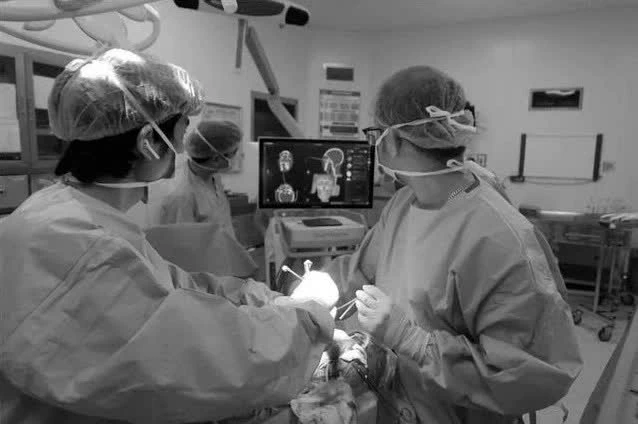 |
| 3D facial reconstruction technology and neuronavigation enable successful surgery for a brain tumour patient with maxillofacial trauma. (Photo: VOV) |
The combination of digital transformation and efforts to improve hospital quality is expected to help the health system provide services more effectively and sustainably.
An increasing number of complex cases have been treated successfully, while new healthcare delivery models are being introduced step by step. These outcomes indicate that the system is moving toward greater efficiency with a stronger focus on patients.
In this context, the use of modern technology together with improvements in hospital quality has been identified as an important factor in supporting sustainable development and meeting growing healthcare needs.
Digital technology in diagnosis and treatment
Digital transformation is increasingly being adopted across the healthcare sector, bringing changes to the way health services are delivered and managed. The application of digital tools supports diagnosis and treatment, while helping medical facilities improve management efficiency, reduce operating costs, and enhance the patient experience.
Advanced technologies such as artificial intelligence (AI), big data and the Internet of Things (IoT) are expanding possibilities for patient care. By using data and connected systems, doctors can make more accurate diagnoses and monitor patients’ health in real time, including remotely, supporting timely and appropriate treatment decisions.
A notable example of advanced technology in clinical practice is a complex multidisciplinary surgery recently performed at E Hospital.
Doctors treated a brain tumour and severe maxillofacial trauma in a 77-year-old female patient by combining intraoperative neuronavigation with 3D technology for surgical planning and facial reconstruction, helping restore both function and appearance.
The patient had lived with a brain tumour for many years and suffered a serious mandibular fracture after a fall during an epileptic seizure. Given her age and multiple underlying conditions, conventional surgery carried significant risks. To tackle these challenges, the medical team used 3D technology based on CT scan data to simulate the operation, print a jaw model and prepare customised titanium fixation plates.
The procedure involved close coordination between neurosurgery and maxillofacial teams, supported by the navigation system. This allowed for safe tumour removal, precise jaw fixation, shorter operating time and a reduced risk of complications.
Advanced technology has also been applied in organ transplantation. In early October 2025, 108 Military Central Hospital successfully performed a special kidney transplant in which a patient’s own kidney was removed from the body, its blood vessels reconstructed externally, and then re-implanted into the same patient. This was the first such case recorded in Vietnam.
The success of the operation resulted from close coordination among multiple specialties and opened up options for preserving kidneys in patients with complex vascular damage, rather than removing the organ as previously required. Internationally, similar procedures remain relatively rare.
 |
| Health experts highlight hospital quality as a priority alongside digital transformation. (Photo: VOV) |
From digital tools to service quality
Apart from clinical practice, digital technology is also viewed by experts as an important factor in the healthcare sector’s future development.
Vu Anh Tu, Chief Technology Officer of FPT Corporation, said technology, particularly AI, could support significant improvements in healthcare through data processing and service personalisation.
He noted that effective use of technology and data could help Vietnam develop in areas such as new drug trials and emerging care models, including remote hospital services.
In practice, advances in medical technology are gradually strengthening patient confidence during diagnosis and treatment.
Many observers stress that, alongside digitalisation and the application of advanced technologies, improving the overall quality of hospitals and medical facilities should remain a central priority.
Hospital quality is reflected in modern equipment, the skills of medical staff, professional processes and attitudes toward patient care.
According to Dr Nguyen Trung Cap, Deputy Director of the National Hospital for Tropical Diseases, the quality of diagnosis and treatment should be viewed as a combination of many factors, with professional competence of medical staff remaining the most critical and a primary concern for patients.
In addition to expertise, facilities, the treatment environment, nursing care, service attitudes and support systems also contribute to overall hospital quality. Some medical facilities with limited infrastructure continue to attract large numbers of patients due to strong professional capacity. However, Dr Cap said hospital managers should not stop at existing strengths but work to improve all elements of service quality in a coordinated manner.
On digital transformation, Dr Cap said the process requires substantial investment and only becomes meaningful when it improves staff productivity, reduces operating costs and provides practical benefits for patients.
He stressed that digitalization must result in more efficient work for doctors, streamlined procedures and better services for patients; otherwise, heavy investment without added value would fail to produce the intended outcomes.
Dr Cap also noted that effective digital transformation depends on supporting policies, particularly in human resources. As technology increases labour productivity, rigid regulations such as fixed staffing ratios per hospital bed, need to be adjusted to avoid becoming barriers to innovation.
Looking ahead over the next three to five years, Dr Cap said coordinated and sustainable development of the healthcare system depends on three pillars: clearer long-term policy frameworks for proactive planning; financial mechanisms that properly account for healthcare service costs and clarify payment responsibilities among patients, health insurance and the state budget; and stronger health communication and education to promote disease prevention and ease pressure on medical services.

| Herbalife Vietnam wins the 'Top 10 Reputable Brand' Award 2025 Herbalife Vietnam, a premier health and wellness company, community, and platform, has been named among the “Top 10 Reputable Brands” for 2025 by the Vietnam ... |

| Autumn Economic Forum 2025: Affirming Ho Chi Minh City's role in international connectivity for green and digital transformation On the afternoon of December 31, in Ho Chi Minh City, a conference was held to review the Autumn Economic Forum 2025, evaluating significant achievements ... |
| Resolution 57: Vietnam records breakthroughs in science, technology, and digital economy in 2025 Driven by a thriving tech enterprise sector and upgraded digital infrastructure, Vietnam reported significant progress in digital transformation by the end of 2025. The expansion ... |

| Ambassador hails 2025 as a milestone year in Vietnam–US relations VNA/WVR- 2025 was an incredibly significant year for Vietnam-US relations, marked by a series of major anniversaries and substantive advances across multiple areas of cooperation, ... |

| Vietnam’s digital technology industry powers economic growth in 2025, revenue nears USD 200 billion Vietnam's digital technology industry solidified its role as a major economic driver in 2025, delivering strong financial and export performance that far surpassed targets, according ... |
(Source: VOV)