





Politburo Member and Foreign Minister Le Hoai Trung: Being ‘crucial and regular’ is both an honour and a great responsibility for foreign affairs
WVR - For the first time, the documents of the 14th National Party Congress have identified foreign affairs as a 'crucial and regular' field. On this occasion, Politburo Member and Minister of Foreign Affairs Le Hoai Trung shared with the press about the 'mission' of foreign affairs in the construction and defense of the nation in the new era.
Latest
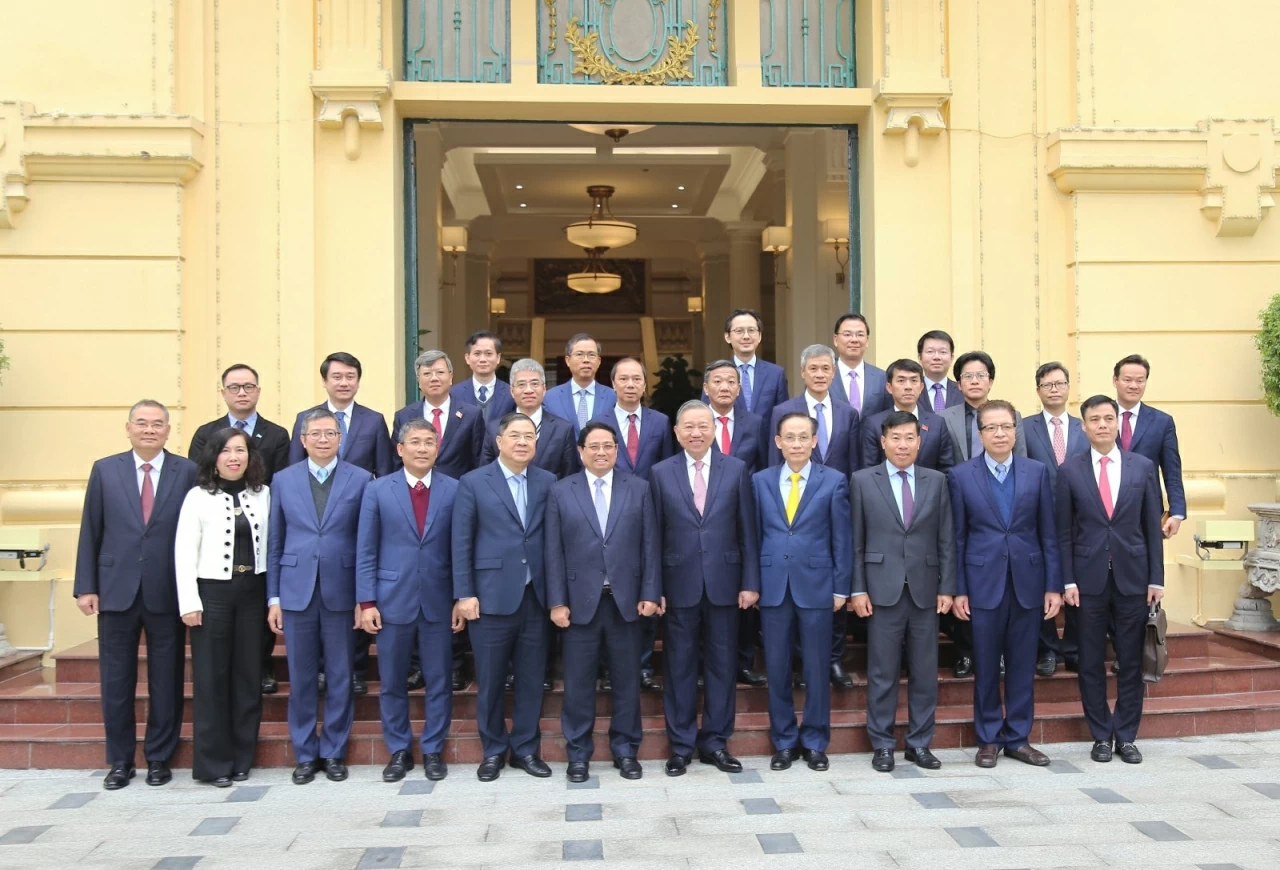 |
| General Secretary To Lam working with Ambassadors and Heads of Vietnamese diplomatic missions abroad attending the 14th Party Congress on the implementation of the Congress Resolution, January 25, 2026. (Photo: Thanh Long) |
The year 2025 was vibrant and successful for Vietnam's foreign affairs with numerous high-level diplomatic activities, upgrading relations with many partner countries, enhancing cooperation with international organizations, and significant multilateral events. Could the Politburo Member and Foreign Minister highlight the outstanding achievements in foreign affairs in 2025? What are the strategic highlights in Vietnam's foreign affairs for 2025?
Looking back, the international environment in 2025 was characterized by volatility, instability, and conflicts erupting in many countries and regions. It can even be said that 2025 was the most tumultuous year in recent years, as the 14th National Party Congress documents noted, "the world is undergoing epochal changes".
Reflecting on this context, the standout feature of foreign affairs in 2025 is that we seized opportunities, overcame challenges, and contributed to creating a new diplomatic landscape for the country as it enters a new era. It can be said that foreign affairs in 2025 demonstrated the highest sense of responsibility to carry out strategic tasks, as emphasized by General Secretary To Lam: "maintaining a peaceful and stable environment; rapid and sustainable socio-economic development; improving people's living standards, all for the people".
Specifically, the notable results include:
Firstly, elevating and upgrading relationships, expanding cooperation with partners. Throughout the year, dynamic diplomatic activities, especially by key leaders, established frameworks and directional visions for relationships. We upgraded relations with 17 partners, bringing the total number of partners with comprehensive partnerships or higher to 42 countries. The emphasis was on substance and effectiveness, evidenced by the signing of nearly 350 cooperation agreements, a 2.5-fold increase compared to 2024. We also strengthened relations, expanded cooperation with political parties, and continued to value and develop people's diplomacy in various forms.
Secondly, on the multilateral front, while multilateral institutions faced difficulties, Vietnam continued to demonstrate its responsibility and commitment. We strongly supported multilateral cooperation, participated responsibly, and contributed to building operational directions and regulations at multilateral institutions. Specifically, Vietnam's active participation was highly appreciated by the international community in peacekeeping, rescue and disaster relief, ensuring energy security, and food security; participating in many governance mechanisms at the Human Rights Council, 6 out of 7 mechanisms of UNESCO. We also successfully organized the ASEAN Future Forum, the P4G Summit, and the signing ceremony of the Convention against Cybercrime, thereby affirming Vietnam's role, reputation, and capacity.
Thirdly, contributing to the country's 8% growth target, economic diplomacy played a pioneering role, capturing global economic trends and new fields to serve leadership and management. Economic diplomacy activities were effectively integrated into high-level diplomacy, achieving a record number of commitments and agreements, expanding markets, attracting investment, and connecting strategies, allowing Vietnam to participate more deeply in regional and global supply chains. Science and technology diplomacy became a spearhead, focusing on innovation, digital transformation, and green transformation, contributing to realizing 11 strategic technology fields.
Fourthly, foreign affairs also contributed to promoting Vietnam's soft power. Cultural diplomacy was systematically implemented, successfully organizing the Vesak Grand Ceremony, advocating for 7 new titles, bringing Vietnam's total UNESCO titles to 77. External information work was proactive, not only promoting the national image but also protecting the ideological foundation and national interests in a complex information environment. Citizen protection was timely implemented at hotspots, bringing thousands of citizens home. Work related to overseas Vietnamese successfully ignited patriotism and national pride, with a clear achievement being the record remittances sent home, becoming an important resource contributing practically to the country's socio-economic development. People's diplomacy played a bridging role, laying the foundation for the country's foreign relations.
Fifthly, alongside implementing foreign affairs tasks, sector building was seriously conducted. The Ministry of Foreign Affairs streamlined its apparatus towards efficiency; reduced the number of focal points by 42.5%, while taking on the Party's foreign affairs tasks and part of the National Assembly's foreign affairs functions. Many important legal documents were issued, creating an institutional foundation for foreign affairs, such as the amended Law on International Treaties, the amended Nationality Law, and Resolution 250/2025/QH15 of the National Assembly on special mechanisms and policies to enhance international integration effectiveness.
Finally, the coordination mechanism between the three pillars of Party foreign affairs, State diplomacy, and People's diplomacy, along with tight integration with defense, public security, and various ministries, sectors, and localities, became more synchronized, helping to develop policies more quickly and proactively. Research, forecasting, and advisory work contributed to understanding the situation, identifying opportunities and challenges, forming the basis for proposing timely and effective policies and strategies with thousands of reports and proposals serving the leadership and direction of the Party and State.
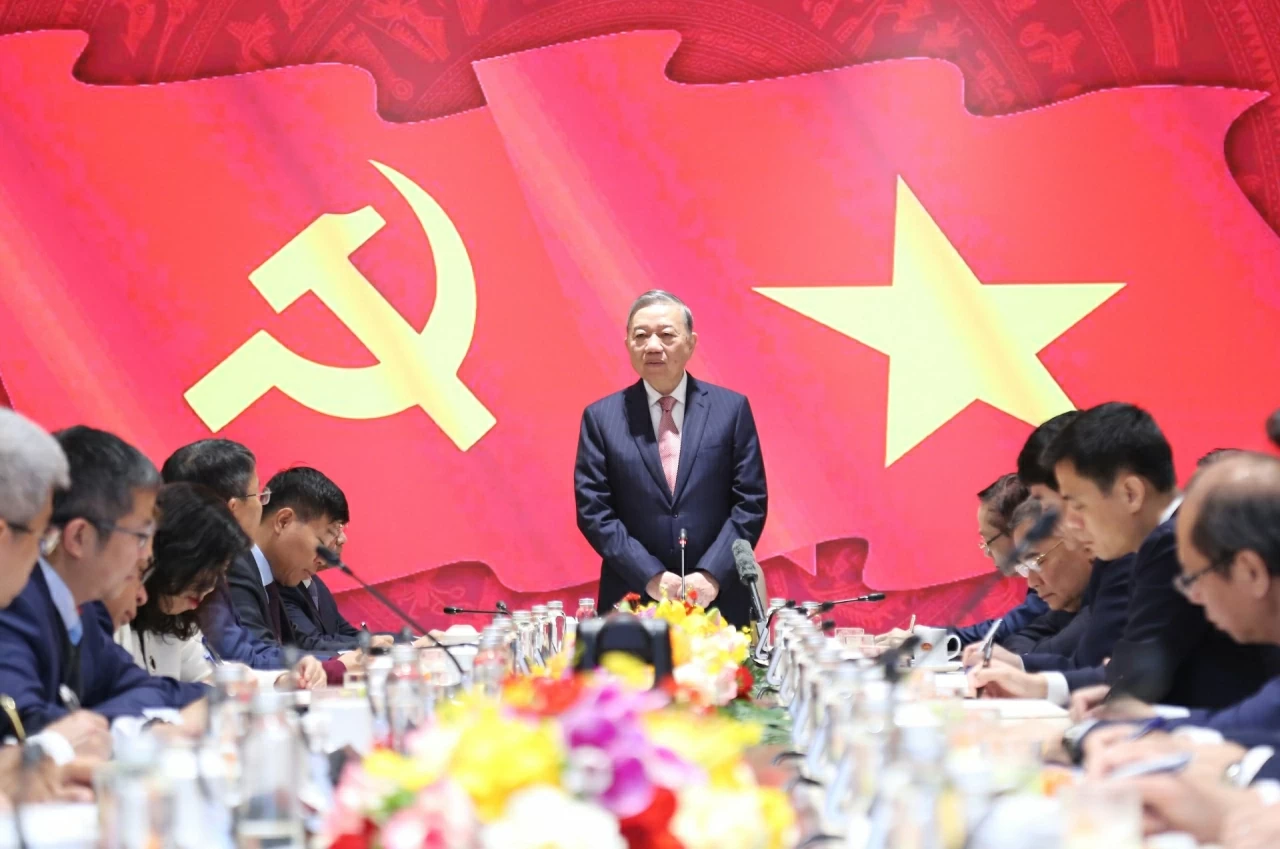 |
| General Secretary To Lam working with Ambassadors and Heads of Vietnamese diplomatic missions abroad on the implementation of the 14th Congress Resolution, January 25, 2026. (Photo: Thanh Long) |
According to the documents of the 14th Party Congress, foreign affairs, along with defense and security, were identified for the first time as a "crucial and regular" field. What "mission" does this policy set for Vietnam's foreign affairs and diplomacy in the construction and defense of the nation?
The 14th National Party Congress's official affirmation of this guiding viewpoint in its documents is both an honour and a significant responsibility for the entire foreign affairs and diplomatic sector. It also marks a new strategic thinking shift of our Party. Reflecting on the country's revolutionary history, from the early days of independence, President Ho Chi Minh emphasized: "After defense, diplomacy is a vital issue for an independent nation". Therefore, affirming foreign affairs and international integration as "crucial and regular" vividly reflects Ho Chi Minh's diplomatic thought.
"Crucial and regular" is understood as work of paramount importance, related to the survival, safety, prosperity, and decline of the country, linked to the history of nation-building and defense, continuously focused on and implemented in every stage of the Revolution, and now contributing effectively to the successful implementation of the two strategic tasks of building and defending the socialist homeland.
With this understanding, we clearly identify that promoting foreign affairs and international integration is not only the work of foreign affairs forces, nor solely of the Ministry of Foreign Affairs, but a common cause of the entire Party, people, and military, a task of the entire political system.
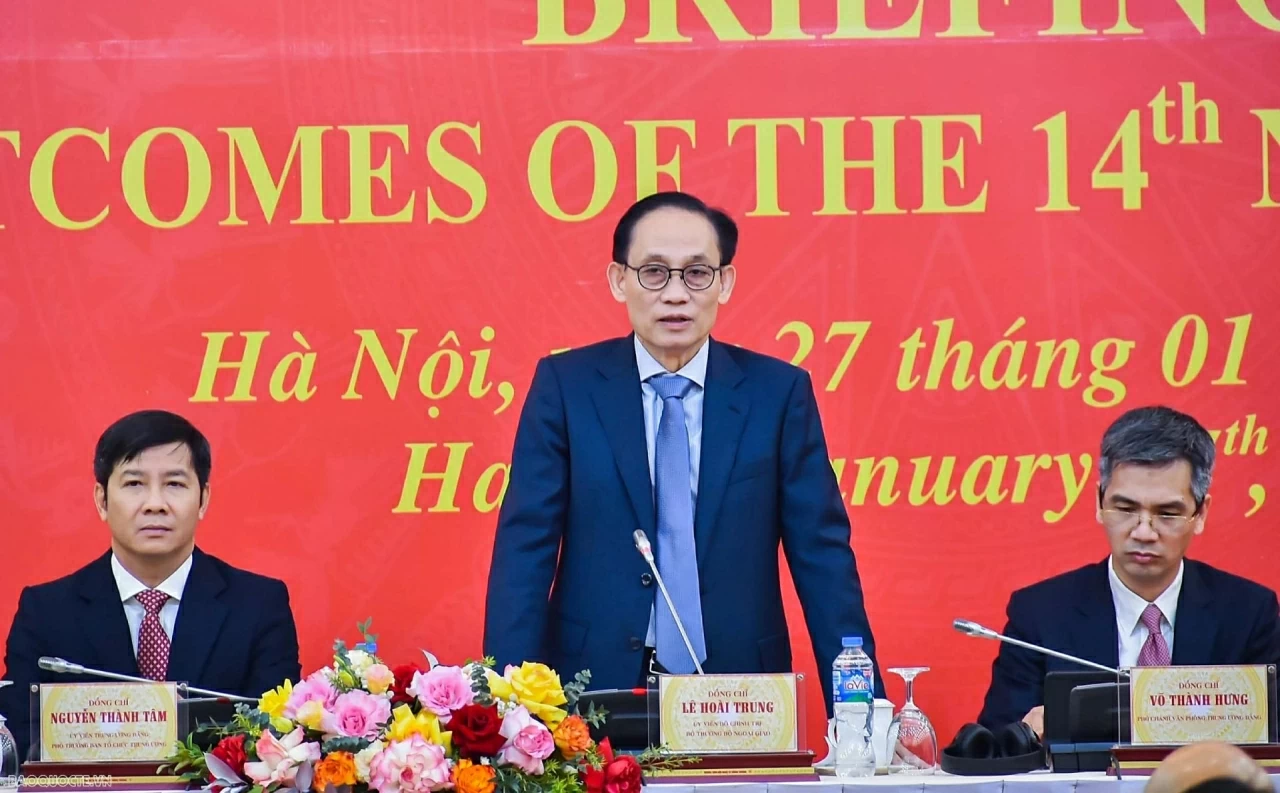 |
| Politburo Member, Minister of Foreign Affairs Le Hoai Trung announcing the outstanding results of the 14th National Party Congress to foreign diplomatic missions and international organizations in Vietnam, January 27, 2026. |
This glorious mission and the urgent requirements of the country in the new era demand that foreign affairs continue to be under the direct, comprehensive leadership of the Party, the unified management of the State, and the proactive and active participation of all ministries, sectors, localities, people, and businesses. In this, the Ministry of Foreign Affairs plays a core role, coordinating and advising the Party and State.
To vigorously implement a comprehensive foreign strategy at a new level, as directed by General Secretary To Lam, and effectively carry out the crucial and regular tasks of foreign affairs and international integration, the entire foreign affairs and diplomatic sector will focus on three major orientations:
Firstly, closely coordinate with Defense, Security, and all ministries, sectors, and localities nationwide to maintain a peaceful and stable environment, protect the independence, sovereignty, unity, and territorial integrity of the homeland; protect the homeland early, from afar, preserve the country when it is not yet in danger; protect the security of the regime, safeguard the people, and the achievements of the Renewal process.
Secondly, maximize external resources and favourable conditions, especially by promoting economic diplomacy, focusing on technology diplomacy to contribute to socio-economic development, particularly the double-digit growth target post-14th National Party Congress, realizing the two centennial goals set by our Party for the historical milestones of 2030 and 2045, bringing the country into a new era, the era of national resurgence.
Thirdly, contribute to enhancing the role, position, and international reputation of the Party, the country, and elevate Vietnam's role in global politics, economics, and human civilization, striving for our nation to "stand shoulder to shoulder with the great powers of the five continents" as Uncle Ho always wished.
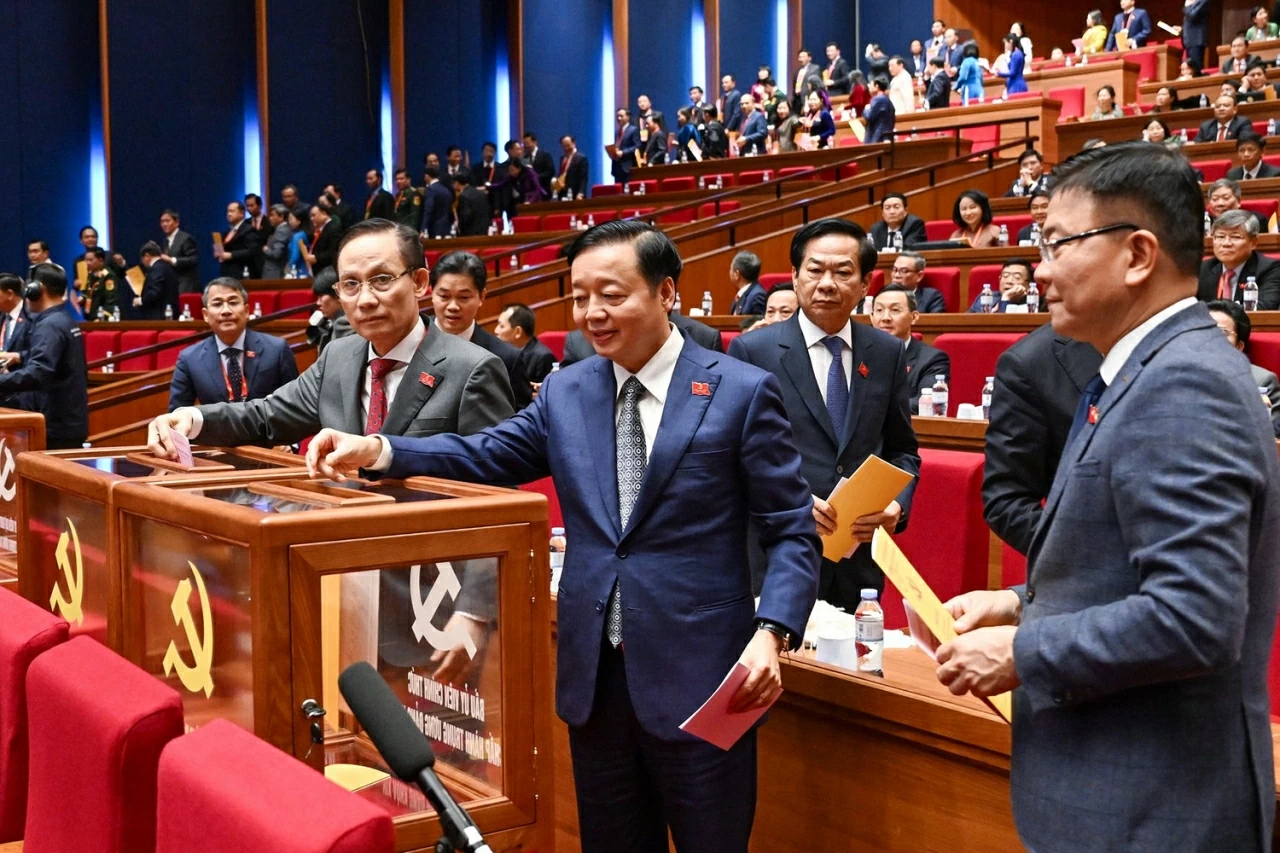 |
| Politburo Member, Minister of Foreign Affairs Le Hoai Trung casting a vote for the 14th Party Central Committee. (Photo: VNA) |
The Politburo has issued Resolution 59-NQ/TW on international integration in the new situation, creating a basis to strongly promote the pioneering, crucial, and regular role of foreign affairs and international integration. Could the Politburo Member and Minister share what breakthrough solutions and approaches Vietnam's foreign affairs and diplomacy will adopt in the coming time to effectively implement the vision and orientation of Resolution 59-NQ/TW? In this, how will the orientation to build a "comprehensive, modern, professional" diplomatic sector be developed in various aspects of the diplomatic sector?
The 14th National Party Congress identified promoting foreign affairs and international integration as a "crucial and regular" task, meaning valuing and elevating international integration, continuing to view international integration not only as an important development driver but as one of the foremost methods to achieve the country's strategic goals. Accordingly, in the coming time, international integration work will need to focus on four breakthrough solution groups as follows:
Firstly, enhancing thinking, awareness, and action, strengthening the Party's leadership over foreign affairs and international integration. The mindset on international integration shifts strongly from "receiving to contributing", from "deep and broad integration to full integration", from "the position of a latecomer integrating into the world to a pioneering nation leading in new fields". This new mindset has been and is being concretized, actively and vigorously implemented in practice, with the focus being the effective implementation of the Government's Action Program to implement Resolution 59.
Secondly, to meet the high development requirements of the country in the coming period, we have recently developed and issued special mechanisms to effectively and comprehensively implement international integration in various fields. Specifically, last December, the National Assembly issued Resolution 250/2025/QH15 on certain special mechanisms to enhance international integration effectiveness, a breakthrough step to remove institutional, mechanism, and resource bottlenecks for international integration. Currently, the Ministry of Foreign Affairs, along with relevant ministries and sectors, is urgently finalizing to submit and issue Government Decrees guiding the detailed implementation of this Resolution within the first quarter of 2026. These new regulations will allow effective implementation of international integration work both domestically and internationally, especially in building and mobilizing high-quality human resources for international integration.
Thirdly, we identify the need to leverage the strength of the three pillars of Party foreign affairs, State diplomacy, and People's diplomacy. Enhance the quality of "synchronized operations", the spirit of close, synchronized, and rhythmic coordination throughout the political system and between the Central and local levels, promoting the role of political-social organizations, the Vietnamese community abroad, strengthening information sharing mechanisms, interconnected data, creating a unified, synchronized integration landscape for the common goal.
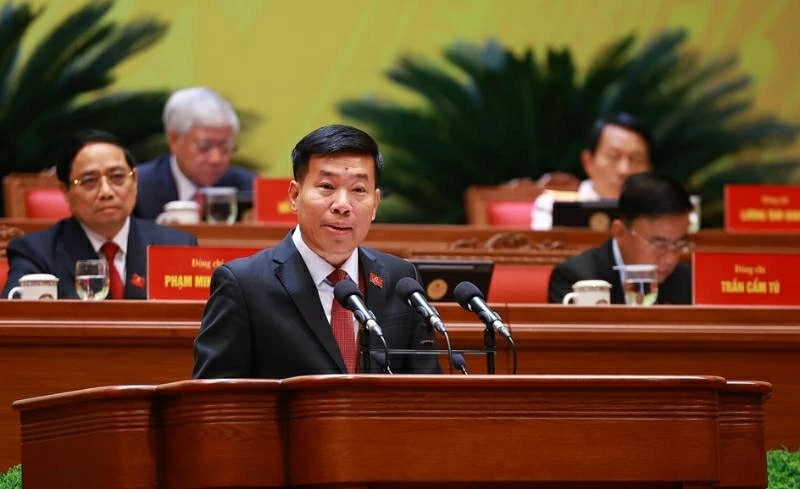 |
| Party Central Committee Member, Permanent Deputy Secretary of the Party Committee, Deputy Minister of Foreign Affairs Nguyen Manh Cuong presenting a discussion on "Proactively and actively carrying out the crucial and regular task of promoting foreign affairs and international integration to serve the country's strategic goals". (Source: VNA) |
Fourthly, to effectively integrate across fields, we also identify the need to promote a "culture of implementation", aligning words with actions, following through as directed by General Secretary To Lam. In international integration, this requires a shift in mindset towards prioritizing substance and feasibility in signing and implementing international commitments and agreements. Along with that, international commitments and agreements must go hand in hand with improving domestic institutions and policies.
For the Ministry of Foreign Affairs, the main force in foreign affairs and international integration, we identify the foundational task of building a comprehensive, modern, professional diplomatic foundation with several major measures, including:
Firstly, thoroughly grasping the Party and State's guidelines, the Party's leadership, and the State's unified management, enhancing the effectiveness of Party committee leadership, always valuing and doing well in Party building, strengthening discipline, continuing to modernize organizational methods, work implementation, and management, supervision through promoting digital transformation, building database systems. Secondly, building a team of foreign affairs officials, embodying virtue, strength, and talent, upholding the spirit of serving the nation and people. Thirdly, comprehensively developing the pillars of Party foreign affairs, State diplomacy, and People's diplomacy, closely combining political diplomacy with defense and security diplomacy; between political diplomacy with economic and cultural diplomacy, focusing on economic diplomacy for development, with businesses and people as the subjects, innovating and enhancing the effectiveness of cultural diplomacy and external information work.
Could the Politburo Member and Minister share how cultural diplomacy has supported the goal of enhancing "soft power" and national position over the past year? Recently, the Party Central Committee issued Resolution 80-NQ/TW on developing Vietnamese culture, identifying culture as the foundation and motivation for sustainable national development, closely linked with defense, security, and foreign affairs to become the national soft power in the new era. How will cultural diplomacy be implemented in the coming time to continue conveying Vietnamese culture to the world while learning from international friends to contribute to building a socialist Vietnamese culture?
Vietnamese diplomacy has always demonstrated cultural depth and national identity. Even before the country's independence, in 1943, the Party had the Vietnamese Cultural Outline. President Ho Chi Minh, the architect of modern Vietnamese diplomacy, the first Minister of Foreign Affairs of Vietnam, was also a world cultural figure.
The documents of the 14th National Party Congress clearly outline the major orientation of building and developing an advanced Vietnamese culture rich in national identity, while proactively and actively cooperating, promoting the country's image, cultural values, and Vietnamese people to the world. Resolution 80-NQ/TW of the Politburo on developing Vietnamese culture is one of the strategic Resolutions of the Politburo to help the country confidently step into the new era.
Reflecting on cultural diplomacy over the past year, we can see significant qualitative progress. High-level foreign affairs activities all incorporated cultural diplomacy. In 2025 alone, we successfully advocated for UNESCO to recognize 7 new titles, bringing Vietnam's total UNESCO-recognized titles to 77, far exceeding the target of 60 titles by 2030. One of the special highlights is Vietnam's pioneering proposal of the "International Decade for Culture for Sustainable Development" initiative with the participation of 163 countries, approved by UNESCO for submission to the United Nations.
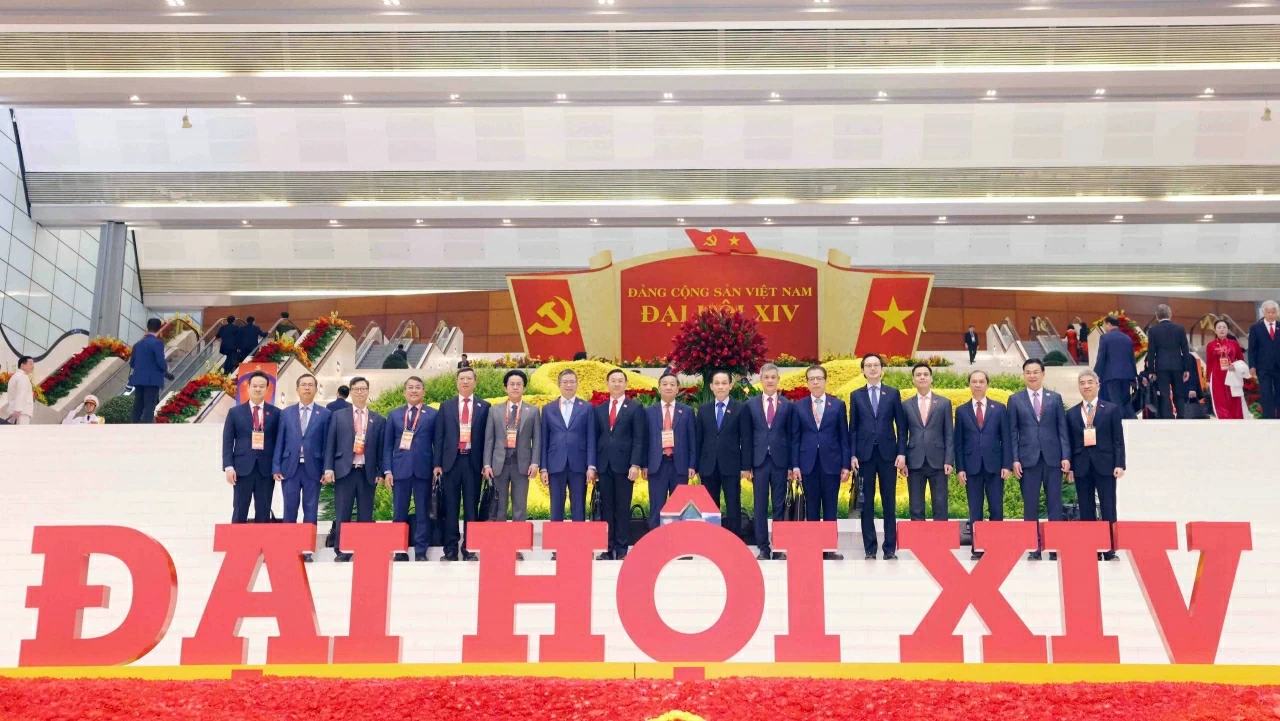 |
| The Ministry of Foreign Affairs delegation attending the 14th Party Congress. (Photo: Quang Hoa) |
In the coming time, to contribute to enhancing national soft power, cultural diplomacy will focus on several major orientations and priorities:
Firstly, strongly innovating thinking, achieving high unity in awareness and action regarding the role of cultural diplomacy, implementing the spirit of General Secretary To Lam's directive to make every diplomatic activity not only have deep cultural content but also become a cultural activity; focusing on research, policy advisory, and proposing international initiatives in cultural diplomacy.
Secondly, innovating content and form, having breakthrough initiatives to implement cultural diplomacy with focus and emphasis, creating marks and spreading. In particular, continuing to integrate cultural diplomacy into high-level foreign affairs activities; supporting localities in developing heritage economies; closely coordinating cultural diplomacy with work related to overseas Vietnamese.
Thirdly, promoting deep and effective international integration in multilateral and bilateral cultural forums, contributing to bringing Vietnam to the world more and absorbing the cultural essence of humanity to enrich the nation's culture and civilization.
Fourthly, promoting communication work associated with digital transformation, applying technology, innovation, and effectively utilizing resources for cultural diplomacy. Developing a Communication Strategy to promote Vietnam's image - a nation rich in cultural identity, humanity, responsible, and positively contributing to the flow of human civilization.
Fifthly, enhancing the development of human resources to meet the requirements of cultural diplomacy work at both central and local levels, especially at Vietnamese representative agencies abroad. Increasing the dissemination of basic knowledge about culture and cultural diplomacy to Vietnamese people working, studying, and working abroad... contributing to building and positively promoting the image of the country and people of Vietnam in the eyes of international friends.
Thank you, Politburo Member and Minister!


