



Vietnamese - a strong bond connecting overseas Vietnamese to their roots
WVR - Preserving the Vietnamese language in the overseas Vietnamese community is not only an effort to preserve identity, but also an act of affirming national pride in the flow of integration.
Latest
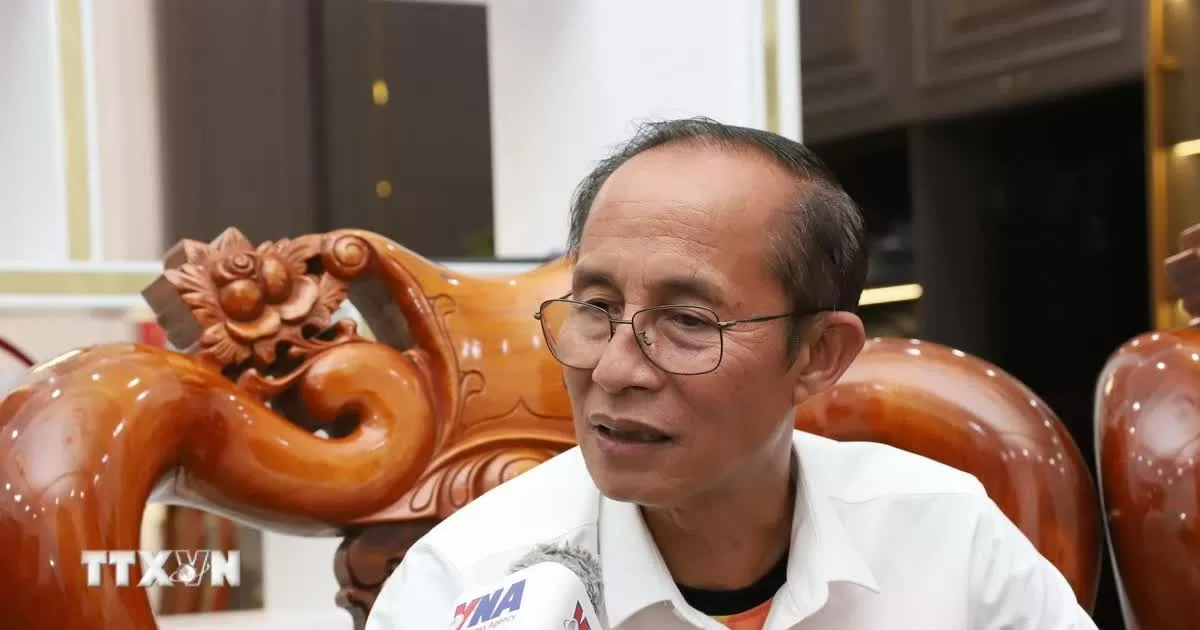 |
| Mr. Nguyen Van Hung, an overseas Vietnamese in Khammouane province, Central Laos. (Source: VNA) |
In every overseas Vietnamese community, Vietnamese is not simply a language, but the soul of culture, an invisible thread connecting people to their national roots.
In Laos, a neighbouring country with a special relationship with Vietnam, preserving Vietnamese in the overseas Vietnamese community is not only an effort to preserve identity, but also an act of affirming national pride in the flow of integration.
In the small home of Mr. Nguyen Van Hung in Thakhek town, Khammouane Province, after the day's work has been set aside and dinner is finished, the whole family gathers around the television to watch Vietnamese programs together - from news from the homeland and familiar TV dramas to music and comedy shows rich in Vietnamese culture.
Mr. Hung shared that since childhood, his parents taught him Vietnamese. Later, he studied at a Vietnamese school in Laos. His children also continued their education in Vietnamese schools. Knowing the Vietnamese language and script, to him, is a way to never forget that they are Vietnamese. Even though he now holds Lao citizenship, his roots, he says, will never change.
Mr. Hung often tells his children and grandchildren that speaking Vietnamese is a way to remember who they are. As long as the language remains, so does their identity. And perhaps it is in those simple evening moments, in those everyday scenes filled with the sounds of the mother tongue, that we find the most beautiful testament to the quiet yet proud journey of preserving the national language far from home.
Mr. Hung doesn’t speak of this in theory, it’s reflected in how he lives and raises his children each day. While many other overseas Vietnamese families have grown accustomed to speaking Lao at home, Mr. Hung and his wife, Mrs. Tran Thi Anh, have always maintained a strict rule: at home, everyone must speak Vietnamese.
Leaning back in her chair, Mrs. Tran Thi Anh shared that she too was born in Laos and was taught Vietnamese by her parents from a young age. Now she teaches the language to her grandchildren. Everyone in the family speaks Vietnamese at home.
It is this perseverance that has helped their son, Mr. Nguyen Van Dung, who was born and raised in Laos, remain fluent in Vietnamese. Despite studying in Lao schools and growing up in a multilingual environment, thanks to his family's strong foundation, he has not been “assimilated.” Today, he carries the torch by teaching Vietnamese to his own children from an early age.
According to Mr. Dung, speaking Vietnamese helps his child know who they are and where they come from. He always speaks Vietnamese with his child, plays Vietnamese music, and listens to Vietnamese audiobooks. Over time, the mother tongue seeps in and takes root in the child’s memory. It is, he believes, the simplest way to preserve one’s origins.
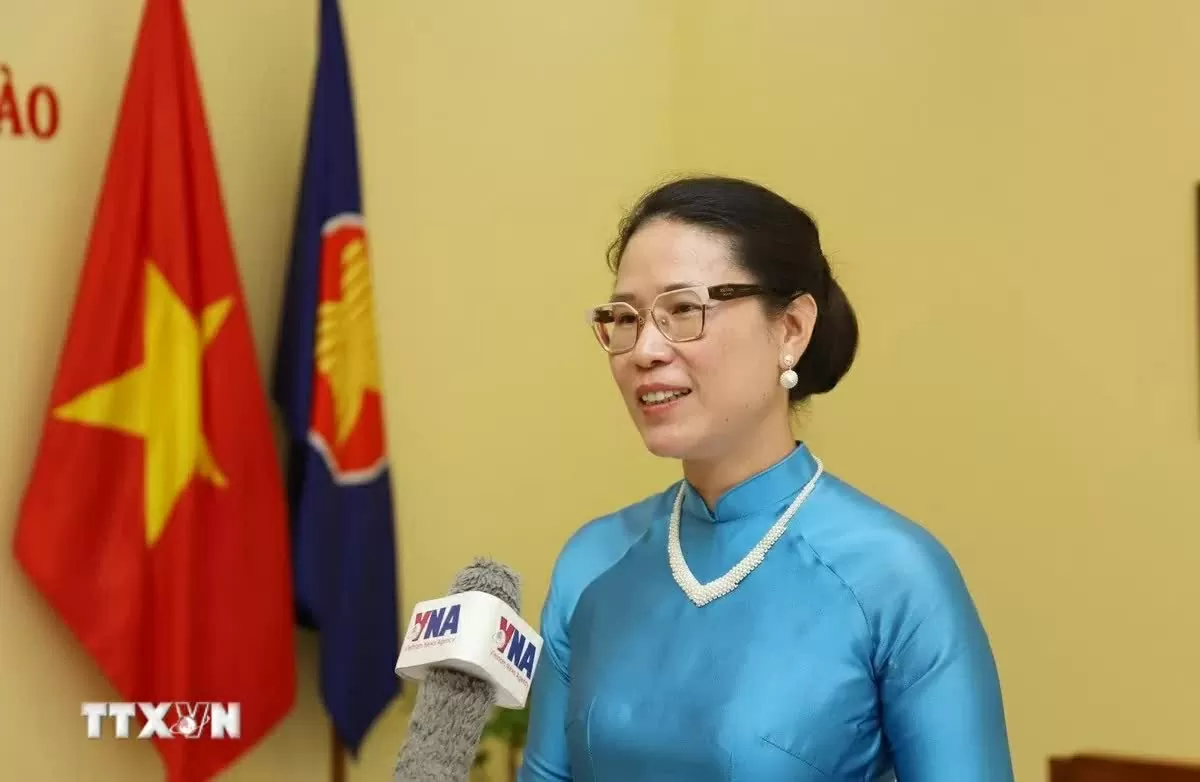 |
| Ms. Dang Thi Hai Tam, Consul General of Vietnam in Savannakhet province, Central Laos, shares about the preservation of Vietnamese language by the Vietnamese community in Central Laos. (Source: VNA) |
According to Ms. Dang Thi Hai Tam, Consul General of Vietnam in Savannakhet Province, Central Laos, Vietnamese is not merely a foreign language to the overseas Vietnamese community. It is the language of their ancestors, a cultural identity that must be preserved.
The journey of learning Vietnamese, she emphasized, must begin at home, from self-awareness and the willingness to learn, to the habit of daily practice.
Ms. Tam also stressed that beyond the role of the family, support from schools is essential through structured, creative, and contextually relevant Vietnamese language programs tailored to the living environment of overseas Vietnamese. At the same time, it is crucial to enhance community-based cultural activities and strengthen connections with the homeland, so that children of Vietnamese descent can grow up immersed in the Vietnamese language and experience Vietnamese values firsthand.
In today’s era of intense globalization, mother tongues are at risk of being overshadowed, especially in communities living far from their homeland. That is why the preservation and development of the Vietnamese language within the overseas community cannot remain just a slogan. It must begin with concrete actions: with the awareness of each family, with educational policies designed for the community, and with the sustained support of the Vietnamese State.
For every Vietnamese living abroad, preserving the Vietnamese language is also preserving the roots of the nation. It is not just a responsibility, but a source of pride—that no matter where we go or where we live, the blood of Lac Hong still flows through our veins, resonating in each lullaby, every greeting, and in the tender words “ba,” “me” spoken on foreign soil.