


Foreign Minister Margus Tsahkna’s visit creates new momentum for deeper, more effective Vietnam–Estonia relations
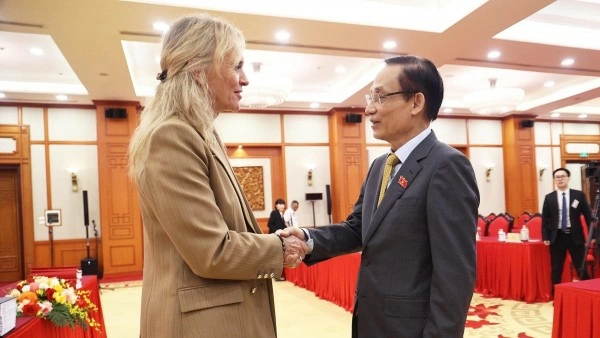
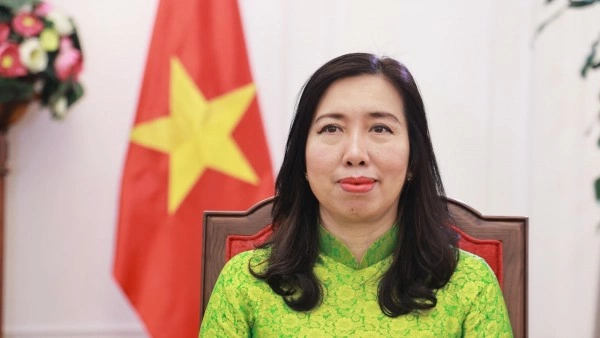
WVR - Estonian Foreign Minister Margus Tsahkna will officially visit Vietnam from April 22-24. On this occasion, Vietnamese Ambassador to Finland concurrently accredited to Estonia, Pham Thi Thanh Binh, gave an interview to The World and Vietnam Report about the significance of the visit and the highlights in the relations between the two countries.
Latest
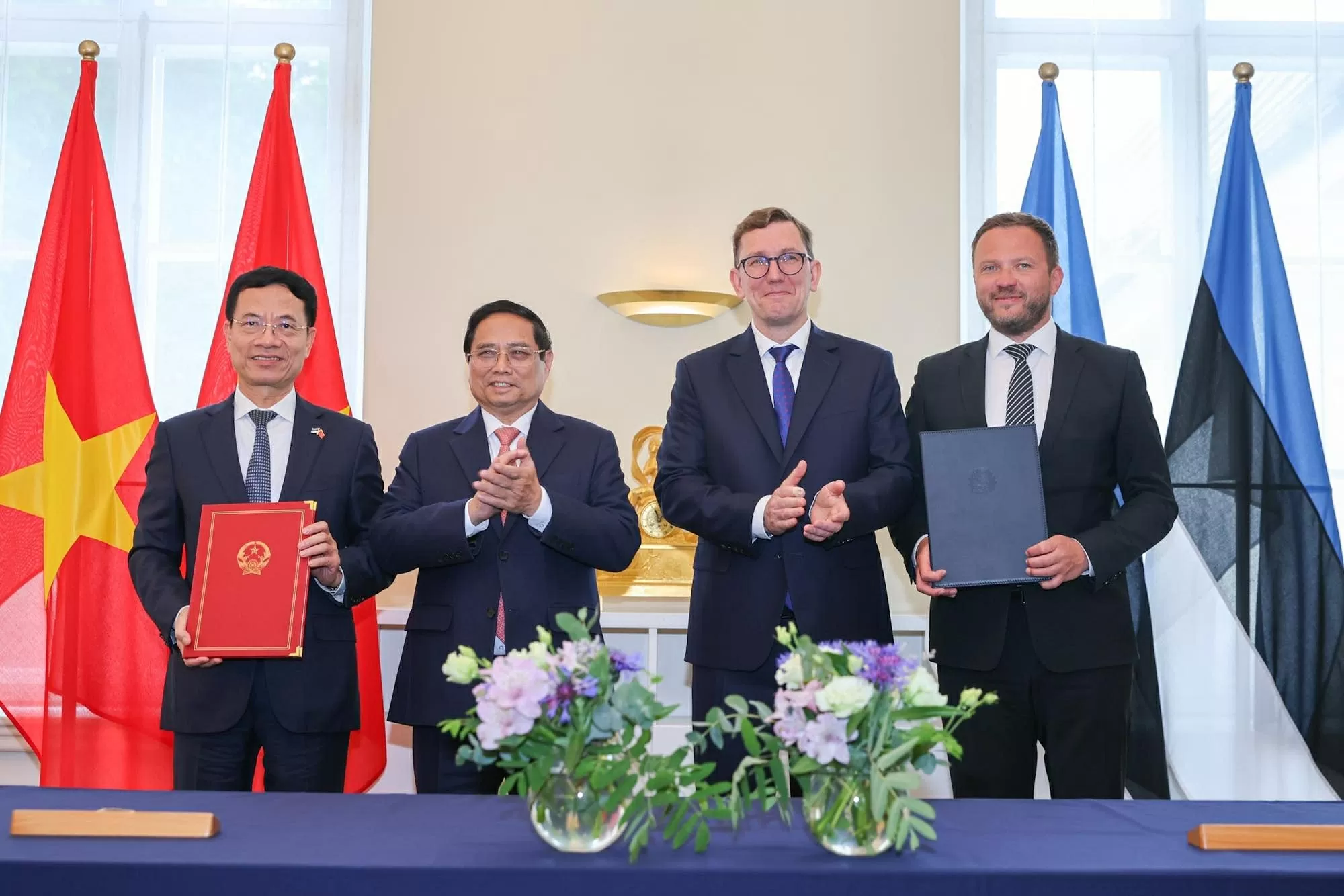 |
| The signing ceremony and exchange of the MoU between the Ministry of Science and Technology of Vietnam and the Ministry of Justice and Digital Transformation of Estonia, witnessed by senior leaders of both countries, June 2025. (Photo: VGP) |
Ambassador, could you share the objectives, significance, and expectations of Estonian Foreign Minister Margus Tsahkna's visit to Vietnam?
The visit of Estonian Foreign Minister Margus Tsahkna to Vietnam holds special significance as it is his first official visit to a Southeast Asian country in 2026.
| More from WVR |
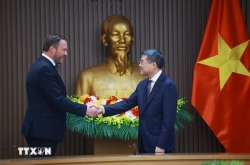 Prime Minister Le Minh Hung receives Estonian Foreign Minister Margus Tsahkna Prime Minister Le Minh Hung receives Estonian Foreign Minister Margus Tsahkna |
The visit takes place amidst rapid global changes in geopolitics, economics, and technology. Therefore, it not only contributes to maintaining high-level exchanges but also strengthens political trust, creating new momentum for Vietnam-Estonia relations to develop more substantively and effectively.
The visit is even more significant as it occurs right after the 16th National Assembly finalized key leadership positions. This demonstrates Estonia's appreciation of Vietnam's role and position in the region and its desire to quickly enhance engagement and cooperation with Vietnam's new leadership.
This visit also serves as a concrete implementation of the Memorandum of Understanding on cooperation between the two Foreign Ministries signed in 2025, in which both sides agreed to promote exchanges at all levels, especially high-level and working-level, thereby maintaining regular political dialogue and expanding cooperation in areas of mutual interest.
On a broader scale, the visit shows Estonia's increasing interest in Southeast Asia, alongside its traditional partners in Europe and the United States. Additionally, the visit could help expand the cooperation space between Vietnam and the Baltic region. The participation of about 12 major Estonian enterprises in the delegation also demonstrates a commitment to promoting substantive cooperation, especially in the fields of economy, investment, and technology.
After more than 30 years of diplomatic relations, what are the notable highlights in Vietnam-Estonia relations, Ambassador?
Since establishing diplomatic relations in 1992, Vietnam-Estonia relations have steadily developed on the basis of friendship, trust, and mutual respect.
Over the past three decades, the two countries have continuously strengthened political-diplomatic relations, enhanced coordination at multilateral forums, and gradually expanded cooperation into new potential areas. Notably, following the official visit to Estonia by Prime Minister Pham Minh Chinh in 2025, the relations between the two countries gained new momentum for more substantive development.
A prominent highlight is the increasingly strengthened political trust. The two countries share many similar views on free trade, multilateralism, and respect for international law. They have closely coordinated at the United Nations, the ASEAN-EU framework, and many other international forums, including the period when they both served as non-permanent members of the United Nations Security Council for the 2020–2021 term.
Estonia is also one of the leading EU countries to ratify the EVIPA, clearly demonstrating its support for promoting relations with Vietnam.
Another highlight is that both sides have begun to identify complementary and long-term potential areas of cooperation, particularly in digital transformation, technology, and innovation. Estonia is one of the world's leading countries in e-government, digital society, and smart governance, while Vietnam is intensifying its national digital transformation, developing the digital economy, and building an innovation ecosystem. The convergence between Vietnam's development needs and Estonia's strengths creates very noteworthy cooperation prospects, not only economically but also in sharing governance experiences and enhancing national competitiveness.
In terms of economy and trade, although bilateral trade turnover is currently modest, below USD 100 million annually, it has maintained a positive growth trend in recent years, especially since 2022. The trade structure between the two countries is quite complementary. Vietnam mainly exports to Estonia goods such as plastics and plastic products, fruits, nuts, tea, coffee, spices, toys, and some steel products; while Estonia exports to Vietnam goods such as steel, electrical machinery, wood, and wood products. This reality shows that the two economies can complement each other, providing a favorable foundation to promote bilateral trade towards a more balanced and sustainable direction in the future.
Overall, after more than 30 years, the two countries increasingly recognize each other's value and cooperation potential. If previously bilateral relations were mainly maintained at a stable level, they have now begun to form new, more substantive, and deeper cooperation content. This is an important basis to believe that in the coming time, with the determination of both sides, Vietnam-Estonia relations will continue to develop positively, not only bilaterally but also contributing to expanding connections between Vietnam and the Baltic region and the European Union.
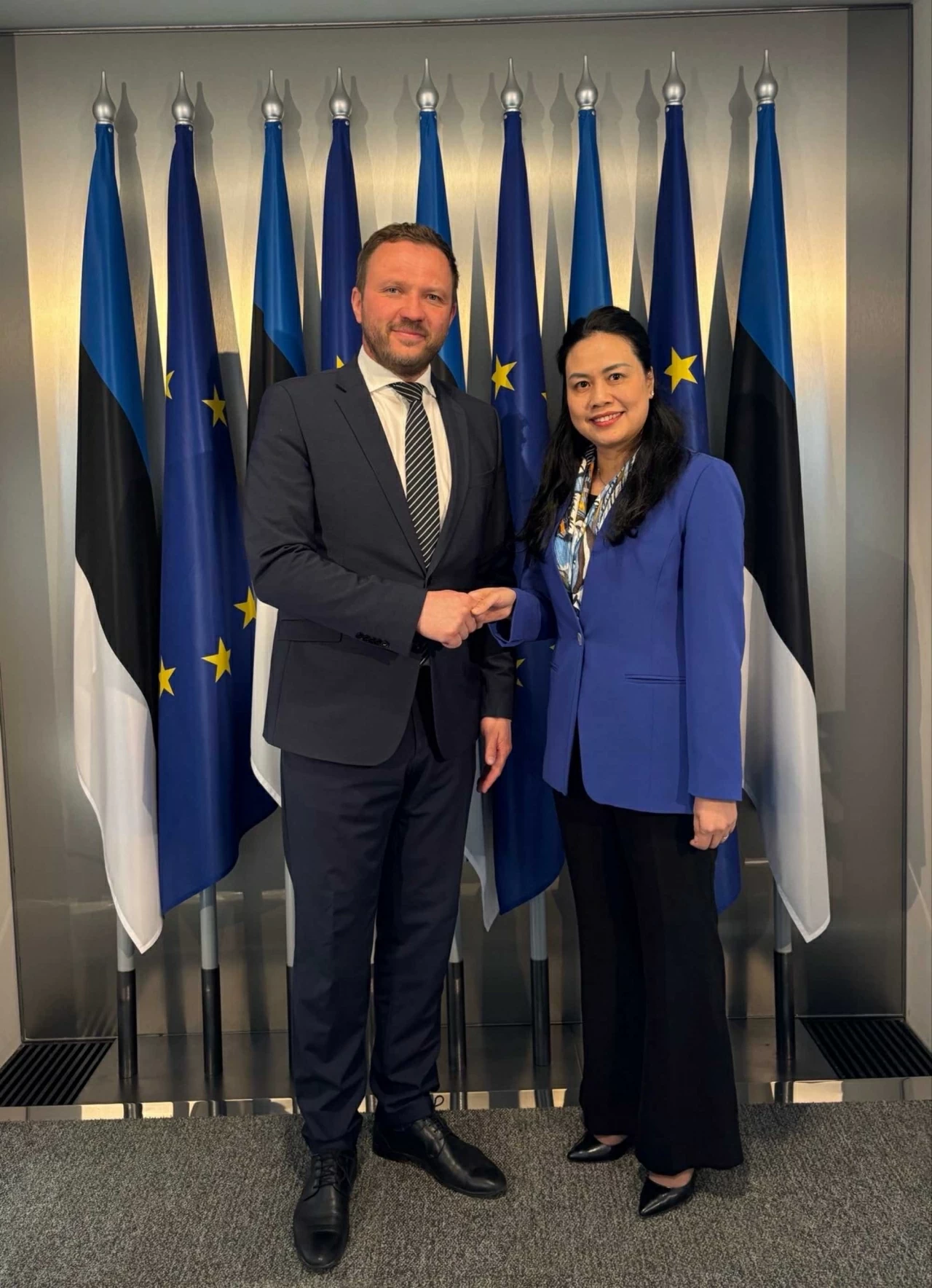 |
| Ambassador Pham Thi Thanh Binh and Estonian Foreign Minister Margus Tsahkna. (Photo: Vietnamese Embassy in Finland) |
With the leverage of the EVFTA, what are your expectations for the growth of bilateral trade turnover and the wave of investment from Estonian enterprises into Vietnam in the near future?
Estonia has always particularly valued and supported the European Union's efforts to enhance negotiations, sign, and implement free trade agreements with countries and regions worldwide. In this context, the EVFTA is of great significance, not only for Vietnam-EU relations but also for creating a favorable framework to further promote trade and investment cooperation between Vietnam and Estonia.
I believe there is still significant room for developing bilateral trade. Although the current turnover remains modest, the economic structures of the two countries are relatively complementary. Vietnam has strengths in consumer goods, agricultural products, processed foods, and certain manufacturing sectors, while Estonia has advantages in technology, electrical equipment, logistics, digitization, and high-knowledge solutions. If we effectively leverage the EVFTA and further enhance business connectivity, market information exchange, and trade promotion, bilateral turnover can positively grow in the near future.
Regarding investment, the EVFTA, along with the prospect of fully implementing the EVIPA, will continue to provide an important foundation for attracting high-quality capital from Estonia into Vietnam. With Vietnam's increasingly improved investment environment and deep integration commitments, I expect more Estonian enterprises to strengthen their presence in Vietnam, especially in areas such as smart logistics, digital government, IT training, innovation, and support for the startup ecosystem.
Estonia's interest in the Vietnamese market has also been quite evident through the continuous organization of business delegations to work and explore cooperation opportunities, including the business delegation accompanying Foreign Minister Margus Tsahkna on his visit to Vietnam.
I believe that if we effectively utilize the EVFTA framework and continue to promote connectivity between the business communities of the two countries, we can expect not only an increase in trade turnover but also a more substantive wave of investment cooperation in the near future.
Estonia is known as a "digital powerhouse" globally. How do you assess the cooperation opportunities between the two countries in e-government, digital economy, and cybersecurity – which are top priorities for Vietnam today?
I believe this is one of the most potential-rich areas of cooperation between Vietnam and Estonia today. Estonia is a world leader in digital transformation, e-government, and data-driven governance, while Vietnam is actively promoting the development of digital government, digital economy, and digital society. The convergence of Estonia's strengths and Vietnam's development needs creates a very favourable foundation for the two sides to promote substantive cooperation.
A significant milestone was during Prime Minister Pham Minh Chinh's visit to Estonia in June 2025, when the Ministry of Science and Technology of Vietnam and the Ministry of Justice and Digital Transformation of Estonia signed a Memorandum of Understanding on cooperation in digital transformation and digital economy. This is an important cooperation framework, demonstrating the determination of both sides to promote in-depth cooperation while providing a legal foundation and direction for implementing specific cooperation content in the future.
The two sides have ample room for cooperation in areas such as digital identification, data interoperability, development of online public services, e-commerce, fintech, and support for business digital transformation. Notably, Estonia is a pioneer with its e-Residency model, a valuable experience in combining digital governance, facilitating business, and integrating into the international digital economy. In the field of cybersecurity, Estonia also has valuable experience in building secure and safe digital infrastructure right from the system design stage. I believe that if promoted in the right direction, digital cooperation will become one of the new pillars in Vietnam-Estonia relations.
Thank you very much, Ambassador!
| Estonian Foreign Minister Margus Tsahkna to pay official visit to Vietnam WVR - Minister of Foreign Affairs of the Republic of Estonia Margus Tsahkna will pay an official visit to Vietnam from April 22 to 24, ... |
| Prime Minister Pham Minh Chinh visits E-Estonia Briefing Centre in Tallinn WVR/VNA - On June 6, Prime Minister Pham Minh Chinh visited the E-Estonia Briefing Centre – a symbol of world-leading digital government, as part of ... |
| Vietnam intensifies partnership with Estonia in multiple sectors WVR - On June 6, in Tallinn, within the framework of Prime Minister Pham Minh Chinh’s official visit to the Republic of Estonia, Deputy Prime ... |

| PM urges greater solidarity among Vietnamese community in Estonia With the principle of leaving no one behind and considering OVs as an inseparable part of the Vietnamese nation, the Government leader affirmed that even ... |
| PM Pham Minh Chinh’s Europe trip highlights Vietnam’s commitment to integration and development: Deputy PM, FM Bui Thanh Son WVR/VNA - Prime Minister Pham Minh Chinh’s trip to Europe from June 5-14, encompassing official visits to Estonia and Sweden, attendance at the third United ... |