

Vietnam enhances capacity to act as a norm entrepreneur and thought leader in ASEAN: Malaysian Ambassador
WVR - Malaysian Ambassador to Vietnam Dato' Tan Yang Thai confirmed that outcomes that Vietnam have achieved during 30 years of joining ASEAN have gone far beyond our initial expectations.
Latest
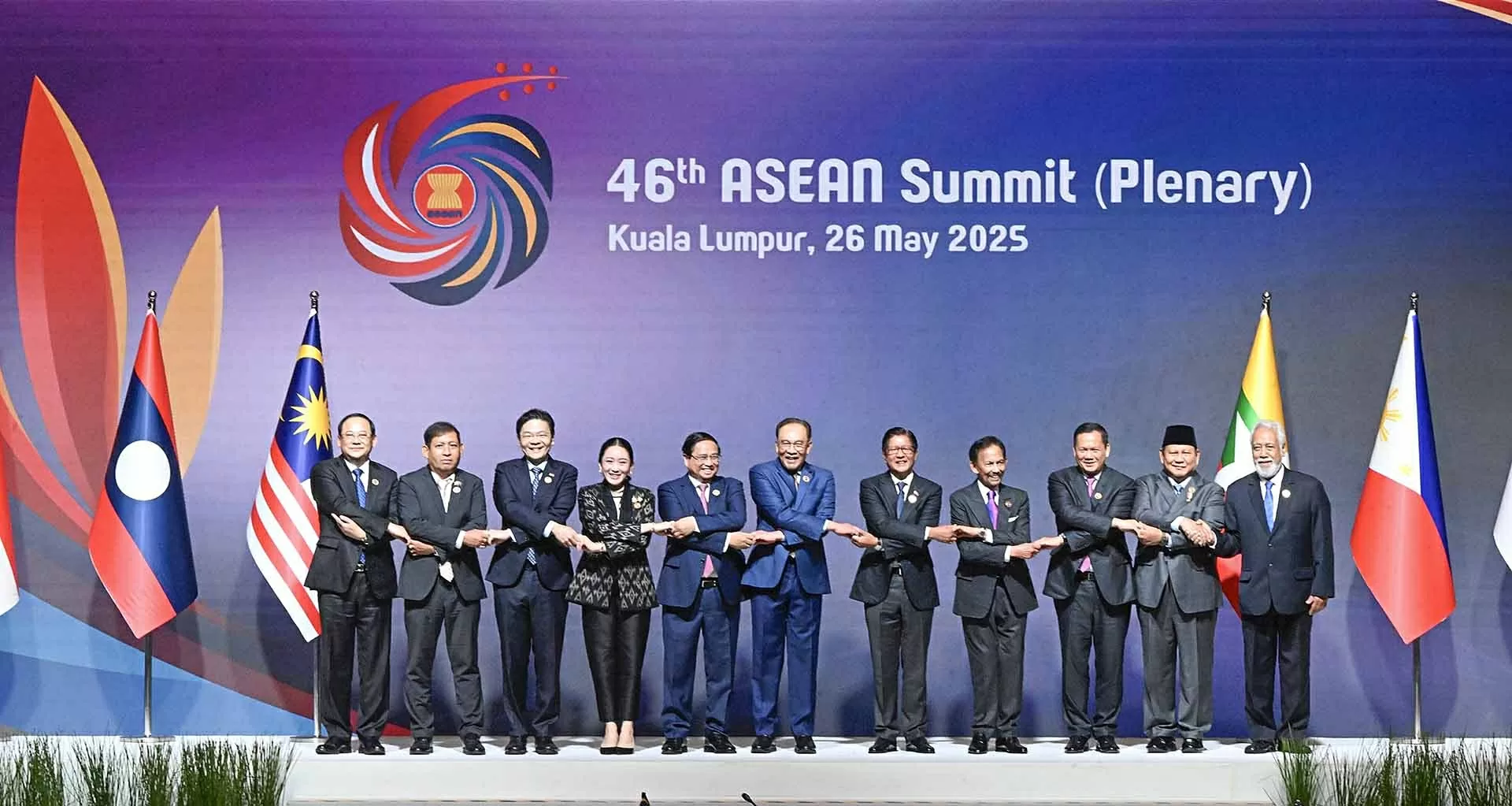 |
| Plenary session of the 46th ASEAN Summit in Kuala Lumpur, Malaysia, May 26. (Source: VNA) |
As a diplomat with longstanding ties to Vietnam, could you share your reflections on the 30th anniversary of Vietnam’s accession to ASEAN?
Thank you. First of all, I would like to extend my heartfelt congratulations to Vietnam on the 30th anniversary of its accession to ASEAN.
I vividly remember the year 1995, when Vietnam joined ASEAN. It was also the year I entered the Ministry of Foreign Affairs of Malaysia. Viet Nam's accession was a major event, and all of us at the Ministry were genuinely excited to welcome Viet Nam into the ASEAN family. At that time, we looked forward to a fruitful and successful collaboration with Viet Nam.
 |
| Malaysian Ambassador to Vietnam Dato’ Tan Yang Thai. (Photo: Thanh Long) |
Looking back over the past 30 years since Viet Nam became a member of ASEAN, I must say that the outcomes have gone far beyond our initial expectations. When Viet Nam first joined, the original ASEAN Member States extended significant support to ease Viet Nam’s integration. This included language assistance through English training programs for diplomats from the Viet Namese Ministry of Foreign Affairs, as well as some technical support.
At that time, ASEAN was already convening over 250 meetings per year. For any new member, fulfilling the full scope of obligations required a period of orientation and a steep learning curve. However, Viet Nam embraced the ASEAN way with great commitment and adapted superbly and successfully.
Today, three decades later, Vietnam stands as a very important and integral member of ASEAN.
What are your comments on Vietnam’s recent initiatives within ASEAN, including the ASEAN Future Forum? What do these efforts reflect about Viet Nam’s efforts and commitments to the Association’s development?
Vietnam’s convening of the ASEAN Future Forum (AFF) reflects its forward-looking vision for a resilient and adaptive ASEAN in the face of emerging global challenges.
The AFF provided a valuable platform for multi-stakeholder engagement—including government leaders, academics, think tanks, and youth voices—underscoring Vietnam’s inclusive approach to regional policymaking.
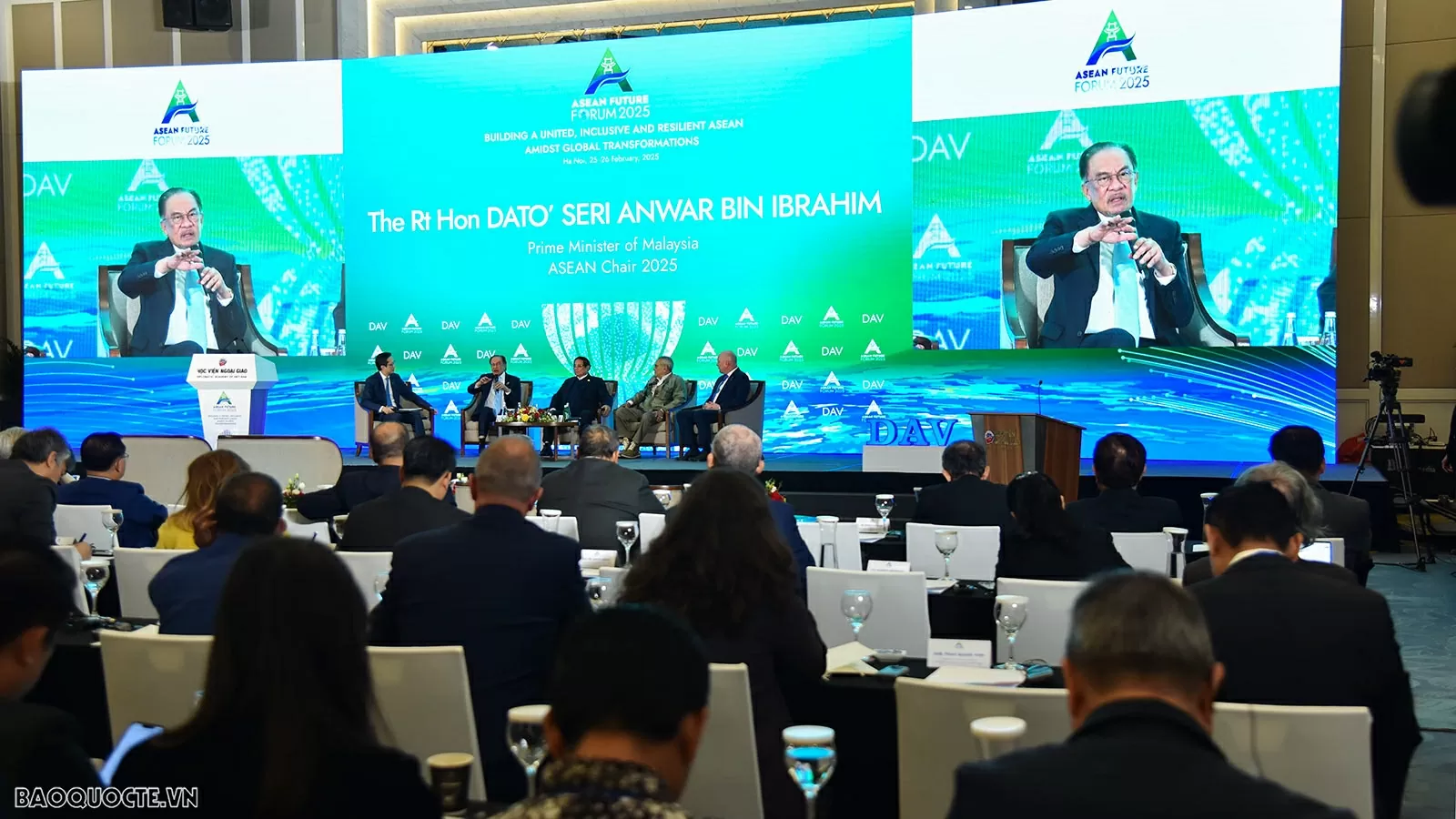 |
| Malaysian Prime Minister Anwar Ibrahim delivered remarks at the High-Level Dialogue of the ASEAN Future Forum 2025, held in February in Ha Noi. (Photo: Tuan Anh) |
Notably, the Forum drew high-level participation, including Prime Ministers, Foreign Ministers, ASEAN Secretary-General, with messages from the UN Deputy Secretary-General, and the President of the European Commission, reflecting the regional and international esteem for Viet Nam’s leadership in ASEAN affairs.
It demonstrates Vietnam’s growing capacity to act as a norm entrepreneur and thought leader within ASEAN, especially on critical issues such as digital transformation, sustainable development, and strategic autonomy.
Viet Nam’s efforts reaffirm its deep commitment to ASEAN’s centrality and unity, particularly at a time when geopolitical shifts and major-power rivalries demand internal cohesion and collective strategic clarity.
Malaysia welcomes and commends these initiatives, which are aligned with our own priorities as ASEAN Chair in 2025, especially in terms of future-proofing ASEAN.
In the current context, could you please share your thoughts on Vietnam’s roles in fostering consensus and upholding ASEAN’s positions on regional and international issues, with the aim to safeguarding peace and stability for development?
Vietnam has consistently played a constructive and principled role in promoting ASEAN unity and consensus, particularly on sensitive issues such as the South China Sea, Myanmar, and great-power competition in the region.
As ASEAN Chair in 2020, Vietnam led the Association through the height of the Covid-19 pandemic. Viet Nam was also instrumental in pushing forward ASEAN's Outlook on the Indo-Pacific (AOIP) during its chairmanship, reinforcing ASEAN’s relevance and centrality in shaping regional architecture.
On the South China Sea, Vietnam has consistently upheld the importance of international law, particularly UNCLOS 1982, and has contributed actively to ASEAN’s negotiations with China on a Code of Conduct.
Vietnam’s active participation in ASEAN-led mechanisms such as the ASEAN Regional Forum (ARF), East Asia Summit (EAS), and ADMM-Plus illustrates its commitment to inclusive, rules-based regional security cooperation.
Malaysia recognises and appreciates Viet Nam’s role as a bridge-builder and consensus-forger, helping to keep ASEAN united in navigating complex regional dynamics.
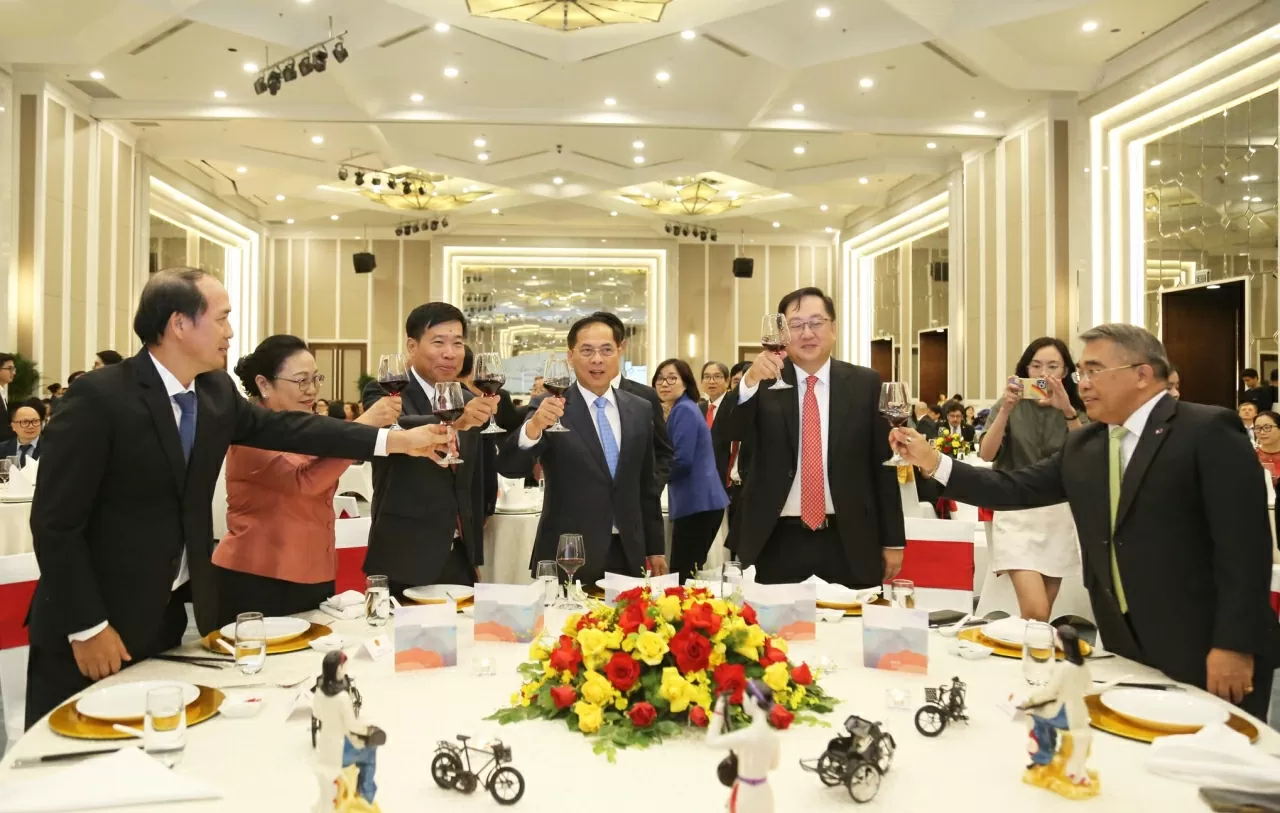 |
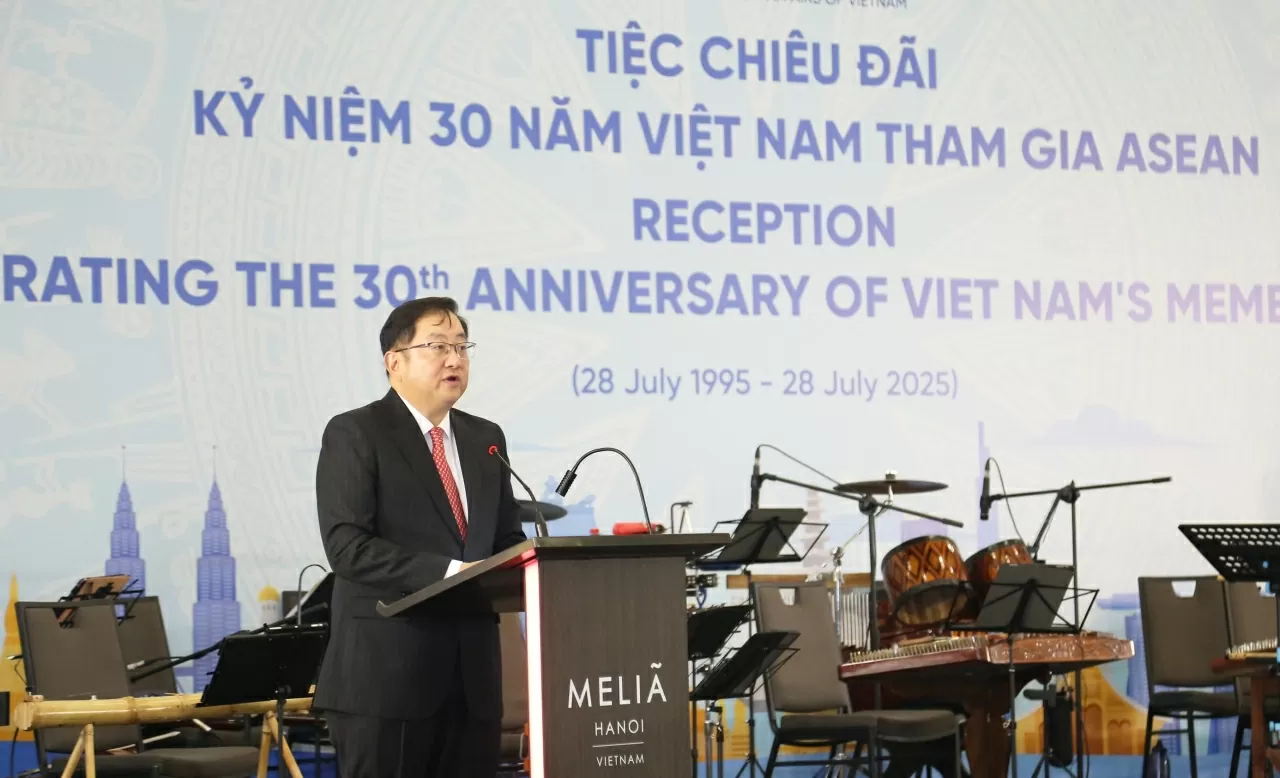
| Deputy Prime Minister and Minister of Foreign Affairs Bui Thanh Son and delegates celebrated the 30th anniversary of Vietnam’s accession to ASEAN on July 28 in Ha Noi. (Photo: Thanh Long) |
How could Malaysia and Vietnam cooperate to effectively advance ASEAN’s development agenda in the years ahead and contribute to shape ASEAN’s strategic role in the evolving global landscape?
Malaysia and Vietnam enjoy a comprehensive strategic partnership built on shared values, regional aspirations, and a commitment to ASEAN’s founding principles.
Malaysia and Vietnam share a common vision for a resilient, united, and people-oriented ASEAN, and we are committed to working closely to deliver tangible benefits to our peoples and the wider region.
We can jointly promote sustainable economic integration, particularly in advancing the ASEAN Economic Community (AEC) post-2025 agenda, including deeper supply chain resilience, digital economy frameworks, and inclusive development.
Both countries can play a leading role in strengthening ASEAN's energy transition agenda. Notably, Malaysia, Vietnam, and Singapore are key partners in Project RISE, which supports the ASEAN Power Grid Initiative by exploring cross-border electricity trade and enhancing grid interconnectivity.
In the face of complex geopolitical shifts, Malaysia and Viet Nam can act as middle-power stabilisers, working to uphold ASEAN centrality and ensuring the region remains a neutral, rules-based, and inclusive strategic space.
Our two countries can also collaborate to ensure the success of Malaysia’s ASEAN Chairmanship in 2025, which will focus on a forward-looking and community-centered ASEAN.
Thanks the Ambassador!