


Three decades of Vietnam in ASEAN: Voyage into the high seas
WVR - '30 years in ASEAN is akin to a voyage for the Vietnam vessel, from the initial days awkwardly paddling forward to steadying the helm today as it confidently sails into the high seas', Deputy Minister of Foreign Affairs Dang Hoang Giang made this analogy as he looked back on the three-decade journey of Viet Nam in ASEAN.
Latest
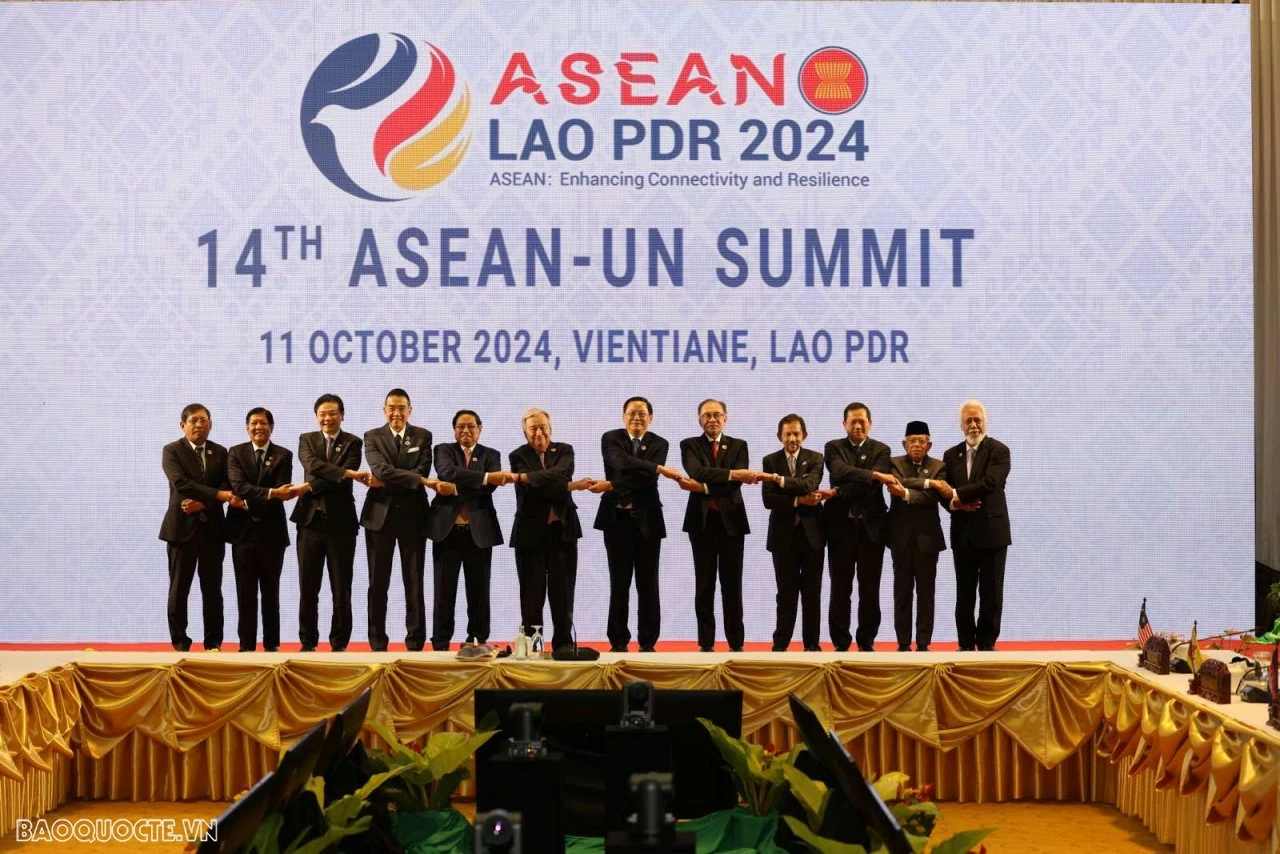 |
| The 14th ASEAN-UN Summit in October 2024 in Laos. (Photo: Quang Hoa) |
Your Excellency, on the occasion of the 30th anniversary of Vietnam’s accession to ASEAN, can you elaborate on the different “stages” of Vietnam’s integration under the common roof of ASEAN? If you were to “name” these stages, what shall they be?
30 years in ASEAN is akin to a voyage for the Vietnam vessel, from the initial days awkwardly paddling forward to steadying the helm today as it confidently sails into the high seas.
Setting sail - The initial stage was when the Vietnam vessel joined ASEAN in 1995. Engaging in an entirely new environment of cooperation, we were well aware of the need to do our utmost in learning about, familiarizing ourselves with, and keeping up with life in the region.
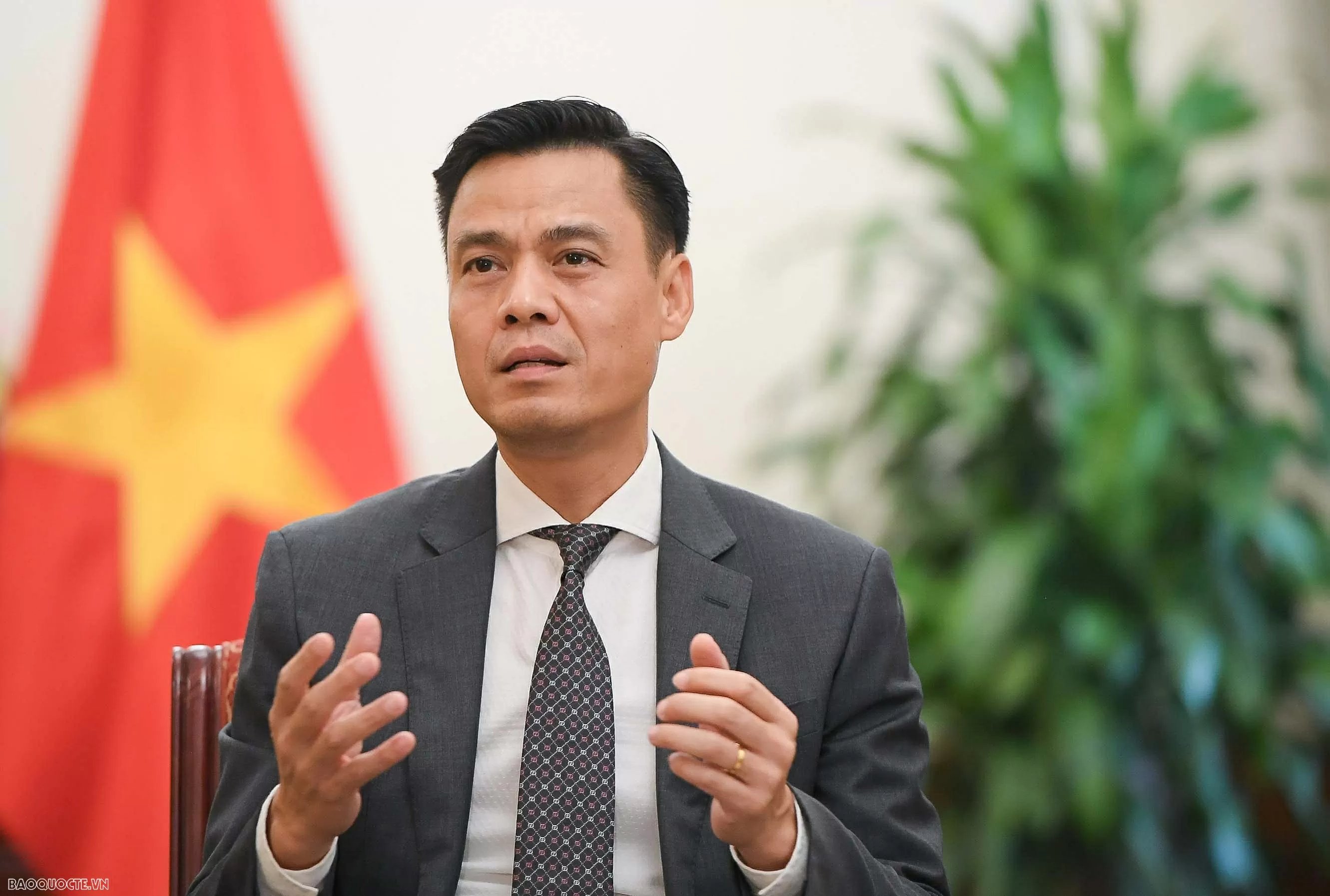 |
| Deputy Minister of Foreign Affairs Dang Hoang Giang. (Photo: Nguyen Hong) |
In an inquisitive and responsible spirit, we not only managed to fulfil our obligations as an ASEAN Member State, but also quickly play a proactive role, as demonstrated through the successful hosting of the ASEAN Summit in 1998 and the vital contributions to finally bringing all 10 Southeast Asian countries under the common roof of ASEAN in 1999.
Steadying the helm - The next stage was when the Vietnam vessel gradually integrated deeper into the common flow of the region. We not only fully participated in but also proactively contributed to the shaping of ASEAN’s strategic decisions. Notable examples included Vietnam’s initiation of the expanded ASEAN Defense Ministers’ Meeting, leading role in drafting the first Work Plan for the Initiative for ASEAN Integration, and efforts to expand the participation in the East Asian Summit for the U.S. and Russia. These initiatives showcased Vietnam’s remarkable growth in both mindset and actions.
Overcoming enormous waves - Faced with the turbulences of the era, conquering formidable waves has become a distinctive feature representative of Vietnam’s participation in ASEAN to date. In particular, Vietnam’s 2020 ASEAN Chairmanship left profound impressions of the country’s mettle and leadership capacity at a challenging time due to the COVID-19 pandemic.
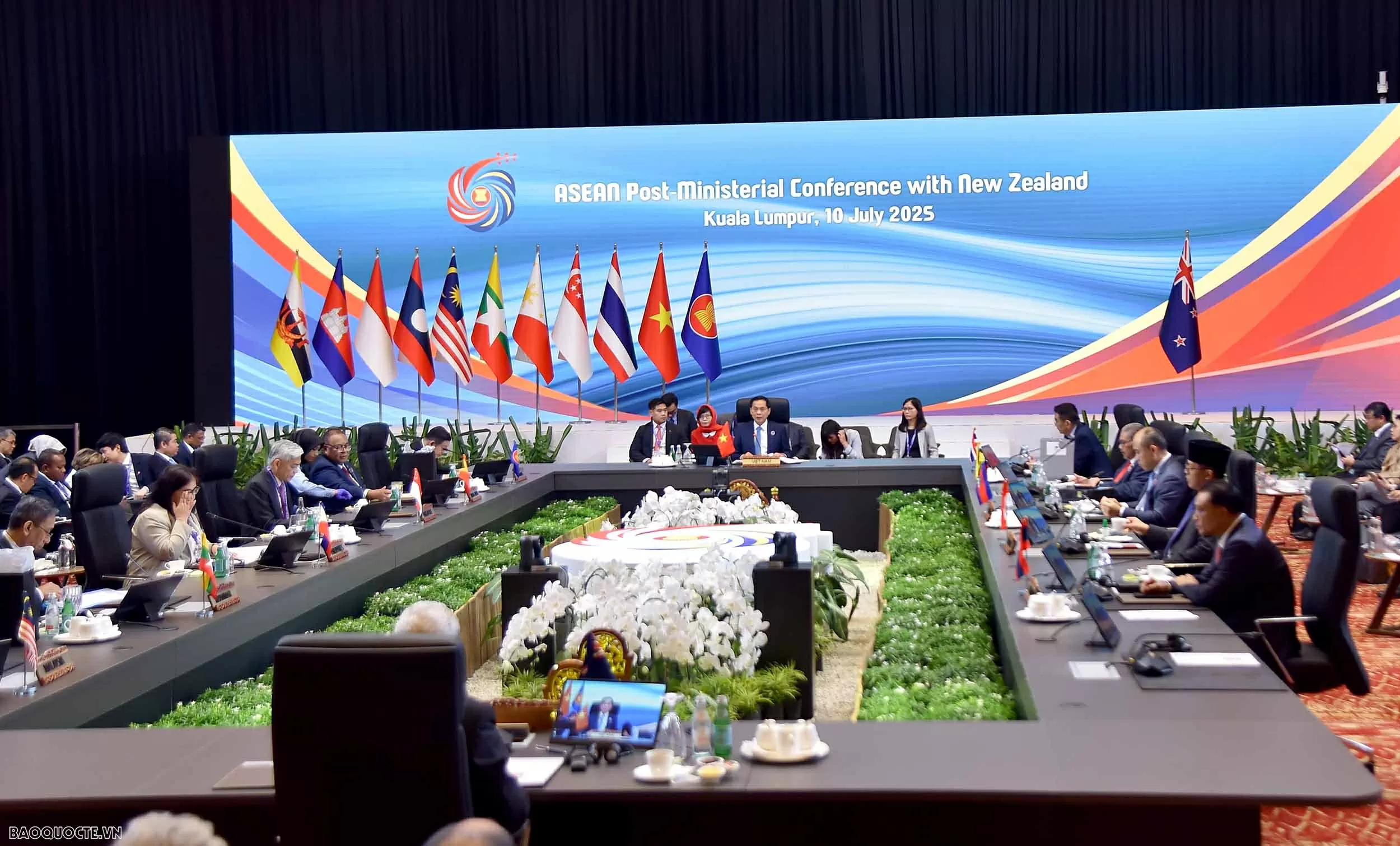 |
| Deputy Prime Minister and Minister of Foreign Affairs Bui Thanh Son and Deputy Prime Minister and Minister of Foreign Affairs of New Zealand Winston Peters co-chair the ASEAN-New Zealand Meeting on July 10 in Malaysia, held as part of the 58th ASEAN Foreign Ministers’ Meeting. (Photo: Quang Hoa) |
The theme “Cohesive and Responsive” in 2020 not only fulfilled practical demands at the time, but also managed to invoke the spirit of unity and a collective strength to help ASEAN navigate through hurdles, maintain the momentum of cooperation, and gradually foster post-pandemic recovery. And this spirit did not wane after Vietnam’s Chairmanship Year. Rather, it continued to permeate, thus further reinforcing ASEAN’s strategic resilience and self-reliance.
Sailing into the high seas - After 30 years of tireless contributions, given its new strength, fortune, and aspiration for national advancement, Vietnam is confidently sailing into the high seas. At the same time, ASEAN is presented with novel opportunities following the adoption of the ASEAN Community Vision 2045 and the upcoming accession of Timor-Leste to the Association as its 11th member.
As General Secretary To Lam underscored in his policy speech at the ASEAN Secretariat, “At this new historic juncture, both Vietnam and ASEAN are striving towards ambitious goals.” Thus, given these increasing expectations for ASEAN and Vietnam, we need to stand ready to make more substantive and effective contributions to regional cooperation, and in turn realize the goals of our country for the decades to come.
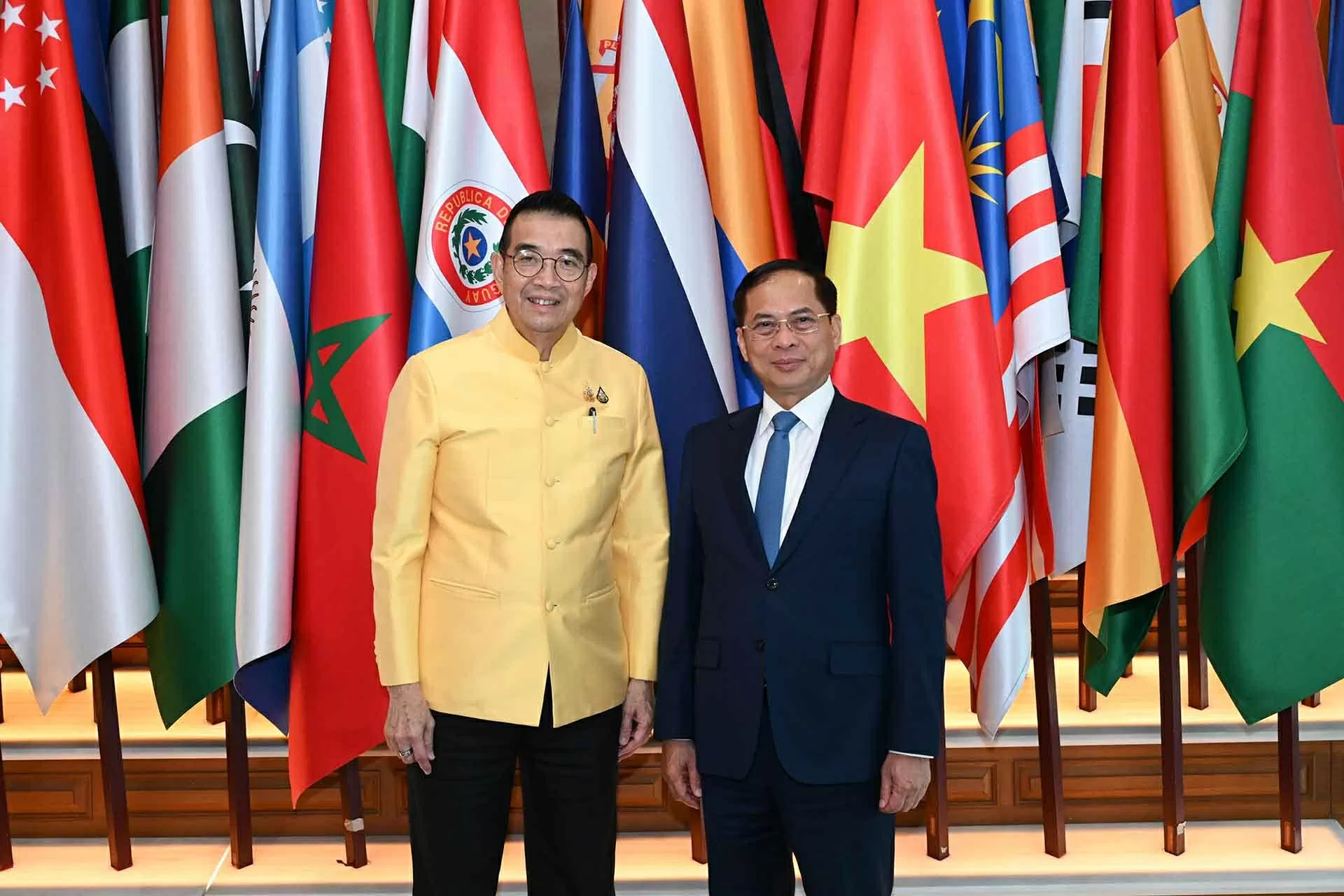 |
| Deputy Prime Minister and Minister of Foreign Affairs Bui Thanh Son met with Thai Foreign Minister Maris Sangiampongsa in Bangkok, Thailand, on July 29. (Photo: Thai Ministry of Foreign Affairs) |
At this historic beginning of a new era of development, ASEAN and Vietnam have both outlined more significant aspirations and visions. From your point of view, how will such similarities complement each other, so that ASEAN is present in Vietnam’s advancement, while Vietnam can leave its hallmarks in ASEAN’s growth?
Ever since we joined ASEAN, a complementary relationship between ASEAN and Vietnam was forged, and has become increasingly tangible over the past 30 years. ASEAN provided Vietnam with strategic interests, helping the country safeguard peace and security, pursue development, and elevate its stature. On the other hand, as an active and responsible ASEAN Member State, Vietnam has made substantive contributions to ASEAN’s growth, and joined hands in building a united, resilient, and sustainable ASEAN Community.
In this new phase of development, when both ASEAN and Vietnam harbor aspirations for more robust advancement, we need to better leverage this complementary bond based on existing shared values, emerging drivers, and a long-term vision for an inclusive and sustainable future.
First and foremost, it is necessary to reinforce the core values underlying the success and identity of ASEAN for nearly 60 years. These entail unity, consensus, and unity in diversity, constituting ASEAN’s most invaluable asset that has always been cherished and upheld by Vietnam and other ASEAN members. At present, amidst intensifying strategic competition and increasing fragmentation and polarization, these values will continue to foster the strength in unity for ASEAN to stand strong against challenges. In these common efforts, Vietnam will always be a reliable and responsible bridge to harmonize interests and seek similarities amidst differences, so as to achieve consensus within ASEAN.
Second, we need to build upon and make the most of drivers for growth. To seize opportunities and overcome challenges from outside and within ASEAN, the Association needs to fulfil two missions in tandem. On the one hand, it is necessary to continue to effectively leverage traditional drivers, such as trade and investment, through the network of intra-ASEAN agreements and free trade agreements with its partners. On the other hand, ASEAN ought to be proactive in adapting to and leading new areas of cooperation, including digital economy, digital transformation, circular economy, and innovation. Such orientations are very much similar to the guidelines for development that Vietnam is pursuing. Therefore, the task at hand is to harmonize and align Viet Nam’s development goals with ASEAN’s shared priorities, so as to together establish an open space for cooperation both in scale and potential.
Third, with regard to long-term visions, Vietnam has been playing an active role in shaping ASEAN’s strategic orientations, with the most notable example being the ASEAN Future Forums (AFF) that we have successfully convened over the past two years to create a space for open and inclusive dialogue on the means and ways to address various issues and trends of interest. Thus, AFF is highly complementary to the drafting and upcoming implementation of documents for ASEAN 2045, bridging the gap between policy and reality, and between policy planners and the business community and people.
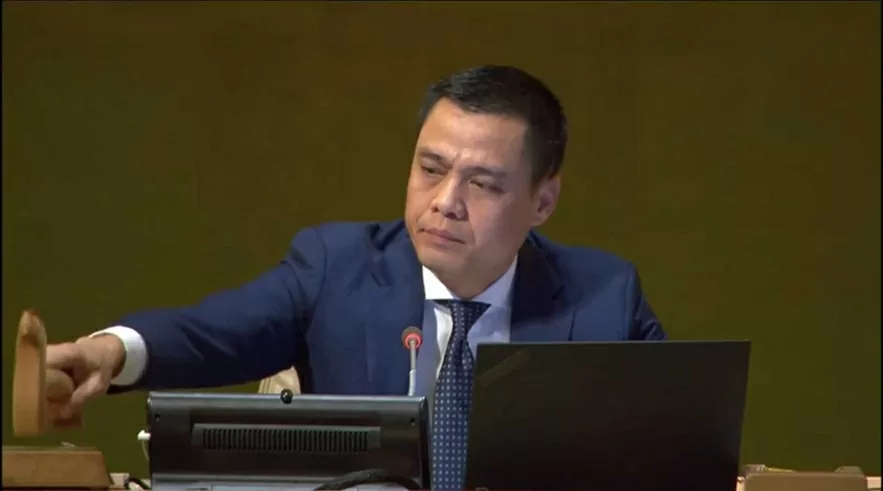 |
| Ambassador Dang Hoang Giang, in his role as the Vice President of the UN General Assembly, jointly chaired a plenary meeting of the UN General Assembly, which adopted by consensus a resolution on UN - ASEAN cooperation on the occasion of the 55th anniversary of ASEAN’s establishment and the 11th anniversary of the comprehensive partnership between the two organisations in November 2022. (Photo: Bao Chi) |
Given its increasing capacity and stature on the international stage, what role can Vietnam play in promoting the voice and centrality of ASEAN at global multilateral forums and spreading the success stories of the Association?
The ASEAN centrality is not given out by default. Rather, it is earned through the recognition of countries and the international community for ASEAN’s tireless efforts. This centrality, nurtured over countless years and tempered by challenges, allows ASEAN to stand firm in a turbulent strategic environment, affirm its leading role in the region, and strengthen its influence in global issues. To further promote ASEAN’s centrality, we need to excel in three fronts, namely bolstering internal strength, enhancing ASEAN’s external relations, and building upon ASEAN’s contributions at international forums and in global affairs.
First and foremost, we need to enhance our internal strength by maintaining unity and consensus and improving ASEAN’s strategic self-reliance. Vietnam will continue to be a pioneer in steadfastly upholding ASEAN’s principles and norms of behavior and international law, and promoting ASEAN’s common position and voice in regional and international issues.
In its ties with partners, it is necessary to leverage the enticement and effectiveness of ASEAN-led mechanisms, such as ASEAN+1 and ASEAN+3. Having served as the coordinating country for ASEAN’s relations with several partners, Vietnam has proactively guided these processes in accordance with the common interests of the region, on the basis of dialogue, cooperation, and trust-building. In the time to come, we need to look into proposals to improve operational methods in ways that ensure the alignment and complementarity among existing mechanisms, so as to yield synergistic impacts and enhance the effectiveness of regional cooperation.
Globally, it is important to promote ASEAN’s presence and common voice on the international stage. Vietnam’s successful convening of the first session in 2020 on ASEAN - UN cooperation in maintaining international peace and security and promotion of ASEAN’s joint remarks in various UN agendas are vivid testaments to ASEAN’s increasing engagement in global processes. Building upon these efforts, coupled with the responsibilities we will assume in the time to come, such as the Host of APEC Year 2027 and ASEAN Chair for 2029, Vietnam will continue to be the bridge between ASEAN and multilateral arrangements, and contribute to affirming ASEAN’s role as a partner for peace, cooperation, and sustainable development.
Thank you, Your Excellency!