


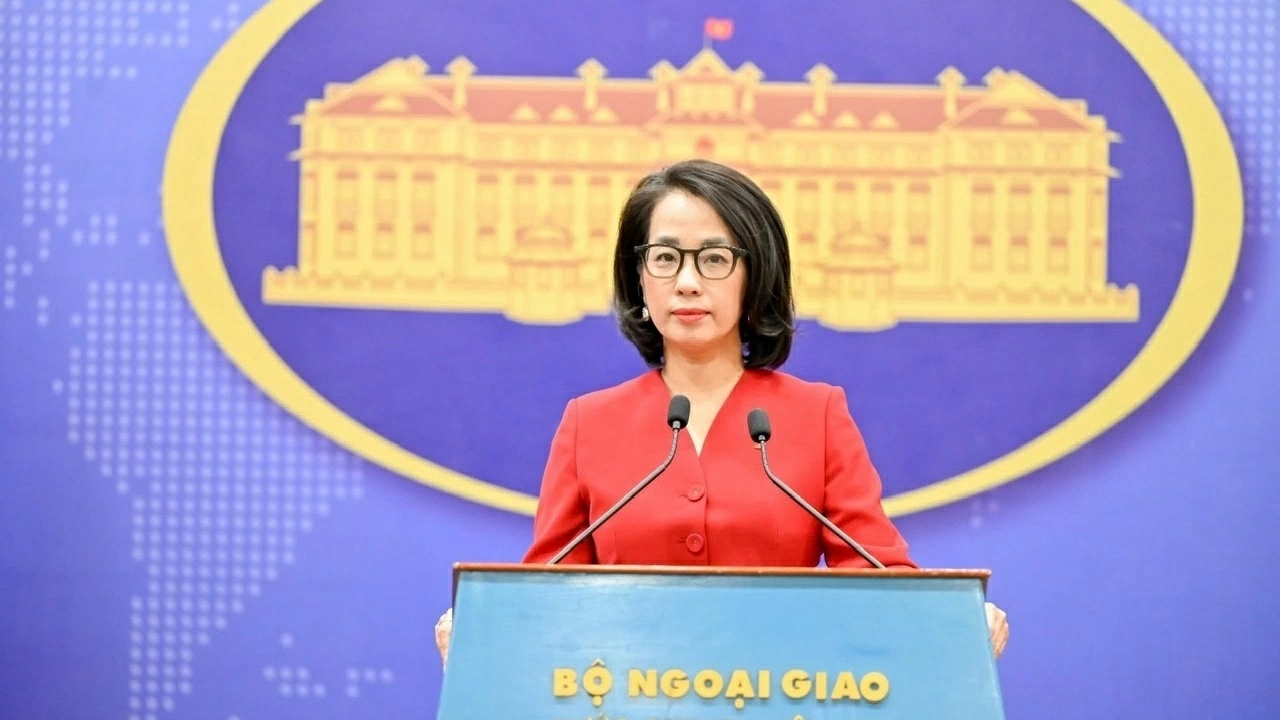
Ambassador Duong Chinh Chuc highlights significance of Angolan Foreign Minister’s visit
WVR - At the invitation of Foreign Minister Le Hoai Trung, Foreign Minister of the Republic of Angola Téte António pays official visit to Vietnam from June 3-4, 2026. On this occasion, Vietnam's Ambassador to Angola, Duong Chinh Chuc, shared with the World and Vietnam Report his expectations for the visit as well as the potential for cooperation between the two countries.
Latest
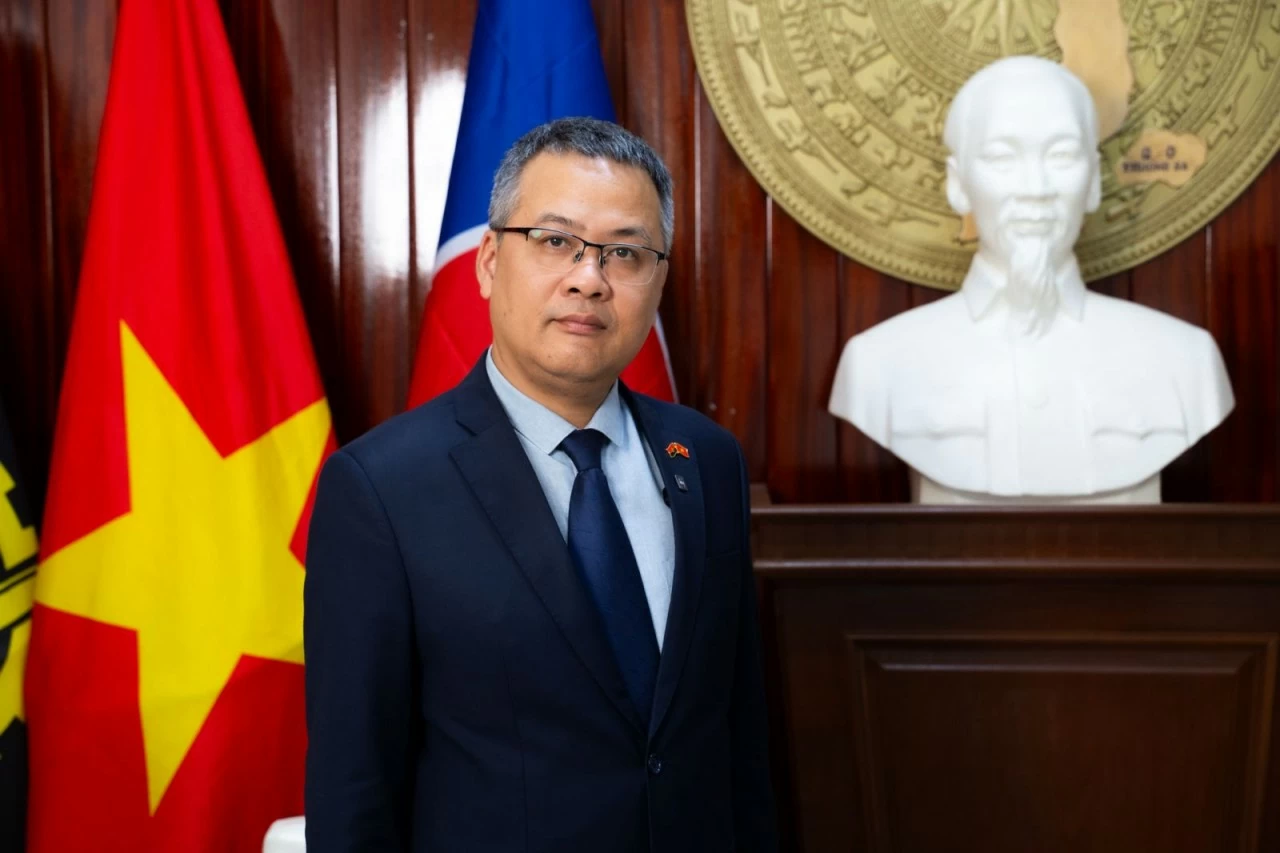 |
| Vietnam's Ambassador to Angola Duong Chinh Chuc. (Source: Vietnamese Embassy in Angola) |
Could the Ambassador share the goals, significance, and expectations for the official visit to Vietnam by Angolan Foreign Minister Téte António? What message does this visit convey about the determination of Vietnam and Angola to deepen their traditional friendship and multifaceted cooperation?
The official visit to Vietnam by Minister of External Relations of Angola Téte António from June 3-4, 2026, takes place as the two countries recently celebrated the 50th anniversary of diplomatic relations (1975-2025) and are actively implementing the outcomes of the state visit to Angola by President Luong Cuong in August 2025.
This is the first visit to Vietnam by the head of Angolan Foreign Ministry since the aforementioned historic visit, continuing and concretizing the shared understandings of the two countries' senior leaders, while also providing additional political momentum to advance Vietnam-Angola relations into a new, more substantive, and effective phase.
The visit aims to discuss measures to enhance high-level and other exchanges, review the implementation of previously reached agreements, and discuss measures to promote cooperation in economics, trade, investment, agriculture, energy, education and training, healthcare, and human resource development. It also seeks to strengthen coordination at multilateral forums such as the United Nations, the Non-Aligned Movement, the African Union (AU), and South-South cooperation mechanisms between the two countries in the future.
The visit holds significant importance, notably: (i) Promoting the early signing of the Agreement on Investment Promotion and Protection and the Agreement on Avoidance of Double Taxation, which are crucial documents to boost investment and trade cooperation between the two countries, creating a stable, transparent, and favorable environment for businesses from both countries to expand their business and long-term investments in each other's countries;
(ii) Providing an opportunity for both sides to discuss the early organization of the 8th session of the Vietnam-Angola Intergovernmental Committee in Vietnam, an important bilateral cooperation mechanism between the two countries, and (iii) conveying a very clear message that Vietnam and Angola not only cherish the values of the traditional friendship nurtured over generations but are also determined to transform this excellent political foundation into specific cooperation programs that bring practical benefits to the people of both countries, especially in the context of the current significant and profound global changes.
Over more than half a century of diplomatic relations, Vietnam and Angola have achieved many important results. Which areas of cooperation does the Ambassador see as having significant potential for the two countries to explore in the future?
After nearly 50 years of diplomatic relations, Vietnam and Angola have built a solid foundation of reliable political relations and strong friendship, with stable cooperation and mutual support both bilaterally and multilaterally.
In recent years, bilateral relations have seen many new developments through cooperation mechanisms and high-level visits. At the 7th session of the Vietnam-Angola Intergovernmental Committee held in Luanda in March 2024, both sides adopted the session's minutes, agreeing to promote cooperation in various fields such as agriculture, education and training, healthcare, trade, and diplomacy.
During President Luong Cuong's state visit to Angola in August 2025, both sides issued a joint statement with new goals to deepen bilateral cooperation in trade, investment, agriculture, mining, and energy security, setting a target for bilateral trade turnover to reach 1 billion USD, signing many new cooperation documents, creating an important political and legal basis to expand cooperation in the next phase as per the spirit of the joint statement.
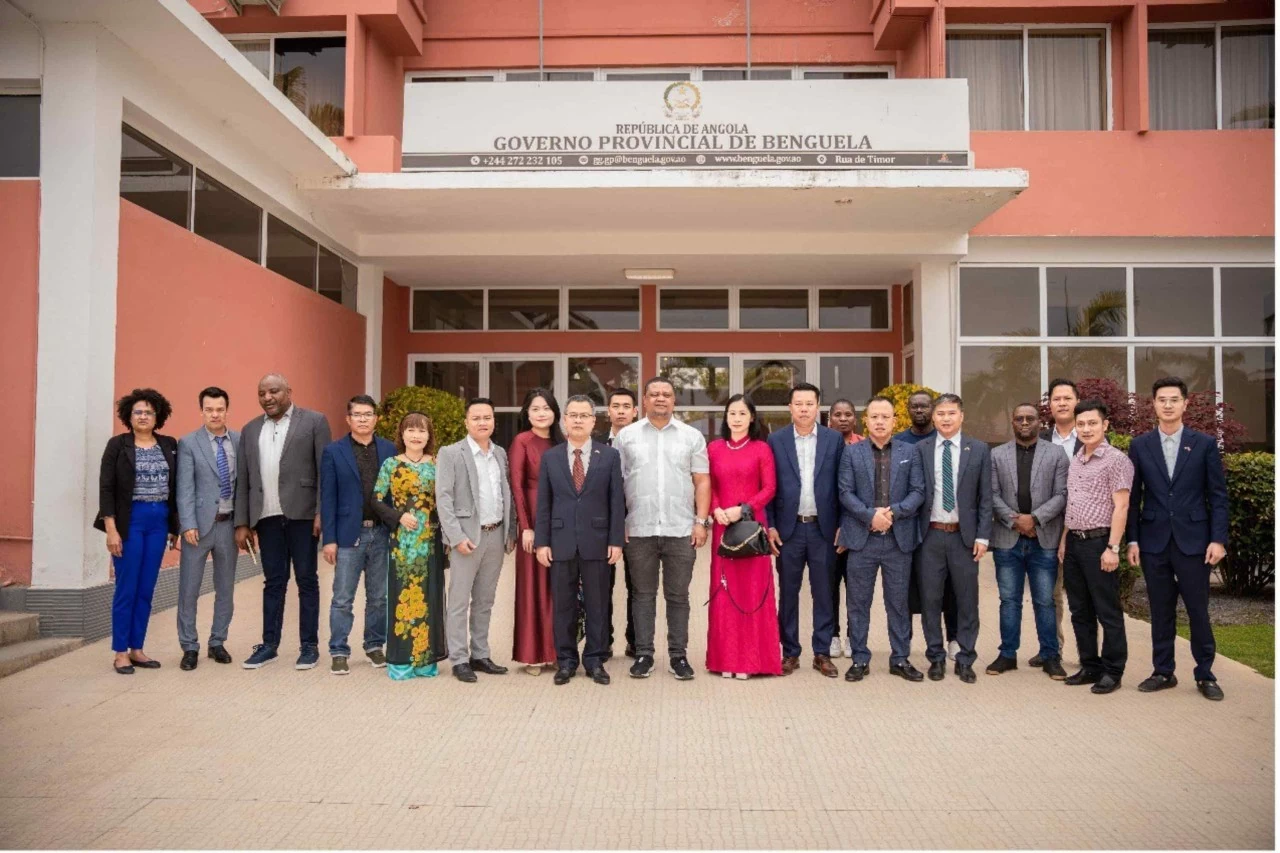 |
| The delegation of the Vietnamese Embassy in Angola led by Ambassador Duong Chinh Chuc during a working visit to Benguela province, 2024. (Source: Vietnamese Embassy in Angola) |
Compared to the potential and development needs of each country, the scope for cooperation is vast.
First is agriculture and food security. This is a highly complementary field. Vietnam has extensive experience in agricultural production, ensuring food security, developing industrial crops, aquaculture, and building agricultural value chains. Meanwhile, Angola has vast land resources, favorable natural conditions, and is prioritizing agricultural development to diversify its economy.
Currently, both sides are implementing a Memorandum of Understanding on agricultural cooperation and an Action Plan for 2025-2030, focusing on technical training in wet rice cultivation, developing corn, soybeans, vegetables, livestock, and aquaculture. Some Vietnamese enterprises are also exploring the possibility of investing in large-scale agricultural production projects in Angola, combining technology transfer, mechanization, and local human resource training. If effectively implemented, these will be exemplary projects of South-South cooperation between Vietnam and Africa.
Second is energy, oil and gas, and mining. Angola is one of Africa's leading oil and gas producers, while Vietnam needs to diversify its energy supply and has experience in oil and gas exploration and extraction. During a phone call on March 16, 2026, between Prime Minister Pham Minh Chinh and Angola's President Joao Lourenco, the two leaders agreed to enhance cooperation on energy security, expedite the implementation of the Memorandum of Understanding on oil and gas cooperation between PVEP and Sonangol E&P. The successful participation of Xuan Thien Group in the exploitation of the KON9 mine and other significant projects in Angola will also be a crucial foundation for promoting cooperation between oil and gas enterprises, expanding crude oil trade activities, and exploring investment opportunities in energy, petrochemicals, and mining in the future.
Third is trade and investment. Bilateral trade turnover has seen positive growth in recent years but remains modest compared to the market size and cooperation potential of the two countries. Vietnam can increase exports of consumer goods, agricultural machinery, electronics, textiles, and construction materials to Angola; while boosting imports of oil, minerals, and raw materials for production. In this field, the early signing of the Agreement on Investment Promotion and Protection and the Agreement on Avoidance of Double Taxation is particularly important. These are documents long-awaited by the business communities of both countries, as they will help minimize investment risks, avoid overlapping taxation, enhance the competitiveness of enterprises, and create new momentum for bilateral investment flows.
Fourth is education and training, healthcare, and human resource development. This is a traditional cooperation field with significant humanitarian value. Over the years, Vietnam has sent thousands of healthcare and education experts to Angola to support the country. Both sides are currently considering promoting cooperation between educational institutions, hospitals, and professional organizations to improve the quality of human resources and healthcare services.
Additionally, digital transformation, infrastructure development, renewable energy, and the green economy are also promising new fields. Angola is accelerating its economic modernization program and digital transformation in state management, while Vietnam has practical experience in infrastructure development, digital transformation, and attracting investment. Experienced enterprises can participate in the digital transformation process, building data or telecommunications information in Angola.
A unique aspect of Vietnam-Angola relations is the very active role of the Vietnamese community in Angola, which can be considered a unique strength of Angola compared to other African countries in cooperation and exchange. Angola currently hosts the largest Vietnamese community in Africa, with thousands of people living, working, and doing business in various fields. Over the years, the Vietnamese community has become an important bridge between the two economies, contributing to promoting the image of Vietnam and fostering friendly relations between the people of the two countries.
The Vietnam Association in Angola and the Vietnam Business Association in Angola have carried out many practical activities to support the community, connect businesses, promote trade, investment, and enhance cultural exchanges. This is an important force of people-to-people diplomacy, effectively complementing state diplomacy and economic diplomacy, creating a solid social foundation for bilateral relations.
I believe that with the high political determination from the leaders of both countries, the proactive efforts of ministries, sectors, localities, the business community, and the Vietnamese community in Angola, Vietnam-Angola cooperation will see strong developments in the near future.
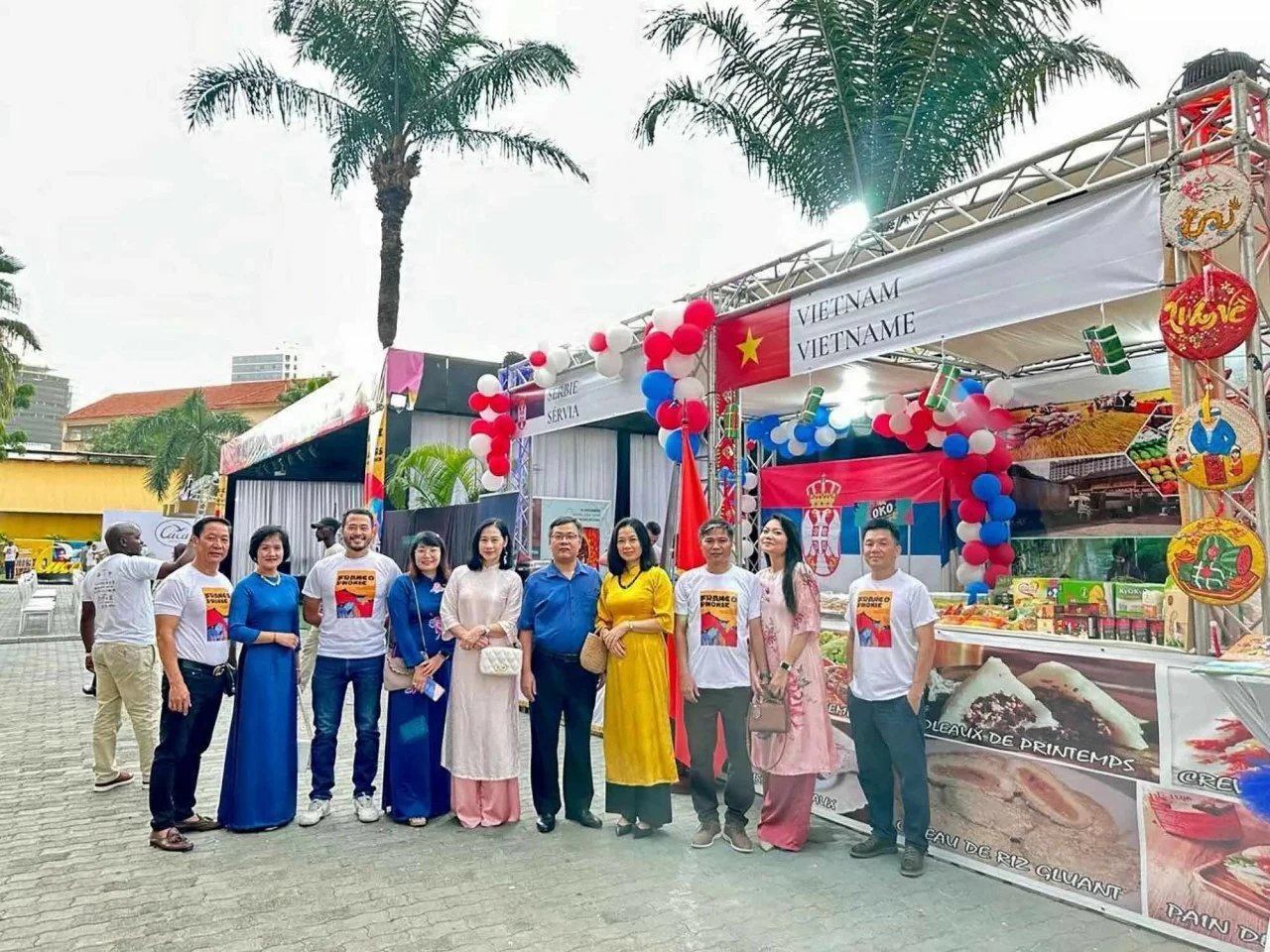 |
| The booth of the Vietnamese Embassy in Angola at the "Francophone Night of Flavours", part of the March 2025 Francophone Community Month activities. (Source: Vietnamese Embassy in Angola) |
In the context of Africa emerging as a new growth pole of the world, how can Vietnam leverage its relationship with Angola to expand cooperation with this region?
Africa is becoming one of the most dynamic regions of the global economy, with a young population, abundant resources, rapid urbanization, and the implementation of the African Continental Free Trade Area (AfCFTA). This is a vast market with many cooperation opportunities in trade, investment, energy, infrastructure, and digital transformation.
In this context, Angola holds a particularly important position in Vietnam's strategy to enhance cooperation with Africa. Not only is it a traditional partner of Vietnam, but Angola is also one of the major economies in Southern and Central Africa and an active member of the African Union, the Southern African Development Community (SADC), and many other important regional cooperation mechanisms.
I believe that Vietnam can leverage its relationship with Angola in a number of major directions.
Firstly, Angola can become a model of exemplary South-South cooperation between Vietnam and Africa. Vietnam's experiences in agricultural development, poverty reduction, human resource training, digital transformation, and international economic integration are well-suited to the development needs of many African countries. If cooperation projects in Angola achieve high efficiency, this will serve as a basis to replicate the model to other countries in the region.
Secondly, Angola can serve as a gateway for Vietnamese businesses to access larger markets in Southern and Central Africa. With its favorable geostrategic position and connectivity to markets within the SADC and AfCFTA, Angola can become a key transshipment and investment hub for Vietnamese businesses in Africa.
Thirdly, the two countries can enhance coordination on political-diplomatic and global issues. Angola is a country with increasing prestige in Africa, while Vietnam plays a pivotal role in ASEAN, actively contributing to multilateral mechanisms in the Asia-Pacific region and globally. Vietnam and Angola can coordinate to build strong cooperative relations between ASEAN and the AU, or ASEAN and SADC. Close coordination between the two countries will help elevate the voice of developing countries on international issues of mutual concern.
In the context of significant geopolitical shifts globally, with trends of supply chain restructuring, energy security pressures, and strategic competition in Africa becoming increasingly intense, establishing a solid foundation of relations with traditional African partners like Angola will position Vietnam advantageously to capitalize on the opportunities that this continent offers in the coming decade. This is not just a matter of diplomacy but also a strategic economic vision for a Vietnam that is rising strongly in the new era.
Thank you very much, Ambassador!