




Vietnam advances regional push on battery storage financing
WVR - Vietnam is stepping up plans to build one of Southeast Asia’s largest battery storage markets, with a regional roundtable in Hanoi on September 12 focused on financing models for Battery energy storage systems (BESS).
Latest
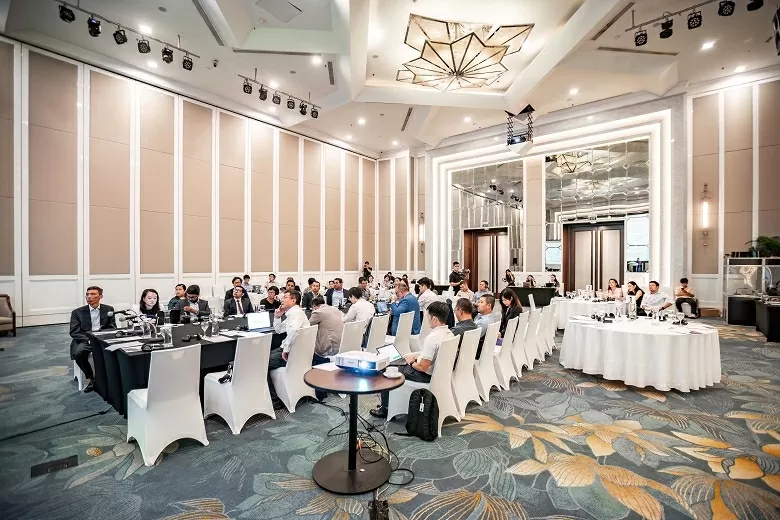 |
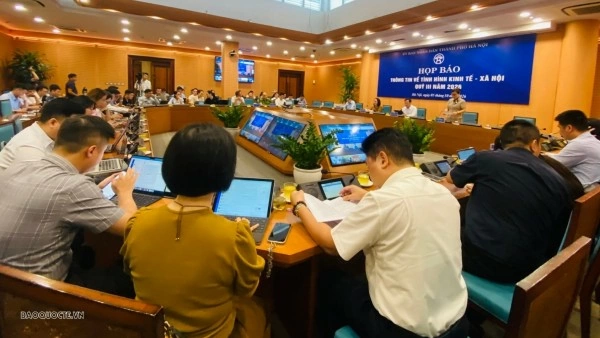
| Vietnam advances regional push on battery storage financing: Overview of the regional roundtable in Hanoi on September 12, 2025 (Source: GEAPP) |
The event was hosted by the Global Energy Alliance for People and Planet (GEAPP) together with the Vietnam BESS Task Force, bringing together financiers, technical experts, research institutions, and development partners.
Opportunity to lead in regional market
The roundtable came as Vietnam accelerates its power sector transformation under the revised Power Development Plan VIII (PDP-VIII), approved earlier this year. The plan targets between 10,000 and 16,300 MW of storage by 2030 and close to 96,000 MW by 2050. Overall installed capacity is projected to rise to 183,291–236,363 MW by 2030, a 30–50 percent increase over the previously approved 150,489 MW.
This expansion is underpinned by important policy signals. The Law on Electricity 2025 formally recognizes BESS as part of Vietnam’s national power infrastructure. In April, Decision 988/QD-BCT introduced a generation price framework for solar projects with storage, requiring at least a two-hour discharge time and a storage ratio of 10 percent of plant capacity. Draft circulars on tariffs and service pricing are now in preparation, which participants agreed would be critical in shaping the market. A new two-part electricity tariff for large consumers, due to take effect in January 2026, is also expected to boost demand for behind-the-meter storage solutions.
Despite these advances, Vietnam’s storage market remains in its early stages. Most projects are pilots, limited by high upfront costs, unclear tariffs, and the absence of recognized revenue streams. Technical challenges further complicate the picture, particularly in older industrial zones where integrating storage with existing infrastructure raises costs. Local pilots in industrial parks and commercial facilities have demonstrated how BESS can improve load shifting, optimize solar generation, and reduce reliance on the grid. Yet without clearer policy and financing frameworks, these projects remain difficult to scale.
Participants emphasized that this transitional stage is both a challenge and an opportunity. Because frameworks are still being designed, Vietnam has the chance to create investor-friendly rules, tariff mechanisms, and financing pathways from the outset, potentially leapfrogging into a leadership position in Southeast Asia’s storage market.
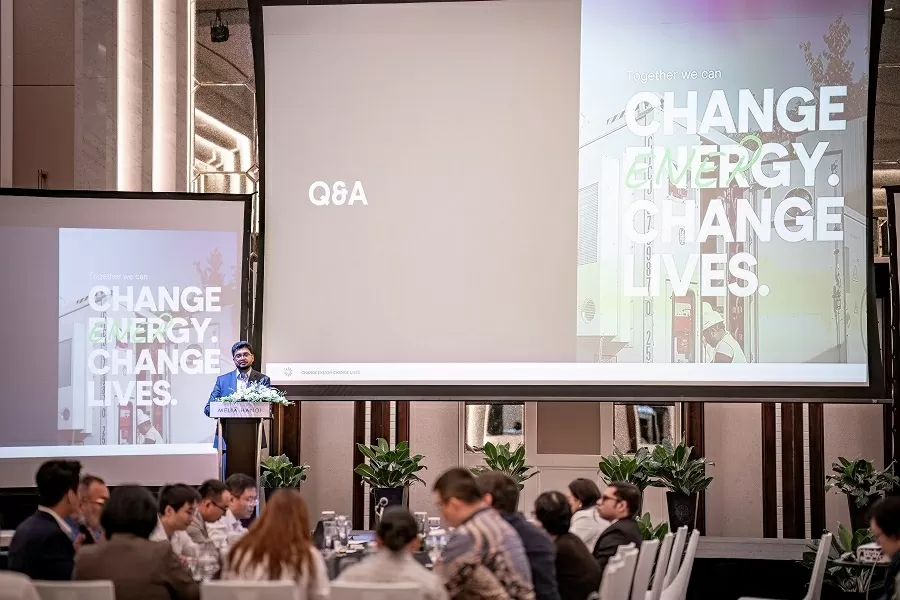 |
| Speakers at the event. (Source: GEAPP) |
Regional lessons and financing models
Regional case studies underscored the importance of aligning finance and regulation. In India, concessional capital and viability gap funding have sharply reduced storage costs. Early standalone projects priced storage at around twelve cents per kWh, but with blended finance and competitive bidding, costs dropped to between three and five cents. China provided another example, where regulatory clarity and clear procurement guidelines enabled rapid scaling and large private investment flows.
These experiences showed how financing mechanisms can transform the economics of storage. Participants agreed that while Vietnam’s conditions are unique, adapting proven models could shorten the path from pilot projects to commercial deployment. The global context is also favorable: BESS costs have fallen to around USD 77 per kWh, strengthening the investment case across markets.
At the event, Ms. Minh Nguyen, Country Manager for the GEAPP in Vietnam emphasized, Vietnam is scaling renewable energy, and storage provides the flexibility the grid requires. “Philanthropic partnerships are vital. By combining concessional funding with public and private capital, we can accelerate pilot projects and build momentum toward large-scale storage deployment”, she said.
From a regional perspective, mobilizing capital at scale remains urgent. Ms. Kitty Bu, GEAPP’s Vice President for Southeast Asia, noted: “Through platforms like the Global BESS Consortium and Southeast Asian ENABLE, we are working with partners to address investment-readiness barriers, support bankable projects, and strengthen cross-market collaboration. Financing storage is about enabling reliable energy access and supporting sustainable economic growth across Asia.”
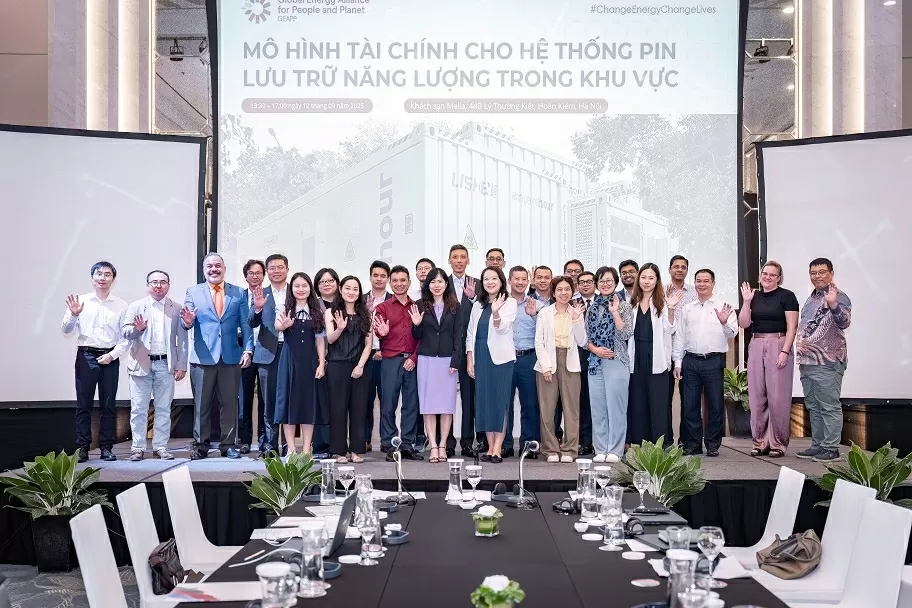 |
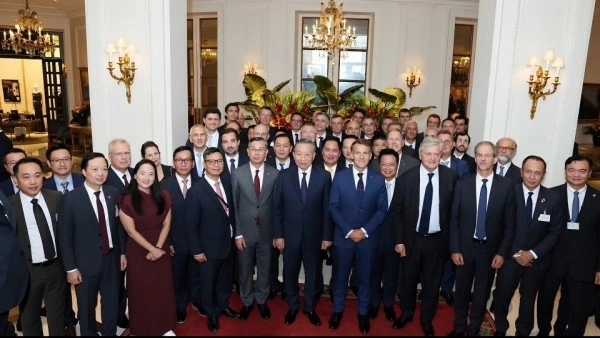
| The roundtable concluded with broad agreement that Vietnam has the ambition, market need, and international support to emerge as a regional leader in energy storage. (Source: GEAPP) |
Challenges and next steps
Speakers highlighted that Vietnam’s ability to meet PDP-VIII’s targets will depend on progress across several areas. Time-of-use tariffs must provide stronger incentives for arbitrage, while defined charging rules for BESS are needed to give investors certainty on operations. Licensing and grid integration standards must be clarified to reduce uncertainty, and the ability of batteries to provide capacity and ancillary services should be formally recognized in market rules.
Industrial users are also expected to play a larger role. Aggregating demand across multiple factories in industrial parks could allow batteries to be deployed more efficiently, reducing costs per unit and improving load management. Pairing BESS with renewables such as solar and wind would increase energy capture and strengthen grid stability, helping industries lower operating costs.
On the financing side, concessional funding and tax incentives were highlighted as critical to overcoming high upfront costs. Innovative business models, such as public–private partnerships or energy service agreements, could spread risks and improve bankability. Participants stressed that early projects will require catalytic capital to de-risk investments and attract commercial financiers. Analyses of pilot projects confirm that internal rates of return and payback periods are highly sensitive to capital expenditure, tariff structures, and electricity price escalation. This makes blended finance particularly important in bridging the gap from feasibility to large-scale deployment.
The Vietnam BESS Task Force was recognized as central to advancing these reforms. By convening partners, providing technical expertise, and coordinating policy discussions, the Task Force is helping to move the market from isolated pilots to a more structured investment environment. Participants agreed that progress in Vietnam will be closely watched across Asia, as it could provide a replicable model for other markets navigating similar challenges.
The roundtable concluded with broad agreement that Vietnam has the ambition, market need, and international support to emerge as a regional leader in energy storage. With falling global costs, new legal recognition, and policy reforms underway, the next step is to align tariffs, financing, and technical standards to unlock large-scale investment.