

Three 'Uncertainties', three 'Selfs', three 'Trusts', and a 'Vietnamese Phenomenon' in the world
WVR - In a conversation with the World and Vietnam Report, Dr. Nguyen Hung Son, President of the Diplomatic Academy of Vietnam, affirmed that amidst a volatile and uncertain world, Vietnam is not merely a destination but is also perceived as a "pillar", a reliable partner, helping countries mitigate uncertainties in international relations.
Latest
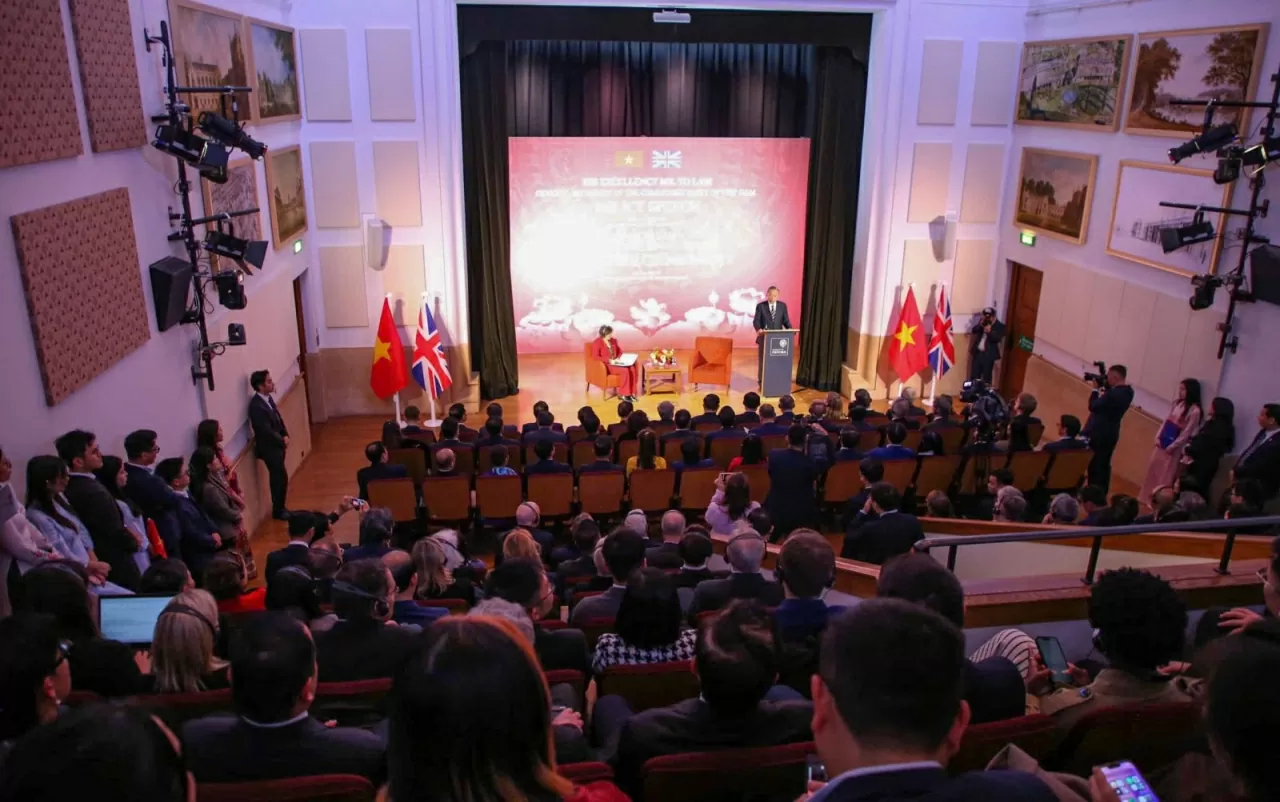 |
| General Secretary To Lam delivers a policy speech at Oxford University during his visit to the UK on October 29. (Source: VGP) |
In an important policy speech at Oxford University during his visit to the United Kingdom last October, General Secretary To Lam stated: We are living in an era where borders and concepts of power are changing daily, even hourly. How does this "daily, hourly" characteristic appear from Dr. Sơn's perspective, and how will it evolve in 2025?
It must be said that General Secretary To Lam's speech at Oxford University (UK) was profound and highly regarded by expert communities, scholars, and diplomats. His assertion that national borders and concepts of power are changing daily, hourly, is a deeply insightful observation about the world's characteristics in the current context.
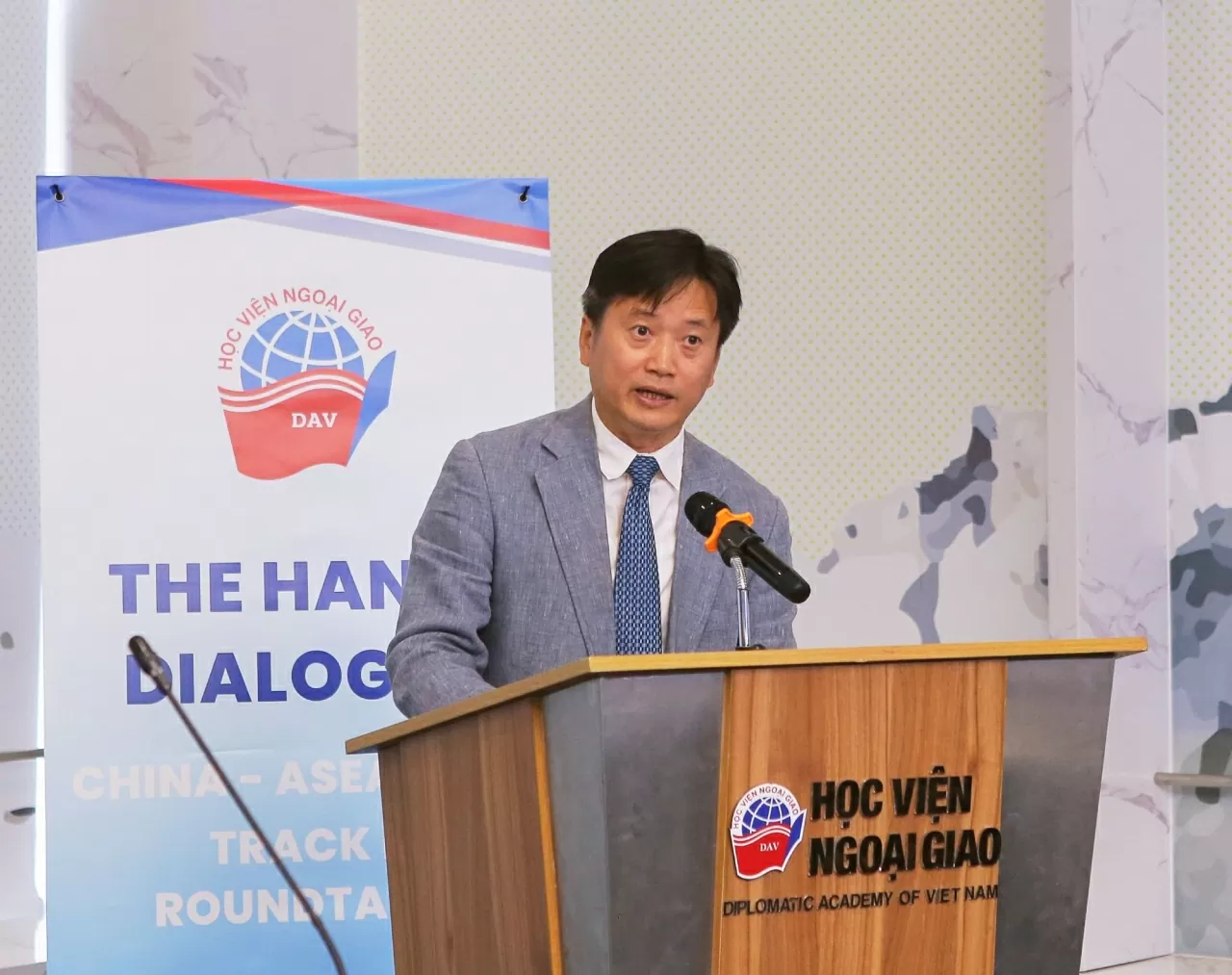 |
| Director of the Diplomatic Academy, Dr. Nguyen Hung Son. (Photo: Le Minh) |
One could say that borders are a spatial concept, representing barriers that separate and divide areas between communities, nations, and interaction spaces. The interaction space of communities is changing significantly and expanding, not only interacting on land and sea but now also in the air, underwater, in space, and even in cyberspace and cognitive space.
The space where the community of nations interacts is expanding and becoming much more complex. Therefore, borders have become very uncertain. The observation that borders are changing is about the expansion of interaction space between communities and nations, causing borders and boundaries to blur and sometimes become unclear.
Next is the concept of power, which is also developing rapidly. The traditional understanding of power as military and economic strength has become too narrow to assess a nation's power today. National power has expanded into many other domains.
For example, power in science and technology, artificial intelligence, quantum computing, new energy sources, and new materials... These are also forms of power.
We can also mention the ability of nations to harness the dynamics of new economies such as digital transformation, green transition, infrastructure, essential minerals, and global supply chains. These are the driving forces of production and the new economy, and they represent a form of power.
Additionally, there are many other forms of soft power and smart power. For instance, national governance capacity is considered a form of power; the adaptability of each nation is also a significant power. Moreover, the ability to build social consensus and adjust development directions to adapt to an uncertain world is also a manifestation of power.
In this context, the General Secretary made a very profound observation: the concepts of borders and power need to be viewed in the context of a rapidly changing and volatile world influenced by various factors; indeed, these changes are happening daily, hourly, on many fronts.
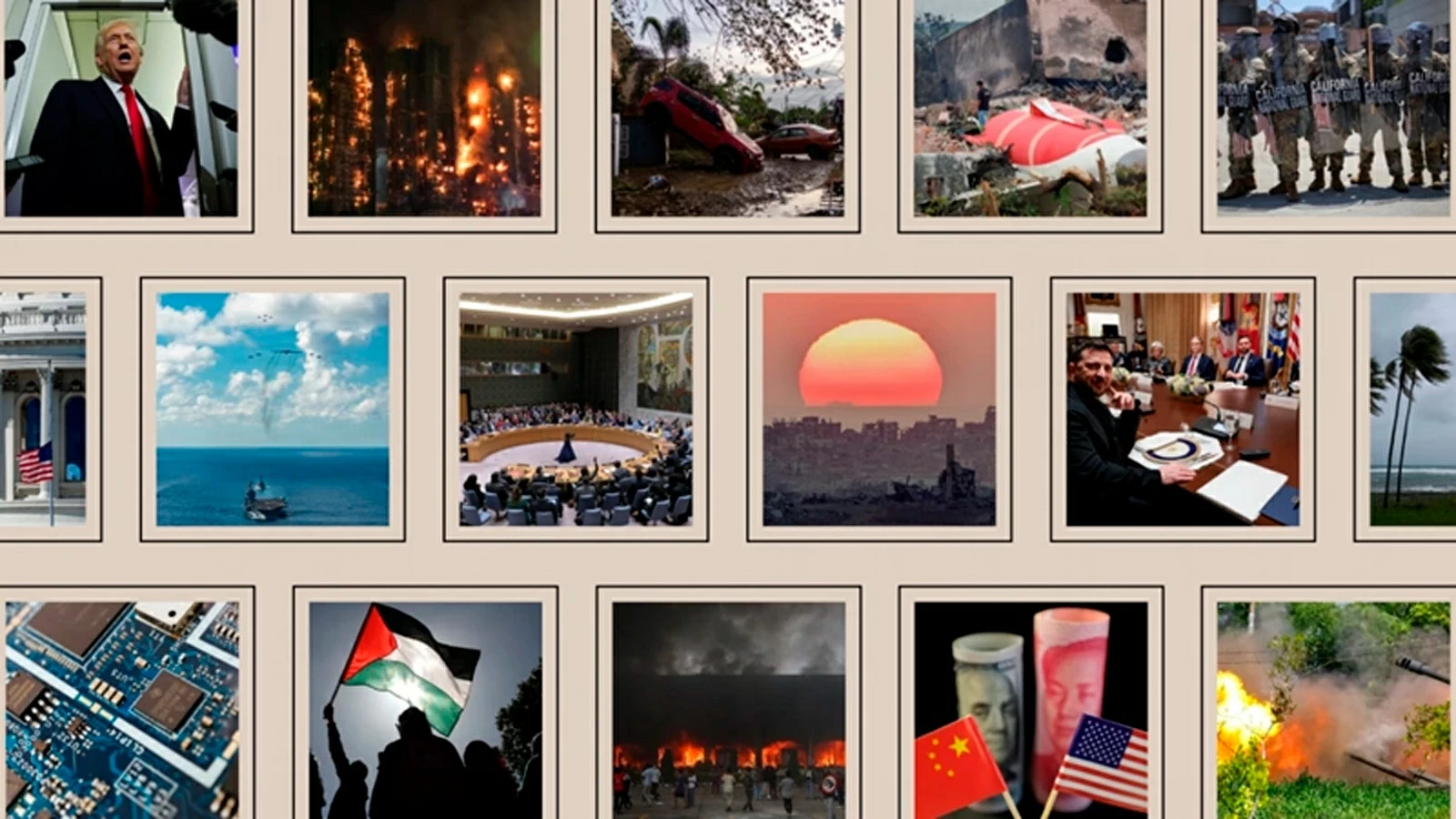 |
| Uncertainty arises from the unpredictability and lack of certainty in international affairs. (Source: Reuters) |
If we combine all the pieces and the bright and dark shades of the world in 2025, what are the main trends shaping our world, according to you?
I would like to approach the issue from the major trends shaping the world in the current context.
First, I want to emphasize three "Uncertainties": the world is becoming uncertain, unpredictable, and surprising.
Uncertainty arises from the unpredictability and lack of certainty in international affairs. When national policies become unpredictable, the world is pushed into a state of uncertainty, unclear about the direction it will take, and thus unexpected factors continuously emerge. These three "Uncertainties" are a prominent feature of the current international environment.
As the three "Uncertainties" increase, I want to mention three "Nations".
Nations tend to turn inward to protect national interests—a trend observable in many parts of the world. Next is the rise of populism, where some leaders incite nationalism in their countries, catering to voter psychology and the influence of the ballot. Additionally, there is a crisis in democracies. When nationalism is pushed to the extreme and institutions are not valued appropriately, democratic institutions have shown signs of crisis over the past year.
In this context, I believe many countries are choosing three "Selfs". These are self-reliance, as in an unpredictable context, nations do not know whom they can rely on. Self-strengthening, meaning they must encourage and bolster their internal capabilities. And self-confidence, to step into a world full of uncertainties and unpredictability. This is something we are also strongly promoting.
However, to achieve self-reliance, self-strengthening, and self-confidence, I believe we need three "Trusts". These are trust between nations; trust between citizens and the government; and trust in international law and multilateral institutions.
From this perspective, I believe the three "Uncertainties", three "Nations", three "Selfs", and three "Trusts" are the major trends shaping and guiding international relations over the past year.
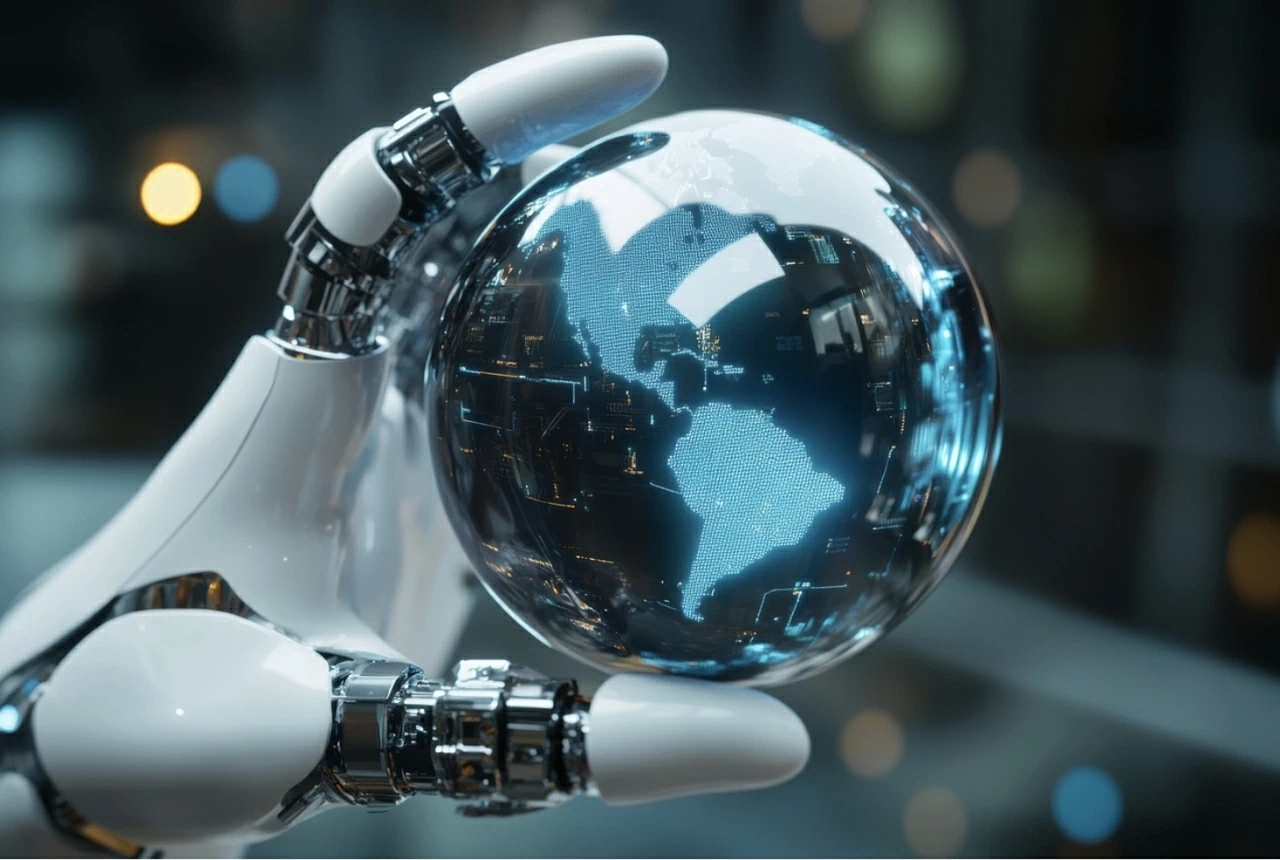 |
| Artificial intelligence is also considered a form of power. (Source: Pixabay) |
National interests have become the guiding principle in policy-making for many countries in an uncertain world. How should this "unchanging" principle be viewed?
I completely agree that national interests are becoming the guiding principle in policy-making for many countries in an increasingly uncertain and unpredictable world. This is true not only for major powers but also for medium and small countries, which are increasingly turning inward to protect their national interests as best as possible.
In such a context, we clearly see the value of the principle "unchanging to respond to myriad changes" that President Hồ Chí Minh pointed out. He was a leader who guided Vietnam's foreign affairs through the nation's most challenging times and left us a foundational lesson that has become a guiding principle for Vietnam's foreign policy. This is a time to understand and apply this principle thoroughly and deeply.
Accordingly, the core is to clearly identify Vietnam's fundamental interests in the current context, first and foremost maintaining peace and stability; protecting independence and sovereignty; and ensuring the legitimate interests of the people. These are the foundational interests we must resolutely protect.
| "National interests are becoming the guiding principle in policy-making for many countries in an increasingly uncertain and unpredictable world. This is true not only for major powers but also for medium and small countries, which are increasingly turning inward to protect their national interests as best as possible". |
However, the methods of protecting those interests must be extremely flexible and adaptable. The same issue may require different approaches and solutions in different circumstances, contexts, and times. That is the spirit of "responding to myriad changes" in foreign affairs, a principle that needs to be thoroughly applied in the current situation.
Looking at the world, we can see that countries have their own conditions and circumstances. No country can provide others with lessons and paths to follow. Each country must choose its own path and method in its unique circumstances. And I believe that at this time, countries are exploring and finding the best path for themselves.
In this context, Vietnam has achieved certain successes in recent years, both in foreign affairs and in national development. This has led many countries to view Vietnam as a path and model worth considering.
Additionally, I believe another important trend is the strengthening of links between countries with similar circumstances, especially medium-sized, small, and regional countries. When the world is experiencing strong and unpredictable changes, the connection, coordination, and sharing among these countries become more necessary and meaningful than ever. This is also a direction that countries need to consider and continue to strengthen in the current context.
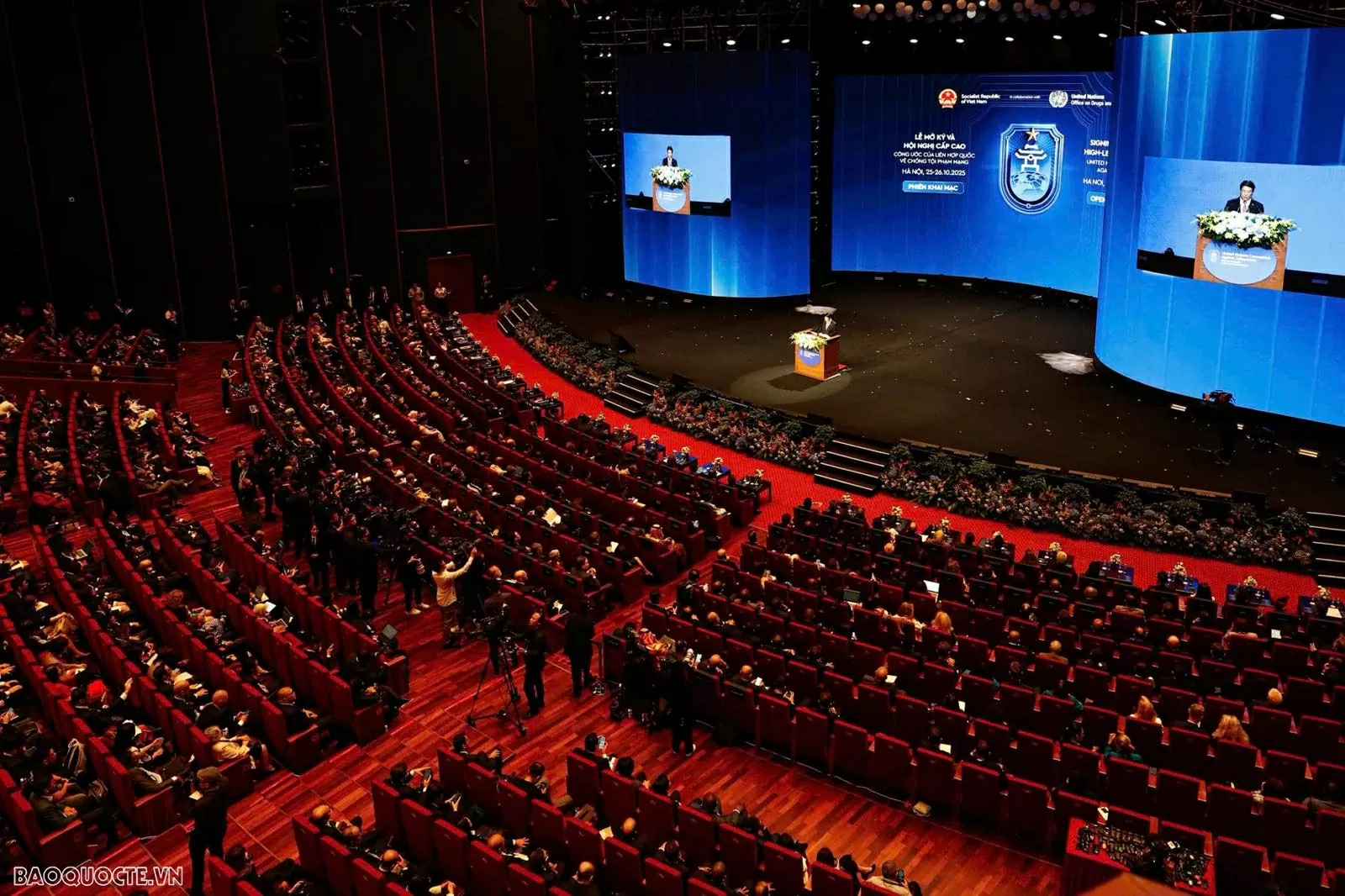 |
| The signing ceremony of the United Nations Convention on Cybercrime (Hanoi Convention) attracted a record participation of 72 countries. (Photo: Thành Long) |
How do you reflect on Vietnam's "responding to myriad changes" mindset in international relations, and how is "responding to myriad changes" different today?
There is much to say about "responding to myriad changes". For a long time, our "response" was mainly understood as adapting to the external environment. However, as we enter a new era, that adaptation is necessary but not sufficient. The current adaptation must be at a higher level. That is, we not only adapt and let the world decide our fate, but we must reach out and contribute to the world's development. This is a form of adaptation at a higher level.
Specifically, we adapt by contributing to the formation of a global political system, a global economy, and contributing to human civilization. We participate actively and constructively to shape world trends, shape the development directions of international relations, and Vietnam's foreign environment. From there, we create the most favorable conditions to protect peace and stability, protect development opportunities, and create more opportunities for the country to maximize internal resources and effectively leverage external resources.
This is a proactive, creative "response to myriad changes" occurring in new spaces, new fields, with new methods. And that is also the spirit of the new era: we think differently, act differently, and have a completely different mindset when relating to the world. Therefore, I believe that in the new context, "responding to myriad changes" requires us to think differently with a completely different mindset.
What thoughts does the vibrancy of Vietnam's foreign affairs in 2025 evoke about a "destination" Vietnam amid the complexities of international cooperation?
To speak about the success of Vietnam's foreign affairs in 2025, we must first look back at the global context of that year. When the world's prominent keywords are disruption, separation, and fragmentation, Vietnam has expanded its foreign relations, deepening those relationships and strengthening ties with friends near and far. Moreover, we have upgraded relationships and added new content, suitable for the new situation.
| "Vietnam is a very positive contributor to the international community, and this has created a 'Vietnam phenomenon', attracting the world's attention and continuing to strengthen Vietnam's position". |
This shows that Vietnam is truly taking a counter-current direction compared to the general world trend, while contributing to strengthening the network of foreign relations and the system of friends and partners in a challenging international context. As a result, Vietnam is not merely a destination but is also perceived as a "pillar", a reliable partner, helping countries mitigate uncertainties in international relations. People find in Vietnam a "soulmate" and a reference model to stand firm and succeed in the current uncertain world.
Our foreign success also shows that Vietnam is not just a destination for bilateral relations but also a destination for multilateral relations. This is a very positive contribution in 2025. Early in the year, Vietnam successfully organized the ASEAN Future Forum, with a record number of speakers and delegates, considered an important contribution to regional dialogue in a context where dialogue between countries is becoming increasingly rare.
By mid-year, Vietnam continued to be elected to international multilateral institutions, including the United Nations Human Rights Council. Subsequently, we organized the signing ceremony of the Convention on Cybercrime with a record participation of 72 countries, in a context where cybersecurity and cybercrime prevention are pressing global issues. This shows that Vietnam is a very positive contributor to the international community, and this has created a "Vietnam phenomenon", attracting the world's attention and continuing to strengthen Vietnam's position.
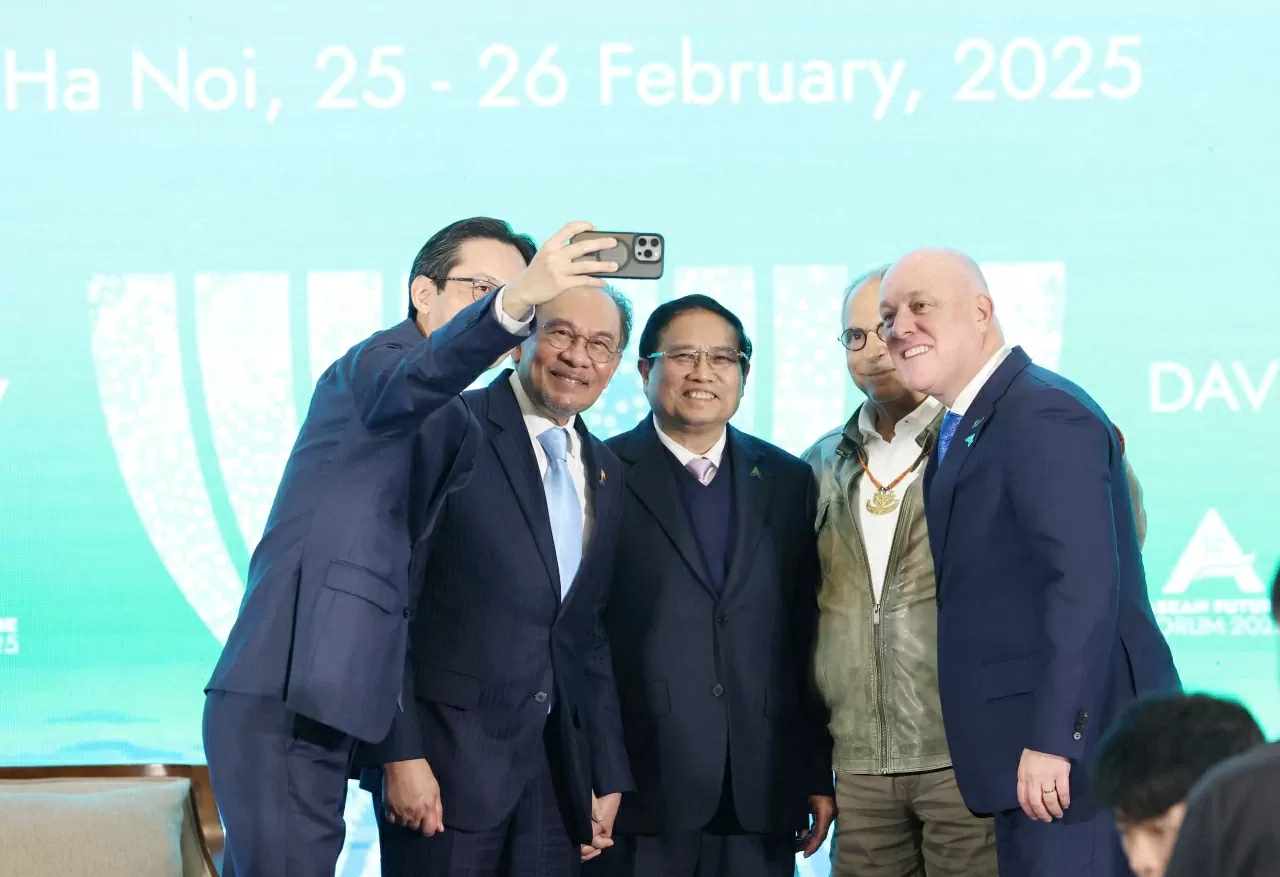 |
| The ASEAN Future Forum 2025 is a destination gradually shaping its brand. (Photo: QT) |
In the new era, foreign affairs are expected to play a key role in bringing Vietnam "to stand shoulder to shoulder with the great powers of the five continents". Given the new "position" and "strength" of Vietnam's foreign affairs, and the future aspirations of the entire nation, what are your expectations for Vietnam's foreign affairs in the new era?
First, I hope that we will successfully carry out the crucial, regular task that the 14th Party Congress is expected to assign to our country's foreign affairs and diplomacy. "Crucial" here means that we have recognized that foreign affairs now play a vital role in the nation's destiny. "Regular" means that foreign affairs are present everywhere, at all times, in every part of the political system. Therefore, foreign affairs need to be regularly attended to, everywhere, and in every specific activity.
This creates opportunities but also places a tremendous responsibility on foreign affairs. I hope that we will have enough strength, intelligence, and resources to fulfill that task. To achieve this, I believe the entire political system must engage, implementing foreign affairs according to the 14th Party Congress's orientation, so that foreign affairs truly become a comprehensive foreign policy of the entire political system.
My second desire is for professional diplomacy to truly become the core of our country's foreign affairs. This means that diplomacy needs to be more professional, modern, and systematic; better managed and organized; and each diplomat must contribute wholeheartedly to building a professional, comprehensive, and modern diplomacy.
Thank you very much!