



Thang Long - Ha Noi Festival 2026: New approaches to heritage in Hanoi...
WVR - From Hoang Thanh Thang Long to Bat Trang, from Van Mieu - Quoc Tu Giam to Hoan Kiem Lake, the Thang Long - Ha Noi Festival 2026 has opened up new approaches to heritage.
Latest
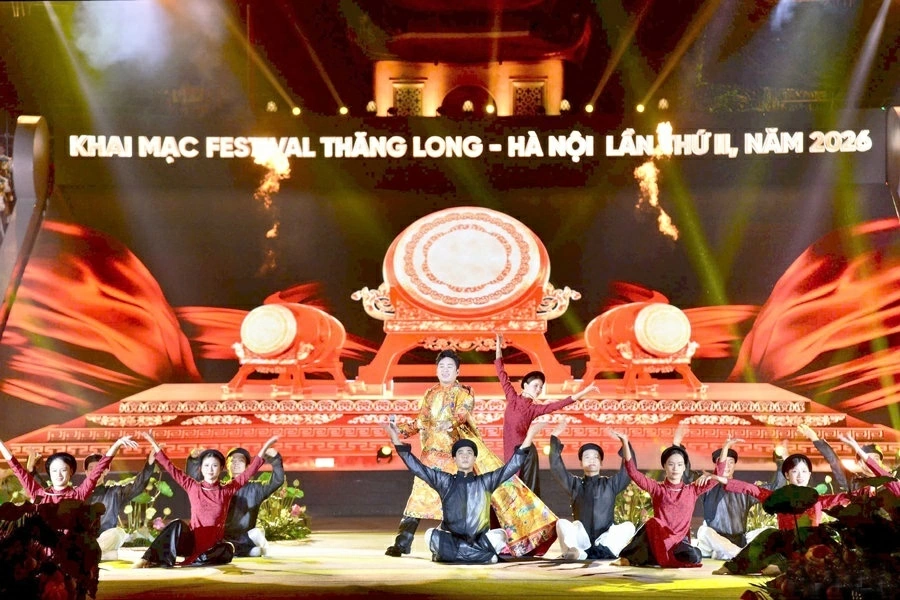 |
| The second Thang Long - Ha Noi Festival in 2026 with the theme “Heritage Flow”. (Photo: Viet Thanh) |
Heritage enters contemporary life
Taking place from September 11 to 20 with the theme “Heritage Flow”, the second festival expanded its space across various cultural, heritage, and public locations in the capital such as Hoang Thanh Thang Long, Van Mieu - Quoc Tu Giam, Hanoi Museum, Bat Trang pottery village, and the Hoan Kiem Lake area...
Instead of concentrating at one point, the festival created a journey stretching from heritage spaces to art programs, from craft villages to experiential activities. Thus, heritage was not only viewed but also approached with new narratives.
The Thang Long - Ha Noi Festival 2026 brought heritage to new encounters with music, fashion, performances, technology, and tourism. However, as the stage curtains closed, a bigger question arose: how can these experiences not only attract in the short term but also continue to live as cultural products capable of entering the market?
More than 250,000 visitors attended, marking a notable highlight. Over 3,000 artists, performers, more than 100 artisans, and heritage practitioners participated, including art troupes from the Republic of Korea, Japan, and India. Van Mieu - Quoc Tu Giam welcomed over 22,000 visitors in the first five days; Sac Mau Ha Noi attracted more than 1,500 guests, while Thanh Am Gom drew about 1,000 spectators each night.
Behind these numbers is a noteworthy movement: Heritage is being placed into contemporary life with a new language. Bat Trang pottery became a performance material; fashion sought out Hanoi's stories; music appeared in heritage spaces. Exhibitions, seminars, and experiential activities created additional touchpoints between today's public and values passed down through generations.
Vice Chairman of the Hanoi People's Committee Vu Thu Ha stressed that Hanoi is the national political-administrative centre, with a thousand-year tradition of culture and talent, where Vietnamese intelligence is crystallized and shines. Hanoi has a rich history and cultural heritage foundation in both breadth and depth, with the integration of Thang Long culture and the cultural regions of Xu Doai, Xu Dong, Kinh Bac, and Son Nam Thuong.
The integration of distinctive cultural heritages has connected and enriched Hanoi's identity, creating a solid foundation for the capital's culture to develop in the direction of “Culture - Identity - Creativity - Integration - Connection”, linking the preservation and promotion of thousand-year-old cultural values, gradually making Hanoi a cultural industry center rich in identity, dynamic, and creative.
According to Ms. Vu Thu Ha, transforming heritage into “living assets” can drive cultural industries, contributing to building Hanoi into a cultural industry center rich in identity, dynamic, and creative.
The festival created meetings between artisans and artists, craft villages and the public, heritage and technology, traditional culture and contemporary art. The participation of international troupes also expanded the exchange space, contributing to promoting the capital's heritage values and cultural brand. However, there remains a gap between a public-attracting event and a cultural industry product. A program with a large audience does not necessarily mean a market has been formed.
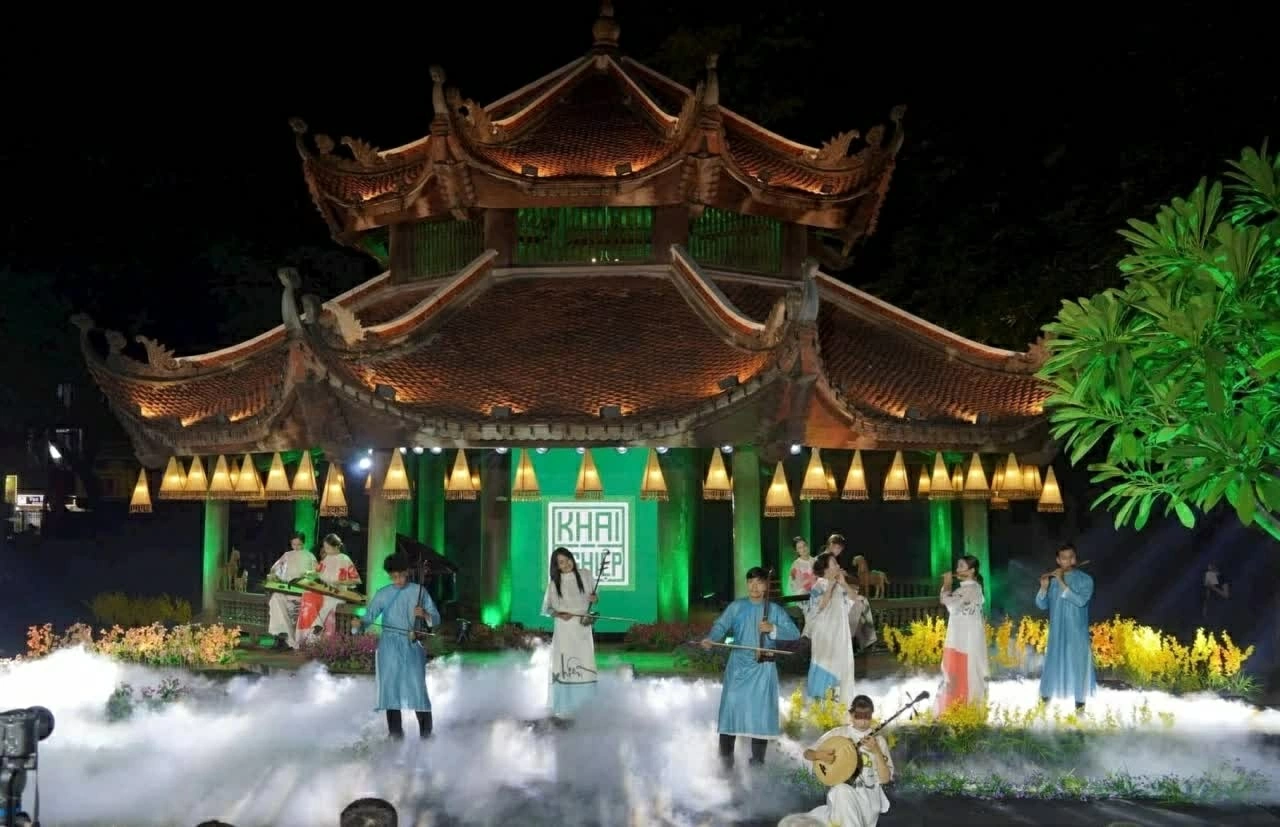 |
| The 'Khai Van' art program at Van Mieu - Quoc Tu Giam is a highlight event at the Thang Long - Ha Noi Festival 2026. (Photo: Hoang Lan) |
New approaches
Dr. Nguyen Thu Ha from the Vietnam Institute of Culture, Arts, Sports, and Tourism believes that a performance creating an effect for just one night is not enough to form a market product. The program needs to be refined, priced, reorganized, and continuously sold to other customer groups after the event.
Thanh Am Gom clearly illustrates this issue. Dr. Nguyen Thu Ha suggests that the program could develop into a regular performance product at Bat Trang, connecting with workshop tours, pottery-making experiences, cuisine, shopping, and accommodation.
If it only appears for a few nights, the cultural effect may be evident, but the economic life cycle remains short. Similarly, “Sac Mau Ha Noi” will create longer-term value if the designs introduced on stage continue to be produced, distributed, and find buyers. This is the transition from “event” to “product”.
To make this transition, the participation of businesses, artists, designers, artisans, organizers, and the public in a value chain is needed. After the festival, it is necessary to identify which activities can be organized regularly, which products can be commercialized, and which connections between artisans, artists, and businesses can be maintained.
The festival can be seen as a test of the ability to bring heritage into modern life. The numbers from Van Mieu - Quoc Tu Giam, Thanh Am Gom, Sac Mau Ha Noi, and the Hanoi International Jazz Festival 2026 show the demand for diverse cultural activities.
The important thing is to turn that interest into a regular need. If a program only exists within the framework of the festival, it remains an event activity. When the program continues to be organized, has paying audiences, business participation, and benefits artists and artisans, it begins to become a product of the cultural industry.
According to Deputy Director of the Hanoi Department of Culture, Sports, and Tourism Le Thi Anh Mai, the festival has used heritage as a foundation, emphasising the process of transmission, creativity, and dissemination in modern life. People are not just spectators but also participants in activities; artisans, artists, and practicing communities perform, preserve, and transmit cultural values.
According to Ms. Le Thi Anh Mai, if the first festival laid the initial bricks for an annual cultural event of the capital, the second is expected to continue strengthening the brand, improving quality, and expanding its reach. Therefore, what is worth waiting for is not just how many programs, artists, or visitors there will be next season, but whether the values created this season will continue to exist.
From Hoang Thanh Thang Long to Bat Trang, from Van Mieu - Quoc Tu Giam to Hoan Kiem Lake, the Thang Long - Ha Noi Festival 2026 has opened up new approaches to heritage. But the value of a cultural event does not lie only in the moment of closing but also in what is maintained afterward.
Heritage truly becomes a resource for the present when there are recipients, creators, and a public ready to accompany. Therefore, “Heritage Flow” should not stop at a festival but needs to become a part of Hanoi's cultural life and creative market.