




Talent diplomacy (Part 1): Building national competitive advantage
From visas for experts to global networks connecting scholars and scientists, many countries are intensifying efforts to attract high-quality human resources through diplomacy, forming a new trend known as Talent Diplomacy.
Latest
 |
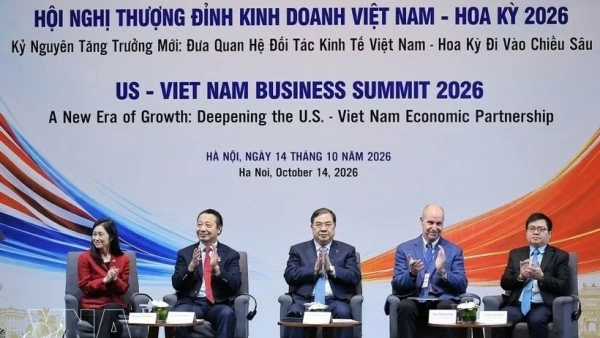
| High-quality human resources are being prioritized by many countries in their development strategies to enhance competitiveness. (Source: Anderson) |
In recent years, many countries have continuously adjusted policies to attract scientists, engineers, tech entrepreneurs, and high-level experts from around the world. From Singapore, Canada, Germany to the Republic of Korea, talent visa programs, research cooperation policies, scholar connections, and support for innovative startups are being expanded on a larger scale.
Despite different approaches, these policies reflect a notable trend: High-quality human resources are being prioritized by many countries in their development strategies to enhance competitiveness.
The competition of the knowledge era
This trend is occurring amid a backdrop where artificial intelligence (AI), semiconductor technology, quantum computing, biotechnology, clean energy, and digital transformation are creating significant demand for scientists, engineers, and tech experts. Simultaneously, many developed economies are facing aging populations and a shortage of highly skilled labor, making the attraction of international talent a crucial aspect of development policy.
According to the Future of Jobs 2025 report by the World Economic Forum (WEF), approximately 170 million new jobs will be created globally between 2025-2030, while about 92 million jobs will be replaced due to the impact of technological transformation and changes in economic structures. The report also indicates that skills related to AI, big data, cybersecurity, and digital technology are among those with the fastest-growing demand.
These projections explain why many countries are simultaneously investing heavily in education, research, and innovation, while also developing policies to attract high-skilled labor, researchers, and tech entrepreneurs. From a development perspective, high-quality human resources not only meet labor market demands but also contribute to enhancing research capacity, innovation, and economic competitiveness.
In addition to visa policies, many countries are expanding cooperation between universities, research institutes, businesses, and innovation centers to facilitate international experts in research, technology transfer, and startups. This indicates that talent attraction is increasingly being placed within a comprehensive development ecosystem, rather than merely a labor or immigration policy.
Diplomacy steps in
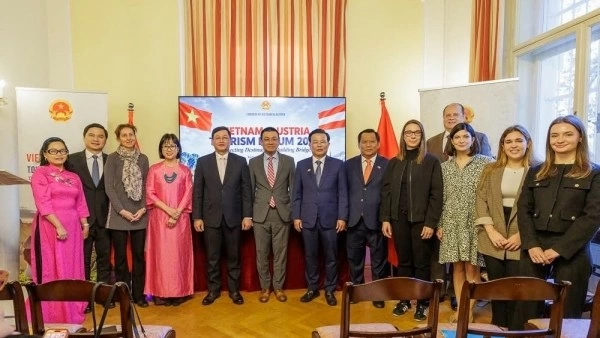
Along with changes in human resource policies, the foreign affairs activities of many countries are also undergoing corresponding adjustments. Besides traditional tasks such as promoting political, economic, and trade relations, many overseas representative missions are deeply involved in connecting universities, research institutes, tech companies, and expert communities.
Some countries organize scientific forums, connect scholars, promote research opportunities, or build expert networks abroad to serve domestic development goals.
From this practice, some scholars use the term “Talent Diplomacy” to describe the trend of expanding the role of foreign affairs in developing high-quality human resources. Although there is no unified definition and it has not become an independent form of diplomacy, this concept reflects a shift in foreign affairs activities: From promoting relations between nations to connecting knowledge, science, technology, and people to serve development goals.
In this context, “Talent Diplomacy” is the intersection of many fields, from economic diplomacy, scientific diplomacy, educational diplomacy to innovation cooperation. The commonality of the models being implemented does not lie in the name but in the goal of expanding access to high-quality human resources through international cooperation.
From visas to ecosystems
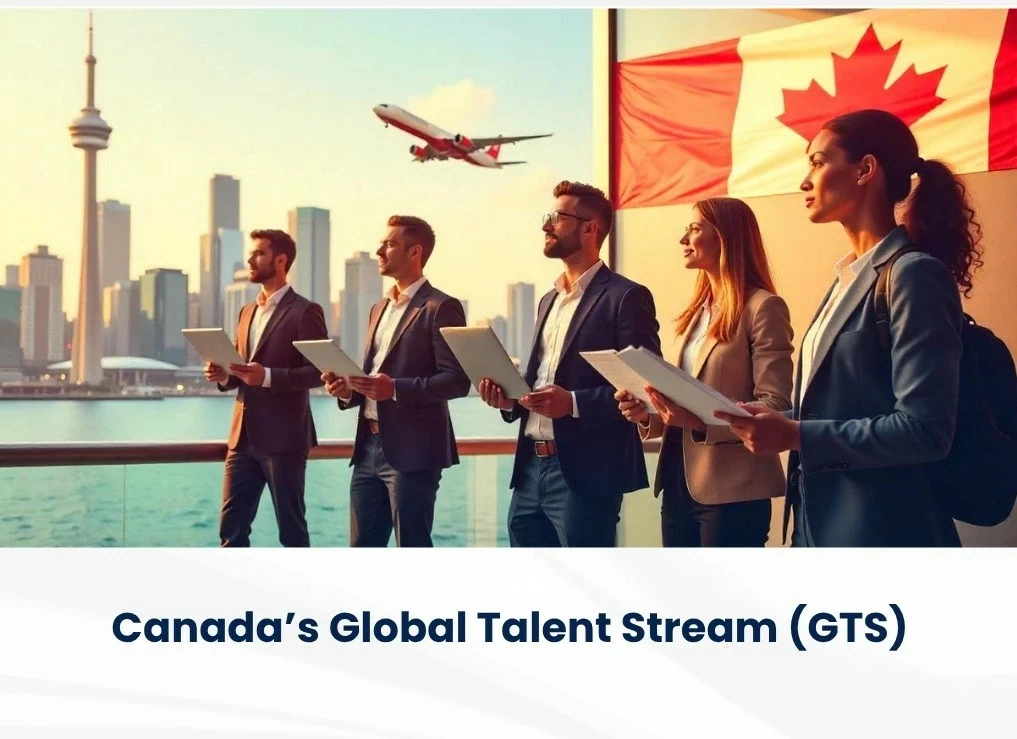 |
| The Global Talent Stream program is designed to shorten processing times for high-skilled labor. (Source: Uniland) |
In practice, the attraction of talent is being implemented by countries in various ways, depending on development conditions and strategic goals.
In Singapore, the ONE Pass visa card has been utilized since early 2023. According to the Ministry of Manpower Singapore, the ONE Pass is a personal work permit for top talent in fields such as technology, scientific research, finance, culture, and sports, allowing holders to work for multiple companies, establish businesses, or change jobs without needing to reapply for a work permit.
This is one of the policies aimed at increasing Singapore's appeal to high-quality human resources amid intensifying international competition. Talent attraction is part of the strategy to build the island nation into a regional financial, scientific, and innovation hub.
Besides the ONE Pass, Singapore has developed the Contact Singapore network to connect international experts and overseas Singaporeans, while heavily investing in universities, research centers, and startup ecosystems.
Meanwhile, Canada combines immigration policy with a strategy to develop high-tech industries. The Global Talent Stream program is designed to shorten processing times for high-skilled labor, enabling businesses to quickly access international human resources in high-demand fields. In a similar vein, the UK has implemented the Global Talent Visa for scientists, researchers, and international experts.
Notably, both Singapore and Canada focus not only on attracting talented individuals but also on building environments for them to work, research, start businesses, and develop long-term. This demonstrates that visas or immigration policies are merely necessary conditions; sustainable attraction depends on the innovation ecosystem. Germany and the Republic of Korea are prime examples of this approach.
In Germany, instead of competing with short-term incentives, the country leverages its research system and international academic cooperation. Through the German Academic Exchange Service (DAAD), the Alexander von Humboldt Foundation, and networks of research institutes like Max Planck and Fraunhofer, Germany has established scholarship systems, scholar exchanges, and research collaborations with hundreds of countries. Many international scientists come to Germany not only to conduct a research project but also to maintain collaborative relationships with German universities and research institutes after returning to their home countries.
Notably, these programs not only aim to attract high-skilled labor but also contribute to forming cross-border scientific cooperation networks. Each researcher, each group of scholars becomes a connection point between universities, research institutes, businesses, and international science funds. The value Germany aims for is thus not only to supplement human resources but also to expand research and innovation capacity through international cooperation.
The Republic of Korea also adopts a similar approach but closely ties it to industrial development strategies. By identifying semiconductors, AI, next-generation batteries, and digital technology as priority fields, the Republic of Korea's government simultaneously increases investment in research and development (R&D), expands engineer training, promotes cooperation between universities and businesses, and implements policies to attract experts in key fields. Accordingly, developing high-quality human resources is not viewed as a standalone labor policy but becomes part of an innovation and national competitiveness strategy.
From the practices of these countries, it can be seen that while all aim to build ecosystems to attract, nurture, and leverage high-quality human resources, there is no one-size-fits-all formula for every country. Each nation chooses tools that suit its development conditions, advantages, and strategic goals.
These different approaches also reflect a shift in the role of foreign affairs. Besides traditional functions, many countries increasingly use diplomatic tools to connect knowledge, promote cooperation in science, technology, education, and develop high-quality human resources, thereby enhancing national competitiveness. These experiences also open up many issues for countries pursuing development based on science, technology, and innovation, including Vietnam.
* Talent Diplomacy (Final Part): Vietnam's challenge