






Revised Press Law: Regulating online activities – A key update reflecting the Digital Transformation Trend
WVR - The draft Revised Press Law has been developed with 4 chapters and 50 articles, a reduction of 2 chapters and 11 articles compared with the current law, and introduces several new and practical provisions.
Latest
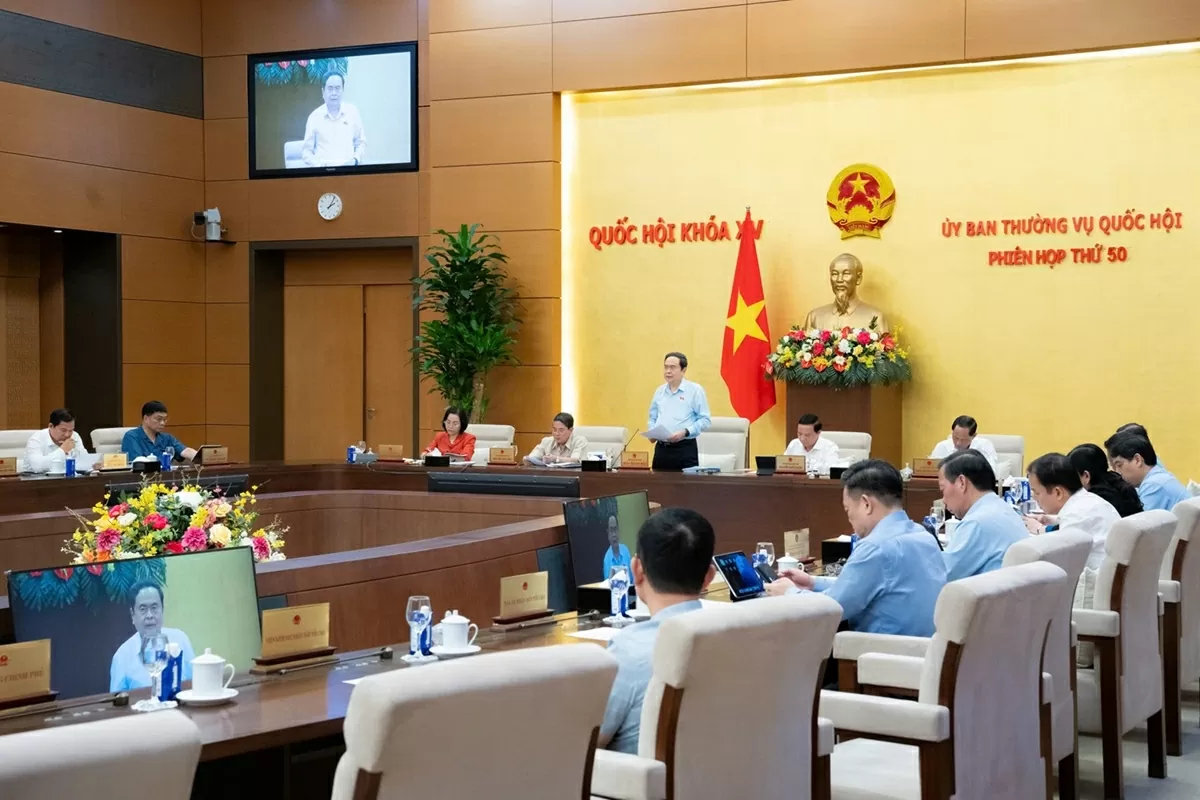 |
| Overview of the 50th session of the National Assembly Standing Committee on the afternoon of October 8. (Source: National Assembly) |
On the afternoon of October 8, during the 50th session of the National Assembly Standing Committee, members of the Committee reviewed and gave opinions on the draft Revised Press Law.
According to the explanatory statement from the Ministry of Culture, Sports and Tourism, the revision of the 2016 Press Law is necessary to address existing limitations, ensure citizens’ constitutional rights to freedom of the press and expression, and promptly respond to the rapid development of modern information and communication technologies.
New contents, aligning with practical realities
The new draft comprises 4 chapters and 50 articles, with many additions aimed at reflecting the realities of today’s media landscape. These include strengthening management of press activities; enhancing the professional qualifications and leadership capacity of journalists and media managers; promoting the development of the press economy; and regulating press operations in cyberspace — a major new feature aligned with the ongoing digital transformation of the media industry.
The draft also increases decentralization and delegation of authority to local governments in press management, proposing a reduction of 20 administrative procedures compared to current regulations, thus simplifying processes and lowering compliance costs for agencies and enterprises.
In addition, the draft reaffirms the role of Vietnam’s revolutionary press, aiming for a professional, humane, and modern journalism sector; introduces clearer licensing conditions for social and professional organizations; and strengthens regulations on journalists’ conduct to prevent unethical behavior and abuse of position.
Commenting on the draft, Chairman of the National Assembly’s Committee for Legal and Judicial Affairs Hoang Thanh Tung pointed out inconsistencies in key definitions.
He noted: “Clause 1, Article 3 defines journalism as informational products about events and issues in natural and social life. Yet Article 4 identifies journalism as the mouthpiece of the Party, State agencies, and socio-political organizations — assigning functions and rights as if it were a legal entity.
Moreover, the draft uses the term ‘press establishment’ without clarifying its meaning. These concepts — press, press agency, and press establishment — should be clearly distinguished to ensure coherence and legal consistency.”
Agreeing with this point, Chairwoman of the National Assembly’s Committee for Deputies’ Affairs Nguyen Thanh Hai emphasized that definitions in the law must be comprehensive, stable, yet flexible enough to cover emerging forms of journalism in the digital age.
She stressed: “We shouldn’t define journalism solely by its format or platform. The law must clarify the professional essence and legal standards of journalistic activities — distinguishing between legally recognized press products and commercial digital media content. Without clear criteria, managing and addressing violations online will be extremely difficult”.
This draft law is structured into 4 chapters and 50 articles, reducing 2 chapters and 11 articles compared to the current law, with many new contents added to align with practical realities such as: enhancing the management of press activities; improving the quality of journalists and media leaders; promoting the development of the press economy; and regulating press activities in cyberspace – a significant new development, meeting the digital transformation trend of the media industry.
Developing the Press Economy
Another key topic of interest is the recognition of “multi-platform key press agencies.” The current draft mentions them only in principle, without detailed criteria or preferential mechanisms.
Chairwoman of the National Assembly’s Committee for Deputies’ Affairs Nguyen Thanh Hai also highlighted the responsibility of parent agencies that oversee major press outlets, noting that:
“If a subordinate press agency is designated as a key media outlet, the parent body must provide sufficient investment, personnel, and financial and technical support. It cannot merely assign the title without corresponding resources.”
Meanwhile, Chairman of the National Assembly’s Committee for Economic and Financial Affairs Phan Van Mai underscored the importance of press economics in today’s context.
He stated: “If state budget funding is tightened, the law should open more space for press agencies to secure their own financial resources.
Just as we have economic mechanisms for state-owned enterprises and public service units, we should research and apply similar models to ensure press agencies can operate efficiently while complying with regulations.”
Strengthening digital media governance
On the issue of managing journalism on digital platforms, National Assembly Chairman Tran Thanh Man emphasized that the law must strengthen governance and development of media on digital platforms in a way that supports the mission of the revolutionary press, increases its presence on social networks, and safeguards the information front against cross-border platforms.
He affirmed: “Press activities must first ensure national sovereignty and information security. The law should include effective measures to correct and strictly handle violations, especially in cyberspace.
Effective communication and public information that fosters social consensus are key to inspiring the development aspirations of Vietnam’s young generation. Only then can we build a strong, prosperous nation — while promoting creative models, good examples, and positive values within the community.”
After listening to feedback, Minister of Culture, Sports and Tourism Nguyen Van Hung addressed several issues raised during the discussion.
Regarding the concept of “multi-platform key press agencies,” he clarified that the revision will not create new administrative structures, but will define existing press agencies that operate digital platforms.
On activities in cyberspace, he stressed that personal pages are not considered press, and therefore fall under the jurisdiction of the Cybersecurity Law, not the Press Law.
As for the press economy, the drafting committee has gathered extensive input from domestic media organizations and will continue refining the text to ensure practical feasibility and smooth implementation.
The drafting body affirmed its commitment to fully incorporate the National Assembly Standing Committee’s feedback, ensuring the draft law’s quality and timely submission for consideration at the next National Assembly session.


