


Russia-Vietnam Year of Science and Education 2026: Tradition as a foundation for new forms of cooperation
WVR - On March 18, in Hanoi, the Russian Centre for Science and Culture held a press conference titled “Where Tradition and Modernity Meet: Educational Achievements and Cultural Prospects”, introducing a series of prominent cooperative activities between Vietnam and the Russian Federation in the field of education and culture in recent times.
Latest
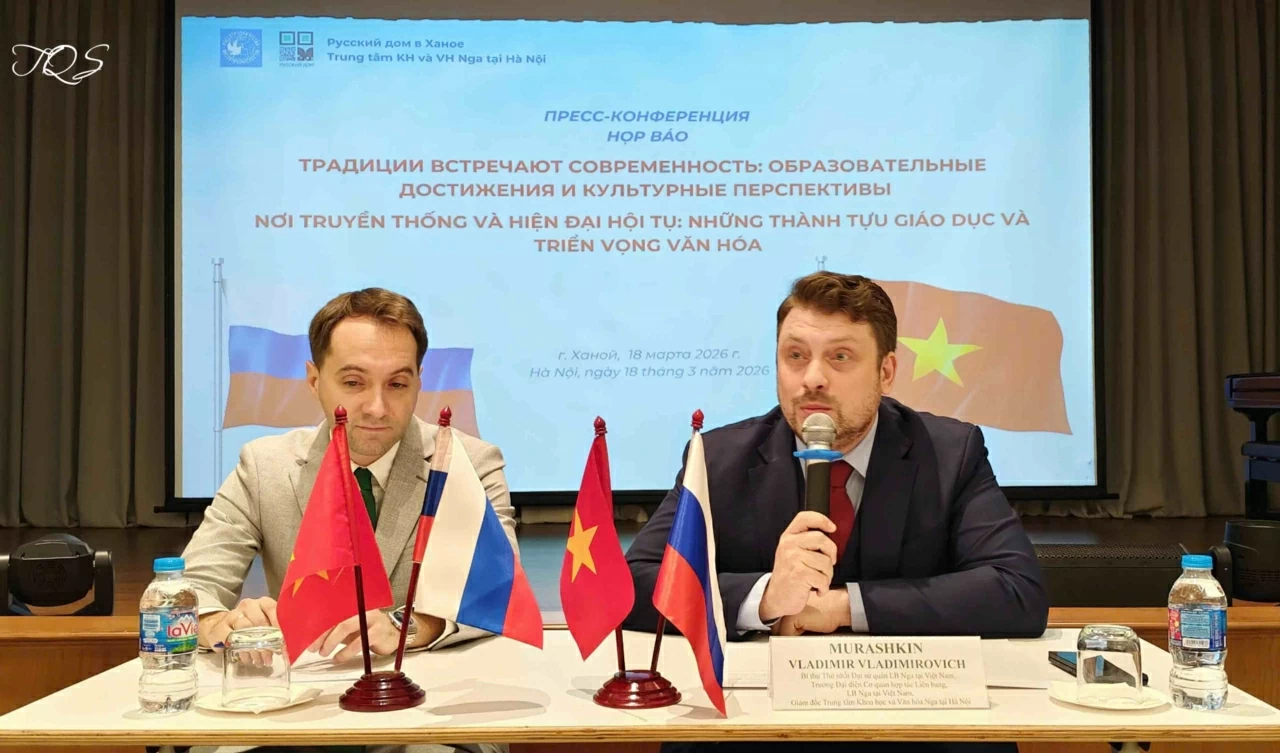 |
| Director of the Russian Center for Science and Culture Vladimir Murashkin shares at the press conference. (Photo: Courtesy) |
The press conference was attended by journalists from various media outlets and representatives from several organizations collaborating with the Centre, such as the Vietnam-Russia Friendship Association and the Bach Duong Ensemble.
Speaking at the event, Director of the Russian Centre for Science and Culture Vladimir Murashkin emphasized that in Vietnam, President Ho Chi Minh laid the foundation for educational cooperation between the two countries, stating, “Tradition is the foundation for us to build new forms of cooperation.”
According to the Director, the Russian Government continues to maintain a special priority policy with approximately 1,000 full scholarships annually for Vietnam, ranging from undergraduate to postgraduate levels. This is considered a crucial foundation contributing to the promotion of educational cooperation between the two countries over the years.
To bring scholarship information closer to Vietnamese students, four large-scale educational exhibitions were organized in 2025.
Notably, in March 2026, representatives from many leading Russian universities visited Vietnam, worked with the Ministry of Education and Training, and signed cooperation agreements with localities and educational institutions.
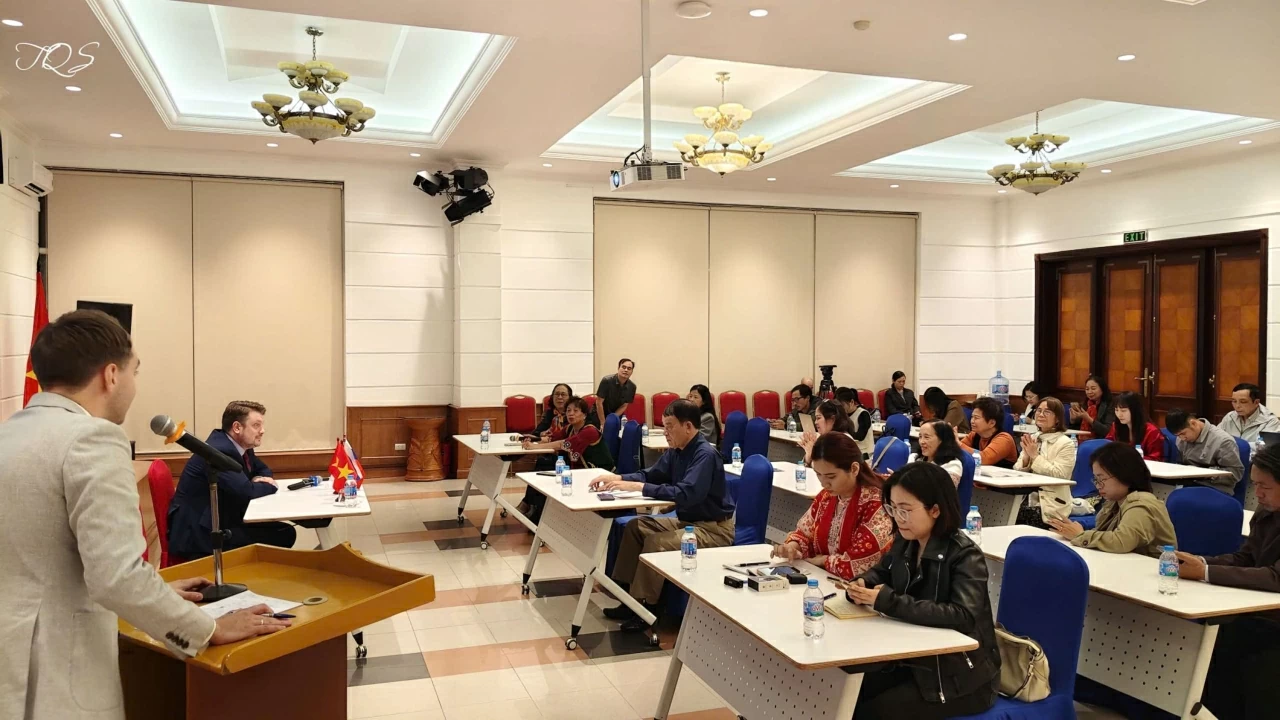 |
| Overview of the press conference. (Photo: Courtesy) |
Additionally, 2026 has been announced as the Year of Science and Education between Russia and Vietnam. According to the plan, the Russian Centre for Science and Culture in Hanoi will organize numerous large-scale activities such as Russian Culture Day, participation in the Forum of Rectors of Leading Universities from both countries, along with many new educational projects and exhibitions.
Mr. Vladimir Murashkin shared that the Centre will continue to implement many large-scale activities, combining education and cultural exchange. A highlight is the “Russian Language Week” scheduled for June 2026, celebrating Russia's National Day (June 12) and the birthday of the great poet Aleksandr Pushkin (June 6), with a variety of diverse experiences for the public.
“Next week, the Center will organize the second educational exhibition of the year, gathering leading Russian universities and research groups. Simultaneously, the 'Hakatom' event in collaboration with the Rosatom Group will also be launched, creating opportunities for students to access advanced science and technology fields,” Mr. Murashkin said.
Over the past year, the Russian Centre for Science and Culture in Hanoi organized more than 600 events and aims to expand its scale in 2026.
These activities not only contribute to introducing Russia's education and science-technology systems in Vietnam but also create conditions for universities in both countries to strengthen cooperation, expanding learning and research opportunities for the younger generation.
The Russian Centre for Science and Culture also shared additional information about its cooperation with the Pushkin Institute in Vietnam and Russia to support Russian language teaching at specialized Russian language schools in Vietnam, organizing Russian language Olympiad competitions, and sending “Russian Language Ambassador” teachers to Pushkin branches.
Besides activities in the field of education, the Centre also organizes a variety of other rich activities, such as tours by Russian art troupes, musical schools and field trips to Vietnam by journalists from a number of Russian television channels and newspapers.
Mr. Vladimir Murashkin affirmed that there will be an increase in tours by Russian art institutions, the organization of journalist exchanges between the two countries, and the establishment of forums on media and journalism experiences, maintaining valuable traditions in Vietnam-Russia relations, and enhancing the comprehensive strategic partnership between the two countries.
“The activities that have been, are, and will be organized in coordination by the Centre aim to deepen mutual understanding between the peoples of Russia and Vietnam, especially among the youth; promoting practical programs and projects that benefit both sides,” emphasized the Director of the Russian Centre for Science and Culture.
Additionally, Mr. Murashkin also answered many questions from Vietnamese journalists about the Centre's role in promoting cooperation in culture and education, exchange activities, and sharing in Russian language teaching in Vietnam and ASEAN countries, as well as plans to expand bilateral cooperation and implement new projects.