

Promoting Vietnam's role in developing and applying international law in emerging fields: Symposium
WVR - On December 12 in Hanoi, the 2025 Symposium on the Development of International Law was held, chaired by the Department of International Law and Treaties, Ministry of Foreign Affairs, in collaboration with the Vietnam Society of International Law. The event was attended by representatives from various ministries, central agencies, and experts, lecturers, and researchers in international law.
Latest
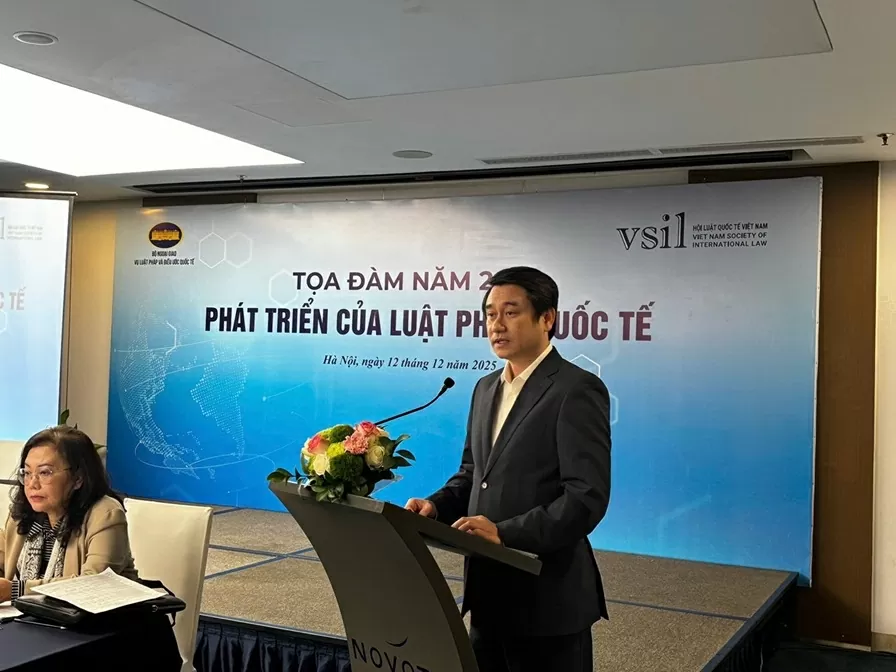 |
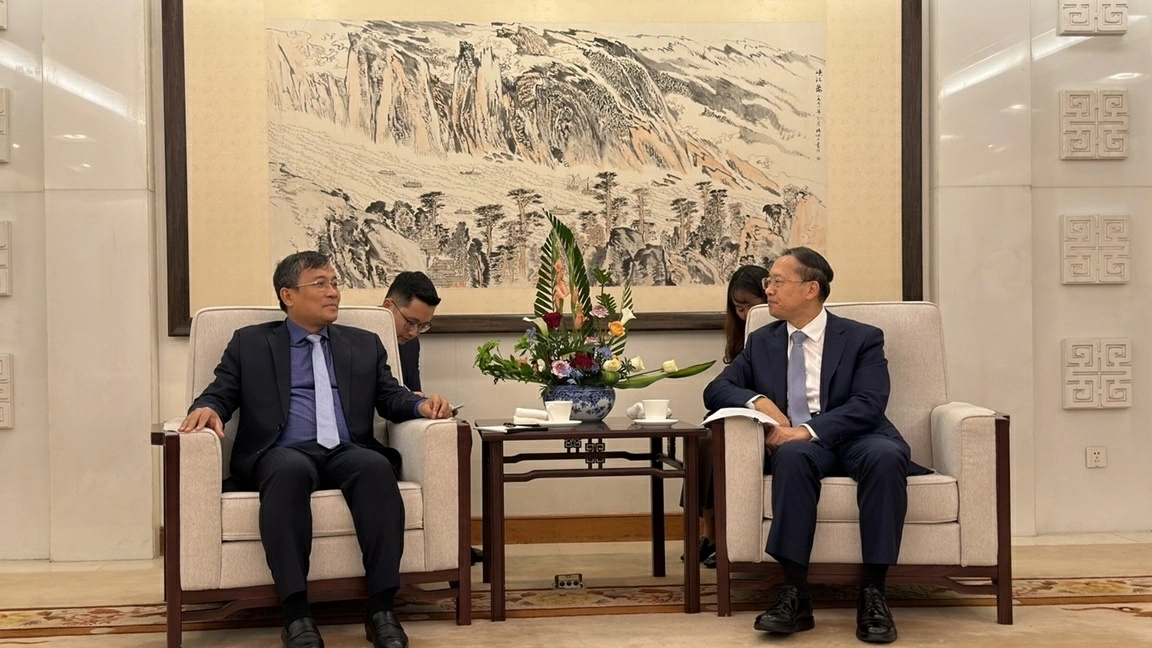
| Deputy Minister of Foreign Affairs Le Anh Tuan delivering the opening speech at the Symposium. (Photo: Chu Van) |
In his opening remarks, Deputy Minister of Foreign Affairs Le Anh Tuan noted that in 2025, international law, despite facing some serious challenges, continues to thrive, particularly through multilateral codification mechanisms of the United Nations and specialized international organizations in fields such as trade, environment, maritime, and cybersecurity.
For developing countries like Vietnam, international law remains an essential tool to safeguard national interests, balance relations, and resolve disputes.
Deputy Minister Tuan stated that 2025 marks Vietnam's active and pioneering role in shaping international law, exemplified by its participation in drafting and hosting the signing ceremony of the Hanoi Convention against Cybercrime.
As 2026 ushers in a phase of implementing the policies and directives of the 14th National Congress Party, Vietnam needs to shift from "participating" to "shaping", from "receiving" to "proactively proposing" in multilateral legal activities.
Deputy Minister Tuan emphasized the need to continue enhancing research capabilities, forecasting international legal trends, promoting participation in codification processes, and strengthening the capacity to effectively implement and utilize international legal tools. He noted that the Ministry of Foreign Affairs has developed the document "Some Legal Opinions of the Ministry of Foreign Affairs in 2024" as a reference for international law experts in research and advising on the application of international law.
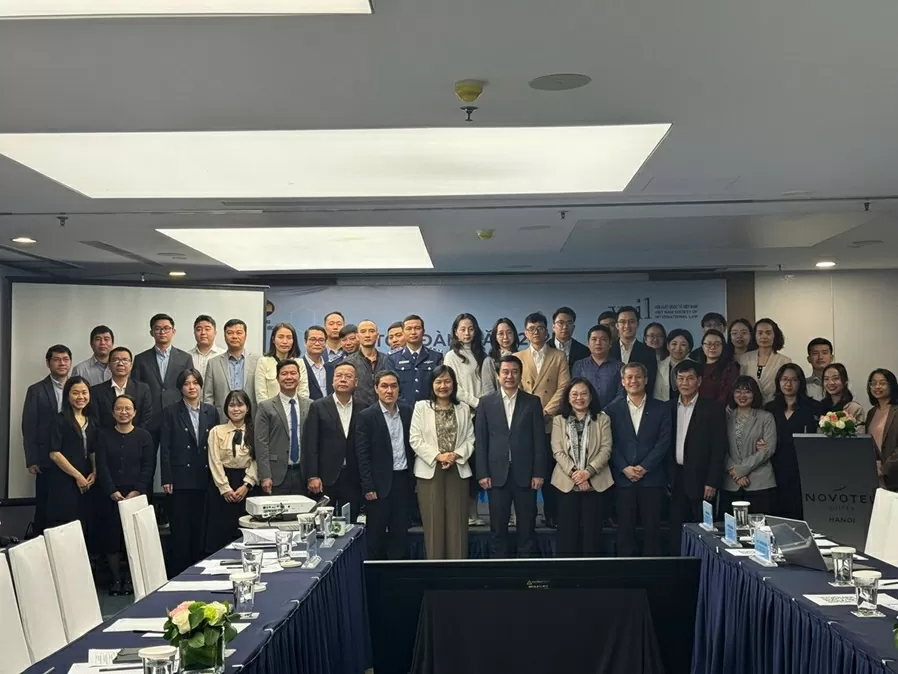 |
| Delegates attending the Symposium. (Photo: Chu Vsn) |
Speaking at the Symposium, Nguyen Thi Hoang Anh, President of the Vietnam Society of International Law, stated that the Symposium is an annual event organized by the Society in collaboration with the Ministry of Foreign Affairs for many years. It connects experts and legal officers from various ministries and agencies to discuss and analyze developments and trends in international law, particularly in new issues such as cybersecurity and e-commerce.
During two discussion sessions chaired by Dr. Nguyen Thi Hoang Anh, President of the Vietnam Society of International Law, and Dr. Pham Lan Dung, a member of the Advisory Council of the Asian Society of International Law, delegates listened to and exchanged views on the International Law Commission's discussions on sea level rise and non-binding agreements, recent rulings by international judicial bodies, discussions at the International Maritime Organization on autonomous ships and emission reductions in shipping, the application of emission reduction measures in civil aviation, as well as counter-trade measures, green trade, and e-commerce.
The opinions highlighted Vietnam's proactive and substantial participation in developing legal documents in these fields, while emphasizing the need to prepare capabilities and conditions for implementation, especially in areas such as cybercrime prevention, counter-trade, green trade, emission reduction, and autonomous maritime equipment, to best ensure the rights and interests of the state, businesses, and citizens.
In his closing remarks at the Symposium, Director General of the Department of International Law and Treaties Nguyen Dang Thang expressed gratitude for the cooperation and support of various ministries, agencies, and the Vietnam Society of International Law over the past period. He also expressed the desire to maintain and enhance the connection and interaction between international legal experts in government agencies and legal scholars, lecturers, and researchers in educational and research institutions, contributing to achieving the goal of enhancing international integration efficiency across fields according to Resolution No. 59-NQ/TW of the Politburo on international integration in the new situation.