



Norway shares experience in turning waste into 'black gold' with Vietnam
WVR - On October 3, the SINTEF Research Institute (Norway), the Norwegian Embassy in Vietnam, and the Vietnam National Cement Association (VNCA) co-organized the workshop 'From Pilot to Policy: Addressing Non-Recyclable Plastic Waste through Co-Processing in the Cement Industry'.
Latest
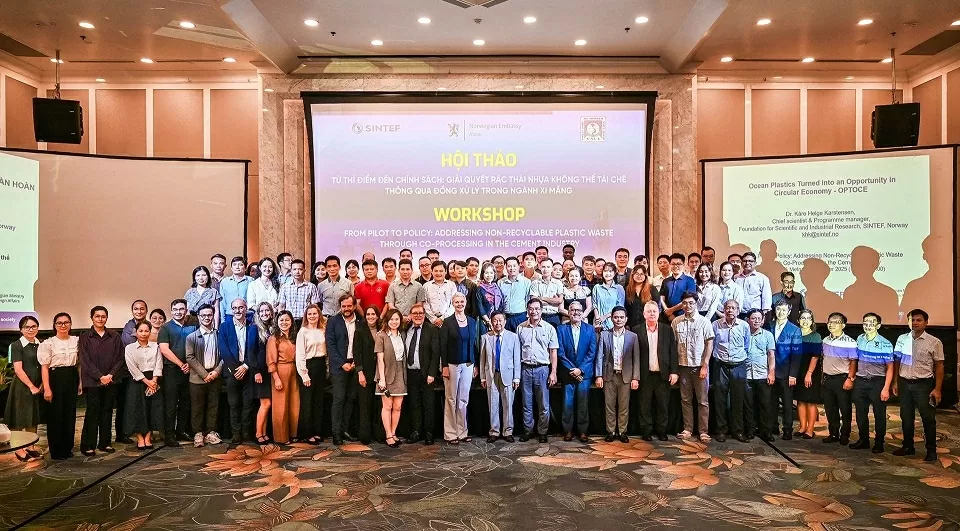 |
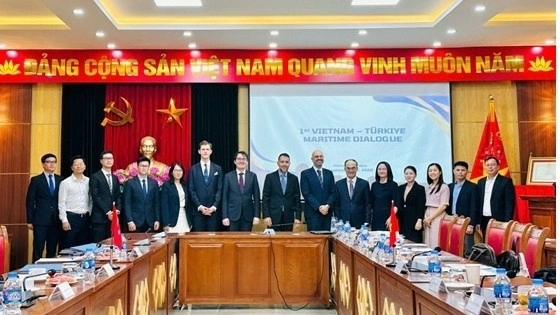
| Norwegian and Vietnamese delegates attending the workshop. (Photo: Kim Kim) |
The workshop marked the success of the project "Ocean Plastic Turned into an Opportunity in Circular Economy" (OPTOCE) funded by the Norwegian government.
Vietnam is one of the countries most heavily affected by ocean plastic waste and is striving to achieve net-zero emissions by 2050 and fulfill commitments under the Just Energy Transition Partnership (JETP).
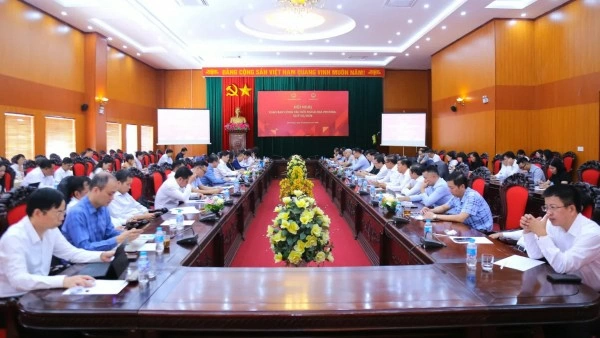
In this context, the workshop brought together over 100 delegates, including policymakers, business representatives, researchers, international organizations, financial institutions, and development partners. The delegates reviewed the achievements of OPTOCE and discussed the potential to scale up co-processing solutions to reduce plastic leakage into the environment, decrease reliance on coal in the cement industry, and cut greenhouse gas emissions.
In her opening remarks, Norwegian Ambassador to Vietnam Hilde Solbakken emphasized: “Addressing ocean plastic waste and climate change is a top priority for Norway – both globally and in Vietnam. Through the OPTOCE project, we have witnessed scientifically-based solutions, like co-processing, that can turn plastic waste into a resource benefiting the climate, economy, and communities. Norway will continue to commit to expanding this approach in Vietnam and across the region, especially in the context of cooperation between the two countries under JETP.”
The OPTOCE project is part of Norway's broader commitment to Sustainable Development Goal 14.1, aiming to significantly reduce marine pollution by 2025. Since 2018, Norway has been investing in development programs to minimize plastic and marine waste pollution.
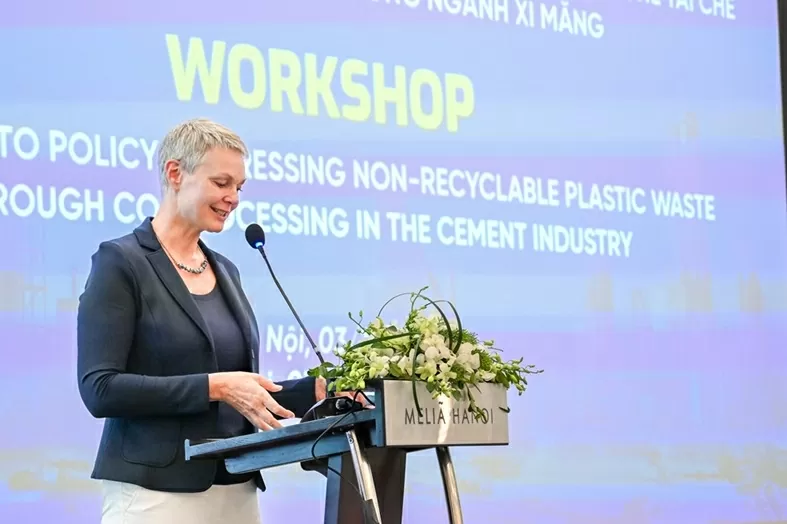 |
| Norwegian Ambassador to Vietnam Hilde Solbakken speaking at the workshop. (Photo: Kim Kim) |
Meanwhile, Vietnam faces a dual challenge: rapidly increasing plastic waste and rising carbon emissions. Urbanization and increased consumption have led to a surge in non-recyclable plastics, many of which risk leaking into rivers and seas, threatening ecosystems and coastal livelihoods. Co-processing is considered a scalable solution, safely handling non-recyclable plastics in cement kilns, preventing plastic waste from entering the ocean, and replacing fossil fuels (coal) in industrial production.
Kåre Helge Karstensen, Chief Scientist and Program Director of OPTOCE, shared: “More than six years ago, OPTOCE was launched as a regional initiative, initially implemented in five countries, including Vietnam, and later expanded to eight countries across Asia. Today's success proves that co-processing non-recyclable plastics in cement kilns is not only technically feasible and environmentally friendly but can also deliver rapid and large-scale impacts. The next step is to move beyond the pilot phase and integrate this solution into national policy frameworks to drive systemic change.”
At the workshop, Associate Professor Dr. Luong Duc Long, Vice President of the Vietnam National Cement Association, emphasized that co-processing waste in cement kilns is the safest and most effective solution. The Vietnam National Cement Association and cement plants are actively developing co-processing.
“We hope for the collaboration of environmental enterprises to convert waste into alternative fuel. At the same time, we hope the government will soon concretize preferential policies so that businesses participating in co-processing can benefit, and create conditions for consulting organizations to support technology transfer. If we unite with determination, we can scale up this method, turning waste into 'black gold', making cement plants the perfect co-processing sites, contributing to building a green, clean, and beautiful Vietnam in the new era of national development,” Luong Duc Long emphasized.
The workshop included numerous presentations and a discussion session focusing on the legal framework, waste source potential, as well as the practices and challenges in implementing co-processing in Vietnam. The presentations analyzed new technical standards, the current status of waste suitable for co-processing, barriers in the cement industry, and practical experiences at the plant level. The discussion session further clarified the opportunities, challenges, and solutions for making co-processing a part of the national waste management strategy.