



'My life’s mission remains spreading the Dharma…'
“My life’s mission remains spreading the Dharma and helping others as much as I can. That is the basic responsibility of any Buddhist practitioner, and this is my personal mission. My life is simple, nothing complicated.”
Latest
During the visit and Dharma activities in Vietnam by the Nepalese Buddhist delegation under his leadership, H.E. Khentrul Kunchok Tenzin Rinpoche said in an interview with The World and Vietnam Report.
Could you kindly introduce yourself and the lineage you belong to?
As many people may already know, Buddhism has three main vehicles: the Foundational Vehicle, the Mahāyāna, and the Vajrayāna. Personally, I come from the Vajrayāna tradition. Within Vajrayāna, there are four main lineages: Nyingma, Kagyu, Sakya, and Gelug. My monastery in Tibet mainly upholds the Nyingma lineage teachings, while my monastery in Nepal preserves many Kagyu teachings. So, according to the tradition of reincarnated masters, I carry a blend of both Nyingma and Kagyu practices.
In terms of Buddhist philosophy and academic training, I studied in the Sakya tradition at the Sakya College in India—one of the earliest Buddhist universities founded by the Tibetan community in 1972. There, I completed the full curriculum equivalent to a Bachelor's, Master's, and a Ph.D. level (Honorary Scholar degree) in the Tibetan Buddhist system.
After my studies, I taught Buddhist philosophy to monastic students at the college for about four years. In 2019, on the occasion of the Sakya College's 50th anniversary, I was honored as one of 19 monks out of approximately 500–700 alumni to receive the title of “Khenpo” together with the Honorary degree. I was also among the youngest monks to be recognized with this title. That same year, I received an Honorary Khenpo Certificate from the Government of Nepal.
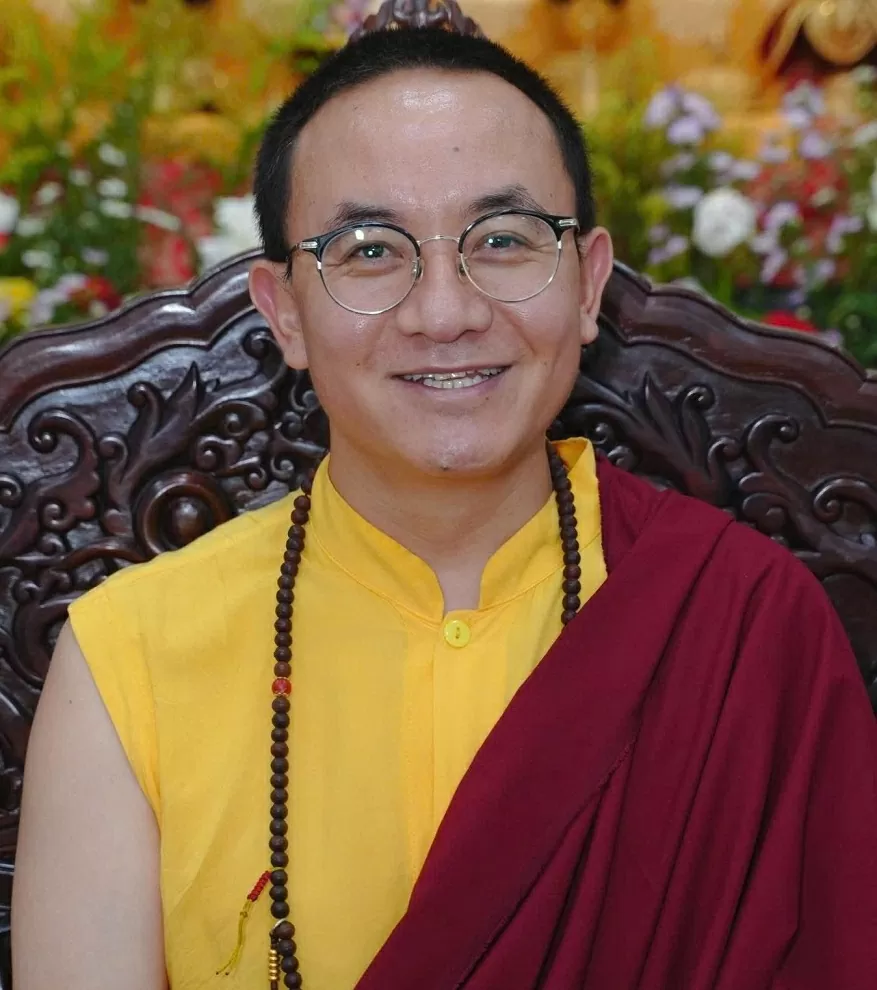 |
| H.E. Khentrul Kunchok Tenzin Rinpoche. (Photo: Ngoc Ha) |
During my time teaching at Sakya College, I also served as the editor of the annual literary journal. One day, while reviewing submissions, I came across an article about psychology. It sparked my interest deeply. As Buddhists, we often use the Buddha’s teachings to help sentient beings.
But I realized that in the West, psychology is used to help anyone facing emotional or mental difficulties - regardless of their religious belief.
So I thought, this knowledge would be very helpful in serving the community, especially in my role as a Rinpoche. With that intention, I went to Malaysia to learn English and pursue a degree in psychology.
After finishing Bachelor of Psychology program in Malaysia, I returned to Nepal and resumed teaching Buddhist philosophyduring the COVID-19 pandemic. Later, I was invited to the United States to pursue a Master's degree in Religious Studies.
The program included studies of various world religions - Christianity, Islam, Hinduism, Indigenous traditions, and African religions. As part of my scholarship arrangement, I also taught at the university for one year as a lecturer. About 98% of my students were Christian. I taught them Buddhist philosophy in an academic setting and guided them in meditation practices.
Interestingly, one of the main reasons I was given this opportunity to teach was because I had obtained well psychological knowledge from a recognized university - not because of my background as a monk or my traditional Buddhist education. So I feel that my wish to study psychology has truly borne fruit. Now I can teach the Dharma even to non-Buddhists - Christians, Muslims, and others - at my university. Psychological knowledge has truly become an effective means for me to go beyond religious boundaries and support a greater number of people.
The Buddha taught, “If, while chanting the Buddha's name, someone hears the Name of the Tathāgata, then in that moment, a seed of Bodhicitta and awakening is planted in their mind.” So with a pure intention, when I share the Dharma, I see it as a way of planting seeds of wisdom and compassion in anyone’s heart—no matter their religion.
Wherever I go - whether it’s Vietnam, Nepal, or the U.S - my life’s mission remains spreading the Dharma and helping others as much as I can. That is the basic responsibility of any Buddhist practitioner, and this is my personal mission. My life is simple, nothing complicated.
These days, although many people call themselves Buddhists or practitioners, the very true essence of Dharma and practicing Dharma is fading. Especially in Mahāyāna Buddhist - whether one practices based on the Sūtras, like in Vietnam, or through both Sūtra and Tantra, like in Tibetan Buddhist - our practice must be firmly rooted in Bodhicitta. Only then is it true, pure Dharma practice.
So wherever I go, I teach and promote the cultivation of Bodhicitta - a pure heart of compassion, truthful living, virtuous conduct, and spend loving kindness and compassion towards human beings, animals, and whole sentient beings. It is that simple!
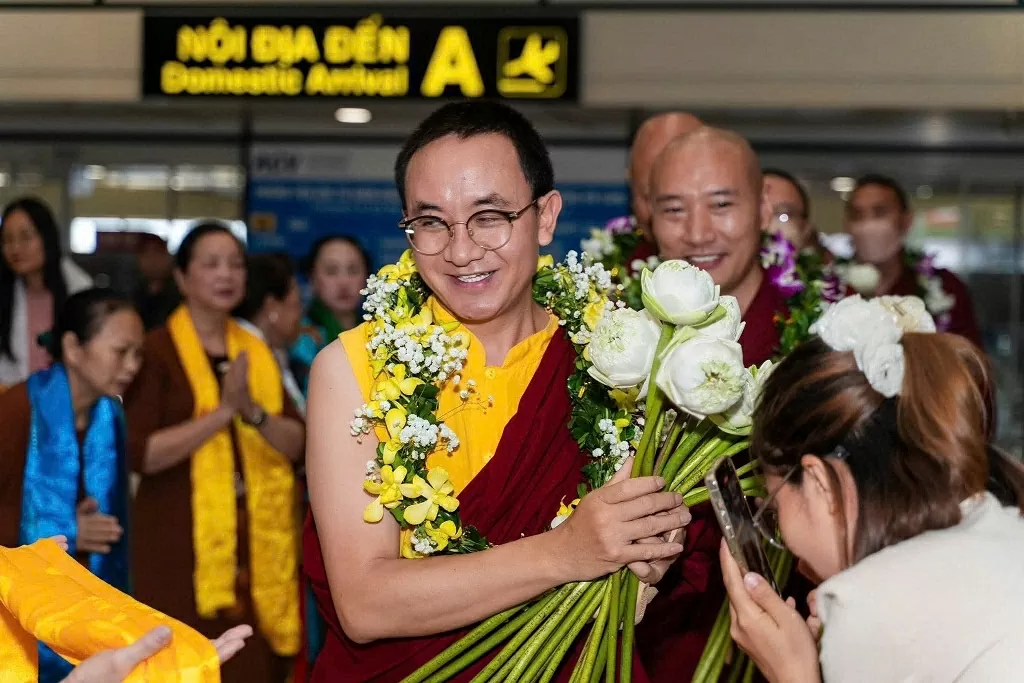 |
| 'H.E. Khentrul Kunchok Tenzin Rinpoche and his delegation are welcomed when they land in Hà Nội on June 23. (Photos courtesy of organisers) |
Could you please share more about your Dharma activities in Vietnam this time?
As mentioned, the main focus of this trip is to teach on Bodhicitta and guide meditation sessions. At the request of Vietnamese Dharma friends, we will also conduct special ceremonies: The one thousand offerings to the Deity Uṣṇīṣa Vijaya; the recitation retreat of 100 million Amitābha Mantras; the retreat of wealth Deity Guru Lama Norlha. These are the main formal activities and responsibilities of my visit.
On a personal note, I truly enjoy returning to Vietnam—not only because I feel a strong karmic connection with many Dharma brothers and sisters here, but also because I really love Vietnamese food. It tastes much better than anywhere else, and I can only enjoy authentic Vietnamese cuisine when I’m actually in Vietnam! That is one of my personal joys.
Thank you!