




Ma nhai Nui Non Nuoc and Van bia Pho Hien recognized as Documentary Heritage in the Asia-Pacific Region
WVR - On November 5, in Jakarta, Indonesia, the dossiers "Ma nhai Nui Non Nuoc" (Ninh Binh) and "Van bia Pho Hien" (Hung Yen) were inscribed in the Memory of the World Register for the Asia-Pacific region, bringing the total number of Vietnamese documentary heritage recognized by UNESCO to 13, including 4 world documentary heritages and 9 regional ones.
Latest
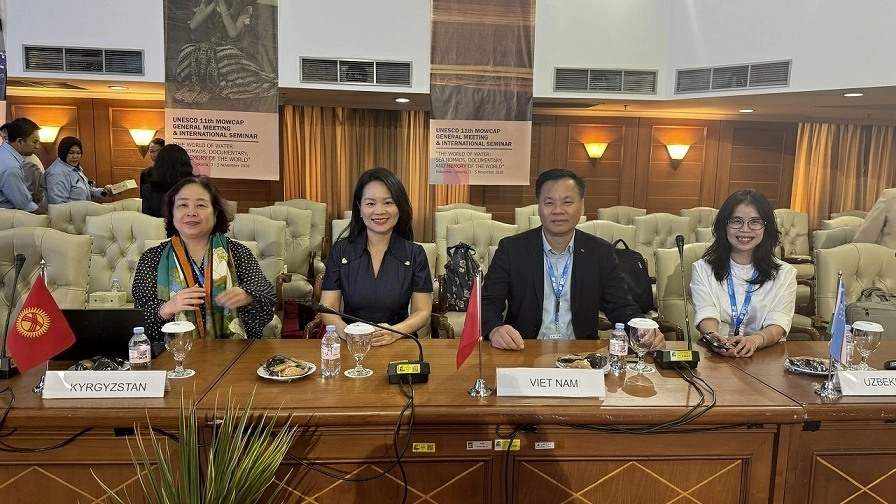 |
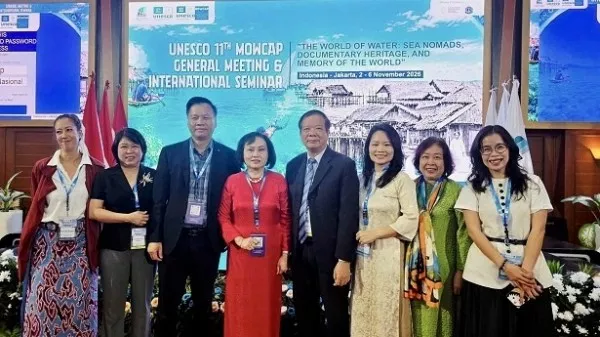
| The Vietnamese delegation at the 11th General Meeting of the Memory of the World Committee for Asia-Pacific. |
From November 2-6, at the 11th General Meeting of the Memory of the World Committee for Asia-Pacific (MOWCAP), held in Jakarta, Indonesia, Vietnam's two nominated dossiers, “Ma nhai Nui Non Nuoc” (Ninh Binh) and “Van bia Pho Hien” (Hung Yen), were unanimously inscribed in the Memory of the World Register for the Asia-Pacific region.
This international recognition highlights the unique historical, cultural, and documentary values of Vietnam, while affirming Vietnam's contribution to preserving, safeguarding, and sharing the common memory of the region and humanity.
The newly recognized documentary heritages are testimonies to the profound cultural heritage and historical exchanges of Vietnam.
Ma nhai Nui Non Nuoc consists of 43 inscriptions carved directly onto the mountain face, dating from the 14th to the 20th century, featuring Chinese characters, Nom script, and the national script. The works include poems, essays, inscriptions, and royal writings by kings, scholars, and poets across various eras. Notably, the Duc Thuy Son Linh Te Thap Ky by Truong Han Sieu, carved in 1343, stands out.
Van bia Pho Hien comprises 41 steles in Chinese and Nom scripts, dating from the 17th century to the early 20th century, currently preserved at the special national relic site of Pho Hien in Hung Yen province. These are valuable original documents reflecting the history of formation and development of an international trading port that once held a significant position in Vietnam and the region's trade network.
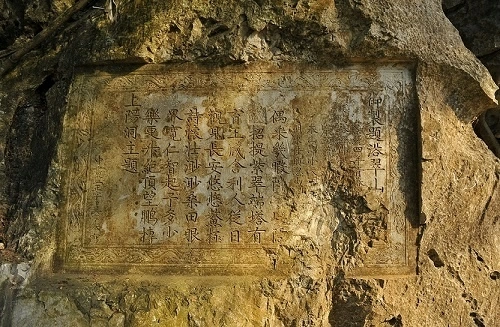 |
| Ma nhai Nui Non Nuoc consists of 43 inscriptions carved directly onto the mountain face, dating from the 14th to the 20th century, featuring Chinese characters, Nom script, and the national script. |
The two sets of documents, with their distinct values, enrich the understanding of Asia-Pacific history and culture. MOWCAP's recognition affirms the value of original documentary sources in researching and reconstructing history, enhancing understanding among cultures.
Through these heritages, Vietnam contributes additional concrete historical evidence, showcasing its identity, creativity, and role in the cultural and civilizational flow of the region.
Throughout the process of building, completing, and advocating for recognition, the Ministry of Foreign Affairs and the National Commission for UNESCO Vietnam have accompanied the two localities, supporting professional exchanges, connecting with experts, and collaborating with UNESCO and MOWCAP; contributing to the completion of scientific bases, supplementing documents, and clarifying the unique and regional significance of each dossier.
Simultaneously, through diplomatic channels in Paris and the region, Vietnam actively introduced, exchanged, and lobbied for international interest and support for the two nominations. This is evidence of the effectiveness of combining heritage expertise with cultural diplomacy, leveraging the combined strength of central and local agencies, researchers, and international partner networks.
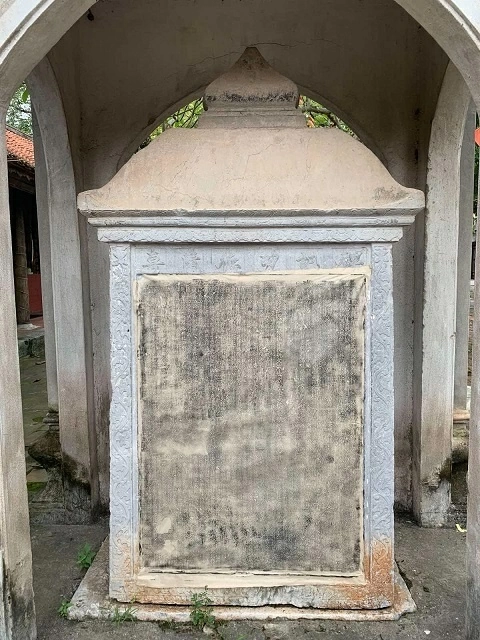 |
| Van bia Pho Hien comprises 41 steles in Chinese and Nom scripts, dating from the 17th century to the early 20th century, currently preserved at the special national relic site of Pho Hien in Hung Yen province. |
Deputy Foreign Minister Ngo Le Van, Chairman of the National Commission for UNESCO Vietnam, emphasised the crucial role of the Memory of the World Program in protecting and promoting global cultural and historical values; he also praised the effective coordination between domestic and international functional agencies and experts, especially the dedication and persistent efforts of generations of leaders and people in Hung Yen and Ninh Binh provinces in heritage protection.
Deputy Minister Ngo Le Van affirmed that the Ministry of Foreign Affairs and the National Commission for UNESCO Vietnam always closely cooperate with ministries, sectors, and localities in preserving and promoting the value of newly recognized documentary heritage, collaborating with UNESCO and international partners, connecting resources, and spreading heritage values through diplomatic activities, contributing to enhancing the image and position of localities and Vietnam as a whole.
With these two new titles, Vietnam now has 13 documentary heritages inscribed in UNESCO's Memory of the World Program, including 4 world documentary heritages and 9 regional ones in the Asia-Pacific. This result not only reflects the richness and diversity of Vietnam's documentary heritage but also affirms the progress in heritage preservation and promotion, as well as Vietnam's increasingly active and responsible role in international cultural cooperation.
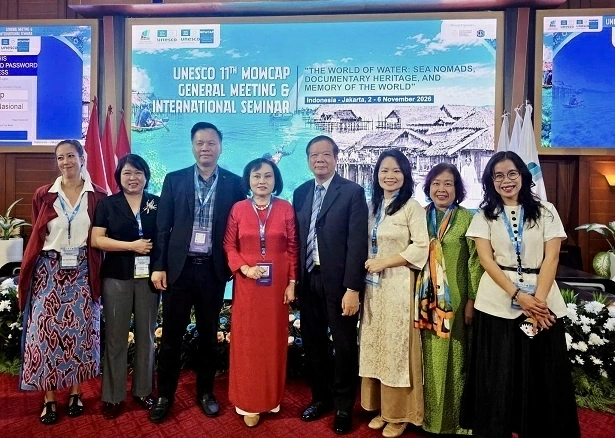 |
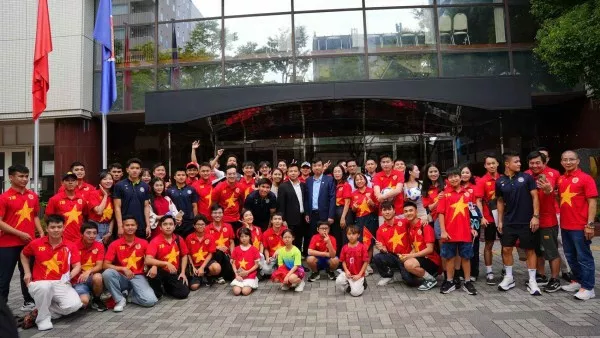
| The working delegation takes a commemorative photo. |
In the context of Vietnam's strong cultural development, international integration, and national soft power enhancement, the recognition of these two heritages continues to demonstrate that culture and heritage are not only intrinsic resources for development but also bridges promoting dialogue, cooperation, and understanding among nations.
This achievement contributes to elevating Vietnam's cultural status, affirming Vietnam's increasingly proactive and positive role in UNESCO's programs and activities.
| The 11th Session of the Memory of the World Committee for the Asia-Pacific (MOWCAP) took place in Jakarta, Indonesia, from November 2-6, 2026, with the participation of 40 out of 43 member countries. This biennial meeting discusses and decides on matters such as: (i) Reviewing and evaluating projects implemented by MOWCAP; (ii) Reporting activities of National Memory of the World Committees; (iii) Reviewing and inscribing 24 nominated dossiers for the Asia-Pacific Documentary Heritage titles. |