

Vietnam’s opportunity to become a regional supply chain reserve hub
Dr. Tobias Burgers, an Assistant Professor in the Social Sciences Program at Fulbright University Vietnam, said Vietnam has become an important link in APEC value chains.
Latest
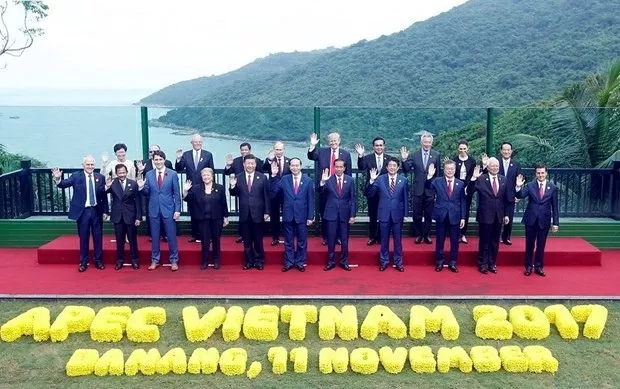 |
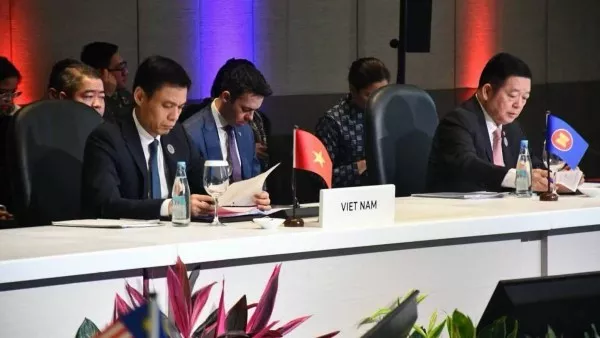
| Leaders of APEC member economies at the 2017 APEC Economic Leaders' Week in Da Nang. (Source: VNA) |
How do you assess APEC's key economic cooperation pillars in 2026? In your view, which priorities should be further advanced to sustain APEC's role as a driver of growth and economic integration in the Asia-Pacific region?
APEC has long advanced and promoted an agenda that centered on open trade, connectivity and growth, and technological and knowledge exchanges, which has been largely successful. However, the geopolitical and geo-economic events of the last years have put in doubt the underlying basis for this growth: Namely, that supply chains will function without significant interruption and that goods, energy and inputs will keep flowing.
Economic protection measures are increasing across the APEC region, affecting not only the flow of goods but also increasingly the flow of capital and ideas. Furthermore, the acceleration of AI development and the green transition are intensifying competition for much-needed resources and putting pressure on these flows. At the same time, environmental shocks have caused significant economic losses.
While these events differ in origin - geopolitical, geo-economic and climatic, they each cause disruptions to the flows on which lean supply chains depend and which affect the ability of APEC nations to successfully cooperate, now and in the future, and to advance successful economic integration and growth.
 |
| Dr Tobias Burgers, an Assistant Professor in the Social Sciences Program at Fulbright University Vietnam. (Photo: Fulbright University Vietnam) |
Given these conditions, APEC should adapt and take into consideration how resilience should be incorporated into its cooperative framework. For the last four decades, manufacturing across the APEC region relied on just-in-time production, which minimizes inventory and assumes uninterrupted supply and which worked as geo-political and geo-economic disruptions were minimal.
However, given present conditions the just-in-time model easily translates into “just too late”: Lean inventories give commercial actors a time-to-survive of days. While shorter disruptions of less than three months can be absorbed through hedging, inventory and temporary cost absorption, disruptions lasting significantly longer, as we are currently observing across multiple supply chains, fundamentally change the economic calculus.
The answer to this is to increase resilience across APEC networks through three priorities: First, shared buffer capacity for energy, fertilizer, food and industrial inputs. Second, port overflow arrangements agreed in advance, since cargo rarely shifts to alternative ports without prior planning. Third, shared early-warning services that combine data on traffic, prices, weather and salinity for public and private users. The sum of these would increase the agility of supply chain networks across the APEC region and the ability to withstand shocks and ensure that further economic cooperation across the APEC region remains possible.
How do you assess Vietnam's evolving position in regional value chains? What advantages and opportunities does Vietnam have to move beyond its role as a link in regional production networks and participate more actively in higher value-added activities, such as technology, innovation, research, and development?
From my perspective, Vietnam's integration into regional production and trade networks has been remarkable. Just a look at recent figures illustrates how well and far Vietnam has integrated into regional production value chains. Electronics, the primary export product, earned US$164 billion in 2025, up 48.4%. Total exports reached US$215.7 billion in the first half of this year, while port throughput rose by 15% and container throughput by 14% over the same period.
The sum illustrates the extent to which Vietnam has become an integral part of the APEC value chains. By linking itself economically with APEC partners and integrating itself into these networks it has been able to gain significant economic benefits and advantages.
At the same time, despite Vietnam's improvements in the value chain, there is room for it to increase its position in the value chain. Evidently, education as a means to increase innovation and research is necessary and could lead to pathways to higher value-added activities.
Across the APEC region, education, innovation and research will be further advanced and in this regard Vietnam has to pursue a difficult trajectory: It will need to improve its own position, but simultaneously ensure that it bridges the existing gap it has vis-à-vis other nations if it seeks to achieve a higher position in the value chain.
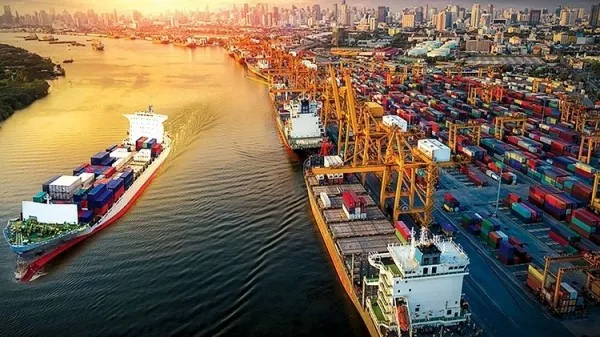
| Vietnam has a favoured geography, much-needed partnerships and political neutrality and the necessary production base to develop itself into a resilient and reliable essential actor in the just-in-case supply chain model that is gaining in importance and utility. |
I think its position in regional networks could enable it to achieve further advancement in regional value chains. As a result of the aforementioned geopolitical, geo-economic and environmental issues, supply chains are reconfigured and are moving from just-in-time to just-in-case. This offers Vietnam a good opportunity for higher value-added activity as these supply chain reconfigurations work in Vietnam's favor.
First, firms pursuing China+1 strategies regard Vietnam as the most credible Southeast Asian alternative for high-value manufacturing, on the condition that it is able to provide policy responses that are timely, meet the demands of these reconfigured supply chains and most importantly are adequate relative to its neighbors.
Second, the energy transition, both in the green domain and equally in fossil fuels, offers an opening. Vietnam needs to develop LNG terminals, solar and wind capacity, grid management and energy efficiency and it is in these areas that Vietnam is ahead of many regional peers.
Third, resilience itself can become a key variable that Vietnam can provide to the region. It can do so as a stable actor that has reliable supply chains, the necessary means and the ability to withstand shocks and keep functioning. Here I would argue that Vietnam is well positioned and that it has four advantages for this role. First, a coastline on the main Malacca to Northeast Asia shipping corridor; second, a food and manufacturing base, third, expanding ports, and fourth, a non-aligned foreign policy.
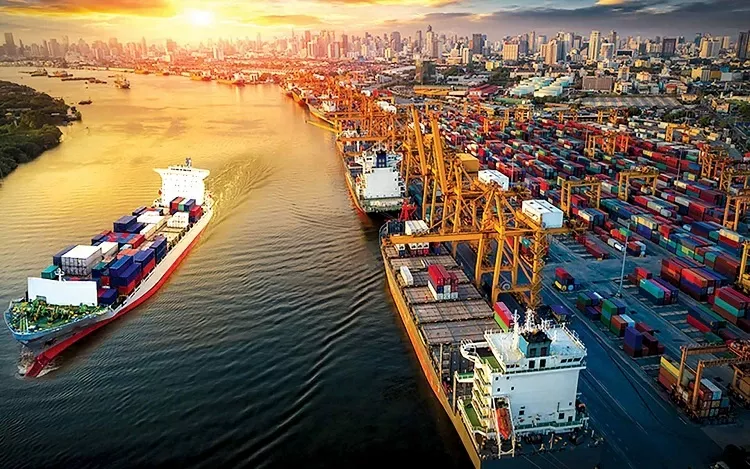 |
| Vietnam has an opportunity to become an essential, stable, and reliable link in regional supply chains. (Source: Cong Thuong Newspaper) |
Which areas hold the greatest potential for strengthening economic cooperation between Vietnam and other APEC economies in the coming years?
I believe the areas in which Vietnam should focus to achieve the greatest potential for cooperation align with the region's broader supply chain necessities.
First, it should establish strategic reserves for energy, building on Politburo Resolution 70, which targets reserves equal to about 90 days of net imports by 2030, and furthermore extend these efforts to include liquefied natural gas (LNG), fertilizer, rice, medical supplies, and critical industrial inputs.
Second, it should develop bonded, multi-commodity storage in port zones, open to regional actors.
Third, and in tandem, it should establish port overflow arrangements agreed in advance, for instance with Singapore and Port Klang.
Fourth, and taking into consideration how environmental crises have affected food security, it should invest in harvest-time rice storage, as the Vietnam Food Association has proposed, to protect farm incomes when prices swing.
Fifth, it should seek to further advance its energy transition and cooperation in LNG, solar and wind, grid management and energy efficiency. This could be achieved through APEC partners, but also beyond, with partners such as Denmark, Germany and the Netherlands.
Overall, it becomes evident that in these times of supply chain interruption and crisis, Vietnam has a favoured geography, much-needed partnerships and political neutrality and the necessary production base to develop itself into a resilient and reliable essential actor in the just-in-case supply chain model that is gaining in importance and utility. What remains needed is that it builds the institutions that turn these into capacity others can trust.

| Proactive preparation for media work to serve APEC 2027: Workshop on strategic communication WVR. From November 3-5, 2026, in Quy Nhon, Gia Lai Province, the Ministry of Foreign Affairs, in collaboration with the U.S. Embassy in Vietnam, organized ... |

| Promoting investment, trade and supply chain connectivity between Quang Ninh and Guangxi WVR - On July 7, in Nanning City, Guangxi Zhuang Autonomous Region (China), the Consulate General of Vietnam in Nanning coordinated with the People's Committee ... |

| Vietnam, Egypt promote economic, trade, and supply chain connectivity via the Red Sea WVR - From July 9-11, to implement the framework of the Vietnam-Egypt Comprehensive Partnership, Vietnamese Ambassador to Egypt Nguyen Nam Duong conducted a series of ... |

| Vietnam - RoK expand supply chain, manufacturing cooperation Beyond sourcing products, RoK companies aim to build long-term partnerships with Vietnamese firms through product showcases, business-to-business (B2B) matchmaking, investment opportunities and sustainable supply chain ... |

| Promoting connectivity to green logistics supply chains On the sidelines of the Ho Chi Minh City Friendship Dialogue 2026 (FD 2026) on September 11, Ngo Thi Thanh Vy, General Director of QTM ... |