






National branding goes beyond products: Culture, knowledge and innovation as sources of competitiveness
Experiences during a working visit to Shenyang, China, in late November 2026, prompted a question: What truly defines a strong national brand in an economy increasingly driven by intangible assets?
Latest
 |
| A strong national brand must be built on values that a country is capable of creating and sustaining. (Photo: Phuong Quynh) |
After attending the 26th IEEE International Conference on Data Mining (ICDM 2026), featuring discussions on artificial intelligence (AI), big data and computational models, I explored Shenyang, a city where historical heritage and modern technology coexist.
Once a political centre during the early Qing Dynasty, Shenyang is now developing industrial robotics, smart manufacturing, AI and aerospace industries. Its Imperial Palace is also part of UNESCO World Heritage.
The city illustrates how history, communities, universities, industry and technology can complement one another to create a distinctive economic identity and strengthen local branding.
The OECD's 2026 report on Place Branding also highlights that local identity can help attract and retain talent, investment and high-value economic activities.
This offers important lessons for Vietnam's National Brand. A strong national brand must be built on values that the country can create and sustain, including cultural identity, business reputation, human resources, scientific and technological capabilities, and innovation.
Long-established brands as part of national strategy
One particularly memorable experience in Shenyang was visiting Lao Bian Dumplings, a traditional restaurant established in 1829 during the reign of Emperor Daoguang.
From a small eatery founded by Bian Fuzhou, the brand has grown into a business with nearly two centuries of history. In 2006, it was recognised by China's Ministry of Commerce as a “China Time-honoured Brand”. In 2011, its traditional dumpling-making techniques were recognised as provincial intangible cultural heritage in Liaoning.
China regards long-established brands as national economic and cultural assets, preserving professional knowledge, local identity and commercial reputation across generations.
The “China Time-honoured Brand” programme combines heritage preservation with industrial development, intellectual property protection, innovation and market expansion.
Recognition requires at least 50 years of history, alongside cultural identity, trademark ownership, business performance and innovation capacity. Periodic assessments also ensure that brands maintain quality and competitiveness rather than retaining recognition indefinitely.
This offers a lesson for Vietnam: the State can establish standards and support brand development, but commercial reputation must ultimately be sustained by business capabilities and market trust.
Cultural identity as a source of branding
Another notable destination was Xita, a neighbourhood associated with China's ethnic Korean community, which began taking shape in the early 20th century.
Following the establishment of diplomatic relations between China and South Korea in 1992, cultural exchanges, trade and investment expanded, helping Xita develop into a vibrant commercial and cultural district.
Since the early 2000s, Shenyang has also organised Korea Week, combining cultural and culinary activities with trade promotion, investment and business networking.
Xita demonstrates that a locality's value lies not only in individual products or cultural symbols, but also in its ability to connect identity, people and economic activities into a competitive ecosystem.
UNESCO's 2016 report, Culture: Urban Future, also highlights how cities use cultural assets and heritage as part of their development and competitive positioning strategies. However, cultural value does not automatically translate into economic value; it depends on connections with businesses, products, services, infrastructure and institutions.
For Vietnam, this raises an important question: how can cultural values and community networks, particularly those with cross-border economic connections, become resources for local branding and international market expansion?
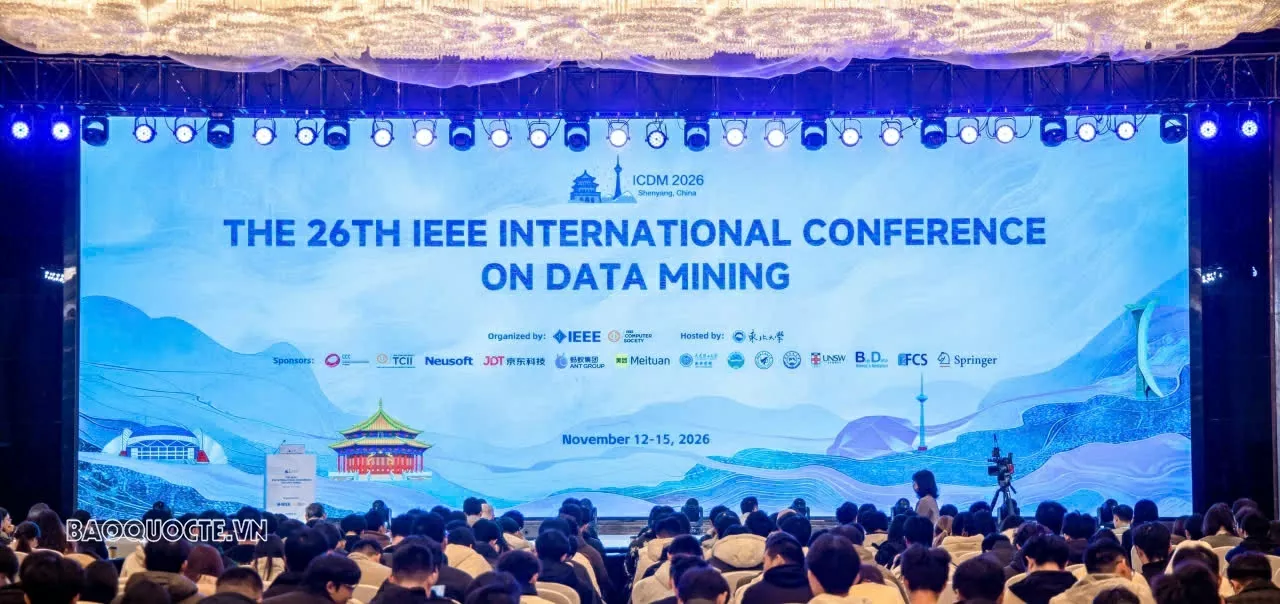 |
| ICDM 2026 demonstrates another foundation of national branding: the ability to create, accumulate and transfer knowledge across generations.. (Ảnh: Phuong Quynh) |
Knowledge as a pillar of national branding
While Xita highlights the role of culture and community networks, ICDM 2026 demonstrates another foundation of national branding: the ability to create, accumulate and transfer knowledge across generations.
Alongside research on AI and data mining, the conference programme dedicated November 14 to research, education and young talent development. Young participants presented research ideas and exchanged views directly with international scientists.
This shows that scientific conferences can serve not only as platforms for presenting new knowledge but also as opportunities to nurture the next generation of researchers.
OECD research also emphasises the international nature of science, with cross-border research networks, shared infrastructure and trust-based partnerships playing important roles in effective scientific ecosystems.
For Vietnam, strengthening research, technology design, innovation and the commercialisation of domestic knowledge is essential to moving from “Made in Vietnam” towards “Designed in Vietnam” and “Developed in Vietnam”.
Vietnamese scientists, technology companies, universities and engineers can all contribute to the country's reputation through internationally recognised research, competitive solutions and trusted partnerships.
These contributions may not immediately appear in export figures, but they provide a foundation for long-term competitiveness. National branding should therefore be closely linked to education, science, technology and innovation strategies.
The challenge for Vietnamese brands
The three experiences in Shenyang offer different perspectives on national branding: Lao Bian represents values accumulated across generations; Xita illustrates the connection between culture and community networks; while ICDM 2026 highlights value created through knowledge and technological innovation.
However, accumulating, connecting and creating value are not enough. Countries must also be able to control and retain a fair share of the value they generate.
According to the WTO's Global Trade Outlook and Statistics, updated in October 2026, goods related to the development and operation of AI accounted for 47% of the growth in global merchandise trade value in the first half of 2026. Trade in these goods increased by 67% year-on-year, representing 14.8% of global merchandise trade.
Meanwhile, the World Intellectual Property Organization (WIPO) reported that investment in intangible assets across surveyed economies exceeded US$10 trillion in 2025, covering research and development, software, data, design, brands and organisational capabilities.
Since 2008, investment in intangible assets has grown significantly faster than investment in tangible assets. This reflects a fundamental shift in global competition: manufacturing capacity enables market participation, while knowledge, technology, intellectual property and brand strength increasingly determine market position and the economic value businesses can retain.
For Vietnam, expanding exports and increasing the international presence of Vietnamese products remain important, but are no longer sufficient. The long-term goal should be to move towards innovation, design, product development and ownership of high-value assets.
A strong national brand should make international markets recognise not only products made in Vietnam, but also the values created, developed and owned by Vietnamese businesses.
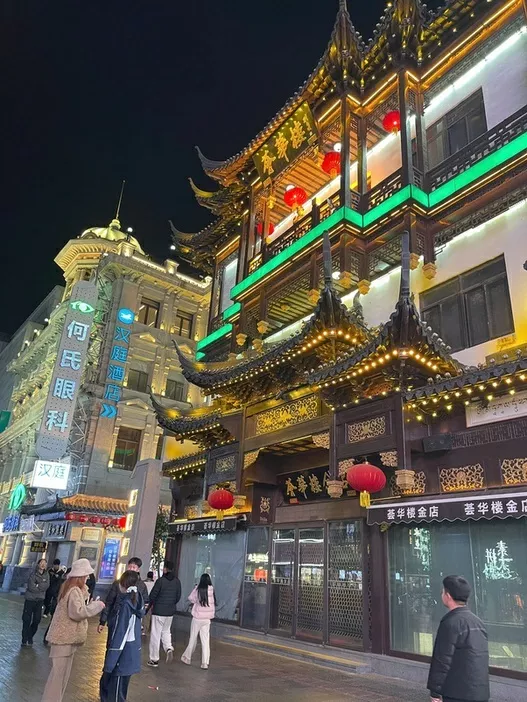 |
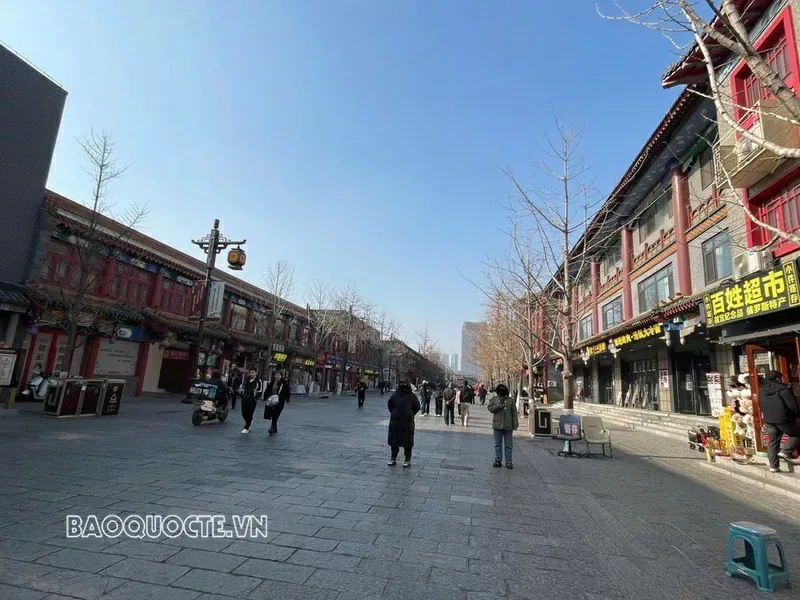
| Night pedestrian street in Shenyang. (Ảnh: Phương Quỳnh) |
Building national competitiveness
At the 2026 National Brand selection, 499 products and services from 227 businesses were recognised. The weighting for innovation was increased from 18% to 30%.
The Ministry of Industry and Trade is also developing the National Brand Development Strategy to 2035, with a vision to 2045, linking national branding with sectoral, local and corporate brands.
Based on international experiences, four priorities deserve attention:
First, develop local brands based on a comprehensive mapping of local assets, rather than simply listing products. These assets should include heritage, leading businesses, universities, experts, overseas Vietnamese communities, technological capabilities and market networks. Economic diplomacy and Vietnam's overseas trade offices should be involved from the early stages to identify suitable markets.
Second, make talent development part of national branding policy. Vietnam needs stronger links between universities, research institutes and businesses, alongside support for applied research and technology commercialisation. Building strong Vietnamese technology brands requires the capacity to create and master technology.
Third, shift evaluation from brand recognition towards the ability to create and retain economic value. In addition to revenue and exports, assessments should consider R&D capacity, intellectual property, domestic value-added content, proprietary brands and the ability to retain international customers. Support after recognition is equally important, as market competitiveness ultimately determines a brand's sustainability.
Fourth, strengthen economic diplomacy, science and technology diplomacy, and overseas Vietnamese networks.Vietnam's Ministry of Foreign Affairs has highlighted the importance of connecting these forms of diplomacy to attract talent, technology and strategic investment. The more than 6.5 million Vietnamese living abroad also represent an important source of knowledge, technology, management expertise and international networks.
The value of these connections should be measured through tangible outcomes such as joint research, technology contracts, investment, business consultancy, market access and knowledge transfer, rather than isolated events.
Ultimately, national branding policy should move beyond recognition and promotion towards creating the conditions for Vietnamese businesses, localities and people to continuously generate new value.
A strong national brand is built not only on existing assets but also on the ability to preserve, connect and continuously transform them into competitive advantages.
The key question should therefore go beyond “What does the world know about Vietnam?” It should be: “What values does Vietnam create that make the world need, trust and choose it?”
When Vietnam can answer that question, its national brand will be built not merely on stories told about the country, but on tangible values that the world can recognise and trust.