





Holding on to the thread of traditional brocade weaving in Mai Chau
WVR - Brocade weaving was once a source of pride for the Thai people in Mai Chau (Phu Tho), where each pattern is a cultural slice preserved through generations. As traditional crafts fade, artisan Vi Thi Thuan quietly remains by the loom, diligently passing the craft to the younger generation.
Latest
For Thai women, brocade weaving was once an essential life skill. From a young age, girls were guided by their grandmothers and mothers, learning to spin, dye, and create patterns—designs that not only serve as decoration but also preserve the stories, memories, and worldview of the community.
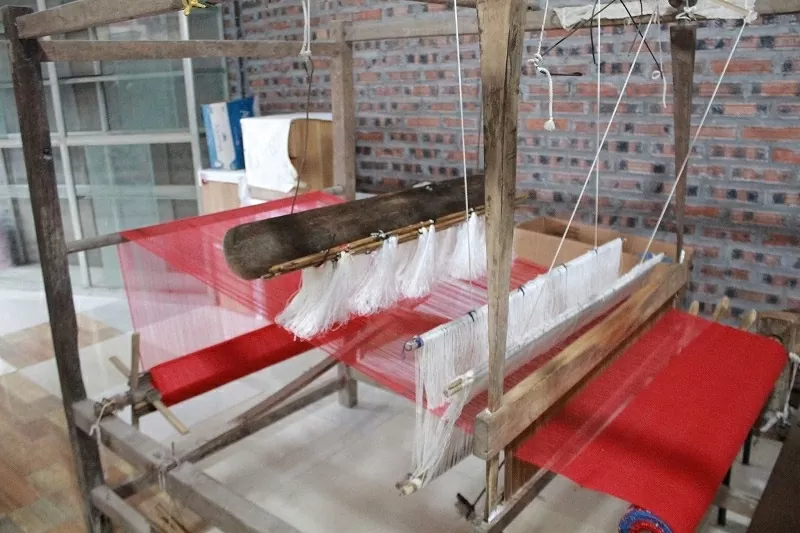 |
| Traditional loom in Hoa Ban workshop. (Photo: TGCC) |
However, the image of three generations gathered around the loom is becoming increasingly rare. In many stilt houses, looms that once held a central place in daily life now sit quietly in corners or are stored in the attic as relics.
The shift in livelihoods towards tourism, services, or distant labor has led to the irregular continuation of weaving; the younger generation is less inclined to learn the craft as it demands patience, while the market favors diverse and inexpensive industrial products.
This disruption in teaching and the absence of weaving in daily life threaten the technical knowledge and cultural memory of many generations with extinction.
The guardian of the craft for 15 Years
In this context, in Lac village, there remains a woman quietly ensuring the loom's sound does not fade. Artisan Vi Thi Thuan has been dedicated to the loom, patterns, and each thread for over 15 years, striving to preserve the craft.
Born into a poor Thai family, Thuan grew up with the sound of her mother and grandmother's loom. For her, the loom is not just a tool but a childhood memory, a place to cultivate patience and determination through each step of mastering the craft.
Thus, witnessing the dwindling number of apprentices, she understood that without persistence, the ancestral techniques would vanish.
In 2008, when many chose to change careers for livelihood, this valley girl went against the tide: she opened the Hoa Ban brocade weaving workshop and established the Thuan Hoa Social Support Facility.
This decision surprised many, as brocade weaving is "difficult even as a hobby", let alone as a livelihood. But for her, preserving the ancestral craft was more important than immediate benefits.
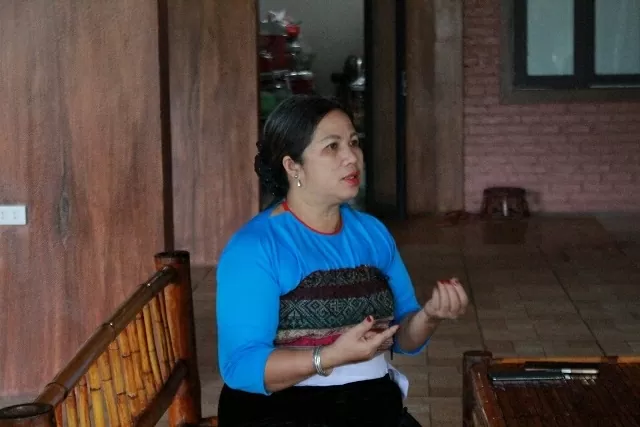 |
| Vi Thi Thuan has been dedicated to the loom for over 15 years. (Photo: Courtesy by author) |
Training regular individuals is challenging, but teaching people with disabilities is even more so. Some have weak limbs, others carry self-doubt. Yet, like with the loom, Thuan never gives up. Each day, she sits beside them, adjusting each thread, guiding each pull until the students truly master the craft.
Thanks to her perseverance, from a few initial students, the Hoa Ban workshop has become a workplace for a group of ethnic minority women, 30% of whom are disabled. For them, weaving not only provides stable income but also serves as a foundation for confidence, integration, and self-reliance.
Preserving the craft is one thing, but making it viable today is another. For Thuan, this involves not just the sound of the loom but also introducing brocade into Mai Chau's new lifestyle.
Deciding to place the weaving workshop and Thuan Hoa Support Facility right in Lac village—the heart of the community—was a turning point. This location allows products to reach tourists naturally, and artisans can sell directly without intermediaries.
To optimize revenue, she established Hoa Ban Homestay, transforming the accommodation space into a cultural storytelling venue using the workshop's products.
Simultaneously, she positioned brocade products in the high-quality handmade segment, refusing machine embroidery. Each fabric piece undergoes all stages of spinning, dyeing, and hand-weaving patterns, requiring absolute meticulousness. This painstaking process creates a distinctive value that industrial goods cannot replace.
The identity of the Thai people
Thuan's products are sold not only on quality but also on the story of traditional hand-weaving, the female ethnic minority and disabled artisans, and the humane livelihood model within the tourist village.
Many tourists are willing to pay more to support, knowing their purchase contributes to changing someone's life.
Thuan has also turned weaving into a cultural experience. Tourists can not only watch but also try sitting at the loom, weaving a few rows of patterns. Just a few minutes of experience is enough for them to appreciate the craft's intricacy—something often hidden when viewing finished products.
Thanks to this approach, the brocade–tourism–social support model has become a self-sustaining circle: Handmade brocade attracts tourists; tourism generates revenue; revenue returns to maintain traditional techniques and support vulnerable workers. This foundation allows her to open classes for young people, keeping hope alive for a craft on the brink of extinction.
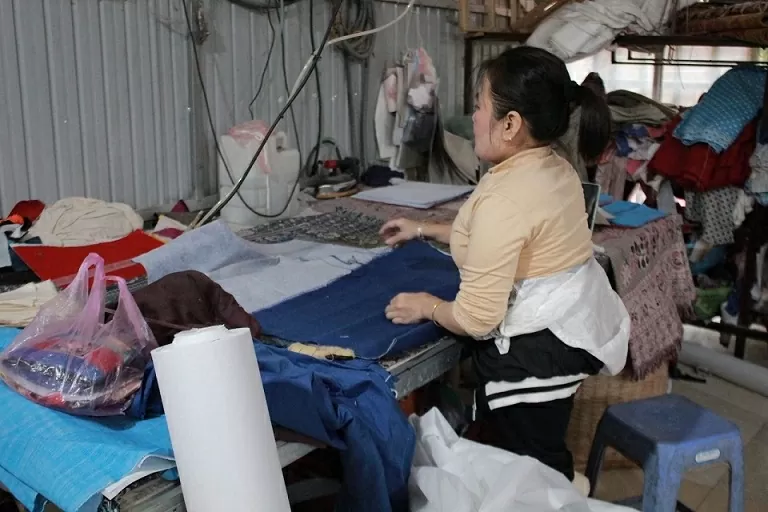 |
| Workers at the fabric cutting area of Hoa Ban workshop. (Photo: Courtesy by author) |
For Thuan, preserving the craft is not just about safeguarding manual techniques but retaining a part of the Thai identity in Mai Chau.
“To truly preserve the soul of the craft, it must be 100% handmade. I only hope young people are willing to learn, so that one day our village will still echo with the sound of the loom,” she says.
In Mai Chau valley today, tourism changes daily, with many old values gradually receding. But at the Hoa Ban workshop, the looms continue to hum. And as long as hands remain at the loom, the hope for a new generation to preserve Thai brocade is never extinguished.