


The Hmong people in Pa Co preserve cultural spirit to attract tourists
In Pa Co commune (Phu Tho), the story of Phang A Pao exemplifies how preserving cultural identity is a key factor for local tourism to compete and develop sustainably.
Latest
Pa Co commune, Phu Tho province, was established by merging three communes: Cun Pheo, Hang Kia, Pa Co, and three hamlets from Dong Tan commune, predominantly inhabited by the Hmong community.
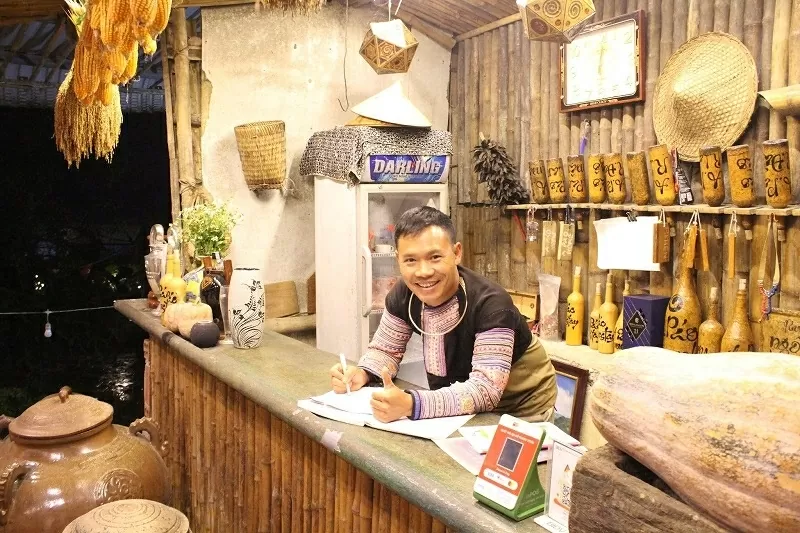 |
| Phang A Pao - Homestay owner. (Photo courtersy by character) |
This land boasts a unique landscape, shrouded in clouds and fog year-round, with weather patterns that showcase all four seasons in a single day: a spring-like cool morning, a summer-like hot noon, an autumn-like chilly afternoon, and winter-like conditions as night falls.
The authentic natural and cultural values of the Hmong people have attracted tourists, making the homestay model a way to diversify tourism products. It also presents a significant economic opportunity for core conservation areas where agricultural land is limited.
| More from WVR |
 Vietnam’s cultural identity in the era of international integration Vietnam’s cultural identity in the era of international integration |
However, rapid development poses significant challenges. Without scientific exploitation and preservation, destinations risk losing their appeal and struggling to compete with other tourist areas.
Local culture as an asset
As one of the first to start a homestay business locally, Phang A Pao (born in 1984) clearly understands that cultural identity is the most important asset in community tourism.
Starting in 2018, instead of borrowing funds to build modern structures, Pao decided to renovate his family's old house based on traditional Hmong architecture.
This idea stemmed from the belief that tourists come to Pa Co to explore local lifestyles and culture, not to seek urban-like comforts.
At his homestay, Pao incorporates culture into every detail. Signs within the premises are written in three languages: Vietnamese, English, and Hmong. The names of the lodging areas are derived from the Hmong clans in Pa Co.
This approach not only enriches visitors' knowledge but also affirms the host's pride in their language and heritage.
Additionally, cultural experiences such as wax painting, paper making, attending local markets, and participating in cultural performances are preserved in their original form, without being staged.
From barren fields to sustainable livelihoods
Previously, Pa Co residents mainly relied on growing corn and rice on rocky mountain slopes. Being in a core conservation area, the land was poor, resulting in low crop yields and unstable incomes.
Since the development of community tourism, the livelihood puzzle for locals has found a new solution. Economic benefits extend beyond homestay owners to the entire community through the service supply chain.
Tourists staying in the area consume local agricultural products, helping residents sell local chickens, black pigs, and mèo cabbage at much higher prices than wholesale.
Traditional crafts like brocade weaving and wax painting have also been revitalized to create souvenirs. Notably, village art troupes have been formed to entertain tourists and provide additional income for members.
Thanks to this methodical approach, Pao's family homestay now achieves stable annual revenue of nearly 1 billion VND, providing regular employment for 4-5 local workers.
This demonstrates that culture and homeland landscapes can indeed become a sustainable "breadwinner". Currently, around 15-20 families in the area are running homestay businesses.
Scientific tourism development to minimize risks
The reality in Pa Co shows that community tourism linked to cultural identity is the right direction. However, for this model to be truly sustainable, more attention and specific guidance from authorities are needed.
As the Head of the Local Farmers' Professional Association, Pao frequently shares experiences with the community for mutual development. His view is that the homestay model should not be expanded indiscriminately.
According to him, tourism requires knowledge and thorough preparation. If everyone jumps into it without understanding customer needs or disrupting the landscape and environment, it will lead to high risks and damage the overall image of Pa Co tourism.
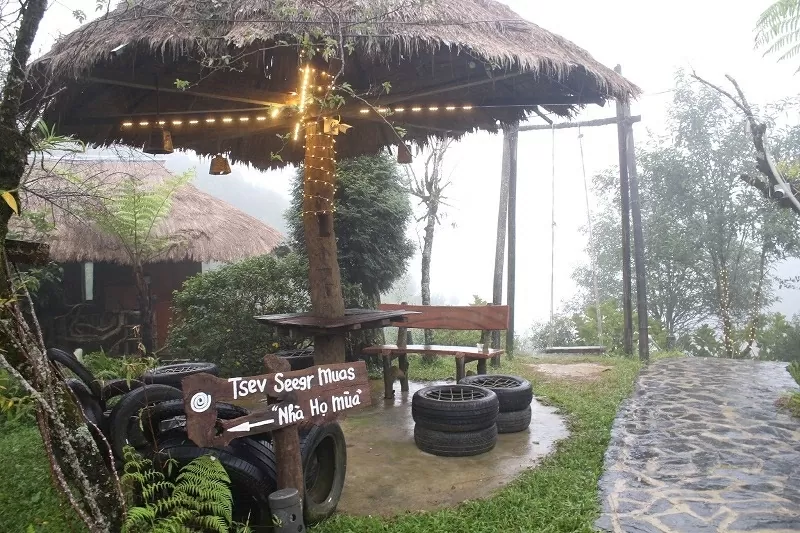 |
| Since the development of community tourism, the livelihood puzzle for locals has found a new solution. (Photo courtersy by character) |
Despite the bright spots in tourism, the commune still faces many challenges such as difficult transportation infrastructure; many points in the electricity, road, school, and station systems are deteriorating and need investment.
Moreover, the area is mainly hills and mountains, with little arable land, and irrigation is not yet proactive, making agricultural development difficult.
In the future, for community tourism in Pa Co to leverage its advantages and develop effectively and sustainably, becoming a livelihood for ethnic groups, the locality needs to foster consensus, proactivity, and positivity among residents, expert support, and timely leadership and direction from party committees and authorities.
Pa Co is gradually overcoming difficulties, striving to become an attractive destination drawing numerous domestic and international tourists along the Northwest route.

| National concerts - A new beat of Vietnam’s cultural industry Not only winning over audiences with performances that touch the heart and strongly inspire patriotism and national pride, the so-called “national concerts” are also helping ... |

| Vietnam prioritises training for cultural industry workforce Vietnam boasts rich “soft power” assets, from diverse cultural heritage to traditional festivals, landscapes and crafts. |

| A boost for the development of Vietnam's cultural industry WVR - From Phuong My Chi's soulful singing in China to Duc Phuc's historic victory in Russia, and the record-breaking revenue from the war film ... |
| Vietnam Pho Festival 2025: A 'cultural ambassador' in Singapore The Vietnam Pho Festival 2025 in Singapore showcases pho as a cultural ambassador, enhancing ties between the two nations. |
| A gathering place of cultural colours from Vietnam’s 54 ethnic groups WVR - From November 18-24, the Ministry of Culture, Sports and Tourism will organize the "Great National Unity – Vietnamese Cultural Heritage" week in 2025 ... |