






Hoi An - A tapestry of colours and memories of nostalgia
WVR - In the early morning, while the ancient town still lay in quiet repose, I began my journey to explore Hoi An with all the eagerness of someone setting foot for the very first time in this familiar land.
Latest
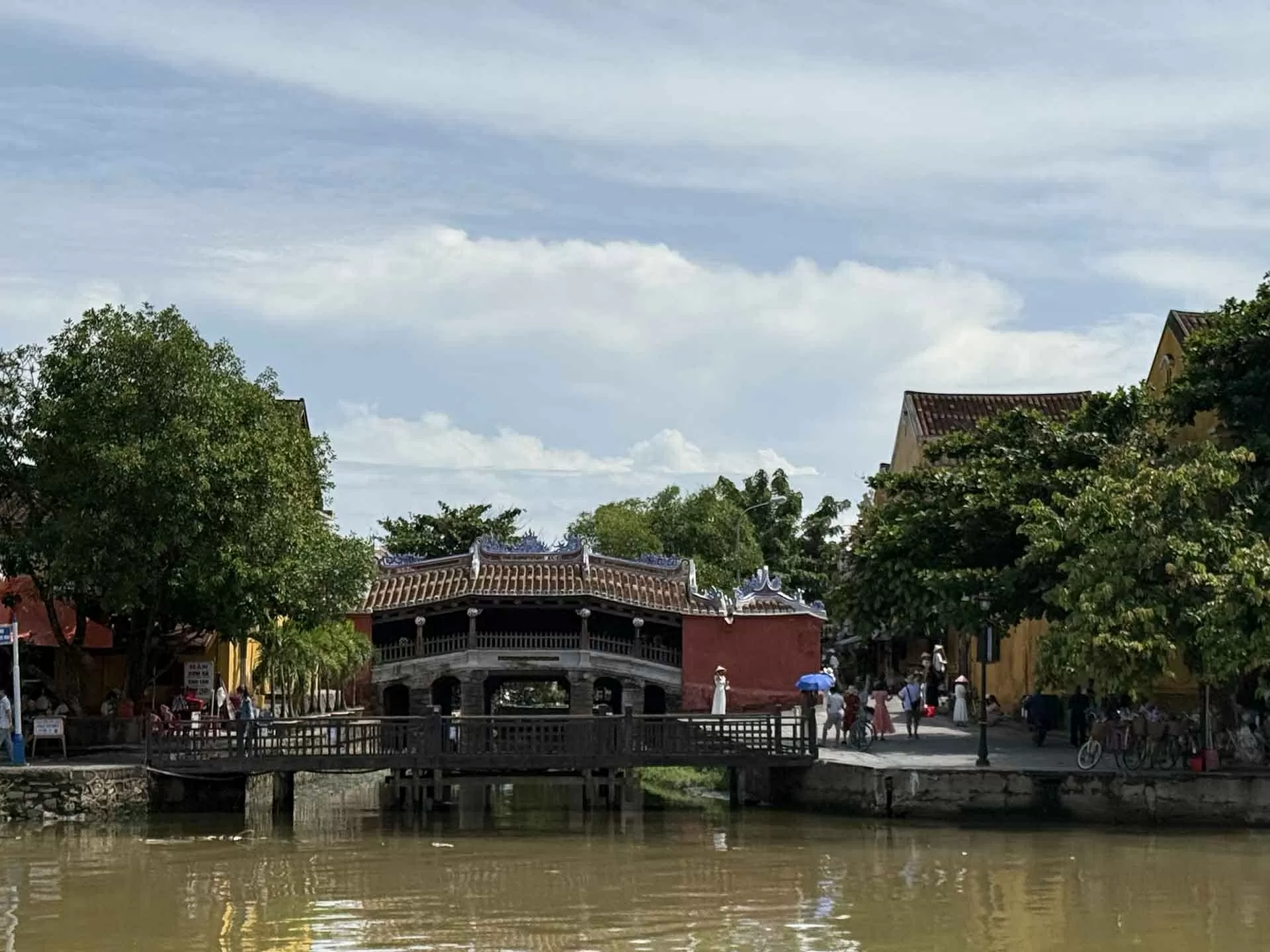 |
| Chùa Cầu Hội An. (Photo: Diệu Linh) |
The ancient town bathed in sunlight
One of the most striking features of Hoi An is its golden glow. From time-worn walls and centuries-old wooden houses to quiet cafés tucked away in narrow alleys, the town is bathed in a gentle shade of yellow. Against this golden backdrop, bougainvillea cascades in vibrant pink and red, spilling from tiled rooftops and balconies like flowing silk, lending Hoi An its own quiet charm - tender and romantic.
While wandering, a Singaporean tourist happened to ask me to take a photo at Chua Cau (Japanese Covered Bridge After a few poses, she turned and exclaimed with excitement: “The ancient town is so beautiful, everywhere is vibrant with mustard yellow.” She admired the view while taking selfies by the ancient wooden door – a familiar backdrop for hundreds of photos each day.
Indeed, Hoi An’s yellow is more than an architectural choice; it is a layer of collective memory carefully preserved through centuries. Under the first rays of sunlight, moss-covered walls come alive, whispering tales of a once-bustling port where merchant ships from across the seas docked.
Along the narrow streets, groups of visitors stroll unhurriedly - some clutching maps, others with cameras in hand. Their eyes sparkle whenever they encounter a picturesque corner. At familiar check-in spots, travellers enthusiastically take turns photographing each other, then huddle over their screens, marvelling at images imbued with poetic beauty, a charm only Hoi An can offer.
Bicycles weave gently through the lanes draped in flowers, while the occasional cyclo glides by without the honking of horns - forbidden in the old town. Instead, only the soft “beep-beep” of the drivers’ voices is heard, a unique traffic signal of Hoi An.
I once sat on one such cyclo, gliding past rows of ancient houses. The driver, nearly 60, cheerful and warm-hearted, shared: “I have been doing this for almost thirty years”, his voice thick with the Quang accent. “I used to try many jobs, but when tourism grew, I switched to driving a cyclo. At first, it was just temporary, but I became attached. Every day I meet new people - some want to hear stories, some just want silence to enjoy the town. Over time, I got used to it”, he laughed, pedalling slowly through a sunlit street.
In Hoi An, foreign visitors are everywhere. On one street, a Thai couple stepped out of a café, map in hand, animatedly discussing their “coconut boat” trip through the Bay Mau nipa forest. Natamon Phothikasem, the young woman, shared: “We have been in Hoi An for three days. Yesterday we went on the basket boat, today we are exploring the old town”. Despite the summer heat, she smiled brightly: “Yes, it’s hot, but this city is wonderful. I love it here”.
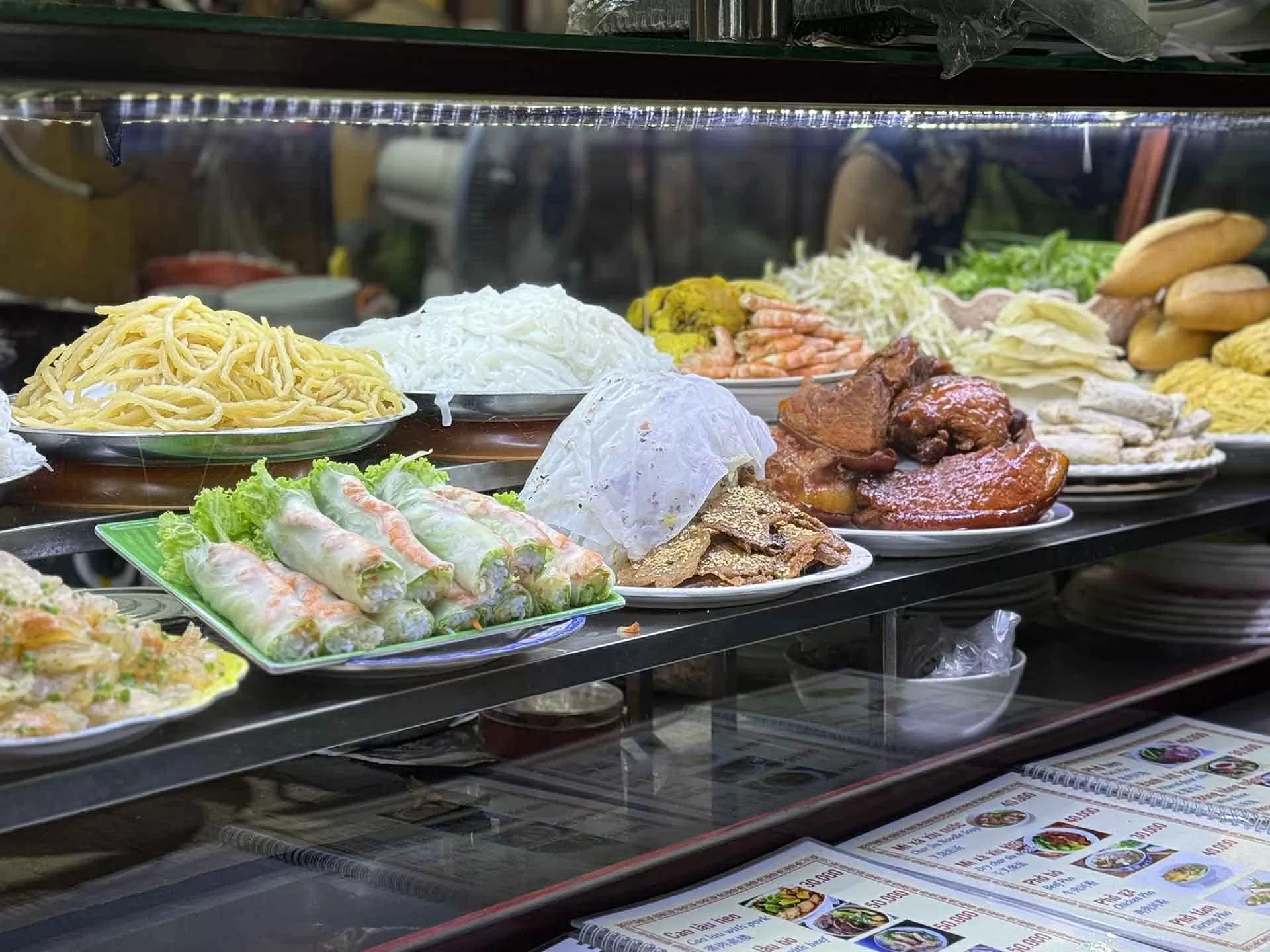 |
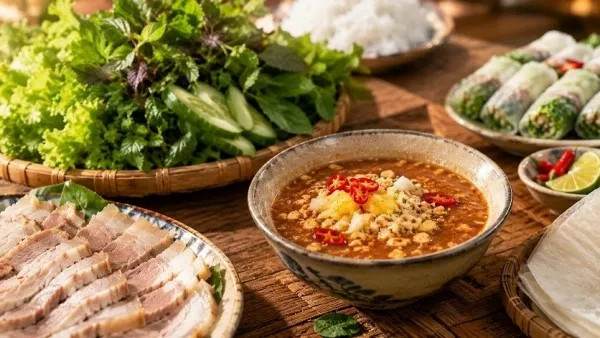
| Specialties in Hoi An. (Photo: Dieu Linh) |
A culinary paradise begins at the market
If there’s a place that truly embodies the culinary soul of Hoi An, it’s the Hoi An market – where visitors can experience the local rhythm of life, discover the flavors of local specialties, and meet the kind-hearted, rustic people.
The Hoi An market is not just a place for locals to buy vegetables, essentials, or daily goods. It’s a true culinary paradise. The food stalls are located right in the center of the market, packed closely together with dozens of local specialties. I chose to sit at a small stall with a simple sign reading “Cao lầu - Mỳ Quảng - Bánh bột lọc – Bánh đập”. I ordered bánh bột lọc and bánh đập, two seemingly simple dishes but with unforgettable flavors.
Bánh bột lọc, translucent like dew, filled with shrimp and minced pork belly, is wrapped in a chewy shell. The vendor adds a spoonful of scallion oil and sweet-salty fish sauce. Each tiny piece is packed with flavor. Bánh đập offers a completely different experience. A crispy rice cracker is topped with a thin layer of wet rice paper, then broken into small pieces and served with a thick, aromatic fish sauce. At the first bite, I was surprised by the crunchy sound, then immediately drawn into the harmonious sweet-salty taste. Simple yet addictive.
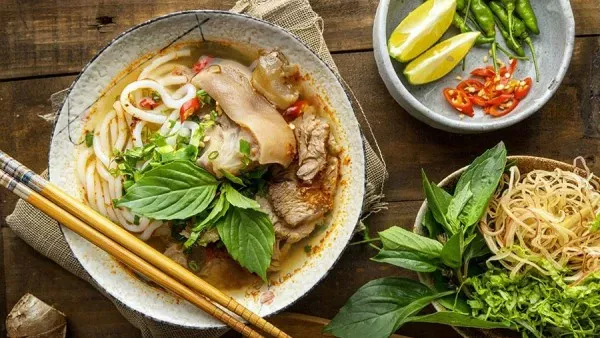
Beside me, a tourist was trying cao lầu, a dish unlike any noodle or pho. He savored the chewy noodles combined with tender, fragrant char siu pork and crispy pork skin, exclaiming to the vendor: “Delicious.” No fancy bowls or chopsticks, no elaborate presentation, but these dishes capture the essence of Hoi An cuisine, rustic yet rich, small yet refined.
Beyond these dishes, the Hoi An market tempts diners with mì Quảng, bánh xèo, hến xào, chè bắp, fresh juices, and even strong black iced coffee served in timeworn glass cups. No need for a luxurious restaurant, a simple wooden bench in the market is enough to open up a world of flavors, leaving a lasting impression.
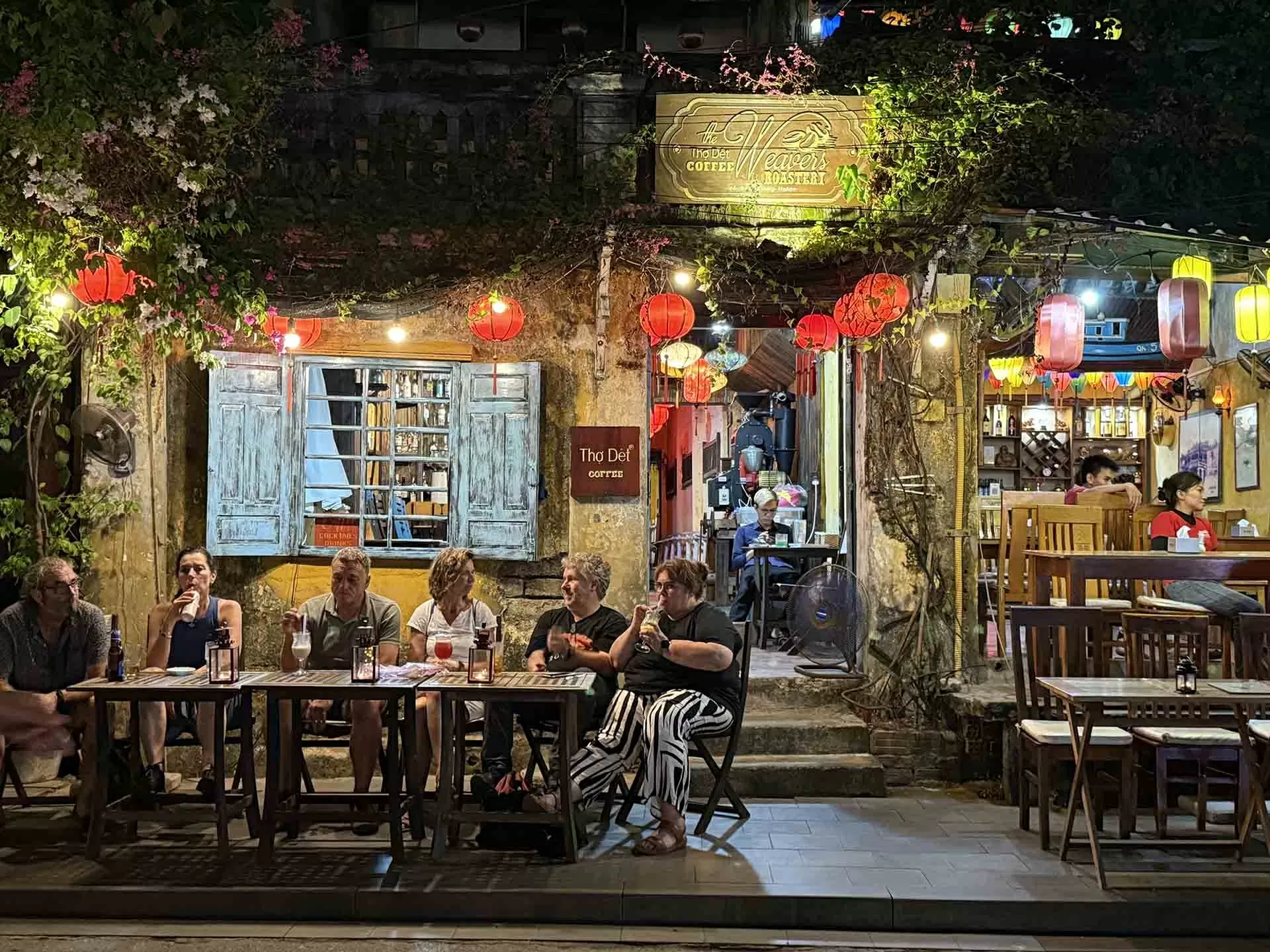 |
| Coffee shop in Hoi An. (Photo: Diệu Linh) |
A glittering night, Hoi An turns into a fairy tale
Every late afternoon, as the sun sets behind moss-covered rooftops, Hoi An dons a new outfit – more vibrant and bustling than ever. People leisurely flock to the pedestrian streets, where colorful lanterns begin to light up, shimmering on every windowsill and porch.
Along certain streets, the Hoi An night market comes to life. Small stalls line up closely, selling a variety of specialties, handicrafts, fabric lanterns, brocade bags, and Chùa Cầu-shaped keychains. Buyers and sellers chat animatedly under the gentle light, making everything look as magical as a fairy tale. Amidst the crowd, soft music plays from a small speaker, mingling with the vendors’ calls, neither hurried nor rushed.
On the river, flower boats adorned with dozens of small lanterns drift quietly, their reflections shimmering on the mirror-like surface of the peaceful Hoai River. Some boats carry tourists on night tours, some taking photos, others sitting quietly, observing the town from the water as if detached from the noisy everyday world. Along the riverside, I spotted a boy standing next to his mother, holding a grasshopper skillfully woven from coconut leaves. Delighted by this simple gift, I followed his gaze and stopped at a small roadside stall. A woman sat beside a foam box, her hands deftly crafting roses from coconut leaves. Around her were various small creations – from fish and birds to bouquets of green roses, neatly arranged like a miniature garden.
As she worked, she shared: She and her husband once traveled everywhere to make a living from the South to the North. Later, her husband learned the craft of leaf shaping and taught her. They chose to settle in Hoi An, a place peaceful enough to stay, with enough visitors to make a living with their skilled hands. “It’s hard work, but you get used to it,” she said.
Walking a bit further, in a courtyard near the river, a group of artisans was performing bài chòi – a traditional folk art form of Central Vietnam. The audience gathered around simple huts, listening to the calls while holding cards, waiting to see if they “win”. The rhythmic calls, sometimes lively, sometimes whispering, could be a humorous verse or a gentle reminder of life’s morals. Children clapped enthusiastically, while adults smiled and nodded. The atmosphere was not noisy, but warm and familiar, like a village fair from memory.
When the lanterns simultaneously lit up, Hoi An transformed into a grand stage of memories and light. Along the Hoai River, small boats carrying guests drift gently through the shimmering water. I followed a group of tourists releasing flower lanterns, small candles in paper lanterns floating with the current, carrying silent wishes.
With its simple beauty, Hoi An touches visitors with its subtle charms – the shimmering lights, the folk songs, a handmade toy, or simply the sound of “beep beep” echoing through a street without car horns.