





Hanoi Opera House listed among Asia's spectacular architectural works
WVR - In the list of Asia's most spectacular architectural works recently announced by Time Out magazine (UK), Vietnam is represented by the Hanoi Opera House. This over 100-year-old structure is not only a remarkable architectural landmark but also a cultural-historical symbol linked to many significant moments of the capital.
Latest
Located at 1A Trang Tien, on the August Revolution Square, the Hanoi Opera House is situated in one of the most central areas of Hanoi. With this location, the building serves both as a venue for performing arts and as a historical witness for over a century.
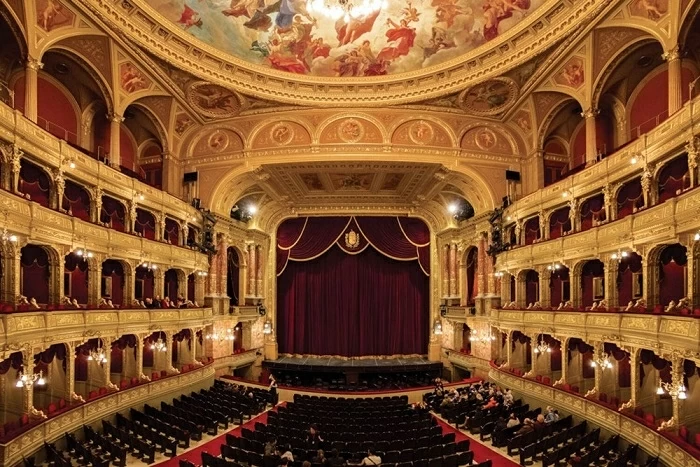 |
| The opera house was designed by French architects Harlay and Broyer, inspired by the Opéra Garnier in Paris but adjusted in scale and materials to suit the tropical climate. (Source: Van Hoa newspaper) |
At the end of the 19th century, the land where the opera house stands was originally a swamp area belonging to the villages of Thach Tan and Tay Luong.
In 1899, the Hanoi City Council proposed the construction of a grand opera house to serve officials and the upper class.
After several adjustments, the construction officially began on June 7, 1901, under Governor-General Paul Doumer, and was completed after 10 years of construction.
In 1911, the Hanoi Opera House became operational, emerging as one of the city's most modern and large-scale structures at the time.
The opera house was designed by French architects Harlay and Broyer, inspired by the Opéra Garnier in Paris but adjusted in scale and materials to suit the tropical climate.
The structure embodies French Neoclassical style combined with eclectic elements, featuring symmetrical Ionic columns, a sloped stone roof, arched windows, and intricate reliefs, creating a harmonious appearance between European architecture and Hanoi's urban space.
In terms of scale, the Hanoi Opera House is 87 meters long, with an average width of about 30 meters, a roof peak height of 34 meters, and a construction area of approximately 2,600 square meters. The main auditorium is designed like a "music box" with three tiers of horseshoe-shaped seating surrounding the stage, ensuring strict standards of acoustics and visibility.
During the colonial period, it primarily hosted opera, chamber music, and plays by French art troupes; from the 1940s, Vietnamese art troupes began performing, bringing the opera house closer to the domestic audience.
Beyond being an artistic venue, the Hanoi Opera House is associated with many important historical events such as the rally on August 17, 1945, and the first session of the National Assembly on March 2, 1946. In 2011, the structure was recognized as a national historical and architectural monument.
Today, the Hanoi Opera House remains a vital performing arts venue in the capital, regularly hosting symphony, opera, ballet, and major cultural events, contributing to the preservation and dissemination of Hanoi's cultural and historical values.