






Hanoi Convention: Empowering youth to shape the digital future
WVR - On October 26, within the framework of the Signing Ceremony and High-Level Conference of the United Nations Convention against Cybercrime (Hanoi Convention), the discussion session “The United Nations Convention against Cybercrime with and for Youth” took place with the enthusiastic participation of young individuals.
Latest
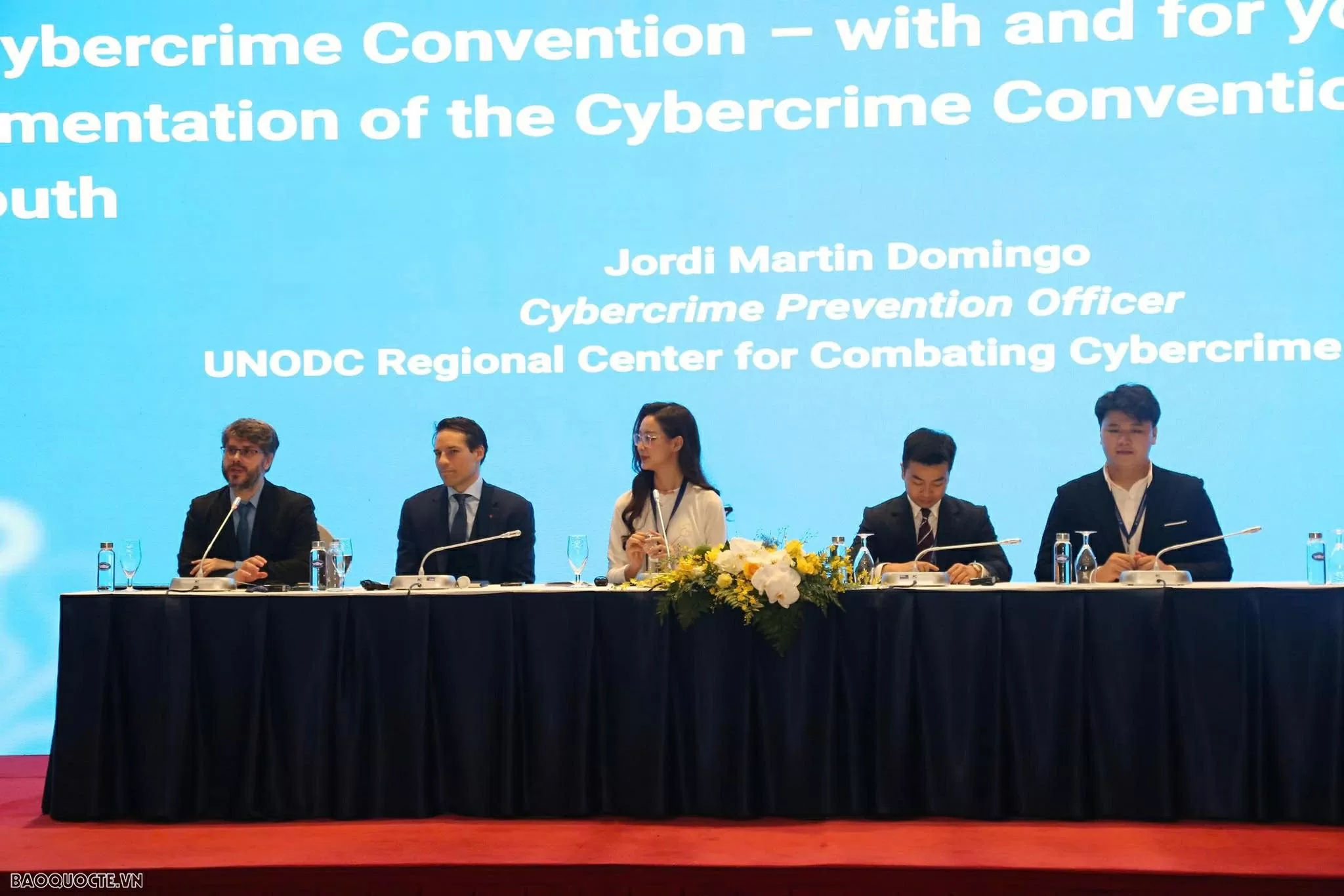 |
| Overview of the discussion session 'The United Nations Convention against Cybercrime with and for Youth'. (Photo: Thanh Long) |
The session was attended by Pauline Tamesis, the United Nations Resident Coordinator in Vietnam, and led by Miss Le Nguyen Bao Ngoc, Director of Gen Zero and a pioneering member of the Digital Trust Alliance under the Ministry of Defense.
The speakers included international experts, government representatives, and outstanding youth, such as Jordi Martin Domingo from the United Nations Office on Drugs and Crime (UNODC), Canadian High Commissioner Frédéric Margotton, and two Vietnamese youth representatives: Huynh Duy Thong from RMIT University, founder of MigPedia – an AI-driven application to prevent fraud and support safe migration, and Nguyen Quoc Anh, CEO of IT'S T TIME – creator of the "Digital First Aid Kit" to help young transgender communities tackle cybercrime.
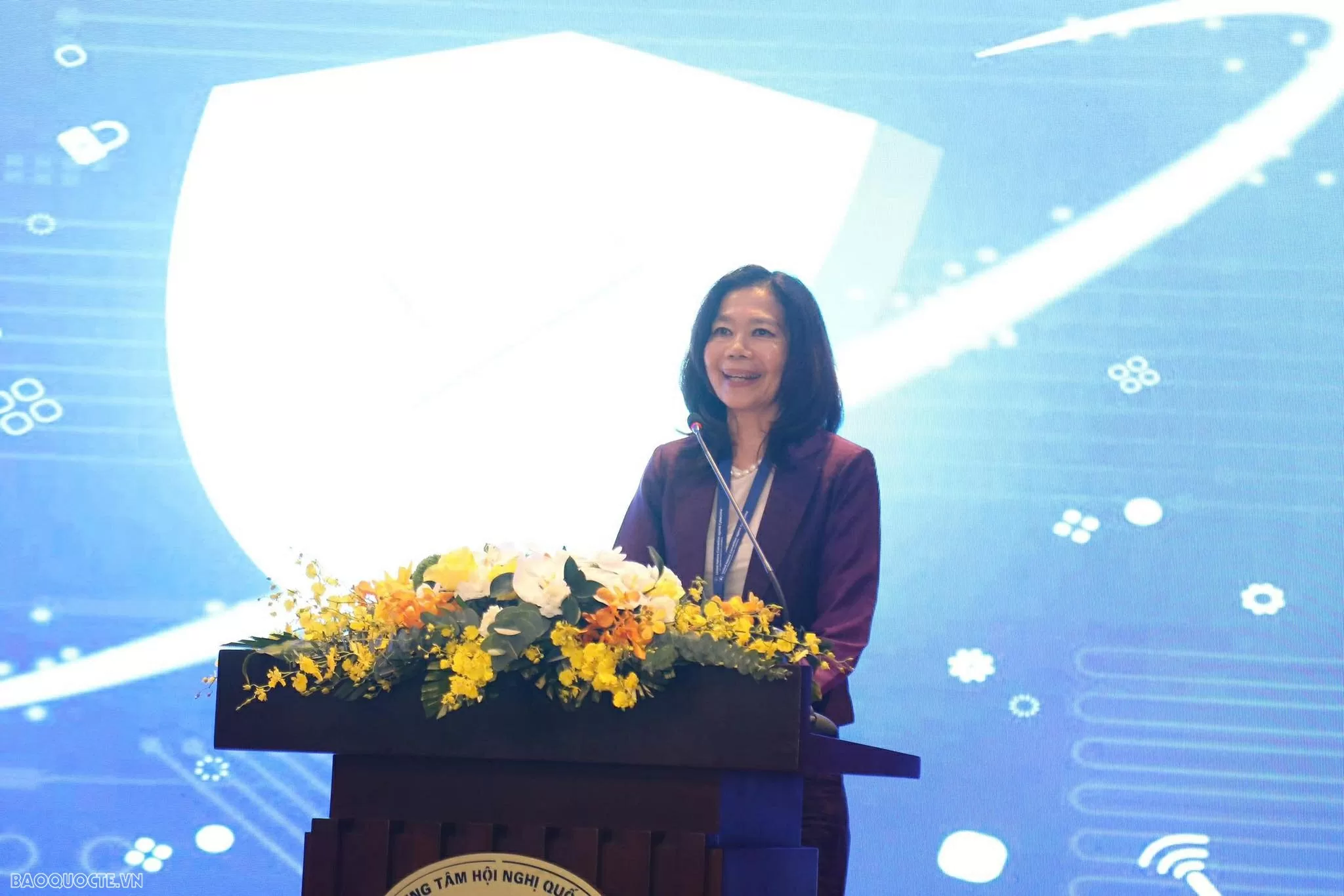 |
| Pauline Tamesis, United Nations Resident Coordinator in Vietnam, speaking at the event. (Photo: Thanh Long) |
A call to action from the Hanoi Convention
In her opening remarks, Pauline Tamesis highlighted the significance of the Hanoi Convention – the first global legal document on cybercrime adopted within the United Nations framework in over two decades.
Pauline Tamesis emphasized the crucial role of prevention in the fight against cybercrime. More than just a legal document, this Convention serves as a blueprint for international cooperation on combating cybercrime. It equips signatories with tools to prevent, investigate, and prosecute cybercrimes while fostering collaboration among governments, organizations, businesses, and social entities.
“The United Nations calls for the effective and appropriate implementation of the Hanoi Convention in line with international human rights obligations. This Convention promotes a safe, inclusive, and responsible digital space and calls for multi-sector cooperation to build online trust – a key to digital transformation that leaves no one behind,” emphasized Pauline Tamesis.
Pointing out that half of the world's population is under 30, Pauline Tamesis noted that young people are not only the main users of digital platforms but also at high risk of being targeted by cybercriminals. Youth are also change agents, driving advocacy, raising awareness, and creating innovative solutions for online safety and human rights in the digital age. For young people, the online space is not separate from reality – it is reality. Therefore, ensuring meaningful and safe youth participation in shaping responses to cybercrime is essential.
“Although youth are not explicitly mentioned in the Convention, its goal is to ensure a safe and robust digital future. We, the United Nations in Vietnam, see this event as an opportunity to start an important dialogue: how to empower youth to become digital citizens? How to equip them with the knowledge and skills to protect themselves and others from cybercrime? And how to create space for them to innovate, express themselves freely, and shape the digital future?” Pauline Tamesis stated.
The theme of the session “The United Nations Convention against Cybercrime with and for Youth” aims to ensure that young people feel safe and free in their online lives – freedom of speech, creativity, and development. This means recognizing youth as potential leaders.
“Let this Convention be not just a legal tool but a call to action. A call to build a safe, inclusive, and empowering digital world for everyone – especially for our youth,” concluded Pauline Tamesis.
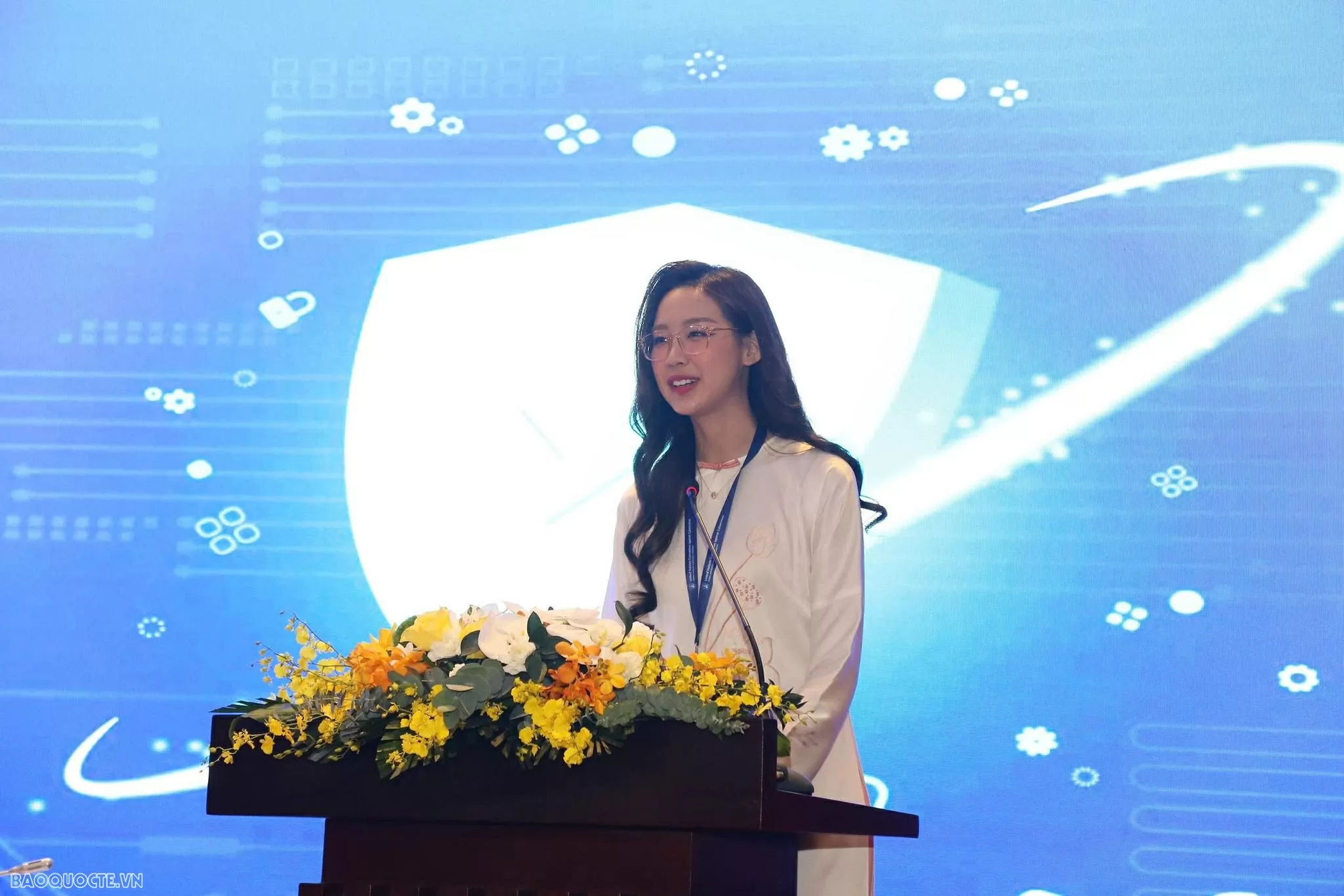 |
| Miss Le Nguyen Bao Ngọc emphasized the purpose and significance of the discussion session. (Photo: Thanh Long) |
Speaking at the event, Miss Le Nguyen Bao Ngoc conveyed the message: “We are here not just to talk about cybercrime, but to collectively redefine the concept of 'trust and safety' in the digital era.” In the online world, where people are more connected than ever, youth are the most dynamic, creative, yet vulnerable group. She emphasized that this paradox is not a weakness but a source of strength for the younger generation to pioneer the creation of a safer, more civilized, and humane cyberspace.
According to Bao Ngoc, when it comes to cybercrime, it is no longer a distant issue but a very real concern for young people, such as online fraud, identity theft, unauthorized dissemination of private content, or privacy violations. Therefore, the session was organized to find preventive solutions, share international experiences, and raise awareness about digital safety for youth.
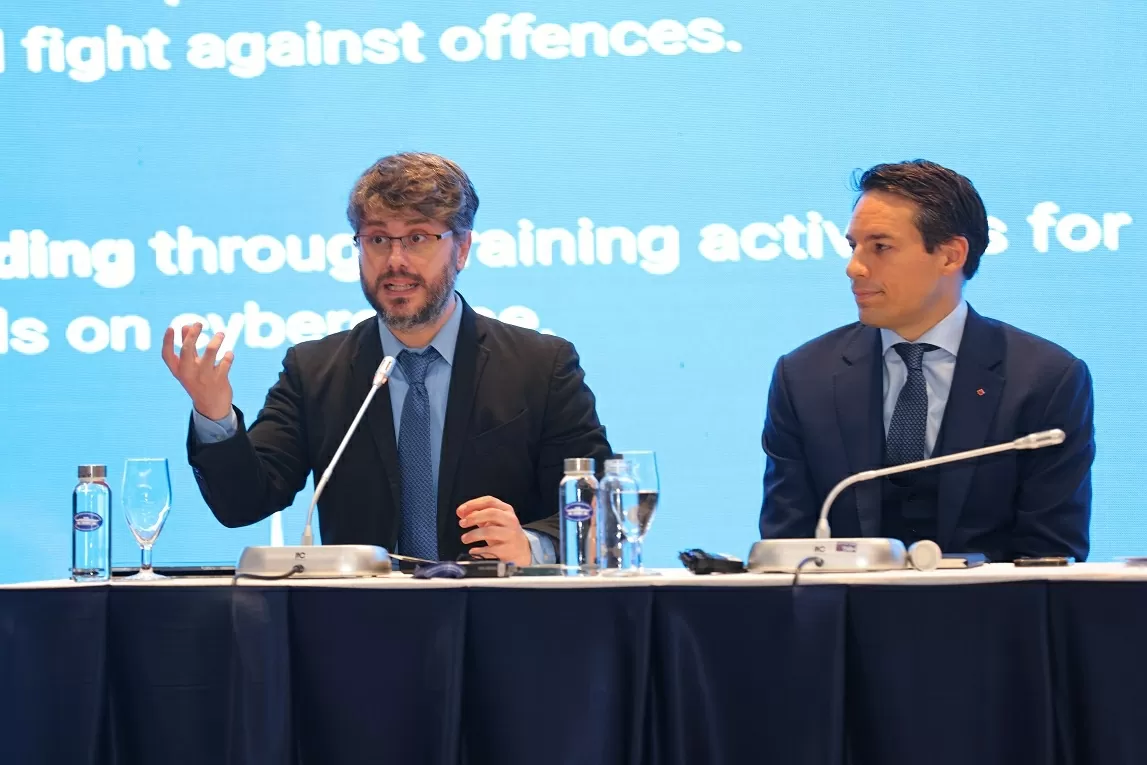 |
| UNODC representative Jordi Martin Domingo pointed out the provisions related to youth rights in the Hanoi Convention. (Source: IOM) |
During the session, UNODC representative Jordi Martin Domingo highlighted the provisions related to youth rights in the Hanoi Convention: youth exposure to cybercrime and related preventive measures (Article 53), as well as protective measures focusing on crimes under the Hanoi Convention affecting youth – unauthorized access (Article 7), data interference (Article 9), theft and fraud (Article 13), and misuse of private images (Article 16). With youth perspectives at the core, Jordi Martin Domingo stated that promoting the Hanoi Convention and the Global Digital Compact (GDC) will lead to a safer and more inclusive cyberspace.
Through the speakers' insights, the session contributed to raising awareness about cybercrime affecting youth and advocating for the implementation of the Hanoi Convention and GDC. International speakers and Vietnamese youth speakers also shared policies and technologies for prevention and protection, emphasizing equality and non-discrimination.
The session concluded with a strong consensus on the need to empower youth to become digital citizens and change agents – showcasing their contributions while ensuring safe and inclusive participation in the digital future.
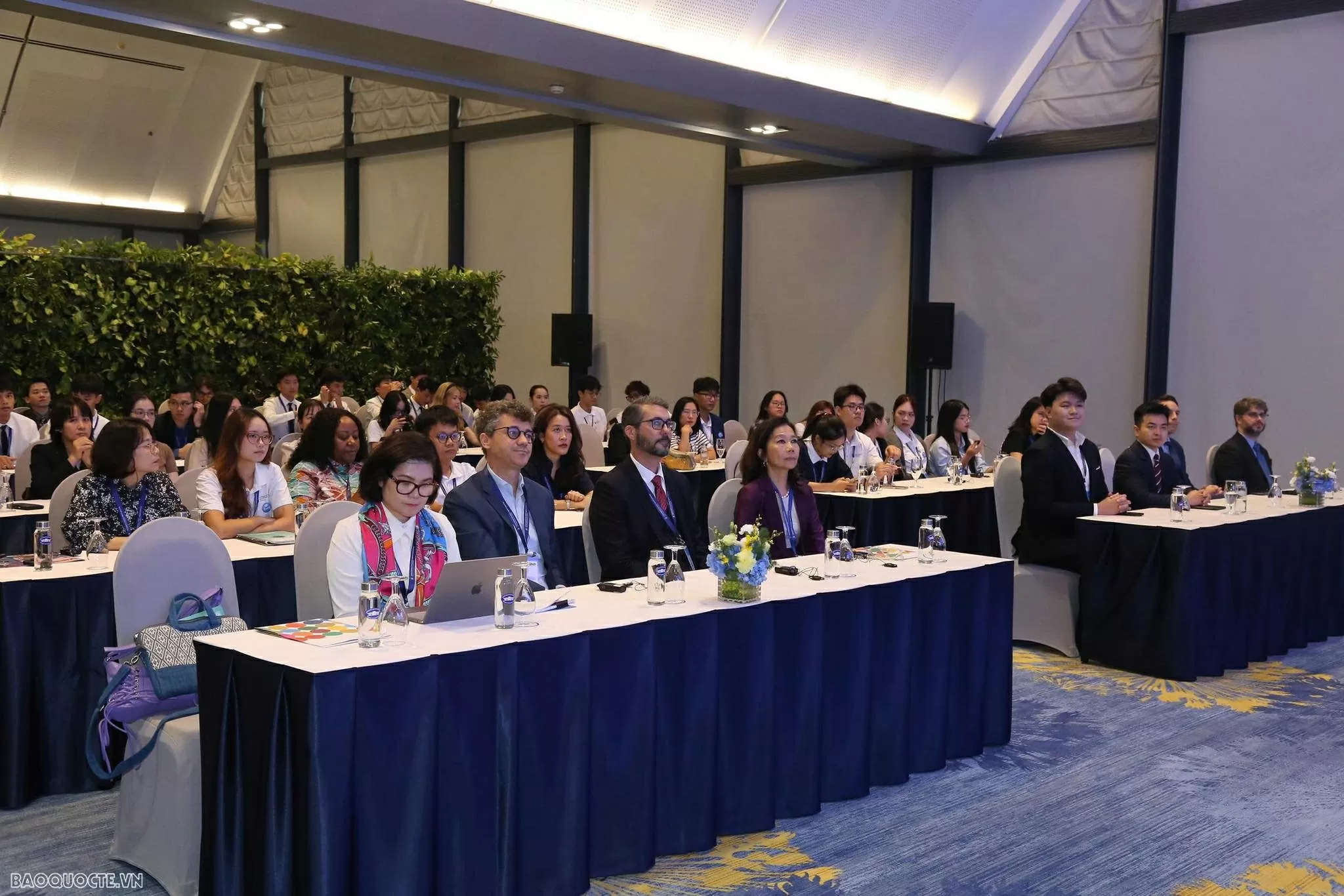 |
| The discussion session was part of the Signing Ceremony and High-Level Conference of the United Nations Convention against Cybercrime. (Photo: Thanh Long) |
The force creating a safe, humane cyberspace
Sharing with The World & Vietnam Report at the event, Huynh Duy Thong, a student at RMIT University and a member of the "Core Youth" group of the International Organization for Migration (IOM) and the Gen Zi Cu (migration) Project on promoting safe migration and combating human trafficking, detailed the MigPedia initiative – a digital platform developed by youth to help young Vietnamese migrate safely, legally, and with reliable information. The application provides tools like Mig-AI for virtual consultation, Mig-Folder for document management, and Mig-Edu for learning digital and legal skills before going abroad.
The motivation for Thong and his team to implement this initiative stems from real stories of young people being scammed online, exploited when studying abroad, or working overseas. Duy Thong and his peers believe that only when youth are equipped with knowledge and their own voice can they stop sophisticated forms of human trafficking in the digital era.
According to the "Core Youth" group member of IOM, the Hanoi Convention is a historic milestone in the global effort to protect people in cyberspace, especially the younger generation.
“For the generation born and raised with the Internet – the digital space is a place for learning, working, and creating, but also holds many risks. This Convention not only helps build a global legal framework to combat cybercrime but also affirms that the right to safety and respect online is a fundamental right of every digital citizen. I believe that the greatest significance of the Hanoi Convention lies in giving youth trust and responsibility – believing that the voices of young people can help shape policy, and the responsibility to act ethically, protect themselves and the community in the online world,” Duy Thong emphasized.
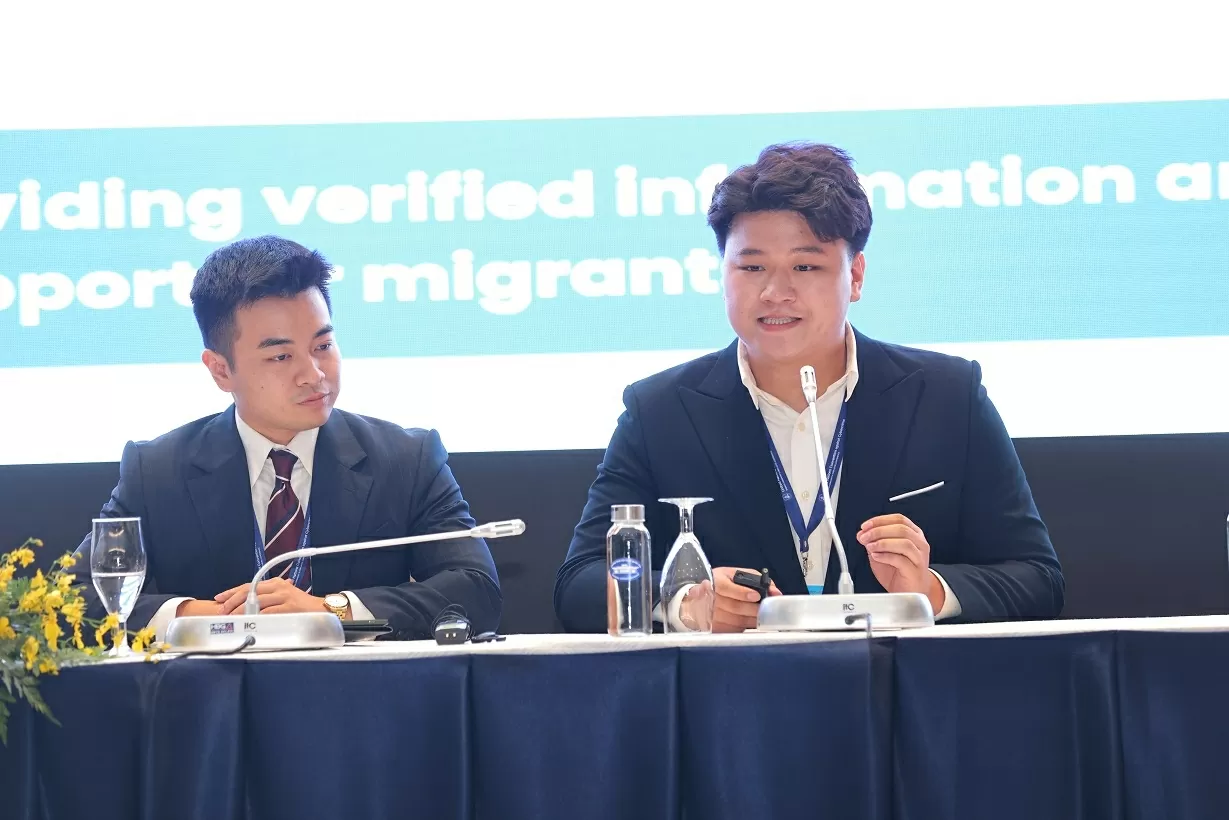 |
| Huynh Duy Thong, a student at RMIT University, member of the "Core Youth" group of IOM and the Gen Zi Cu Project on promoting safe migration and combating human trafficking. (Source: IOM) |
Looking towards a digital future full of opportunities but also challenges, Duy Thong believes that Vietnamese youth can become "creators" rather than just "users" of cyberspace. Youth can develop more humane technology, spread critical thinking, and support each other in identifying and reporting online abuses.
“More importantly, every young person – whether a student, a programmer, or a developer – can contribute to building a safe digital future through small daily actions: sharing accurate information, protecting others' privacy, and spreading a culture of respect in the online world,” called the "Core Youth" group member of IOM.
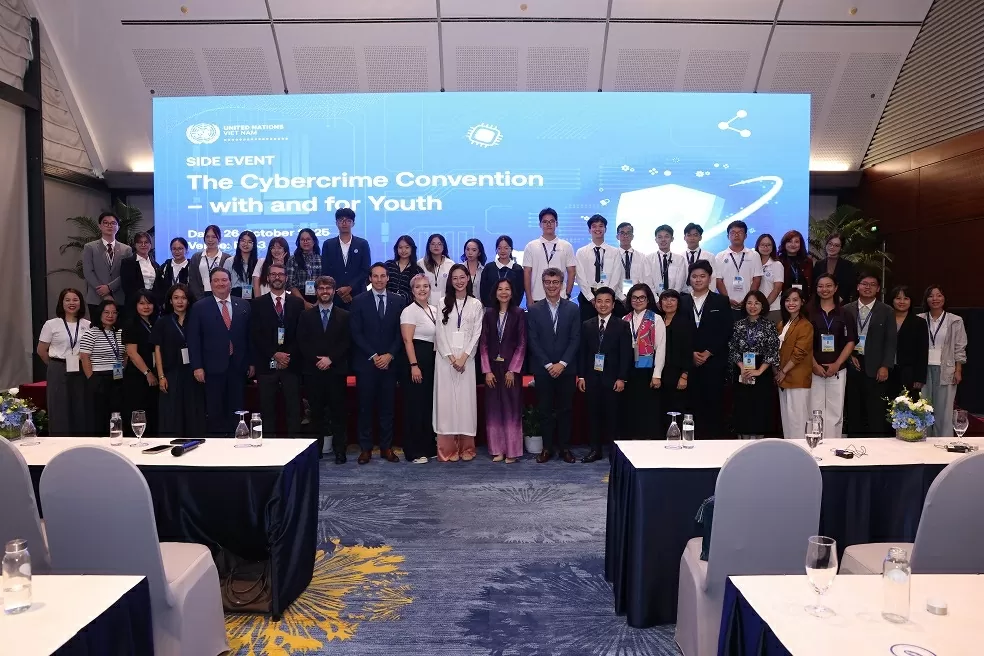 |
| Delegates taking a group photo. (Source: IOM) |