







Prime Minister Pham Minh Chinh emphasizes cybersecurity as 'backbone' of national digital transformation at Hanoi Convention
WVR - On the afternoon of October 25, within the framework of the Signing Ceremony of the United Nations Convention against Cybercrime (Hanoi Convention), the first high-level plenary discussion session took place.
Latest
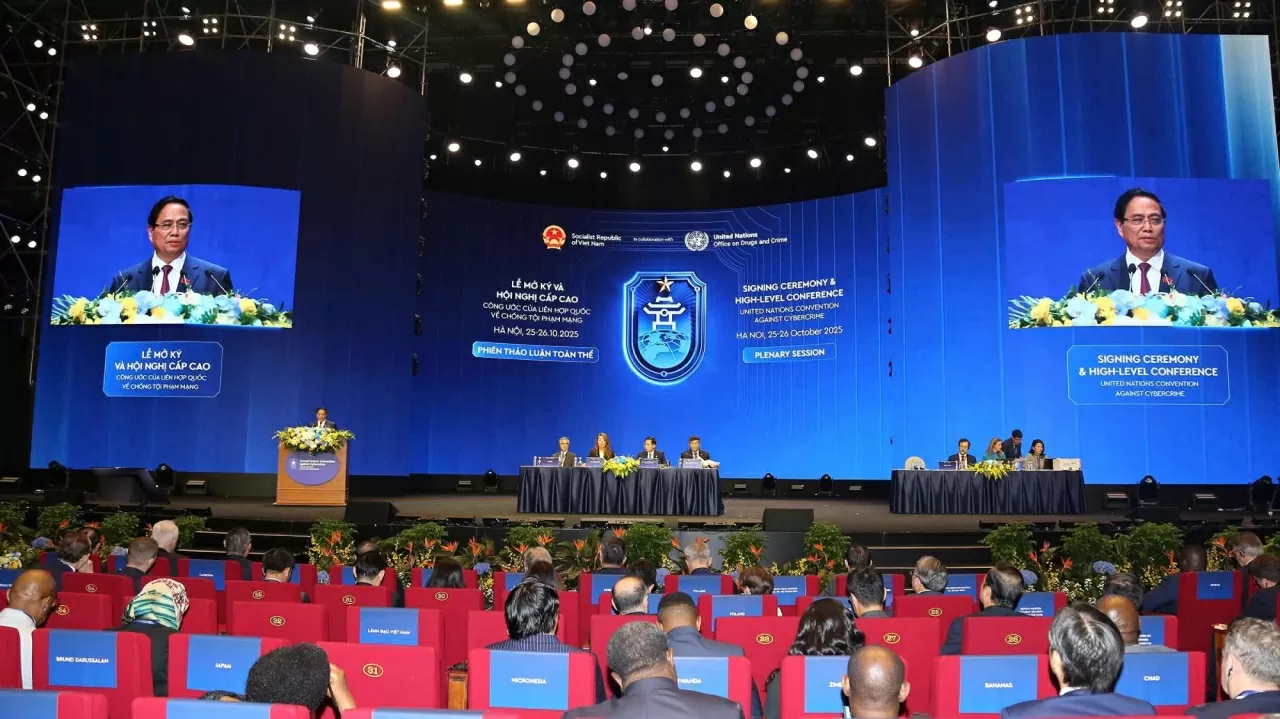 |
| Prime Minister Pham Minh Chinh emphasizes cybersecurity as 'backbone' of national digital transformation at Hanoi Convention: Overview of the plenary discussion session. (Photo: Thanh Long) |
In his opening remarks, Prime Minister Pham Minh Chinh affirmed that the United Nations Convention against Cybercrime marks a new beginning in history, establishing the first global legal framework in cyberspace, a new territory for humanity. This is not just a legal event but also a symbol of trust and collective determination among nations to unite, act, share, protect, and develop in a safe, healthy, fair, sustainable, and civilized environment.
The world is entering the digital era with significant achievements, driven by advancements in science and technology, particularly the rapid growth of artificial intelligence, big data, the Internet of Things, blockchain technology, and many other platforms. These achievements fundamentally change the economy, production methods, and social life. Digital transformation is not only an inevitable choice and an objective trend but also a strategic choice for nations aiming for rapid and sustainable development in the digital era.
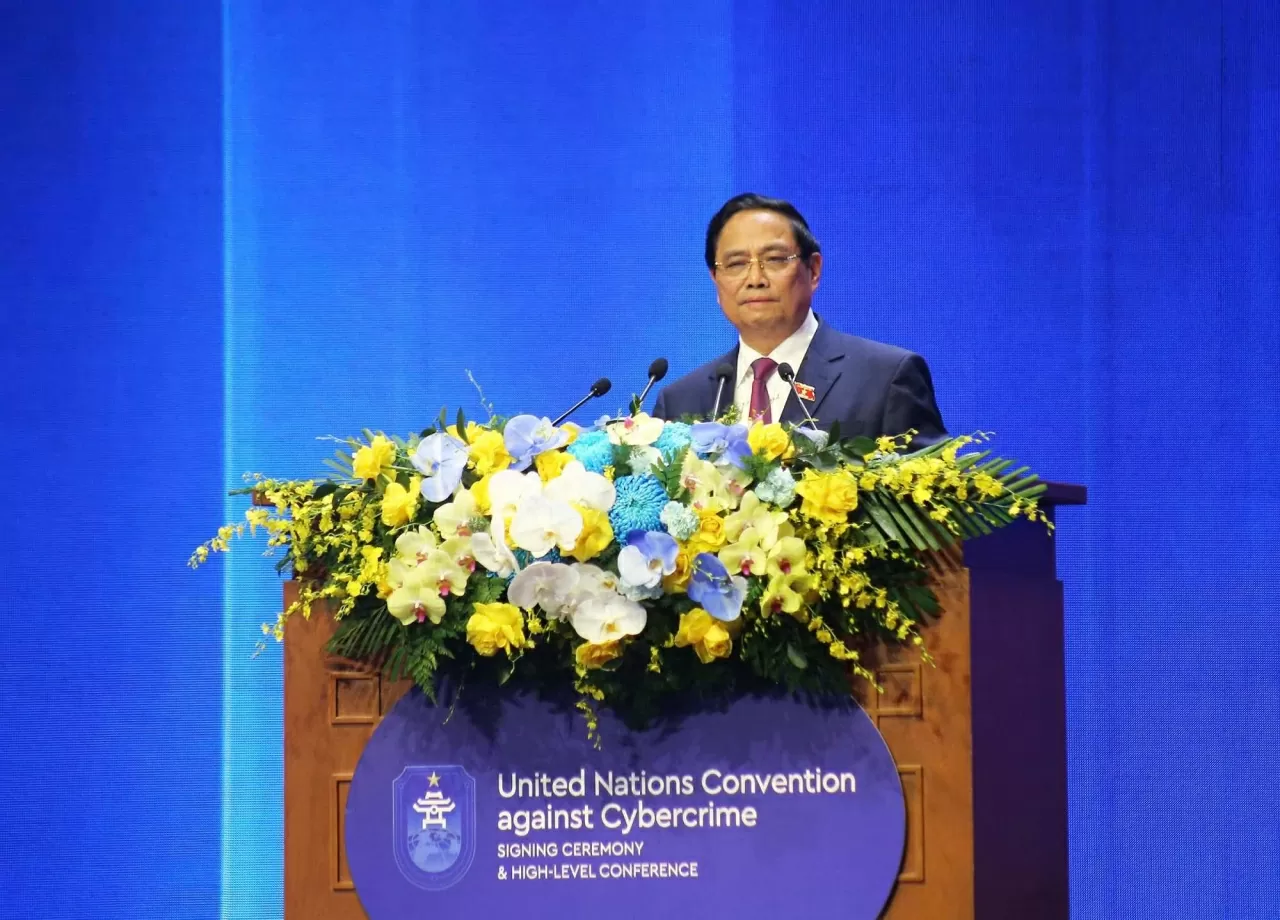 |
| Prime Minister Pham Minh Chinh affirms that ensuring cybersecurity and combating cybercrime are pillars and the backbone of the national digital transformation. (Photo: Thanh Long) |
According to Prime Minister Pham Minh Chinh, alongside the light of progress lies unprecedented risks. Cyberspace is being exploited by criminals to violate the law, causing damage amounting to 3-5% of global GDP, exceeding the GDP of many countries worldwide. These risks impact not only material and cultural life but also human psychology.
Therefore, ensuring cybersecurity and combating cybercrime in the digital era will help protect social trust, maintain political stability, national independence, sovereignty, and the safety and happiness of every citizen. Vietnam deeply understands that ensuring cybersecurity and combating cybercrime are pillars and the backbone of the national digital transformation.
Speaking at the discussion session, Cambodian Deputy Prime Minister Sok Chenda Sophea stated that we are facing a challenge that no nation can solve alone, a challenge that can only be overcome through unified action. Cybercrime transcends all borders, but for a long time, our responses have been fragmented and lacking cohesion.
According to Deputy Prime Minister Sok Chenda Sophea, the signing ceremony has paved the way for coordinated action, shared responsibility, and mutual trust. He expressed confidence that the Convention will help parties share electronic evidence across borders, extradite suspects, and ensure that cyberspace does not become a safe haven for criminals but a safe environment for everyone.
In policy-making, legal framework development, and law enforcement, each country has different priorities. However, it is crucial to align national priorities with the Convention, considering it a shared commitment to act and protect citizens.
"For Cambodia, the Convention contributes to enhancing the capacity to fulfill the national mission on cybersecurity, promoting safe digital practices, and establishing incident response procedures in line with international standards. We are building a highly skilled cybersecurity workforce to protect citizens from threats such as online fraud, data breaches, and privacy violations," Deputy Prime Minister Sok Chenda Sophea affirmed.
The Cambodian Deputy Prime Minister reaffirmed Cambodia's strong and sustainable commitment to this important international Convention. We look forward to working closely with all member countries in implementing the Convention and turning commitments on paper into real actions.
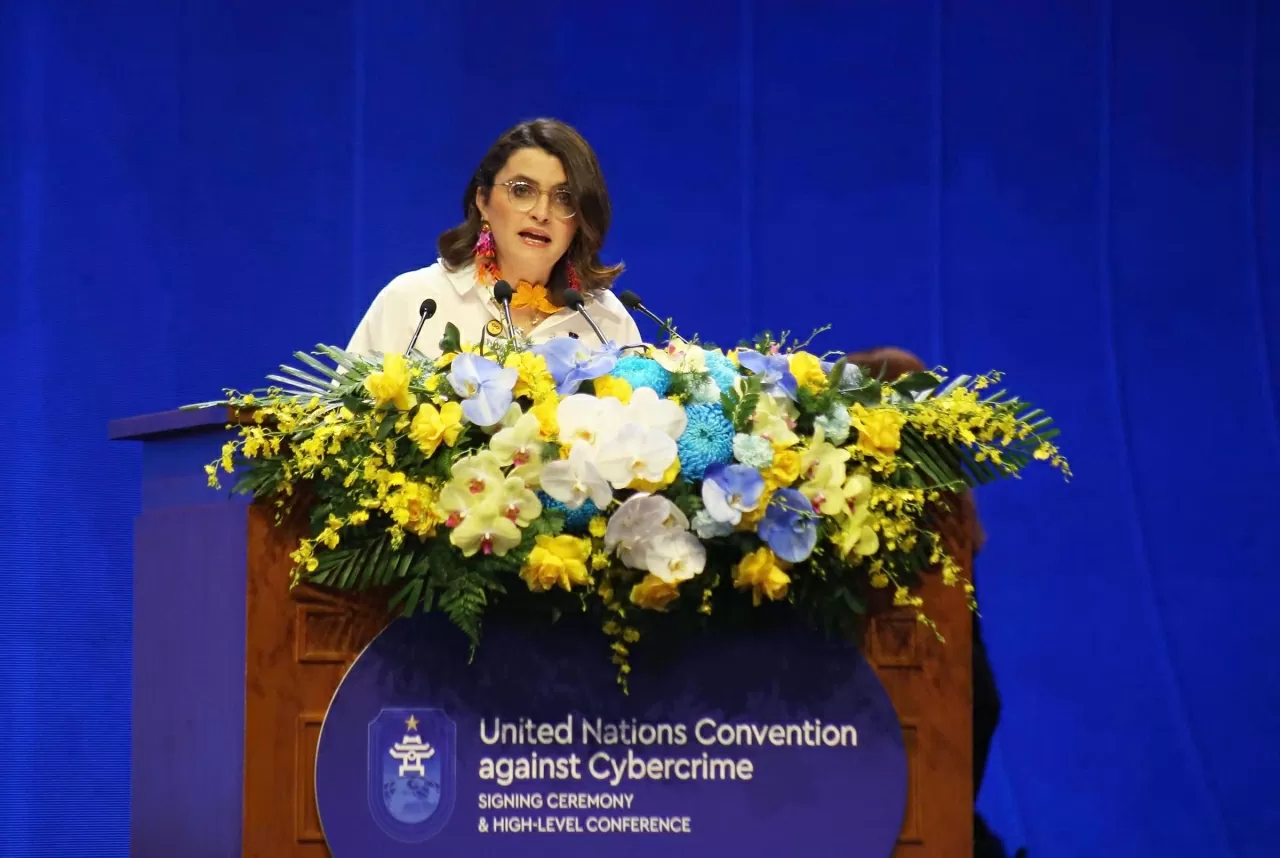 |
| Ecuadorian Vice President Maria Jose Pinto believes that cybersecurity cannot be viewed merely as an economic or technological issue; it is a social welfare issue. (Photo: Thanh Long) |
Ecuadorian Vice President Maria Jose Pinto stated that behind the threat in cyberspace, there are always social consequences affecting future generations. Today, children grow up in a digital world where connections have no limits. However, in that space, they also face risks of online violence, sexual exploitation, and fake news.
According to Maria Jose Pinto, cybersecurity cannot be viewed merely as an economic or technological issue; it is a social welfare issue, protecting the hearts and minds of an entire generation. When a child loses trust in the online world, it is not just data that is lost, but also potential, hope, and a part of humanity's shared future.
Vice President Maria Jose Pinto said: "We must build systems that not only protect information but also preserve innocence. Digital skills should be taught as life skills, not optional tasks. We must ensure technology empowers rather than isolates people."
Therefore, the concept of "security" needs to be expanded to include human dignity, mental health, and child protection at the center of cybersecurity discussions. "Let's ensure that every technological advancement is accompanied by a step forward in humanity. If we protect children today, we not only secure their physical world but also preserve the soul of humanity itself," Maria Jose Pinto affirmed.
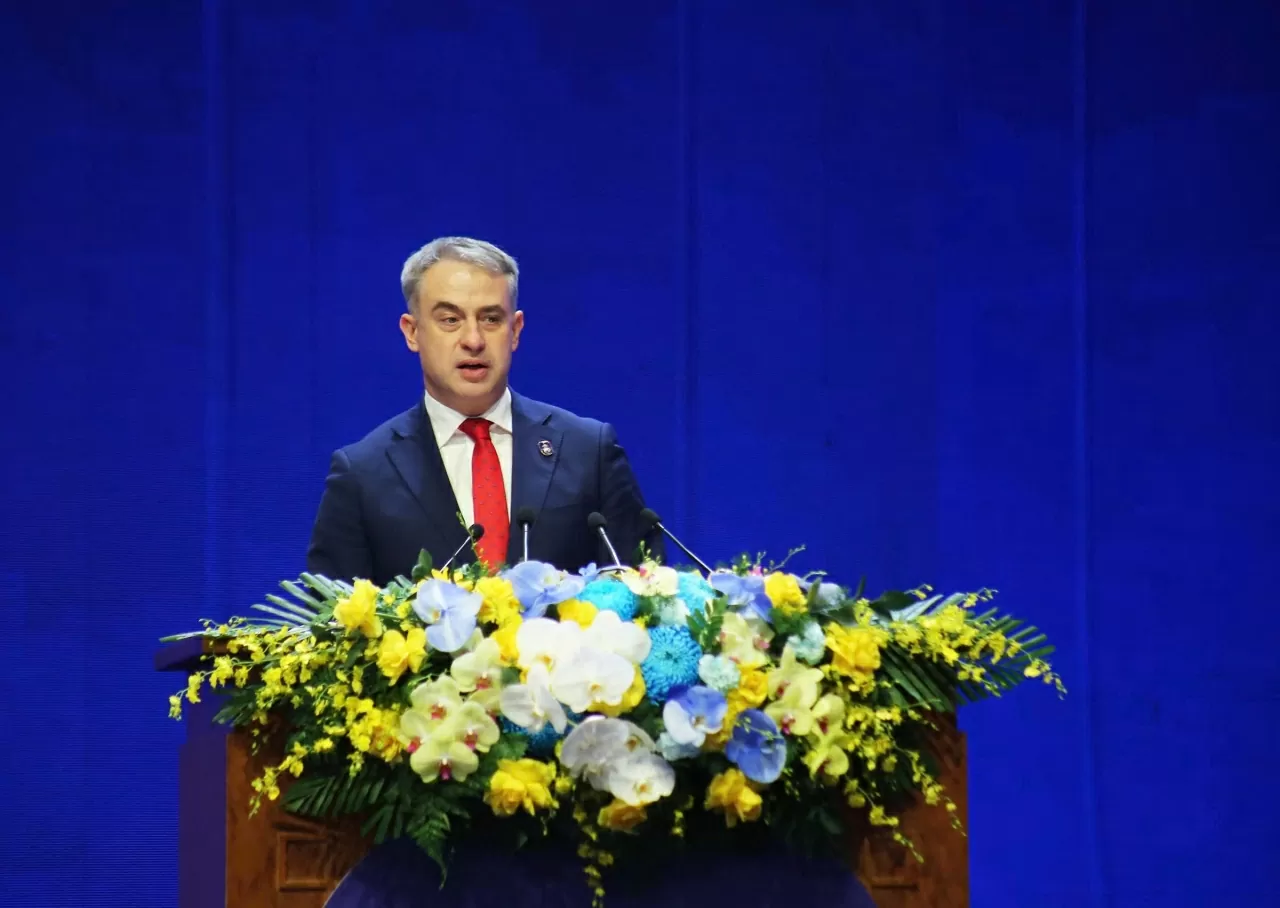 |
| Polish Deputy Prime Minister, Minister of Digital Affairs Krzysztof Gawkowski fully supports the Convention, considering it a significant step forward, laying the foundation for effective cooperation frameworks among countries in combating cybercrime. (Photo: Thanh Long) |
Meanwhile, Polish Deputy Prime Minister, Minister of Digital Affairs Krzysztof Gawkowski emphasized that cybercrime is a borderless phenomenon, a global trend, and an increasingly dangerous challenge. Therefore, Warsaw fully supports the Convention, considering it a significant step forward, laying the foundation for effective cooperation frameworks among countries in combating cybercrime, and collecting and processing electronic evidence.
This Convention is the result of years of relentless efforts, reflecting the shared will of the international community and the commitment of parties to protect human rights, personal privacy, respect national sovereignty, and promote legal cooperation, according to Krzysztof Gawkowski.
The Polish Deputy Prime Minister, Minister of Digital Affairs noted that from a political perspective, this Convention holds profound significance for Warsaw. For law enforcement agencies, the Convention provides more comprehensive tools to collect electronic evidence, not only in criminal cases but also in those involving digital elements. For citizens and businesses, the Convention enhances digital safety, protects jobs, and ensures international compatibility. For the state, the Convention offers a more effective response to cross-border threats.
Krzysztof Gawkowski concluded: "Cybercrime threatens our society, ethics, and democracy, requiring a unified response. Poland reaffirms its commitment to continue acting in solidarity, responsibility, and the rule of law, contributing to building a safer, healthier, and more humane cyberspace for everyone."
 |
| Delegates attending the discussion session. (Photo: Thanh Long) |