



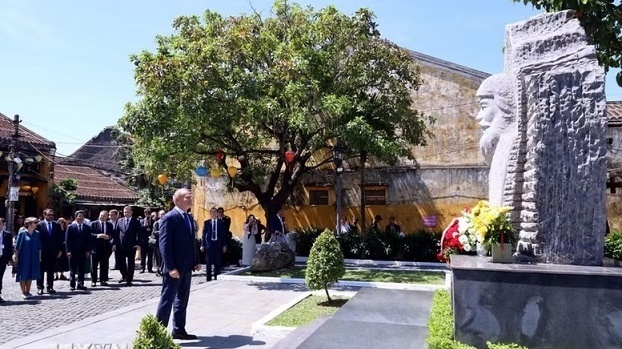
Exploring Vietnam's nine World Heritage Sites
WVR - The Japanese daily Nikkei Asia has introduced nine of Vietnam’s World Heritage Sites, guiding travellers from the sacred serenity of Yen Tu, through the majestic landscapes of Phong Nha, to the time-honoured charm and cultural richness of Hoi An.
Latest
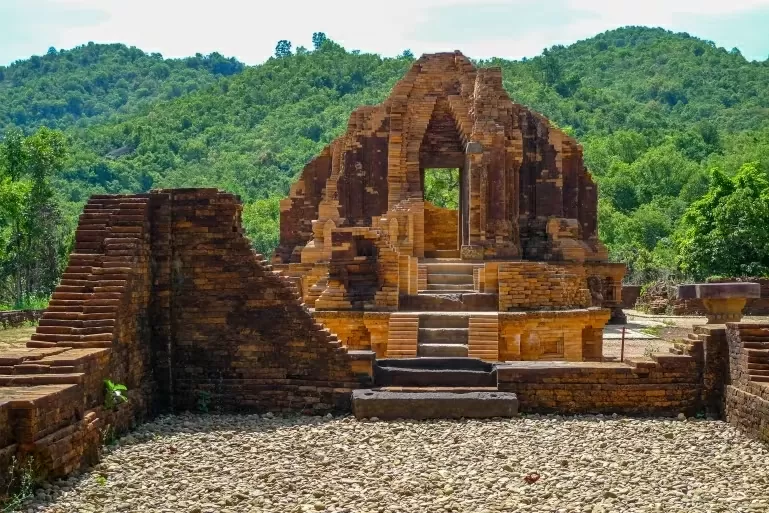 |
| A partially restored temple at My Son Sanctuary, one of Vietnam's UNESCO-recognized World Heritage Sites. (Source: Nikkei Asia) |
According to Nikkei Asia, Vietnam currently has 9 UNESCO-recognized World Heritage Sites following the 47th session of the World Heritage Committee in Paris last July. Among these, the Yen Tu – Vinh Nghiem – Con Son, Kiep Bac Complex has just been listed, while Phong Nha – Ke Bang National Park has been expanded to include Laos' Hin Nam No National Park, becoming Vietnam's first transboundary heritage site.
To provide visitors with more destination options, Nikkei Asia outlines a comprehensive picture of seven cultural and two natural heritage sites, stretching from Hanoi to Hoi An, showcasing historical, religious, and unique landscape values.
Thang Long Imperial Citadel
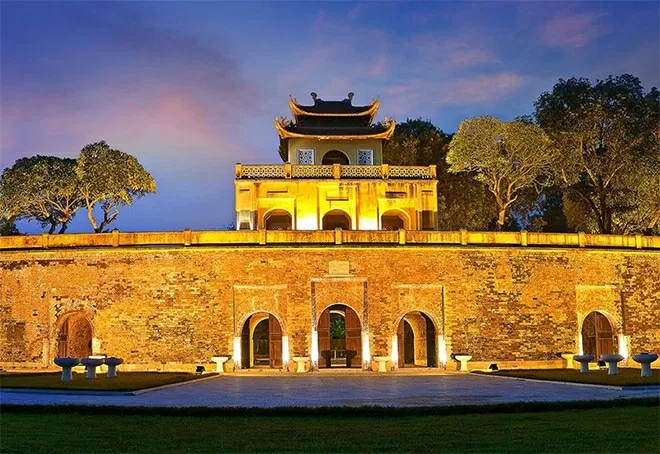 |
| The central relic area of Thang Long Imperial Citadel in Hanoi. (Source: Thang Long Imperial Citadel) |
The Thang Long Imperial Citadel (Hanoi) was recognized as a World Heritage Site by UNESCO in 2010, coinciding with the 1,000th anniversary of Thang Long. The site's outstanding value lies in its continuous role as a political center, along with archaeological layers marking the nation's long history.
The central relic area of Thang Long Imperial Citadel covers 20 hectares, including the 18 Hoang Dieu archaeological site and remaining relics within the Hanoi Ancient Citadel such as Bac Mon, Doan Mon, Hau Lau, the stone dragon of Kinh Thien Palace, the dragon house, D67 house, and the Hanoi flagpole. This complex is surrounded by four roads: Phan Dinh Phung to the north, Dien Bien Phu to the south, Nguyen Tri Phuong to the east, and Hoang Dieu to the west.
One of the most impressive structures at Thang Long Imperial Citadel is Doan Mon Gate, once the main entrance to the forbidden area, built in the 11th century under King Ly Thai To (1009 – 1225).
The remaining parts of the complex reflect the nation's heroic past, such as D67 House – the command center of the Vietnam People's Army during the resistance against the U.S., or the remnants of Bac Mon Gate with cannonball marks from the French colonialists in 1882.
Yen Tu relics
 |
| Dong Pagoda on the peak of Yen Tu. (Source: World Heritage nomination dossier) |
The Yen Tu – Vinh Nghiem, Con Son, Kiep Bac Complex is Vietnam's newest World Heritage Site. This complex of temples and pagodas is associated with Truc Lam Zen Buddhism, founded in the 13th century by the Tran kings, particularly the role of King Tran Nhan Tong. Truc Lam Zen Buddhism created many values, making a special, sustainable contribution to the cultural and spiritual heritage of humanity.
The Yen Tu – Vinh Nghiem, Con Son, Kiep Bac Complex includes a system of relics belonging to the special national relics ranked by the Prime Minister (including: Yen Tu Relics and Scenic Landscape Complex, Tran Dynasty Relic Site in Dong Trieu, Vinh Nghiem Pagoda, Bo Da Pagoda, Con Son – Kiep Bac Relic Site, An Phu – Kinh Chu – Nham Duong Historical, Scenic Site), national relics ranked by the Ministry of Culture, Sports and Tourism (Thanh Mai Pagoda…) and national treasures, intangible cultural heritage, traditional festivals in the area… along with the landscape with a system of mountains and forests and cultural space.
Highlights include Con Son Pagoda, Kiep Bac Temple, and Dong Pagoda on the peak of Yen Tu mountain, over 1,000 meters high. A two-tier cable car system takes visitors to the top, offering panoramic views of the Northeast region.
Ha Long Bay – Cat Ba Archipelago
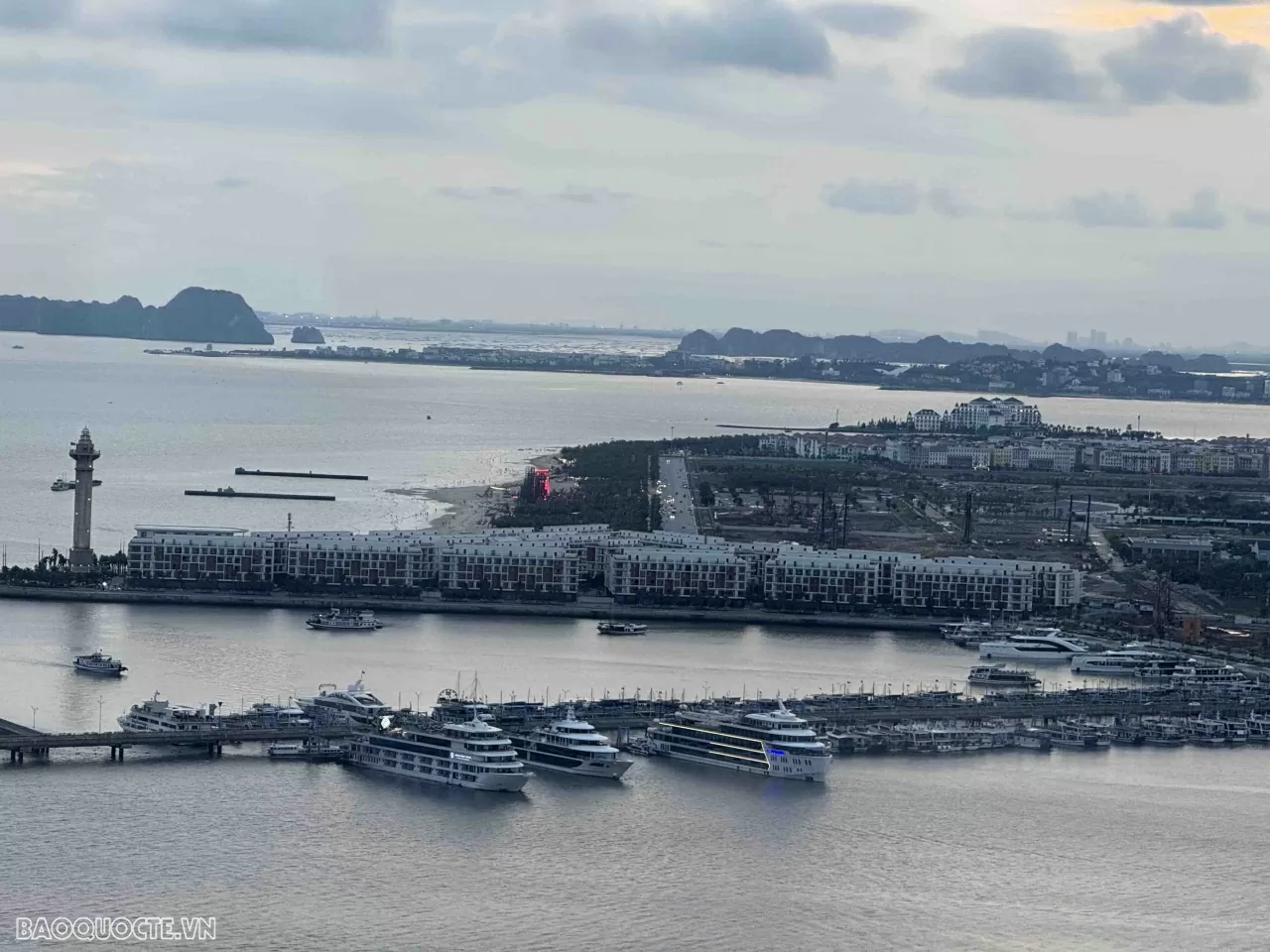 |
| Each year, Ha Long Bay – Cat Ba Archipelago welcomes about 4 million visitors, generating significant revenue for local tourism. (Photo: Dieu Linh) |
Ha Long Bay (Quang Ninh) – Cat Ba Archipelago (Hai Phong) is located in Northeast Vietnam, known as the "pearl of the Gulf of Tonkin". This natural area covers a core zone of 65,650 ha and a buffer zone of 34,140 ha.
Ha Long Bay – Cat Ba Archipelago is recognized by UNESCO as a World Heritage Site for its magnificent limestone landscapes with islands covered in vegetation, towering peaks rising from the sea, and unique karst cave systems. Saltwater lakes, sheer cliffs, and lush green islands contribute to its rare beauty.
The area contains a total of 1,133 limestone islands, with 775 islands in Ha Long Bay and 358 islands in Cat Ba Archipelago. Against the backdrop of emerald sea water, the islands' diverse shapes stand out with rich vegetation and fine white sand beaches, creating a scene both majestic and serene.
With the convergence of mountains and islands, this area is one of the most biologically diverse regions in Asia. The ecosystem includes seven distinctive types: primary tropical rainforest, caves, mangroves, tidal flats, coral reefs, soft bottoms, and saltwater lakes. The forest on the sea covers more than 17,000 ha, with about 1,045 ha of primary forest on Cat Ba Island, playing a crucial role in the area's ecological and biodiversity value.
Currently, Ha Long Bay – Cat Ba Archipelago is home to 4,910 species of terrestrial and marine flora and fauna, including 198 species listed in the IUCN Red List and 51 endemic species. Each year, this area welcomes about 4 million visitors, generating significant revenue for local tourism. Visitors can choose a day tour from Hanoi, but for a more complete experience, it's recommended to spend at least one night on a cruise to appreciate the natural beauty at different times of the day.
Trang An scenic landscape complex
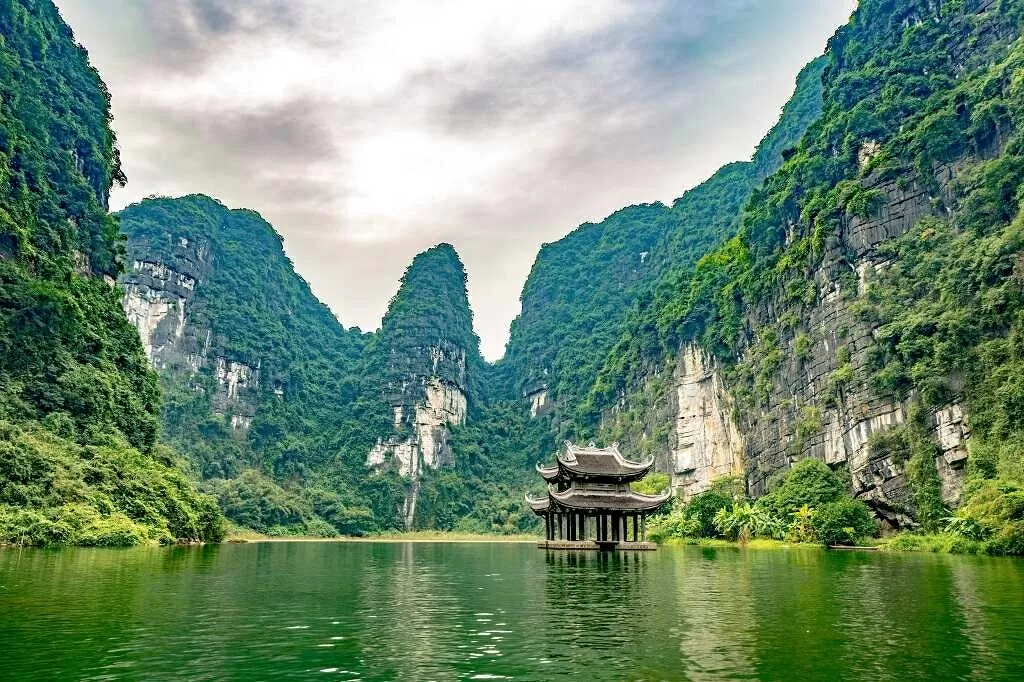 |
| The Trang An Scenic Landscape Complex was recognized by UNESCO as a World Cultural and Natural Heritage in 2014. (Source: Vietnam National Administration of Tourism) |
The Trang An Scenic Landscape Complex (Ninh Binh) covers an area of 6,172 ha, spanning Hoa Lu, Gia Vien, Nho Quan districts, Tam Diep town, and Ninh Binh city, about 90 km southeast of Hanoi. The complex includes three contiguous protected areas: the historical and cultural site of Hoa Lu Ancient Capital, Trang An Scenic Landscape, Tam Coc – Bich Dong, and the Hoa Lu Special-use Primary Forest.
Trang An is likened to "Ha Long Bay on land" with its majestic beauty of limestone mountains in various shapes reflecting on winding waterways, meandering through caves and pristine valleys. It also preserves many ecosystems of wetland forests, limestone mountain forests, and contains unique archaeological and historical-cultural relics.
Adjacent to Trang An, Tam Coc – Bich Dong is another highlight of Ninh Binh. Tam Coc, meaning "three caves", includes Hang Ca, Hang Hai, and Hang Ba, offering visitors a boat ride experience to view the changing landscapes with the seasons. Bich Dong, known as the "second most beautiful cave in Vietnam", with its ancient pagoda nestled amidst lush green mountains, adds to the perfect picture of Trang An.
The complex also encompasses the Hoa Lu Special-use Forest, home to many rare animals such as the ground hornbill, laughingthrush, monkeys, pythons, and especially the white-cheeked gibbon – a primate listed in the world's Red Book. Besides its scenic and ecological value, Trang An also holds many archaeological sites like Bui Cave, Trong Cave, Cho Mountain Cave…, evidence of ancient human presence from tens of thousands of years ago.
Ho Dynasty Citadel
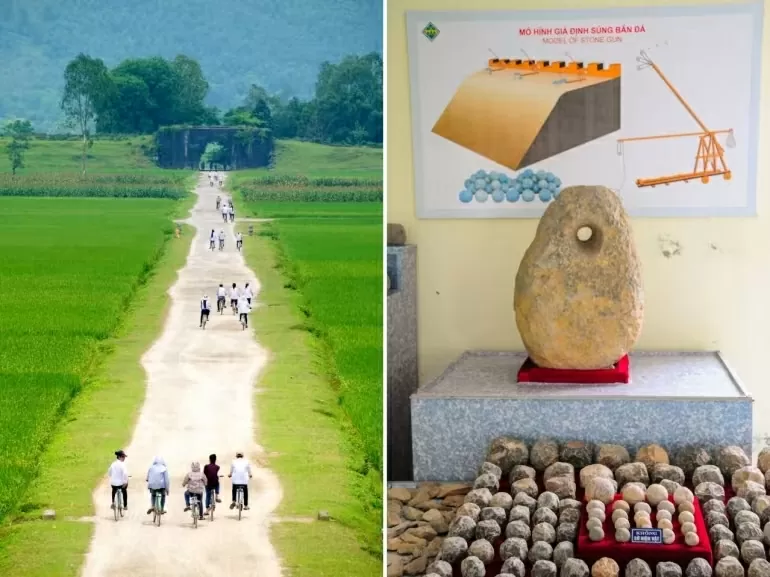 |
| Over centuries, the four stone walls and the South, North, East, and West gates remain relatively intact. (Source: Nikkei Asia) |
The Ho Dynasty Citadel (Thanh Hoa) was built in 1397 under King Ho Quy Ly, and is one of the most unique stone architectural works remaining in Vietnam. The structure uses massive green stone blocks, tightly stacked without mortar. This unique construction technique earned the site UNESCO recognition as a World Cultural Heritage in 2011. After more than 600 years, the citadel still retains many original features, with significant historical, architectural, military, and archaeological value.
The four main gates and the entire citadel walls are constructed from massive limestone blocks, each weighing tons, averaging 1.5 meters long, with some reaching 6 meters. The stones are tightly stacked without adhesive, yet remain durable over time. It's estimated that the total volume of stone used for construction is about 20,000 m³, combined with nearly 100,000 m³ of meticulously excavated and compacted earth. Despite the loss of internal structures over centuries, the four stone walls and the South, North, East, and West gates remain relatively intact, becoming a symbol of endurance and national pride.
The construction techniques of the Ho Dynasty Citadel continue to intrigue experts and archaeologists both domestically and internationally. Although not the only stone structure in the world, the method of using rudimentary tools to transport and assemble massive stone blocks to heights of 8–10 meters with precision is considered an architectural achievement ahead of its time.
Phong Nha – Ke Bang and Hin Nam No National Parks
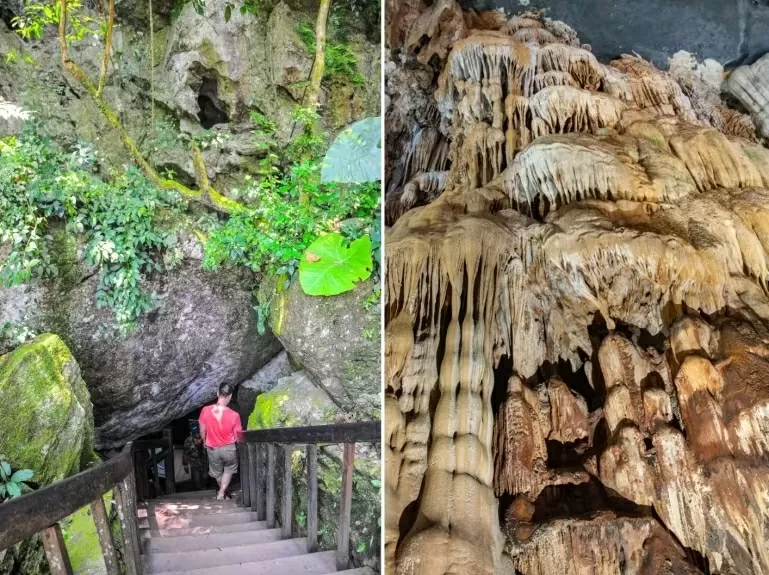 |
| Phong Nha – Ke Bang National Park boasts one of the oldest and largest karst landscapes in Asia. (Source: Nikkei Asia) |
Phong Nha – Ke Bang National Park (Quang Tri, Vietnam) and Hin Nam No National Park (Khammouane, Laos) form one of the world's most intact and prominent limestone karst landscapes. Located at the convergence of the Truong Son Range and the Indochina limestone belt, this area was formed during the Paleozoic era, about 400 million years ago, and is considered one of the largest and oldest karst complexes in Asia.
The area features a system of over 220 km of spectacular caves and underground rivers, evidence of geomorphological processes spanning millions of years. Son Doong – the world's largest cave in Vietnam, with a dome over 250 meters high and stalagmites up to 7 meters tall – is a standout feature, alongside more accessible caves like Paradise, Phong Nha, or Xe Bang Fai (Laos).
In addition to geological value, the area is particularly rich in biodiversity. Phong Nha – Ke Bang has recorded over 2,700 vascular plant species and more than 800 vertebrate species; Hin Nam No adds another 1,500 plant species and 536 animal species, including many endemic and rare species. Notably, the area is home to 10–11 primate species, including the southern white-cheeked gibbon and the endemic black langur, as well as the giant huntsman spider found only in Khammouane Province.
Complex of Hue Monuments
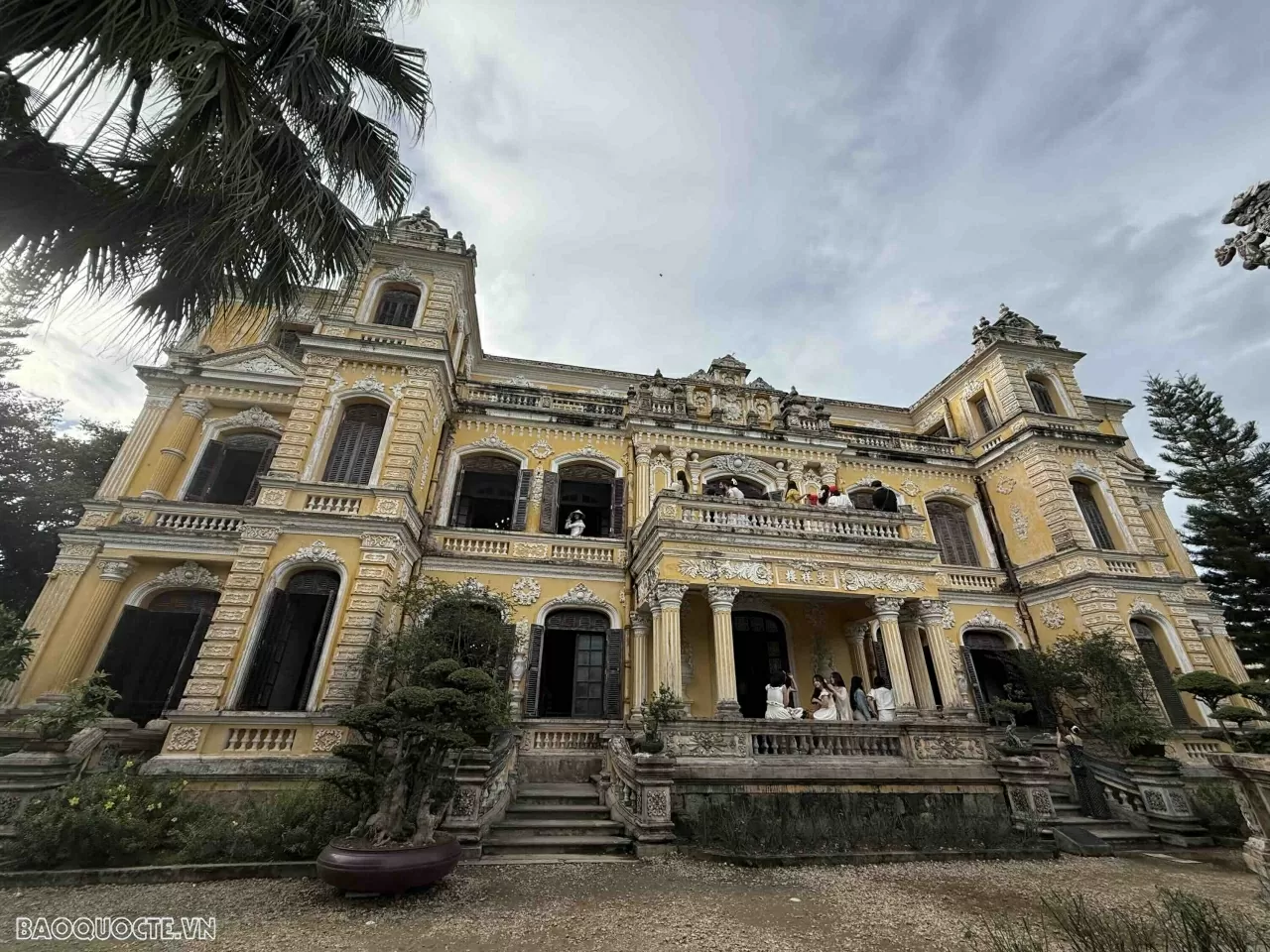 |
| An Dinh Palace, Hue City. (Photo: Dieu Linh) |
The Complex of Hue Monuments is a special cultural heritage, marking many important historical periods of the nation, recognized by UNESCO as a World Cultural Heritage in 1993. Hue was once the capital of Vietnam under the Nguyen Dynasty (1802 – 1945) and still retains its solemn and refined beauty.
This heritage includes the Imperial City, distinctive garden houses, the Royal Arena – where elephant and tiger fights were held for the kings, and a system of elaborately designed tombs surrounded by gardens and the poetic Perfume River. A significant highlight is the Hue Citadel, with its robust fortification system, three concentric walls – the Citadel, Imperial City, and Forbidden Purple City – symmetrically arranged along the main north-south axis, creating a structured and dignified architectural ensemble.
Beyond its architectural and historical value, Hue attracts visitors with its distinctive cuisine featuring famous dishes like Hue beef noodle soup and banh khoai. After visiting the monuments, tourists can head to nearby Thuan An Beach to relax and experience both culture and nature.
My Son Sanctuary
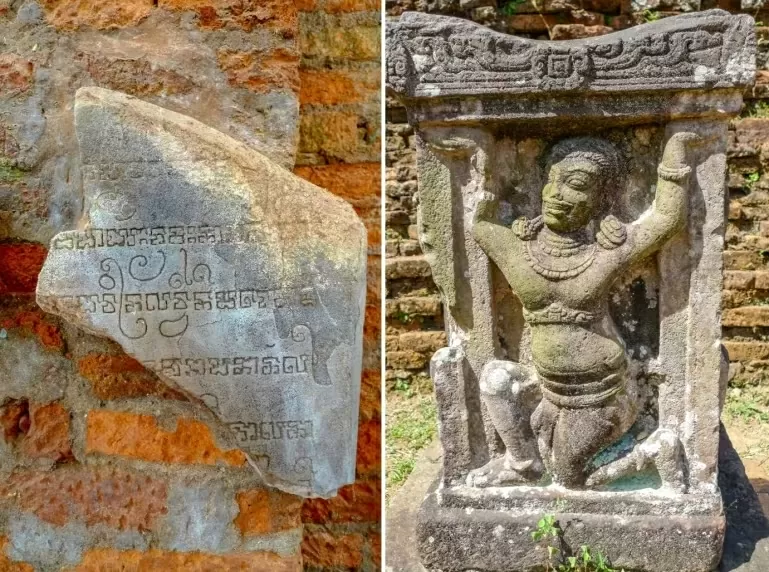 |
| Remaining relics at My Son Sanctuary. (Source: Nikkei Asia) |
My Son Sanctuary (Da Nang City) dates from the 4th to the 13th century, located in a valley surrounded by mountains forming the Thu Bon River basin.
Dubbed as Vietnam's "miniature Angkor Wat", My Son was the religious center of the Champa Kingdom from the 2nd to the 17th century. This complex preserves dozens of ancient brick towers, symbolizing the sacred mountain Meru in Hindu mythology – the abode of the gods. The towers are built with baked bricks, stone columns, and intricately carved sandstone reliefs depicting mythological stories. The architectural art and construction techniques demonstrate the high technical proficiency of the Cham people, reflecting the development of Champa's religious and political thought.
Despite suffering significant damage during the war, some tower clusters have been preserved and gradually restored. Visitors can explore the museum at the entrance for an overview before admiring the well-preserved B, C, D tower clusters and the prominent statues at D1, D2.
Today, My Son is a vivid picture of Champa's spiritual and political life, and an important testament to Southeast Asian history. The site is not too large, relatively quiet, and best visited in the early morning to avoid the intense Central Vietnam sun.
Ancient Town of Hoi An
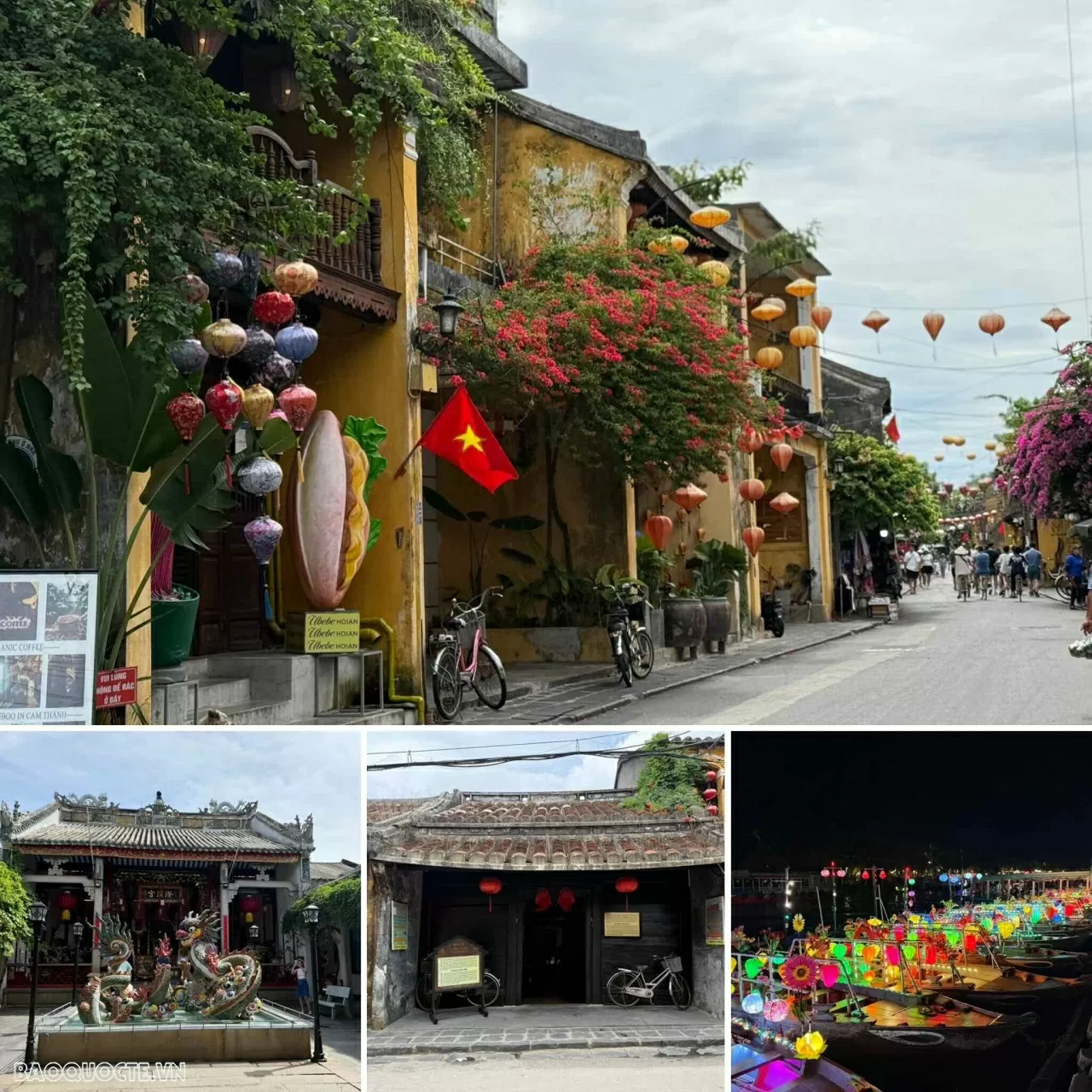 |
| Today, the ancient town of Hoi An is preserved almost intact, with moss-covered roofs, ancient yellow walls, and small streets along the Hoai River. (Photo: Dieu Linh) |
Hoi An, an ancient town located along the poetic Hoai River (Da Nang City), is a familiar destination for both domestic and international tourists. Formed in the 16th century, it was once one of the most bustling international trading ports in the region, attracting merchants from China, Japan, India, the Netherlands, Spain, and more. As a result, Hoi An became a melting pot of Eastern and Western cultures, with its influence still evident in its architecture and lifestyle.
The ancient town of Hoi An was recognized by UNESCO as a World Cultural Heritage in 1999. The entire area currently has 1,360 relics, including 1,068 ancient houses, 11 ancient wells, 38 clan temples, 19 pagodas, 43 shrines, 23 communal houses, 44 special ancient tombs, and one ancient bridge.
The ancient town is preserved almost intact with a blend of Vietnamese, Chinese, Japanese, and European architecture. The car-free streets, moss-covered tile roofs, ancient yellow walls, a myriad of colorful lanterns, along with handicraft shops and exquisite cuisine, create a unique charm.
Hoi An is renowned for its typical architecture of traditional Southeast Asian trading ports, reflecting its prosperous development history from the 16th century. Despite numerous changes, the ancient town retains its peaceful, contemplative atmosphere – contrasting with the vibrancy of modern cities.
A distinctive feature of Hoi An is its ancient town layout, built in a grid pattern, winding along the river and embracing the ancient houses. Strolling through the ancient town, visitors can visit centuries-old pagodas like Chua Cau, Phuoc Lam Pagoda, Van Duc Pagoda; admire the intricately designed, vibrant Chinese assembly halls; or immerse themselves in the festive atmosphere with traditional games like Bai Choi singing, ho khoan, and chess competitions.