



Enhancing support for gender-based violence victims through Trauma-Informed Care
On March 26, in Hanoi, UNFPA, the United Nations Population Fund, organised an international workshop on strengthening the Trauma-Informed Care (TIC) approach in providing services for survivors of gender-based violence (GBV), particularly within emergency contexts.
Latest
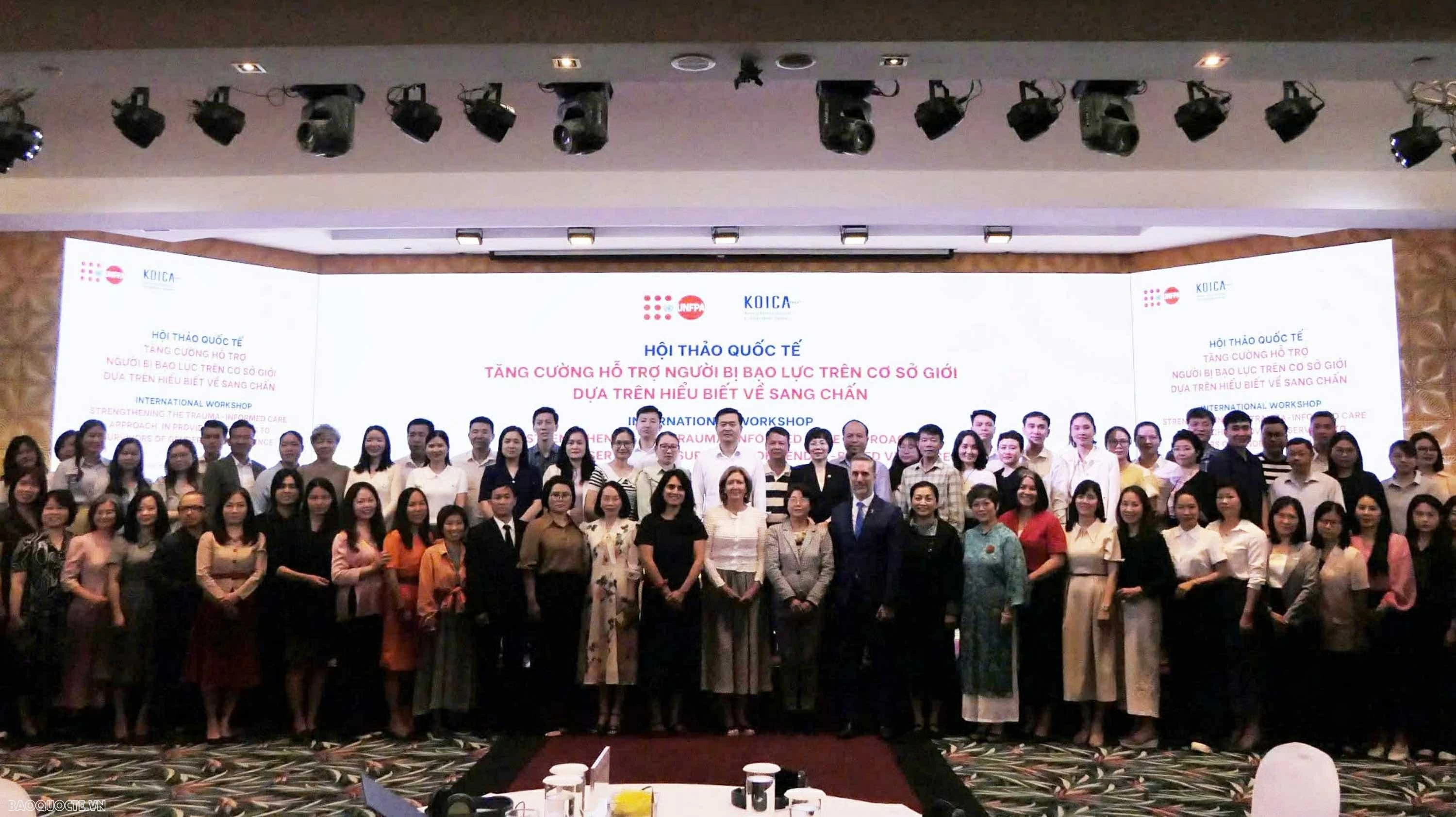 |
| The event gathered representatives from various sectors at both central and local levels, including healthcare, legal, social work, police, development partners, academia, and social organizations. (Photo: Ngoc Linh) |
The event also celebrates 10 years of the Social Work Day in Viet Nam (25 March) and is part of a project funded by the Korea International Cooperation Agency (KOICA), aimed at enhancing the capacity of support systems and safeguarding the rights of women and girls in Viet Nam.
| More from WVR |
 Launching project to strengthen prevention and response to violence against women and girls in Quang Ninh Launching project to strengthen prevention and response to violence against women and girls in Quang Ninh |
The workshop was preceded by a three-day intensive training course (23–25 March 2026) in Ha Noi. The training focused on advancing knowledge and practical skills for 45 delegates from seven provinces (An Giang, Khanh Hoa, Ha Tinh, Dien Bien, Phu Tho, Quang Ninh, and Thanh Hoa), alongside representatives from the Viet Nam Farmers’ Union, the 18001768 hotline, and related organizations.
During the training, participants were equipped by international experts with specialised skills to support women and girls through a trauma-informed lens, with a particular focus on sensitive situations in emergency settings. The application of TIC represents a paradigm shift for service providers: moving beyond a purely procedural focus to understanding the profound psychological impact of trauma. This is essential for delivering safe, survivor-centered, and compassionate services while preventing re-traumatisation.
Building on the results of the training, the workshop on strengthening the TIC approach on 26 March 2026 brought together nearly 100 delegates from various sectors at both central and provincial levels across medical, legal, social, and police, development partners, academia, CSOs, and experts from Viet Nam and other countries all around the world. The workshop served as a vital forum for stakeholders to share practical experiences, discuss existing challenges, and propose policy recommendations to standardize TIC protocols across service delivery points nationwide.
A key focus of the workshop was evaluating the effectiveness of integrated services at the Anh Duong Houses (One-Stop Service Centers - OSSCs)—a pioneering model in Viet Nam supported by UNFPA—and exploring how to further mainstream TIC principles to increase accessibility for the most vulnerable groups.
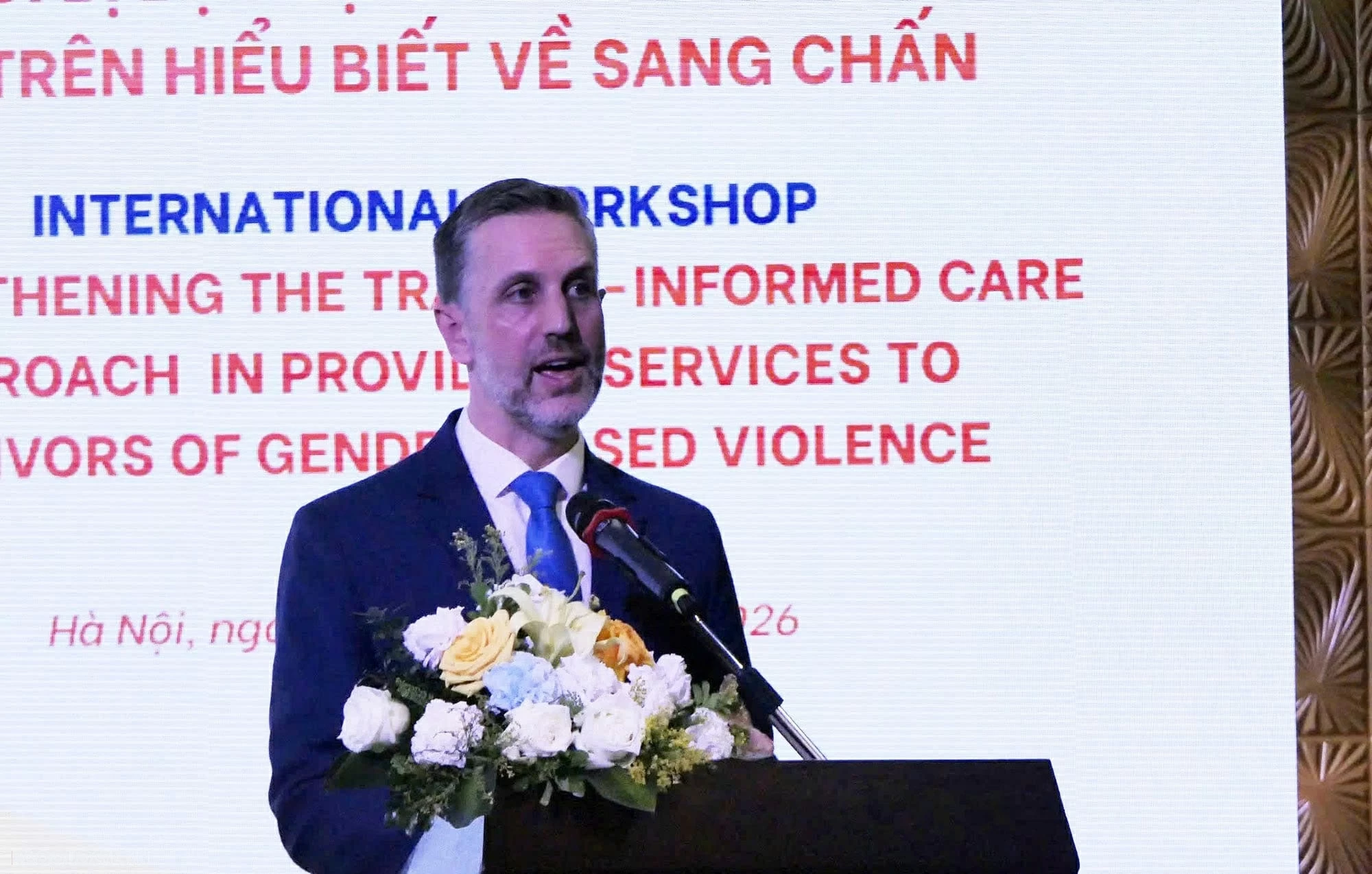 |
| UNFPA Representative in Vietnam Matt Jackson speaking at the event. (Photo: Ngoc Linh) |
In his opening remarks, UNFPA Representative in Vietnam Matt Jackson expressed gratitude to KOICA for consistently supporting Vietnam in its efforts to end gender-based violence. From the outset, KOICA's cooperation has been foundational in establishing the first Anh Duong Houses in 2020. This partnership continues through valuable funding for the emergency project in Quang Ninh, ensuring essential, life-saving services for GBV victims remain uninterrupted, even after natural disasters.
"This commitment has enabled UNFPA to transform global standards into concrete actions, tailored to local contexts and sustainable in the long term; while connecting and bringing international experts, such as TIC specialists, to work directly with frontline forces over the years," Matt Jackson stated.
The UNFPA Representative in Vietnam emphasized that applying TIC is not optional but a necessary requirement to ensure service quality. Without a trauma-informed lens, even the most well-intentioned efforts, whether at police stations, hospitals, or courts, can inadvertently cause victims to experience trauma again. Misunderstanding trauma risks building "walls" instead of "bridges" for recovery.
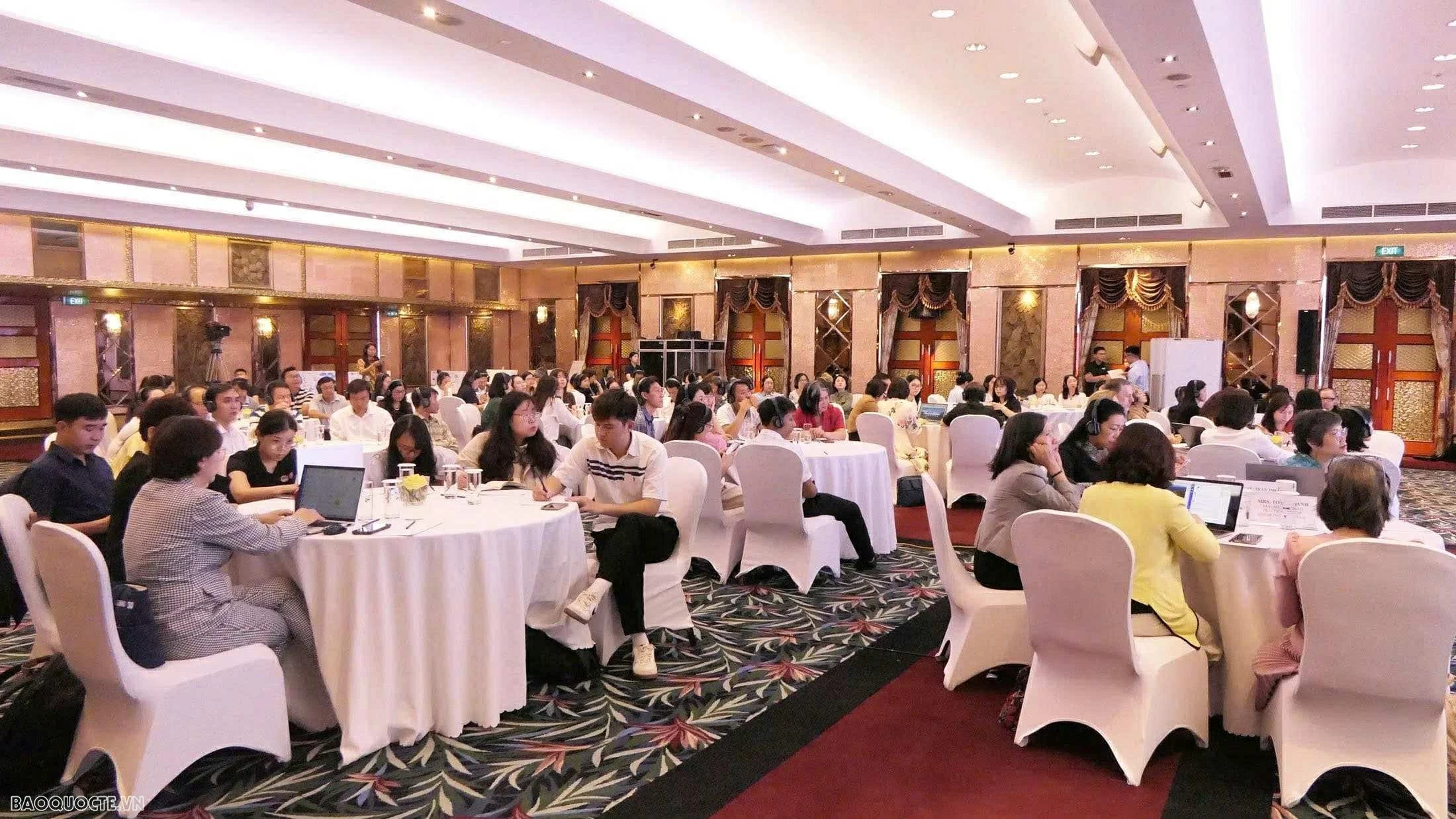 |
| Overview of the workshop. (Photo: Ngoc Linh) |
According to him, TIC requires interdisciplinary coordination. Only when the fields of justice, healthcare, and social work use a common "language" of empathy and trauma awareness, can those affected feel safe to regain autonomy and rebuild their lives.
"Our goal is to ensure everyone can exercise their rights and choices with respect and dignity. This is especially crucial in emergency contexts such as natural disasters, where the vulnerable are at their most fragile, and our 'uninterrupted' services need to be maximized," Matt Jackson pointed out.
He specifically recommended that Vietnam institutionalize trauma-informed care approaches within national legal and policy frameworks. UNFPA proposes ensuring stable national financial resources for regular TIC training and incorporating TIC indicators into national monitoring and evaluation systems. Standardizing TIC at the policy level is key to ensuring all victims receive high-quality, humane, and consistent support.
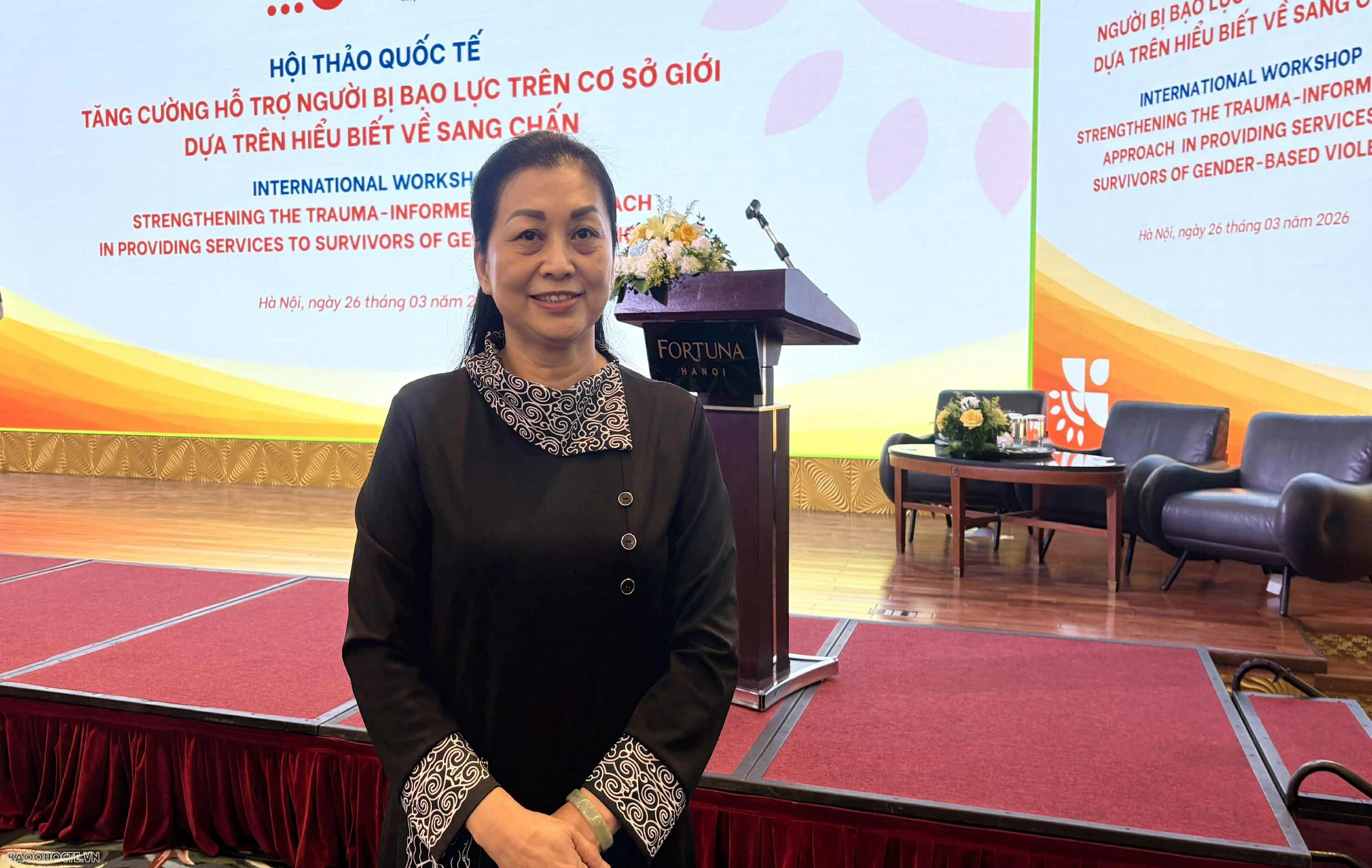 |
| Supreme People's Court Judge Luong Ngoc Tram interviewed by The World and Vietnam Report. (Photo: Ngoc Anh) |
In an interview with The World and Vietnam Report about applying TIC in adjudicating gender-based violence cases, Supreme People's Court Judge Luong Ngoc Tram shared that in cases of sexual assault and gender-based violence, judges are required to assess the victim's testimony and conduct confrontations between the victim and the accused in court.
In such cases, the judge's task is to ensure gender sensitivity and the friendly nature of the court proceedings, even when the legal process is somewhat rigid.
According to Luong Ngoc Tram, alongside the Juvenile Justice Law, there are many other legal documents such as resolutions from the Judicial Council and circulars from the Chief Justice, assigning judges the task of conducting friendly court proceedings in these cases.
Additionally, the Supreme Court organizes many mock trials, experiential trials, and intensive training for judges at all levels to ensure that the legal process does not re-traumatize victims after their cases have been adjudicated.
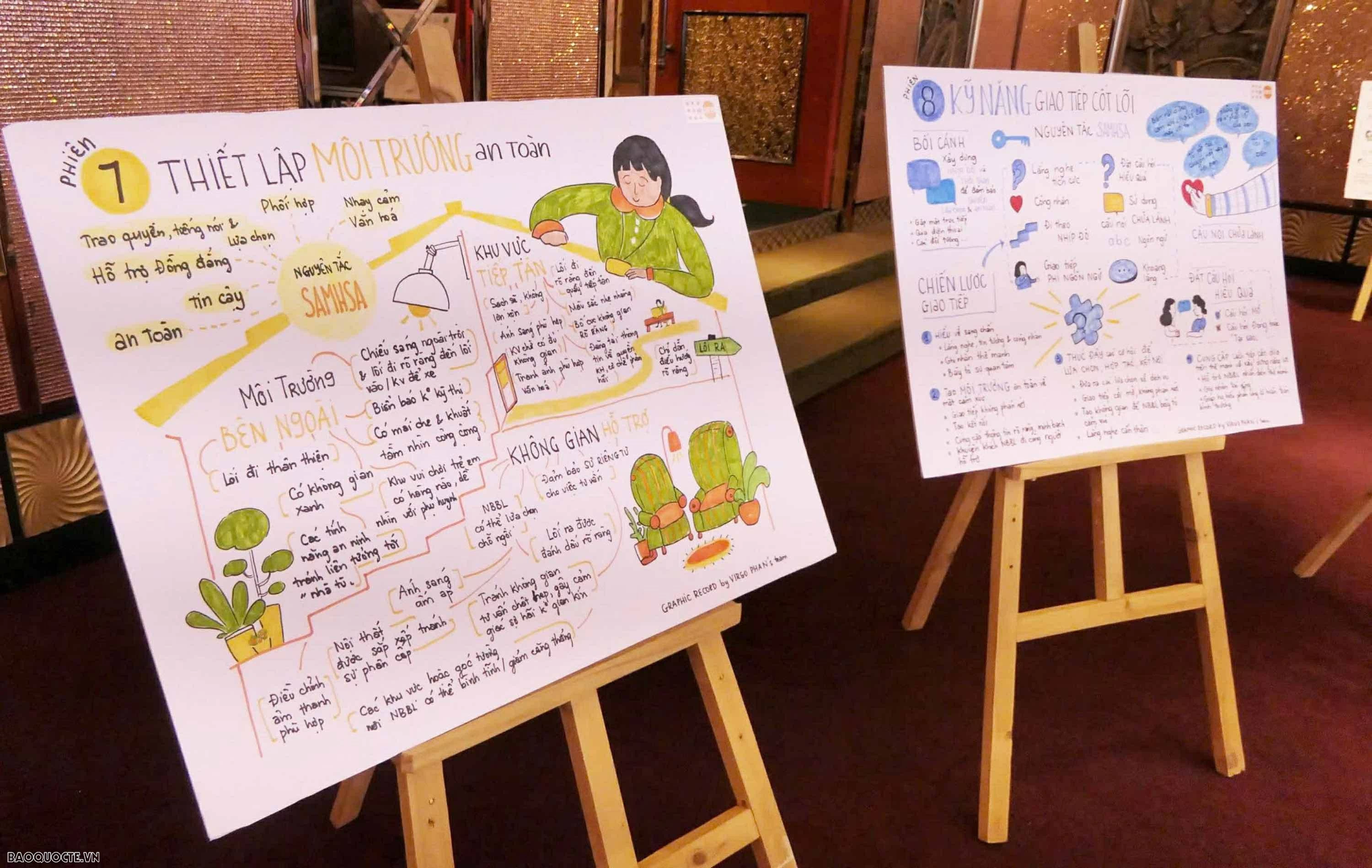 |
| The workshop also serves as a foundation for policy advocacy, aiming to develop practical recommendations to strengthen the system and intersectoral coordination mechanisms in a synchronized, transparent, and effective manner. (Photo: Ngoc Linh) |
At the workshop, participants highlighted the timeliness of these activities as Viet Nam works to strengthen its social protection systems and respond to emerging challenges from climate change and natural disasters—contexts that often exacerbate the risk of gender-based violence. The workshop also functioned as a platform for policy advocacy, aiming to develop practical recommendations to bolster the system and enhance multi-sectoral coordination mechanisms in a more synchronized, transparent, and effective manner.
This series of training and workshops reaffirms UNFPA’s commitment to partnering with Viet Nam to realize the goal of ending violence against women and girls. This initiative moves us closer to a safe and inclusive society, fulfilling the vision of the 2030 Agenda for Sustainable Development and ensuring that every individual is protected from violence and discrimination.
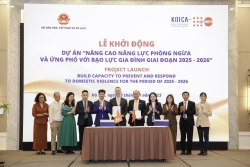
| Vietnam launches a new project to strengthen capacity for preventing and responding to domestic violence in the digital age WVR - On November 25, Vietnam officially launched a new two-year project titled “Building capacity to prevent and respond to domestic violence, 2025–2026”. |
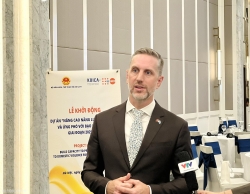
| Together with Vietnam, building an environment where every woman and girl can live free from violence: UNFPA Representative WVR - According to the United Nations Population Fund (UNFPA) Representative in Vietnam Matt Jackson, Vietnam has taken significant steps in recent years to strengthen ... |
| General Secretary To Lam: Ensure timely support and care for all children in special circumstances WVR - The Office of the Party Central Committee has released a notice on conclusions of Party General Secretary To Lam following a working session ... |
| Vietnamese Embassy in Germany launches support for domestic natural disaster victims WVR - The Vietnamese Embassy in the Federal Republic of Germany organized a fundraising event to support the Central and Central Highlands regions of Vietnam, ... |
| Vietnam Care Economy Forum 2026: Developing care economy for sustainable growth, job creation, and gender equality in Vietnam WVR - The Vietnam Care Economy Forum 2026 under the theme “Business model innovation – Promoting sustainable business development” was co-organised by the Vietnam Women ... |