




Enhancing health care knowledge for youth through daily choices
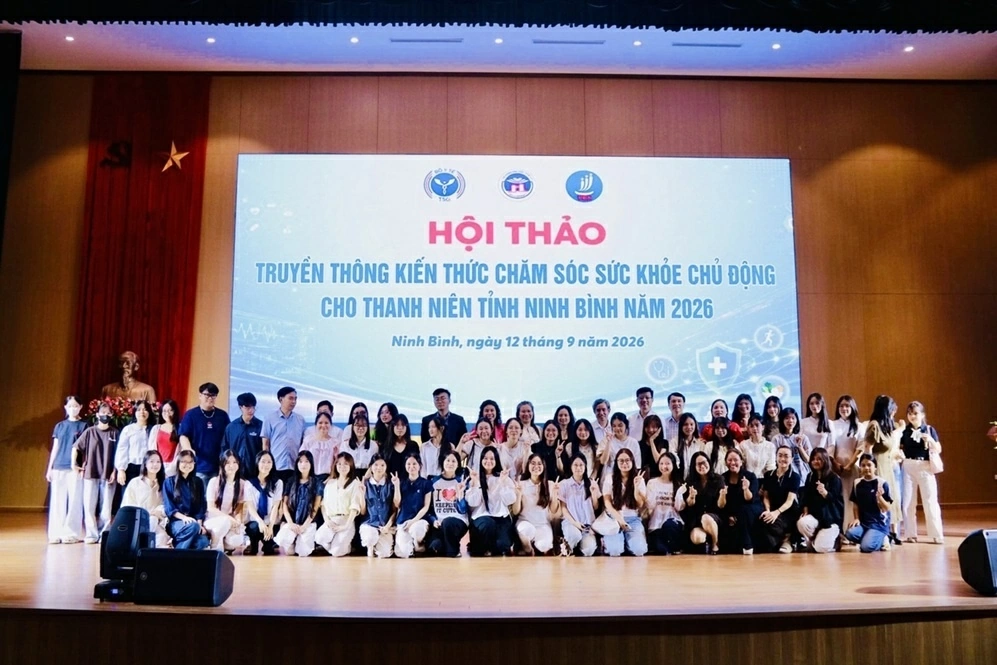
WVR - On September 12, in Ninh Binh, the Central Health Education Communication Center (Ministry of Health) collaborated with the Vietnam Beer - Alcohol - Beverage Association (VBA) and Hoa Lu University to organize the workshop "Proactive Health Care Knowledge Communication for Youth in Ninh Binh Province 2026".
Latest
 |
| Enhancing Health Care Knowledge for Youth Through Daily Choices |
The workshop attracted over 500 delegates, students, and youth union members, who exchanged practical knowledge on proper nutrition, enhancing physical and mental health, reading product labels, and raising awareness and responsibility in preventing the harmful effects of alcohol abuse.
From treating illness to proactively maintaining health
Youth is a stage where individuals form many habits that may last a lifetime. The fast pace of study and work, psychological pressure, staying up late, irregular eating, lack of exercise, and frequent exposure to unverified information on social media are creating notable health risks. Therefore, equipping oneself with the right knowledge and self-care skills from a young age is of long-term significance for each individual, family, and community.
The workshop was organized to contribute to realizing the spirit of Resolution No. 72-NQ/TW dated September 9, 2025, by the Politburo on breakthrough solutions to enhance the protection, care, and improvement of people's health, while implementing Decision No. 3915/QD-BYT dated December 25, 2024, by the Ministry of Health on the plan to implement the communication project to prevent the harmful effects of alcohol and beer until 2030.
 |
| Mr. Vu Manh Cuong - Director of the Central Health Education Communication Center, emphasised the need to shift from a focus on diagnosis and treatment to disease prevention and proactive health maintenance. (Source: Organizing Committee) |
In his opening remarks at the workshop, Mr. Vu Manh Cuong - Director of the Central Health Education Communication Center, emphasized the need to shift from a focus on diagnosis and treatment to disease prevention and proactive health maintenance. According to him, health is not just the absence of pain but also the ability to live, study, work, and love healthily. Young people need to understand the risks, recognize early signs of abnormalities, adjust their lifestyle, and seek appropriate medical services when necessary.
The overarching message of the program is that each young person should become the master of their health. Proactive health care begins with daily choices such as proper eating, regular exercise, adequate sleep, stress management, vaccination, safe reproductive and sexual health care, avoiding tobacco or e-cigarettes, and knowing how to seek support when facing physical, mental health, or violence issues.
Nutritional Knowledge Needs to Become Daily Behavior
At the workshop, Dr. Nghiêm Nguyet Thu - Vice President of the Vietnam Dietetic Association, Head of the Nutrition Department, Tam Anh General Hospital, Hanoi, analyzed common nutritional issues among young people. This is a stage where the body continues to consolidate bone and muscle mass, while nutritional needs change based on gender, activity level, study, and work. The risk factors for non-communicable diseases can also form early if adverse habits persist.
A healthy diet should ensure adequate needs, balance nutrient groups, be moderate and diverse in food, along with food safety requirements. A reasonable meal should allocate about half for vegetables and fruits, a quarter for grains and tubers, and a quarter for protein sources. Young people should prioritize minimally processed foods, less refined grains, fish, lean meat, eggs, milk, legumes, and nuts; choose water as the main beverage.
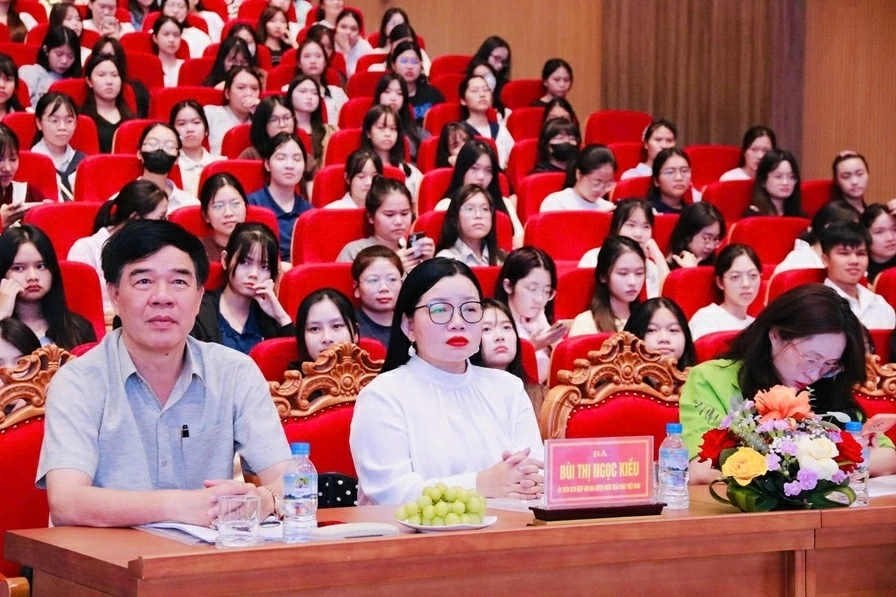 |
| The workshop attracted over 500 delegates, students, and youth union members, who exchanged practical knowledge on proper nutrition, enhancing physical and mental health. (Source: Organizing Committee) |
Some notable recommendations include eating at least 400g of vegetables and fruits daily, ensuring about 25g of fiber, limiting free sugars to less than 10% of total energy, and consuming less than 5g of salt per day. Fruit juices, even without added sugar, can still contribute to free sugar intake. Types of milk tea, soft drinks, energy drinks, coffee with lots of milk or sugar, and alcoholic beverages also create easily overlooked energy amounts.
The presentation highlighted many common behaviors among students such as skipping meals, irregular eating, eating quickly, eating while using a phone, late-night eating, using caffeine to stay awake, frequently consuming fast food, or self-prescribing supplements. Instead of trying to change everything at once, individuals can choose one or two priority behaviors and set specific, measurable goals.
Besides nutrition, young adults should maintain 150 to 300 minutes of moderate-intensity physical activity per week, or 75 to 150 minutes of vigorous-intensity activity, combined with strengthening major muscle groups at least two days a week. For those who sit a lot, any replacement of sedentary time with appropriate physical activity brings benefits.
Reading labels for informed choices
Ms. Nguyen Thanh Hong, representative of the Central Health Education Communication Center, guided students in identifying mandatory information on product labels, including product name, origin, responsible organization or individual, quantity, production date, expiration date, and ingredients. The ingredient list is recorded in descending order by weight, providing an important basis for consumers to understand the products they choose.
When reading nutrition labels, consumers should pay attention to serving size, energy, sugar, saturated fat, sodium, and ingredients. Comparing information on the same amount of product helps make more suitable choices, especially for products used frequently. The habit of reading labels also helps young people avoid being influenced by names, promotional images, or unsubstantiated information.
For alcoholic beverages, product labels provide information about alcohol content and necessary warnings. The workshop guided how to convert pure alcohol content, helping participants understand that drinks with different volumes and concentrations can contain significant alcohol amounts. The program also emphasized important regulations and recommendations: individuals under 18 should not drink alcohol; pregnant women should not drink alcohol; do not drive after drinking alcohol; do not abuse alcoholic beverages.
The beverage industry proactively implements initiatives for public health
Speaking at the workshop, Mr. Nguyen Van Viet - President of VBA affirmed that VBA and its member enterprises are committed to accompanying the Government, the Ministry of Health, and consumers in complying with laws on preventing the harmful effects of alcohol. Within its functional scope, the Association participates in communication, advocates for law enforcement, provides policy feedback, and supplies information to minimize harmful alcohol consumption behaviors.
The Beverage Industry is one of the important economic-technical sectors, contributing positively to the country's socio-economic development. In the early years of the renovation period, when domestic beverage demand was high but supply was limited, the Vietnam Beverage Industry gradually developed to meet people's needs, contributing to replacing imports and building reputable Vietnamese brands in the market.
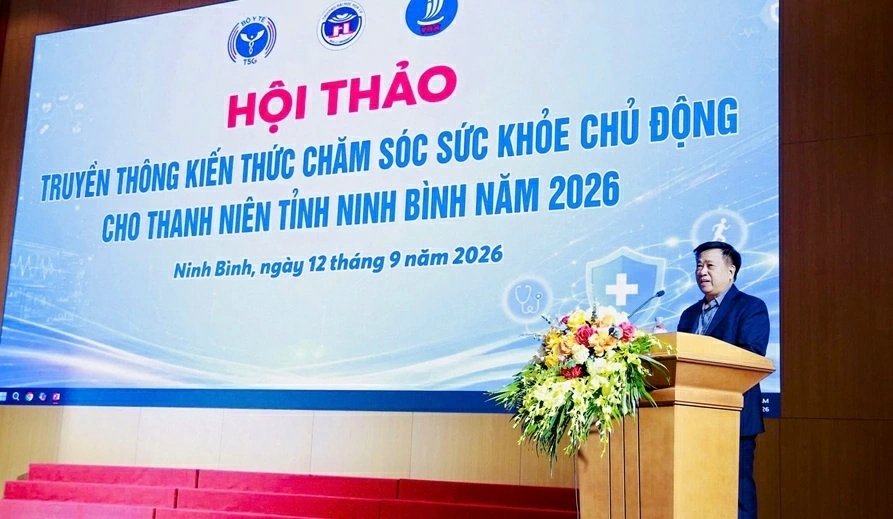 |
| According to Mr. Nguyen Van Viet - President of VBA, the beverage industry is one of the important economic-technical sectors, contributing positively to the country's socio-economic development. |
The entire industry not only contributes over 60 trillion VND to the budget annually, creating direct and indirect jobs for millions of workers but also increasingly focuses on sustainable development goals and public health. “We recognize that alongside production and business activities, enterprises also have the responsibility to accompany society in raising awareness about responsible consumption, especially for the younger generation,” Mr. Nguyen Van Viet shared.
According to Mr. Viet, VBA has compiled many communication materials on responsible consumption, helping people understand the scientific, safe, and appropriate use of food and beverages. Through programs coordinated with health agencies and social organizations, the Association aims to join hands in raising community awareness about proactive health care.
The VBA President believes this is not merely a propaganda activity but also an opportunity to equip the future generation of the country with knowledge. In the context of strong technological development, young people need to absorb new knowledge to build the country while preserving and promoting the nation's good historical and traditional values.
Mr. Nguyen Van Viet affirmed that beverage production and business enterprises provide quality and safe products for consumers. Many enterprises in the industry from North to South are striving to invest in technology, improve product quality, meet the increasing market demands, and contribute to public health protection, researching and launching low or non-alcoholic products, natural-origin drinks, and low or no-sugar products.
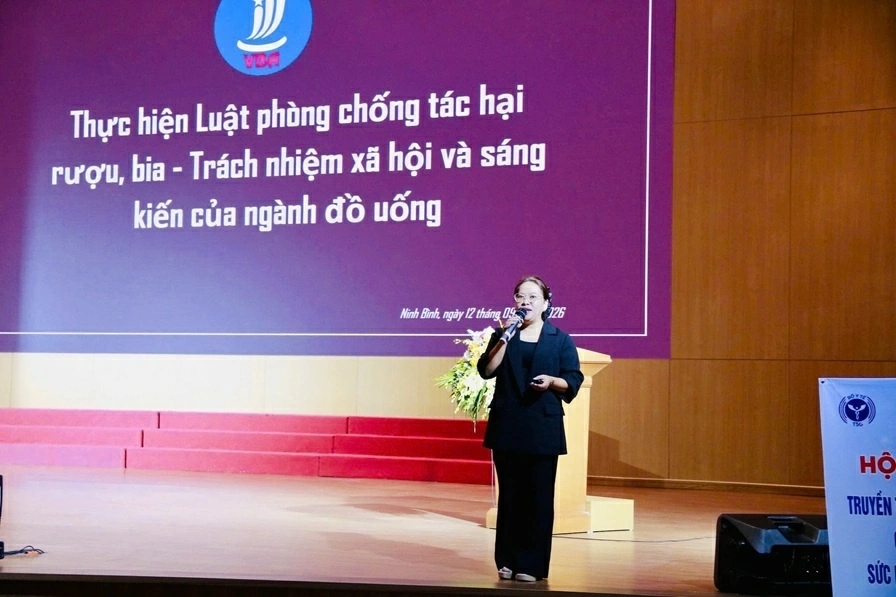 |
| Ms. Trinh Thi Van Giang - Vice President of VBA shares at the workshop. (Source: Organizing Committee) |
At the workshop, Ms. Trinh Thi Van Giang - Vice President of VBA shared that the Association and its member enterprises always identify strict compliance with legal regulations on preventing the harmful effects of alcohol abuse as a top responsibility. The Beverage Industry not only fully complies with current regulations but also actively participates in disseminating knowledge, advocating for law enforcement, and contributing to policy-making to limit the negative impacts of alcohol abuse. VBA affirms that the Association and its member enterprises are committed to complying with the law, accompanying the Government, the Ministry of Health, and relevant parties to minimize harmful alcohol consumption behaviors.
VBA also promotes training for responsible beverage service, focusing on age verification, identifying at-risk cases, refusing service when necessary, and supporting safe transportation for those who have consumed alcohol. Additionally, the industry encourages expanding non-alcoholic products for adults and continues to spread clear messages: Do not sell alcohol to those under 18; do not abuse alcoholic beverages; do not drive after drinking alcohol.
Recently, the Beverage Industry has implemented many programs in collaboration with management agencies, international organizations, and social organizations to raise community awareness. One notable activity is the Autosobriety program implemented with the United Nations Institute for Training and Research (UNITAR), aimed at preventing the issue of driving after consuming alcoholic beverages by providing scientific knowledge to students, teachers, workers, and other community groups. The program has directly reached over 13,000 people and disseminated information to over 19 million people through digital platforms.
Especially, youth is a group of interest in the Beverage Industry's educational communication activities. The “Power of No” program, implemented on online platforms, has reached over 45 million young people in Southeast Asia and over 9 million young people in Vietnam, contributing to raising awareness about responsible beverage consumption and building a healthy lifestyle.
In addition, many community education projects on traffic safety have been implemented, helping to enhance knowledge and change the behavior of students in complying with the “do not drive after drinking alcohol” regulation. These programs have been recognized for contributing to reducing traffic accidents in some pilot localities.
According to Ms. Trinh Thi Van Giang, preventing the harmful effects of alcohol abuse requires the participation of the entire society. State agencies develop policies and monitor implementation; experts provide scientific foundations; social organizations participate in communication; enterprises comply with regulations, provide transparent information, and implement programs to raise community awareness.
Each young person can spread a good choice
The highlight of the workshop is its approachable and practical approach. Besides expert presentations, students directly answered questions, analyzed meal portions, read product labels, and discussed common scenarios. Thus, knowledge does not stop at general advice but is translated into specific choices in study and life.
From a meal with enough vegetables, a bottle of water instead of sugary drinks, a workout session, a moment to verify information before sharing, to the decision not to drive after drinking alcohol, each small action contributes to health protection. When young people actively practice and share accurate knowledge with friends and family, they can become positive communication nuclei in the community.
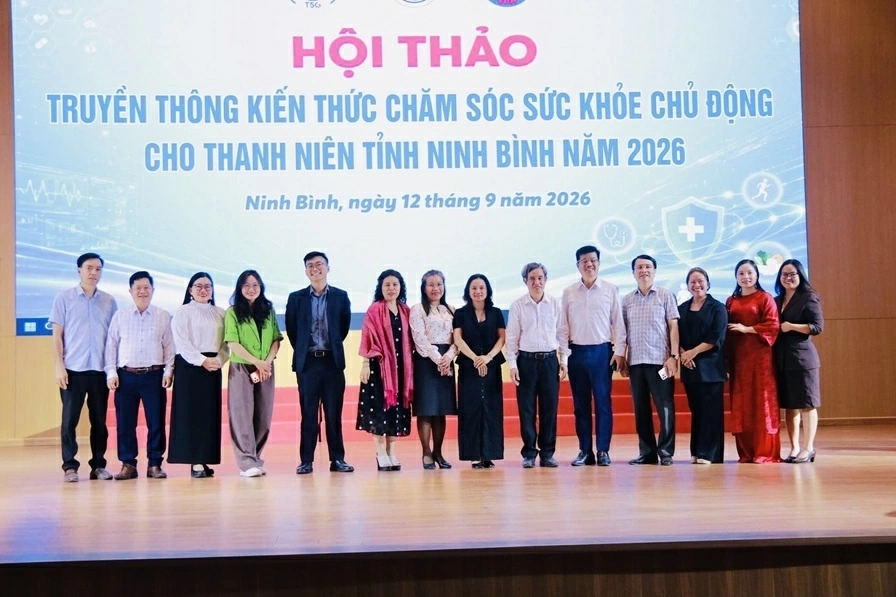 |
| The workshop “Proactive Health Care Knowledge Communication for Youth in Ninh Binh Province 2026”. (Source: Organizing Committee) |
The workshop in Ninh Binh contributes to strengthening the coordination between health agencies, educational institutions, social organizations, and the business community in health communication for youth.
Based on scientific knowledge and easily applicable skills, the program hopes to encourage young people to start making changes today, maintain healthy habits, and proactively seek appropriate support for a healthier future.