





A special kind of medicine for the soul: “Tell Me”
WVR - Happiness sometimes begins with having someone who is willing to listen, understand and share our burdens during the most difficult times. Through the Tell me project, simple human connections in hospitals are helping to bring moments of joy and emotional support to patients’ family members, those who often stand quietly behind their loved ones throughout the course of treatment.
Latest
When accompanying a loved one through illness, family members often have to put their work, personal lives and even their own feelings aside to become a source of strength for the patient. Seeking to support the mental well-being of these caregivers, the Tell me project, run by students from Hanoi Medical University, is gradually building warm connections within hospital settings.
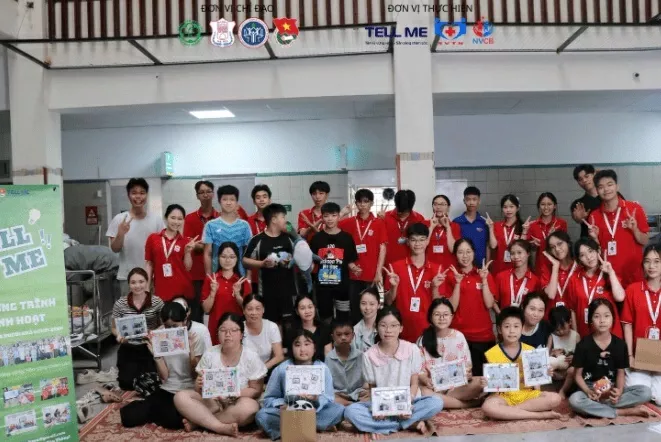 |
| Children and their parents take part in the 13th “Luu Sac” activity session, organised by the Tell me project at the Paediatrics Centre of Bach Mai Hospital on 6 June. (Source: Tell me) |
When caregivers need care, too
During a survey at the Tan Trieu campus of K Hospital, Mr. Ngo Van Thong, co-founder of the Tell me project, met a man in his forties whose father had colorectal cancer and had been admitted to hospital for treatment several times. Each time his father was hospitalised, the man and other family members took turns caring for him, sometimes having to leave their work unfinished.
Despite feeling exhausted and under considerable stress, the man kept telling himself that he had to stay strong for his father. When he heard about Tell me’s idea, he immediately expressed his support and donated VND 5 million to the project. He also left the team a heartfelt message: “I believe in you and I believe you can make this happen. Please consider this my contribution towards buying a dose of emotional medicine for my father. I wish you every success”.
For Mr. Thong, this was one of the most memorable moments in the project’s journey. The encounter helped him and his colleagues recognise that behind every patient are family members quietly bearing their own burdens and striving to remain strong as they care for their loved ones.
These caregivers face financial pressures, family responsibilities and constant anxiety about their relatives’ health. Yet their own mental well-being often receives far less attention than it deserves.
 |
| The Tell me project won second prize in the 2024 New Generation Students competition. (Source: VTV) |
It was out of this concern that Tell me was established as part of the 2024 New Generation Students competition, where it won second prize nationwide. The project aims to provide mental health support to family members of inpatients in Hanoi. It is currently under the management of the Institute of Preventive Medicine and Public Health at Hanoi Medical University.
Guided by the message “Stronger minds, better care”, Tell me seeks to listen to caregivers’ difficulties, understand their practical needs and develop activities tailored to their circumstances.
Encounters that ease the burden
Over the past two years, Tell me has organised 12 events at K Hospital’s Tan Trieu campus and the Paediatrics Department of Bach Mai Hospital. Activities have included handicraft workshops, laughter yoga and conversations with specialists, attracting an average of around 40–50 participants per session, including both patients and their family members.
Alongside these in-person gatherings, the project has launched the Tell me podcast and shared information through an online community group for patients’ families. Now entering its third year, the team is continuing to refresh its programme, develop new initiatives such as the Tell me Kit and expand its reach to more hospitals across Hanoi.
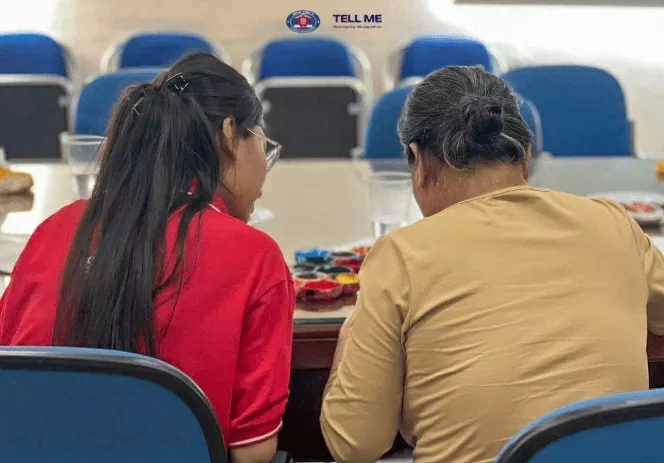 |
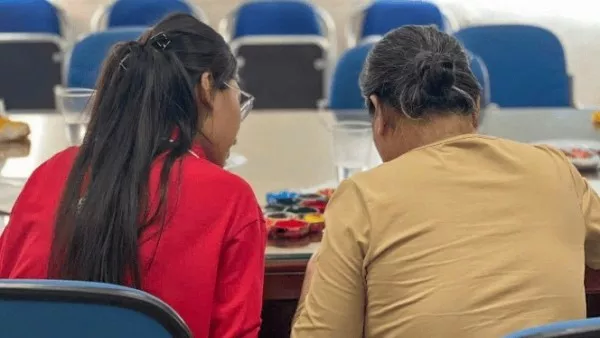
| Family members of patients take part in a drawstring bag decorating activity during the fourth weekly session, themed “Little Brushstrokes - Big Dreams”, organised by the Tell me project at K Hospital’s Tan Trieu campus. (Source: Tell me) |
For the team members, simple messages shared at the end of each session provide a great source of encouragement. Some patients and their relatives have even asked eagerly: “Will you come back next week?”
Such invitations speak to the value of these seemingly small encounters. After hours of tension and worry surrounding illness, a relaxing activity or the chance to talk to others in similar circumstances can offer participants a brief respite from their anxieties.
Ms. Le Tran Thi Anh Tuyet, the project’s deputy leader, and her fellow members believe that support activities need to be sustained over the long term. Beyond creating moments of happiness, Tell me hopes to provide practical information on patient care, ease the pressure on family members and establish peer-support groups where people can exchange experiences and support one another.
Finding happiness in the little things
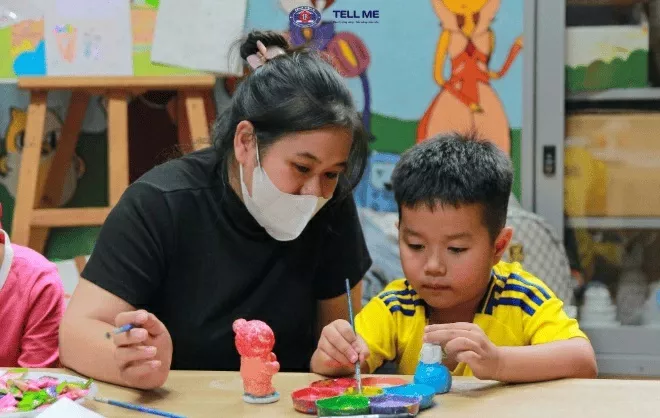 |
| Sharing and understanding provide emotional support, giving patients’ family members the strength to continue caring for their loved ones. (Source: Tell me) |
For Tell me, happiness for those caring for a loved one can sometimes be as simple as knowing that someone understands what they are going through. Such care may not solve every difficulty, but it can give them the strength to carry on supporting their loved ones through treatment.
Ms. Nguyen Dieu Vi Lam, a member of the project, said that before joining Tell me, she often associated happiness with major achievements. However, after meeting patients and listening to their stories, she came to realise that happiness can lie in the most ordinary things: being healthy, returning home after a long day, gathering with family and spending time with those we love.
Ms. Lam still remembers one session when a female patient began singing softly while those around her listened in silence. Amid the pain, uncertainty and anxiety that fill hospital wards, everyone seemed to set aside their weariness for a moment and share in a rare sense of peace. That experience helped the young volunteer realise that even in difficult circumstances, life still holds beautiful moments worth cherishing.
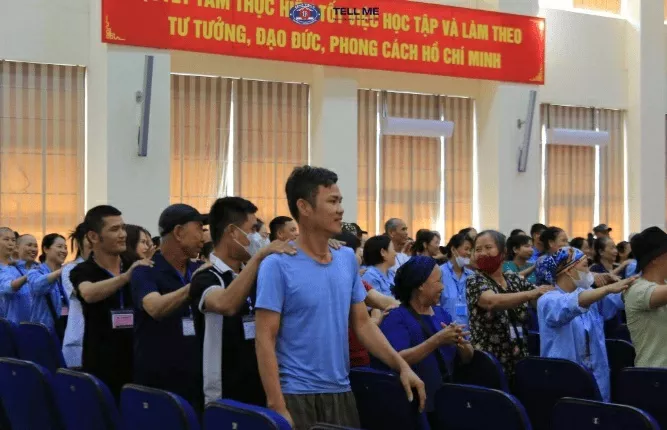 |
| Moments of sharing, songs and smiles bring simple joy to the hospital environment. (Source: Tell me) |
The Tell me journey is therefore one of mutual enrichment. While its members hope to make a positive difference to patients and their families, the people they meet also teach them to appreciate good health, family bonds and the simple pleasures of everyday life.
Sometimes, a dose of emotional medicine need not be anything extraordinary. It may be no more than a thoughtful question, a smile or someone willing to sit down and listen. During difficult times, such warmth and companionship can give people the strength to keep moving forward.