


Deputy FM Dang Hoang Giang co-chairs 14th Vietnam-U.S. Political, Security, and Defense Dialogue in Washington D.C.
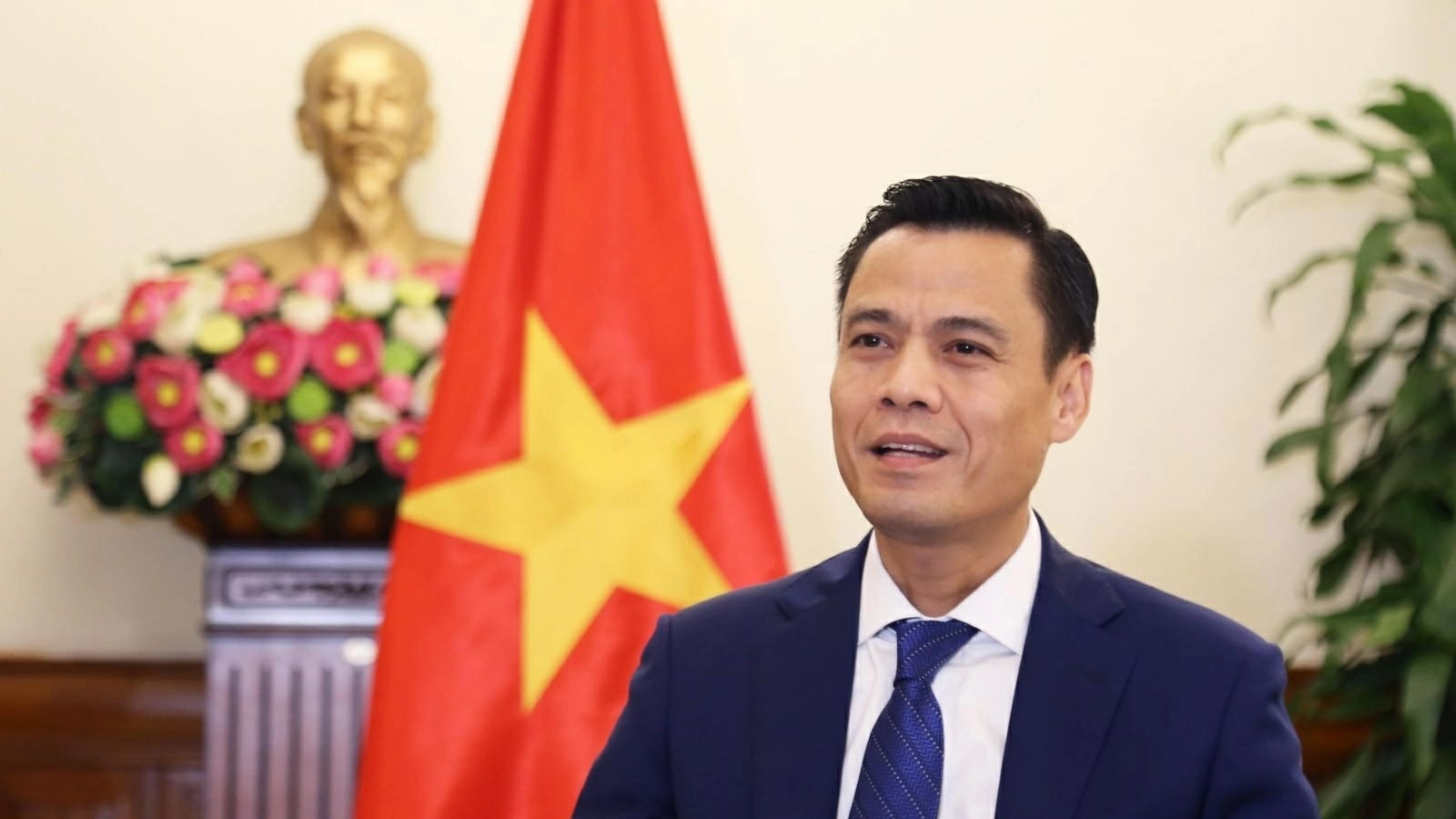
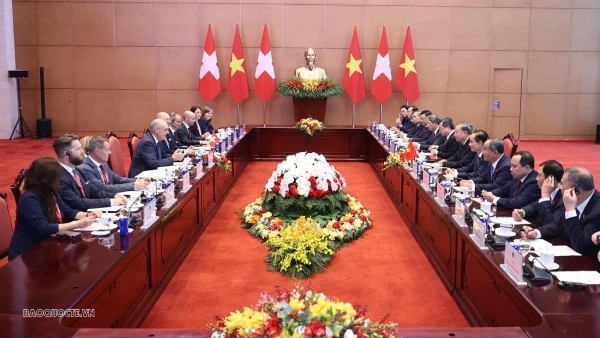
WVR - On December 18, in Washington D.C., Deputy Foreign Minister Dang Hoang Giang and Acting Assistant Secretary of State Fleet White co-chaired the 14th Vietnam-U.S. Political, Security, and Defense Dialogue.
Latest
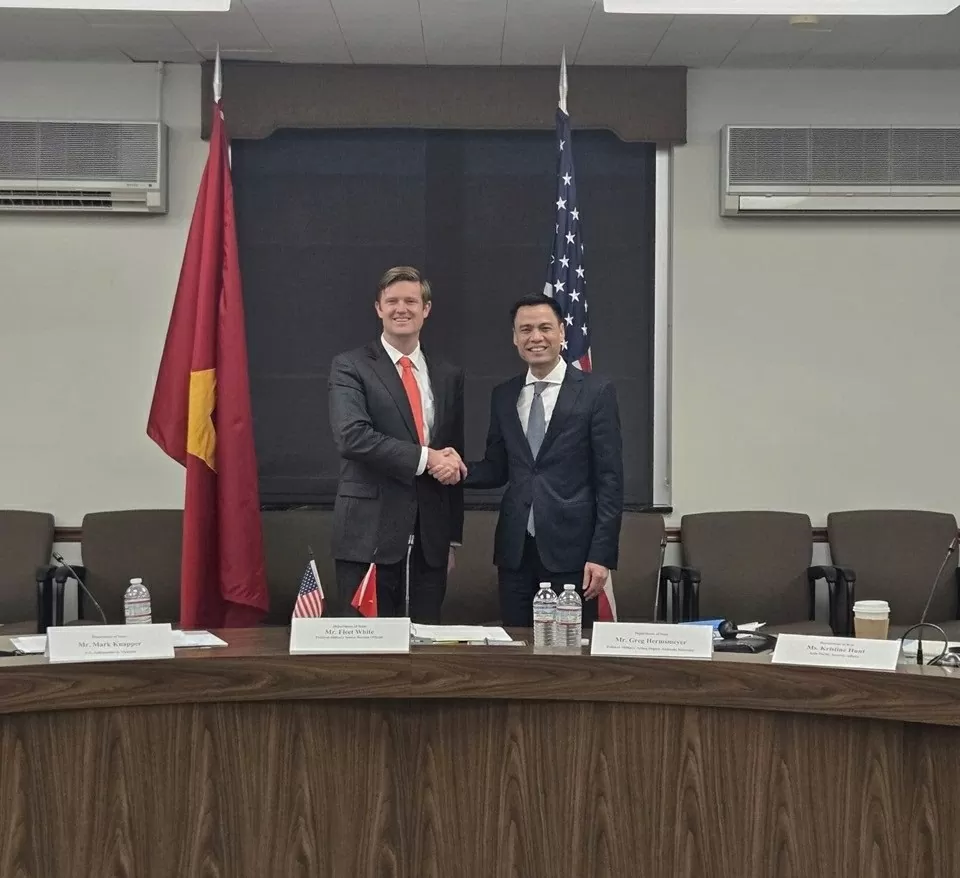 |
| Deputy Foreign Minister Dang Hoang Giang and Acting Assistant Secretary of State Fleet White co-chaired the 14th Vietnam-U.S. Political, Security, and Defense Dialogue. (Photo: Bao Chi) |
This annual cooperation mechanism helps review and orient cooperation in political, security, and defense fields; enhances understanding, builds trust, and promotes stable and substantive Vietnam-U.S. relations.
The Dialogue was attended by representatives from Vietnam's Ministry of Foreign Affairs, Ministry of Public Security, and Ministry of National Defense; on the U.S. side, representatives from functional units of the Department of State and Department of Defense were present. Additionally, Deputy Foreign Minister Dang Hoang Giang held meetings with U.S. Deputy Secretary of Defense Elbridge Colby, Assistant Secretary of State for East Asian and Pacific Affairs Michael DeSombre, and other senior U.S. officials.
During the Dialogue, both sides assessed the bilateral relationship 30 years after establishing diplomatic ties and two years into the Comprehensive Strategic Partnership, noting continued positive developments. Vietnam reaffirmed its view of the U.S. as a leading strategic partner and welcomed increased U.S. cooperation and contributions to regional peace, stability, and development.
The U.S. affirmed that the Vietnam-U.S. relationship over the past 30 years remains a model in international relations, evolving from former adversaries to comprehensive strategic partners. The U.S. reiterated its desire to continue promoting mutually beneficial cooperation with Vietnam based on respect for Vietnam's independence, sovereignty, territorial integrity, and political system, supporting a strong, prosperous, and resilient Vietnam.
Both sides acknowledged significant cooperation results, particularly in maintaining exchanges and contacts at all levels, especially high-level and ministerial; enhancing cooperation to improve law enforcement capacity, combat transnational crime; coordinating responses to non-traditional security challenges; and effectively implementing projects to address war legacies and search for U.S. soldiers missing in action (MIA).
The U.S. expressed gratitude for Vietnam's active cooperation in MIA efforts and affirmed its commitment to expanding dioxin remediation projects, bomb and mine clearance, and promoting new initiatives to support the search for information and DNA identification technology for missing Vietnamese soldiers.
Both sides highly valued the role of existing bilateral cooperation mechanisms in politics, defense, and security, as important channels for information exchange, addressing differences, and promoting substantive, sustainable cooperation on shared concerns.
Building on achieved results, both sides agreed to deepen cooperation in areas within the Comprehensive Strategic Partnership framework, gradually expanding cooperation in potential areas such as defense industry, enhancing maritime law enforcement capacity, coordinating in crime prevention, and high-tech control.
The two sides exchanged views on regional and international security issues, emphasizing the importance of maintaining peace, stability, security, safety, freedom of navigation and overflight; refraining from the use or threat of force; resolving disputes by peaceful means based on international law, including the 1982 United Nations Convention on the Law of the Sea. Both sides reaffirmed ASEAN's central role in the regional architecture.
Concluding the Dialogue, both sides agreed to continue maintaining and enhancing the effectiveness of the Political, Security, and Defense Dialogue mechanism; increasing delegation exchanges, consultations at all levels, especially high-level; and effectively implementing agreed cooperation content, thereby contributing to the Comprehensive Strategic Partnership, for the practical benefit of the peoples of both countries, as well as peace, stability, and development in the region and the world.
During the visit to the U.S., Dang Hoang Giang, Member of the Standing Committee of the Party Committee of the Ministry of Foreign Affairs, also held meetings with Daniel Twining, President of the International Republican Institute, representatives of the Democratic Institute leadership, Co-Chairs of the Communist Party USA Joe Sims and Rossana Cambron to inform about the preparation for the 14th National Party Congress and discuss future party channel cooperation directions. Additionally, the delegation met with representatives from several U.S. organizations, businesses, and scholars to discuss bilateral, regional, and international relations of mutual interest.