



‘Cultural Business Card’: A new bridge for Vietnam-Russia cultural and educational cooperation
WVR - On the afternoon of October 7, an international seminar themed “‘Cultural Business Card’ – A Tool in International Cultural and Educational Policy” was held at the Russian Centre for Science and Culture in Hanoi, aiming to discuss a multifaceted cultural-educational cooperation model, with the goal of building a profound and comprehensive understanding of the traditional values of Vietnam and Russia.
Latest
The event was attended to the President of the Russian Federation Valery Alexandrovich Fadeev, Ambassador of the Russian Federation to Vietnam Gennady Stepanovich Bezdetko; Head of the Rossotrudnichestvo Representative Office in Vietnam and Director of the Russian Centre for Science and Culture in Hanoi Vladimir Vladimirovich Murashkin.
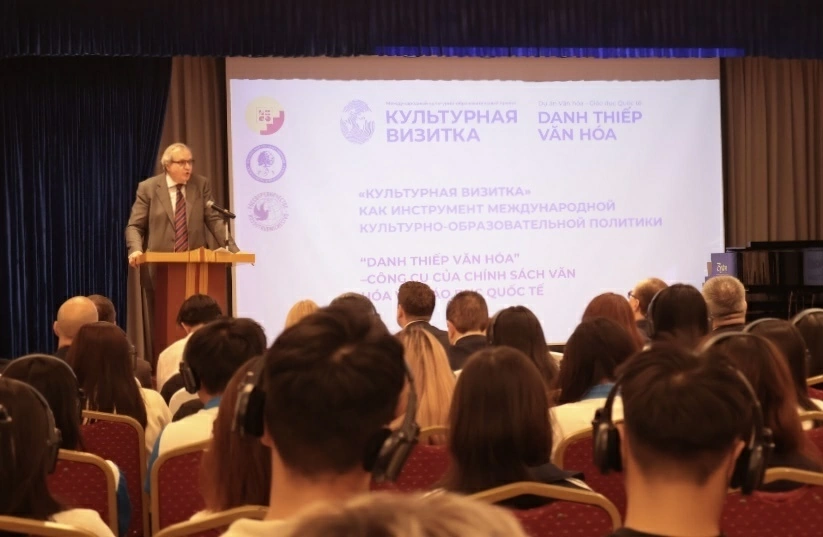 |
| Mr. Valery Alexandrovich Fadeev emphasised the importance of expanding mutual cultural understanding. (Photo: Minh Hang) |
Representing Vietnam were Assoc. Prof. Dr. Ta Minh Tuan, Deputy Secretary of the Party Committee, Vice President of the Vietnam Academy of Social Sciences; Dr. Bui Phuong Dinh, Deputy Director of the Institute of Public Administration and Management; Ms. Nguyen Thi Phuong Cham, Director of the Institute of Cultural Studies (Vietnam Academy of Social Sciences); Ms. Le Thi Anh Mai, Deputy Director of the Hanoi Department of Culture, Sports and Tourism; Mr. Nguyen Nam Hai, Vice President of the Hanoi Union of Friendship Organizations, along with scientists, intellectuals, political-social activists, and representatives from leading universities of both countries.
Promoting humanistic dialogue during the ‘Year of Russia-Vietnam Cooperation in Science and Education’
The seminar took place in a special context as the leaders of both countries have declared 2026 as the Year of Russia-Vietnam Cooperation in the fields of science and education.
The “Cultural Business Card” project, initiated by the Institute of Heritage and Modern Society under the Russian State University for the Humanities (RGGU), received coordination and support from the Russian Centre for Science and Culture in Hanoi.
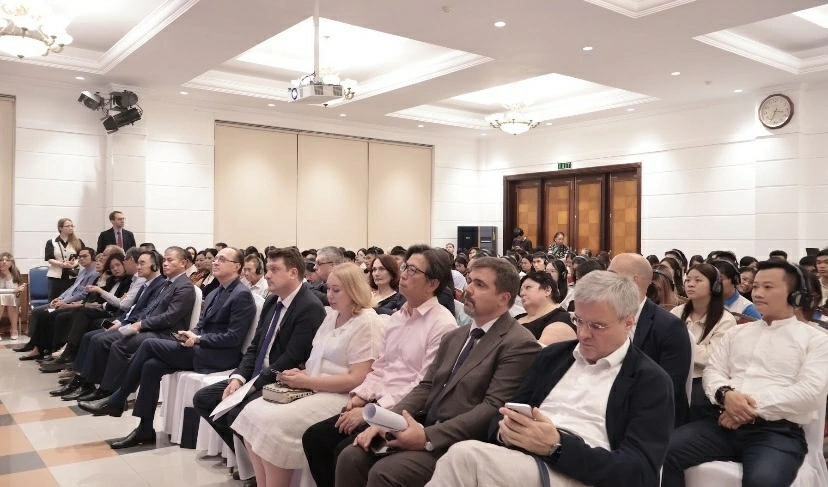 |
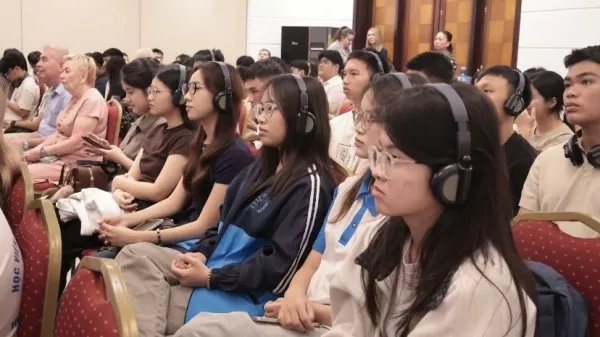
| Delegates and guests attentively listening to the project presentation. (Photo: Minh Hang) |
In his opening remarks, Mr. Valery Alexandrovich Fadeev, Advisor to the President of the Russian Federation and Scientific Director of the Institute of Heritage and Modern Society (RGGU), emphasised that the partnership between the two countries has a nearly century-long history, originating in the first half of the 20th century.
In a world undergoing profound changes, expanding mutual cultural understanding is the core foundation for building a fair, stable world order that respects the diversity of nations.
Sharing this view, Russian Ambassador to Vietnam Gennady Stepanovich Bezdetko affirmed that cultural-humanistic cooperation is a crucial component of the comprehensive strategic partnership between the two countries.
The Ambassador highly appreciated recent vibrant cultural exchange activities such as performances by the Russian Folk Theater Yar, tours by the Boris Eifman Ballet Company, and the maintenance of 100% of the Russian Government's scholarship quotas for Vietnamese students.
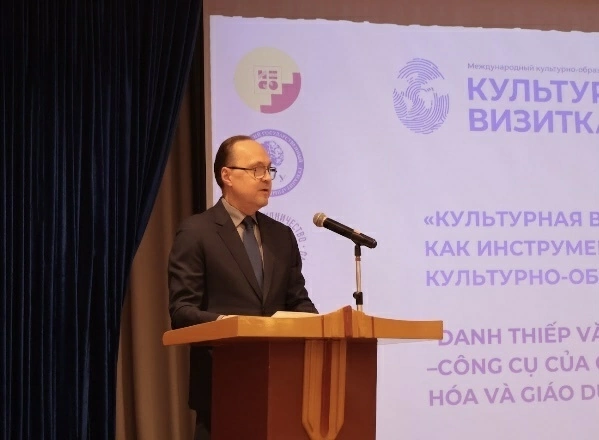 |
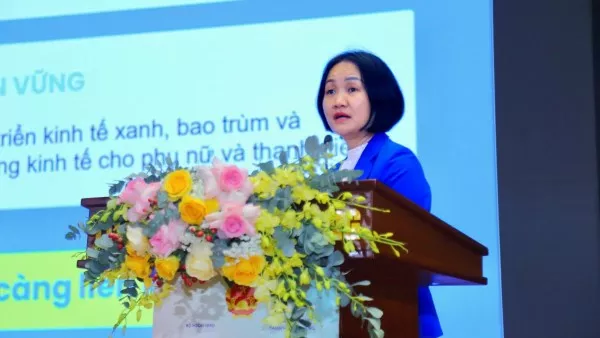
| Russian Ambassador to Vietnam Gennady Stepanovich Bezdetko speaks on the important factor in cultural diplomacy between the two countries. (Photo: Minh Hang) |
Breaking simple stereotypes, aiming for profound understanding
One of the key focuses discussed at the seminar was the current perception of each other's culture among the public in both countries, which remains limited by some simple stereotypes.
Through surveys, Mr. Valery Alexandrovich Fadeev pointed out that knowledge of Vietnam's history before the latter half of the 20th century is almost entirely absent.
“The Russian people's perception of Vietnam is still very limited and consists of a set of simple stereotypes: Market – War – Beach – Pho. Many Russians do not even know that the capital of Vietnam is Hanoi, mistakenly thinking it is Ho Chi Minh City or Nha Trang, simply because there are charter flights from Russia to those places,” said the Advisor to the President of the Russian Federation.
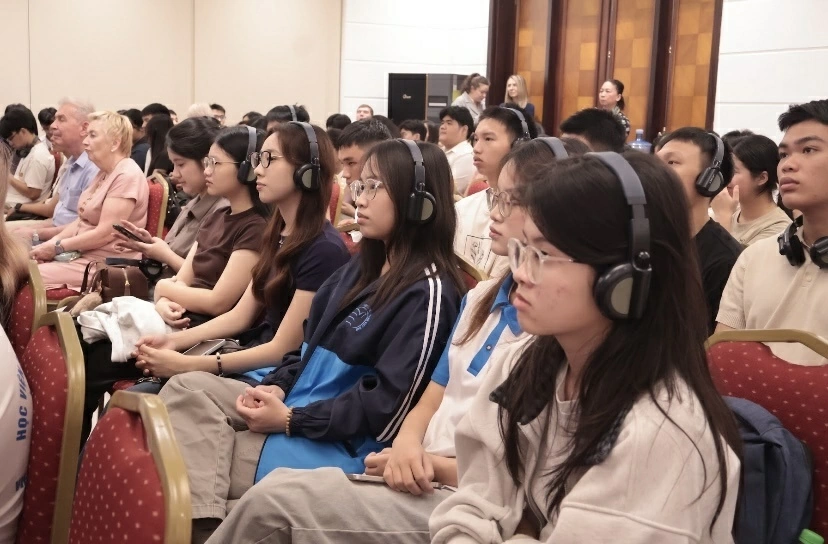 |
| Students listen to the presentation on the project. (Photo: Minh Hang) |
Meanwhile, the long-standing culture, masterpieces of literature such as Truyen Kieu by Nguyen Du, the unique art of water puppetry, or the Vietnamese philosophy of respecting the homeland and ancestor worship are still not fully known to the Russian public.
To bridge this gap, the “Cultural Business Card” project aims to create a model of a shared cultural-educational space, selecting the best literary, musical, artistic, historical, and geographical works to propose their inclusion in the educational system, cultural policy, and tourism development of participating countries.
This is the fourth international event of the project following activities implemented with many partner countries such as Ethiopia, China, India, Brazil, and Iran. The project aims to ensure a fundamental and shared understanding of each country’s culture.
Outlining Vietnam’s ‘Cultural Business Card’
Assoc. Prof. Dr. Taras Alexandrovich Varkhotov, Deputy Director of the Institute of Heritage and Modern Society RGGU, introduced a draft of the “cultural codes” that could become components of Vietnam’s “Cultural Business Card”.
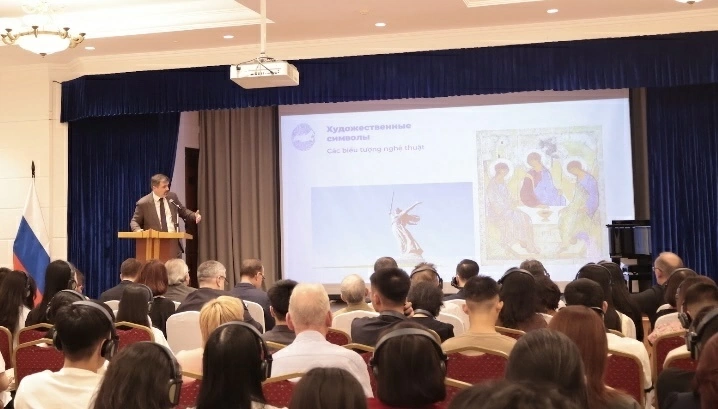 |
| Assoc. Prof. Dr. Taras Alexandrovich Varkhotov introduces the symbols. (Photo: Minh Hang) |
These include symbols associated with space and legend such as the carrying pole, Lac Long Quan - Au Co, lotus, bamboo; the system of sacred animals Long - Lan - Quy - Phuong; the image of the buffalo in wet rice civilization; and heritage sites like Hoi An, My Son.
Additionally, there are imprints in social life such as the structure “Family - Village - Nation”, village communal houses, the 36 streets of Hanoi, ao dai, conical hats; culinary culture with pho; Tet Nguyen Dan along with family, clan values, and traditional ethics.
In terms of language and art, the draft mentions the journey from Nom script to Quoc Ngu script, Truyen Kieu by Nguyen Du, Dong Ho folk paintings, monochord, horns, tuong, cheo... along with a value system formed from the intersection of the Three Teachings and ancestor worship beliefs.
These elements, when placed in a whole, are not merely a list of cultural symbols. They also tell a story about Vietnam – a country with a rich history, memory, value system, and spiritual life.
Becoming a Bridge Between the young generations of both countries
A notable aspect of the seminar was the presence of a large number of students, who are expected to become a bridge between Vietnamese culture and international friends in the future.
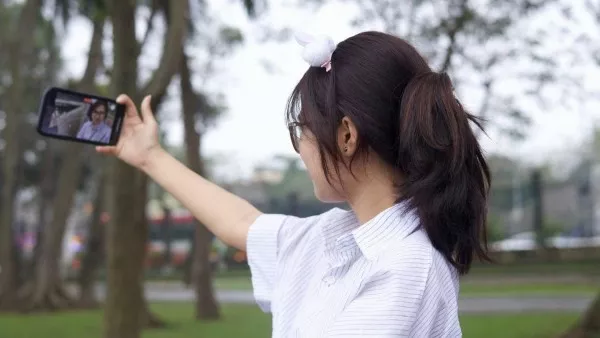
Sharing with The World and Vietnam Report, Pham Thuy Trang, a first-year student at the Vietnam Women's Academy, could not hide her excitement when learning about the “Cultural Business Card” project for the first time.
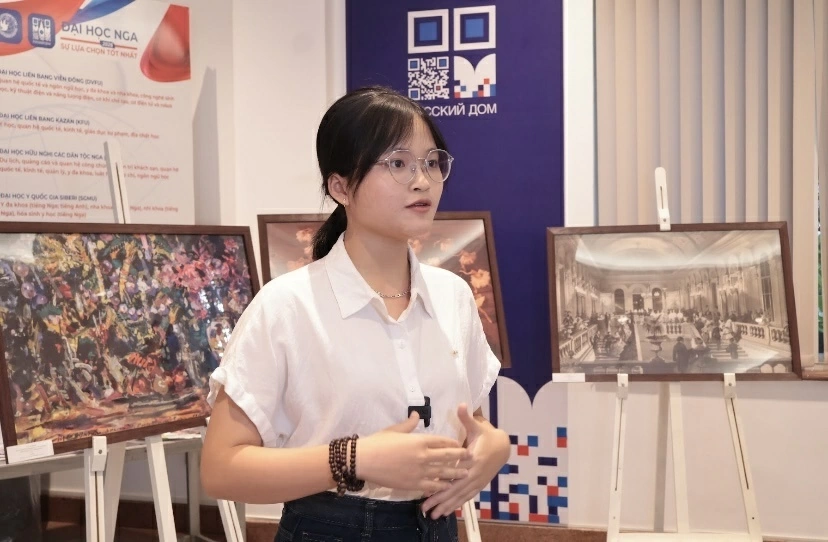 |
| Pham Thuy Trang shares her thoughts on the project. (Photo: Minh Hang) |
“First of all, I want to explore and learn more about Russia. Listening to the experts' presentations, I felt very happy and excited. The project not only helps Vietnamese youth understand Russian culture more deeply but also reminds me of the responsibility to contribute content to introduce our culture,” Thuy Trang shared.
Trang also expressed her hope that the cultural business card is not just a project, but that the cultural symbols on it will create a powerful voice, thereby fostering a deeper connection between the young generations of the two countries.
In the context of Vietnam and Russia continuing to implement many cultural cooperation programs from 2025-2027, and looking forward to the “Russian Cultural Season in Vietnam” in 2027, the “Cultural Business Card” initiative is expected to become a new connection point, helping to bring the unique values of the two cultures closer to the public, especially the younger generation.