





APEC 2026: Transforming cooperation opportunities into value
WVR - Ms Le Dung, Director of the Institute of Business Intelligence, Founding President of the CEO Club 1983, asserts that APEC 2026 offers additional cooperation opportunities. To secure orders and maintain clients, businesses must prepare their execution capabilities.
Latest
 |
| Ms Le Dung, Director of the Institute of Business Intelligence, Founding President of the CEO Club 1983. |
APEC is an economic cooperation space that brings together many dynamic economies, with a vast market and increasingly high business standards. In your opinion, what are the standout opportunities that APEC 2026 could open up for Vietnamese businesses?
I believe that a notable opportunity from APEC 2026 is that Vietnamese businesses have more conditions to connect with partners, access technology, and better understand the requirements of regional markets. The three priorities of APEC 2026 are openness, innovation, and cooperation. The content on trade facilitation, digital transformation, and supply chain connectivity is practically significant for businesses, but it requires time and coordination to translate into business results.
APEC is an economic cooperation forum among 21 member economies, operating on a voluntary and consensus basis. Participation in APEC does not automatically create tariff preferences. When choosing a market, businesses still need to check import regulations, customer requirements, and conditions for preferential treatment under each relevant trade agreement.
In my opinion, Vietnamese businesses should focus on three directions of opportunity.
Firstly, the opportunity to find customers and distribution partners. Business connection activities within and on the sidelines of APEC can initiate a cooperative relationship. To proceed further, businesses must answer very specific questions from buyers: Is the quality stable, what is the production capacity, how long is the delivery time, and who is responsible if issues arise? Therefore, preparation before the meeting is as important as the meeting itself.
Secondly, cooperation to supplement technology, skills, and management capacity. For small and medium enterprises, a valuable partner might be one that helps improve product quality, refine processes, or understand how to operate a new distribution channel. Such cooperation can lay the foundation for long-term growth.
Thirdly, participating in the value chain with specialized capabilities. Businesses can start at a stage that suits their strengths and gradually upgrade. For example, with agricultural products, besides the quality of raw materials, they can develop processing capabilities, traceability, and meet distributor requirements. The retained value will depend on the stage undertaken, negotiation capacity, and the level of product and market mastery.
APEC economies have different market access needs and conditions. Businesses should choose target markets based on actual capabilities and resources, experiment on a controllable scale before expanding. In my view, APEC 2026 creates additional cooperation opportunities, but to secure orders and maintain clients, businesses must prepare their execution capabilities.
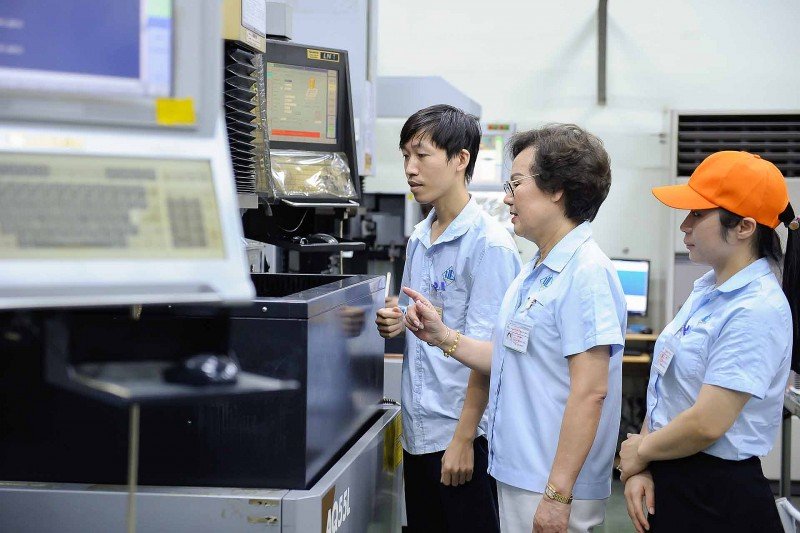 |
| A notable opportunity from APEC 2026 is that Vietnamese businesses have more conditions to connect with partners, access technology, and better understand the requirements of regional markets. (Photo: Nguyen Hong) |
What are the major limitations hindering Vietnamese businesses from reaching the APEC market? How should businesses change to enhance competitiveness, ma'am?
From the perspective of training and connecting entrepreneurs, I believe a priority bottleneck is the gap between the ability to produce products and the ability to organize business in the international market. The level of difficulty varies between industries and businesses, but the common question remains whether the management system can meet the demands when order volumes increase.
Having a good product is a necessary condition. To maintain relationships with partners, businesses must also demonstrate stable quality, delivery schedules, cost control, and how to handle issues when they arise. A large order can become a pressure if production processes, working capital, and management teams cannot keep up.
Therefore, the first change needs to be in management thinking. The leader must clearly define how the business will compete, which customer group it will serve, and how long it is willing to invest to build that capability. Cost advantage remains important but needs to be reinforced by productivity, quality, and responsiveness. If only prices are reduced without improving operational efficiency, the business will lack resources for development.
Regarding technology, it should start from specific issues. If deliveries are frequently late, the business must identify whether the cause lies in production planning, inventory, or inter-departmental coordination, then choose a solution. With artificial intelligence (AI), it is necessary to determine suitable tasks, data quality, security requirements, and responsibility for result verification. It is advisable to experiment on a small scale, measure effectiveness, and then expand investment.
Regarding human resources, besides language and expertise, businesses need individuals who understand contracts, know how to coordinate work, and can handle situations with international partners. The middle management team is particularly important, as businesses find it difficult to expand if everything awaits the owner's decision.
Additionally, it is essential to account for the costs and risks of international transactions, from transportation, testing, exchange rates to payment and complaint handling. High revenue does not necessarily accompany good profits or safe cash flow. Businesses also need to understand contractual obligations, rules of origin when applying for preferences, and legal requirements related to their goods and services.
In my opinion, preparing for integration is also the process of enhancing internal management quality. The stronger that foundation, the higher the ability to seize external opportunities.
What specific mechanisms, policies, and connection programs are needed to support Vietnamese businesses, especially small and medium enterprises?
In my opinion, it is necessary to review existing support programs, clarify focal points, and help businesses access them more conveniently. Then, organize support according to each target market: Assess readiness, address shortcomings, connect partners, and monitor implementation. This approach requires coordination among management agencies, promotion organizations, associations, and specialized units, avoiding businesses having to seek out each fragmented service.
First, market information needs to be specific enough for businesses to use. A market potential report will be more useful if it points out which products are in demand, what the access conditions are, suitable distribution channels, and anticipated costs. Promotion agencies, trade offices, and industry associations can collaborate to build information by industry and market, while updating significant changes.
A practical need is to reduce the cost of market entry preparation. I recommend using or supplementing appropriate co-funding mechanisms for process improvement consulting, testing, certification, and intellectual property protection.
Support should be based on a feasible market access plan, with the business's responsibility and result evaluation. Specifically, it is crucial to distinguish between mandatory import market regulations, buyer-specific requirements, and voluntary standards to choose the right investment.
Regarding trade promotion, the post-connection phase is very important. After a meeting, businesses may need support in partner evaluation, sample completion, payment term negotiation, or logistics issue handling. Each program should have a focal point to monitor for an appropriate period. Results should be evaluated by executed transactions and the ability to maintain business relationships, alongside the number of meetings or memorandums of understanding.
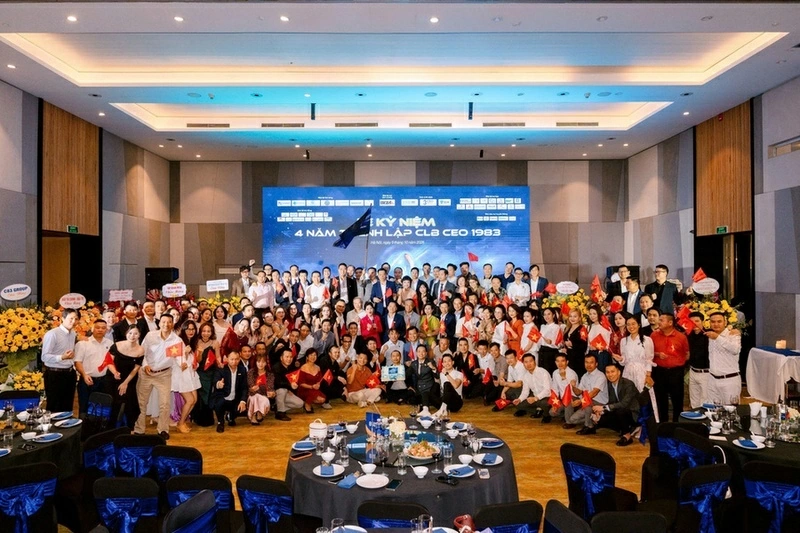 |
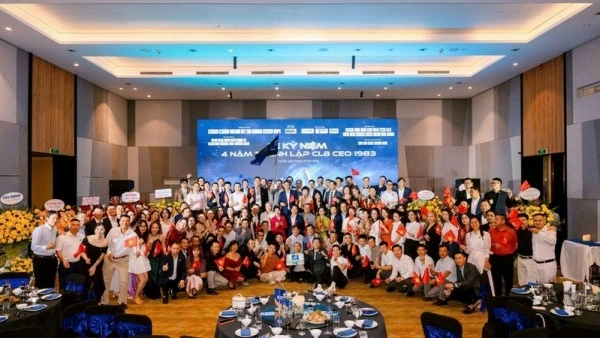
| The CEO community needs to invest in the capabilities of each business and the organization of cooperation among members. |
Regarding capital, it is necessary to increase access to financial products suitable for the production cycle and payment terms of orders. Trade finance, credit guarantees, or export credit insurance can be considered based on application conditions, supply capacity, and risk levels of each case. Businesses must standardize bookkeeping, manage cash flow, and demonstrate business plans; financial institutions should be connected early to jointly assess actual needs.
Regarding technology and distribution networks, programs should be organized to connect based on specific problems: which process needs improvement, what support can the partner provide, and how costs and responsibilities are divided. This can be combined with supplier development programs, linking top-tier businesses and foreign-invested enterprises in Vietnam. This is a path for small businesses to accumulate capabilities to participate in international value chains, alongside seeking direct export customers.
To me, an effective support program must leave capabilities within the business: knowing how to choose markets, understanding partner requirements, and being able to independently conduct subsequent transactions.
How do you assess the role of the entrepreneurial team in elevating the position of Vietnamese businesses in APEC? What capabilities and long-term cooperation strategies should the CEO community build?
In my opinion, entrepreneurs play a direct role in building the reputation of Vietnamese businesses in the international market. Partners evaluate us through very specific actions such as product quality, execution progress, transparency, and attitude when handling disagreements. These are accumulated through many transactions to form long-term trust.
With 18 years of experience in training and connecting the entrepreneurial community, I am most concerned with how knowledge is applied within businesses. In my roles as Director of the Institute of Business Intelligence, Founding President of the Vietnam Business Intelligence Community, and President of the CEO Club 1983 under HANOIBA, I believe a valuable sharing session helps participants find solutions to their problems. The same applies to connection activities, where parties need to understand each other's capabilities and identify tasks they can jointly undertake.
Therefore, the CEO community needs to invest in the capabilities of each business and the organization of cooperation among members.
 |
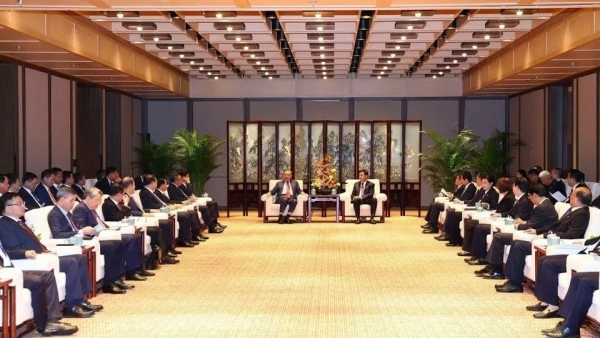
| Streets in Shenzhen, Guangdong Province, China are adorned with APEC 2026 symbols. (Source: VCG) |
At the business level, leaders must have the ability to choose strategies: Which markets are suitable, which advantages can be maintained, and when is it feasible to expand. The decision to go international must be accompanied by a resource plan and acceptable risk limits.
Along with that is the ability to organize learning and innovation. CEOs need to build teams that can adopt technology, adjust products, and improve processes. Knowledge from a course or a survey trip needs to be translated into specific tasks, with someone in charge and results monitored.
At the community level, trust helps initiate cooperation, while clear principles help sustain it. When doing business together, parties still need specific agreements on quality, finance, responsibility, and how to resolve disagreements. The closer the acquaintance, the more necessary it is to clarify commitments from the start.
Regarding long-term strategy, CEO communities can develop collaborative groups by industry or market demand, jointly researching customers, sharing experiences, and building complementary supply capabilities. The goal should be specific enough, such as jointly meeting a buyer's requirements or developing a distribution channel.
Regarding contributions to business standards, businesses can start by practicing transparency, responsibility, and sharing proven experiences. Issues and recommendations need to be compiled with evidence through associations and appropriate consultation mechanisms, including forwarding proposals to Vietnamese representatives in the APEC Business Advisory Council (ABAC). This is a channel for business advice to APEC leaders. Building technical standards requires going through corresponding professional processes; it should be distinguished from ABAC's policy consultation role.
Sustainable development also needs to start from measurable tasks: using materials more efficiently, reducing waste, ensuring labor conditions, and transparency of information. Doing well allows businesses to improve operational efficiency and have a basis to negotiate with partners based on actual results.