




Vietnam proactively promotes new momentum for Mekong Sub-Regional cooperation: Deputy FM Nguyen Minh Hang
WVR - On September 30, in Ha Long, Quang Ninh, Deputy Minister of Foreign Affairs Nguyen Minh Hang attended and delivered a keynote speech at the Senior Officials' Meetings (SOM) of the Cambodia - Laos - Myanmar - Vietnam (CLMV) and Mekong-Japan cooperation mechanisms.
Latest
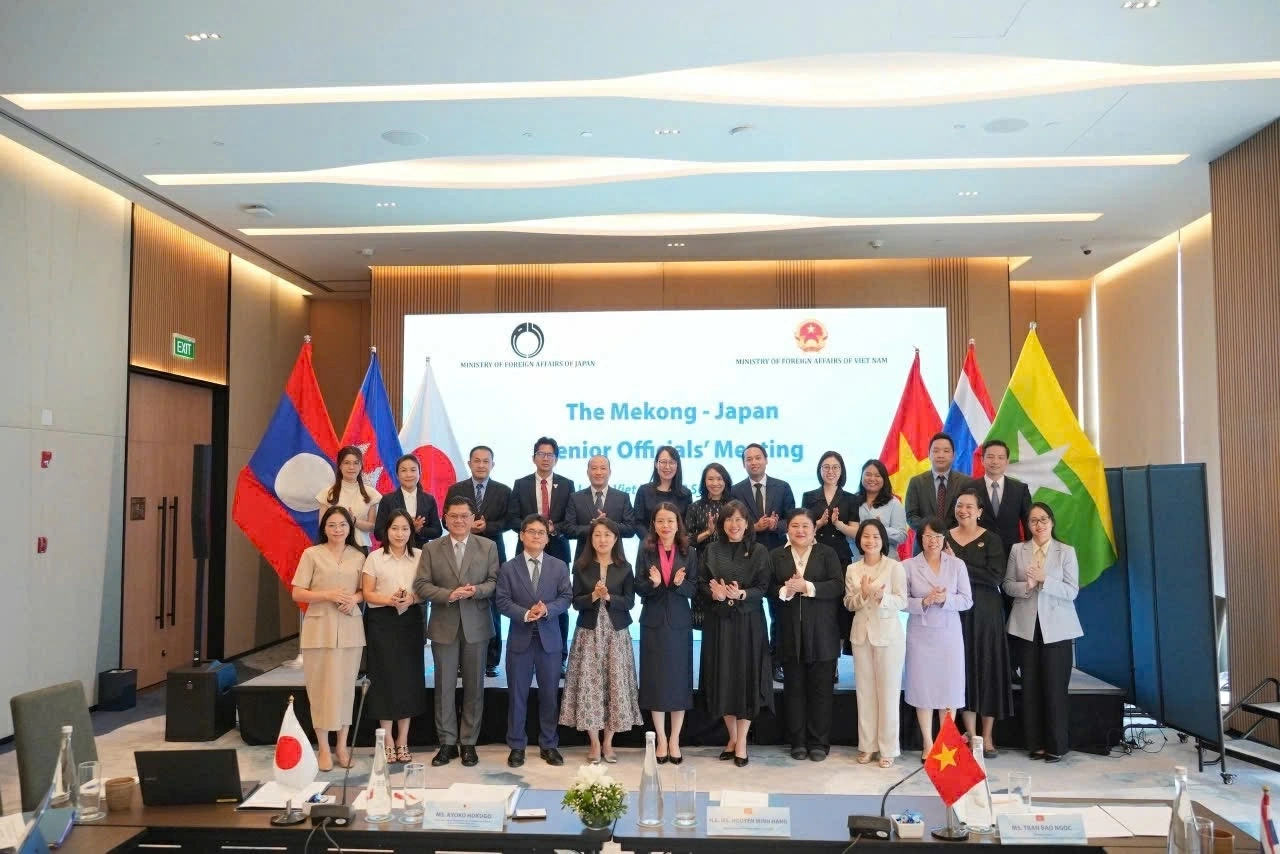 |
| The CLMV and Mekong-Japan Senior Officials' Meetings focused on promoting sub-regional cooperation and identifying priorities for the upcoming phase. (Source: Organizing Committee) |
The meetings were attended by Senior Officials and representatives from the Ministries of Foreign Affairs and several other ministries and sectors of Cambodia, Laos, Myanmar, Thailand, Vietnam, and Japan.
The conferences focused on assessing opportunities and challenges, identifying cooperation priorities for the future, and preparing for the 12th CLMV Summit and the 13th Mekong-Japan Summit.
At the CLMV SOM, Deputy Minister Nguyen Minh Hang emphasized that the changes over the past five years have affirmed the long-term value of CLMV cooperation in narrowing the development gap, enhancing economic connectivity, and ensuring that ASEAN integration brings opportunities to all member countries.
Ahead of the 12th CLMV Summit, the Deputy Minister urged CLMV senior officials to focus on discussing three main topics.
First, finalize the summit documents with a mindset of innovation, shaping a common vision, and identifying CLMV cooperation priorities that align with new development requirements.
Second, exchange to recommend to the Leaders the priorities and initiatives for the next phase of cooperation, especially in strengthening economic connectivity, tourism, human resource development, and sustainable water resource management.
Third, renew cooperation commitments to strengthen solidarity and enhance the effectiveness of initiative implementation with a shared responsibility spirit, clear roadmap, and regular review. Vietnam will coordinate with member countries and the ASEAN Secretariat to promote the participation and support of development partners and the private sector.
At the Mekong-Japan SOM, Deputy Minister Nguyen Minh Hang assessed that Mekong-Japan cooperation has significantly contributed to enhancing connectivity, sustainable development, addressing non-traditional security challenges, and building a trusted partnership between Japan and the Mekong countries.
The Deputy Minister appreciated Japan's promotion of Mekong-Japan cooperation in the spirit of “co-creation”.
In the context of profound global and regional changes, the upcoming Mekong-Japan Summit is an opportunity for Leaders to affirm the strategic importance of the Mekong-Japan partnership for the stability, cooperation, and prosperity of the sub-region and region, complementing the development strategies of the Mekong countries and Japan.
Frankly acknowledging that the cooperation results so far have not matched the expectations and potential of the partnership, the Deputy Minister urged Mekong and Japanese senior officials to focus on identifying annual cooperation priorities for Leaders to consider and approve.
In the immediate future, Mekong countries and Japan should focus on promoting smart supply chains, developing renewable energy, enhancing the application of artificial intelligence (AI) and emerging technologies, and combating transnational crime.
Deputy Minister Nguyen Minh Hang also suggested that member countries enhance resource mobilization for Mekong-Japan cooperation, including leveraging Japan's existing frameworks and initiatives such as POWERR ASIA.
From the orientations proposed by Vietnam, delegates from the two CLMV and Mekong-Japan mechanisms engaged in frank and open discussions about the opportunities and challenges facing both mechanisms.
Senior Officials from the countries supported the proposals on priority areas and Vietnam's anticipated initiatives to report to the 12th CLMV Summit and the 13th MJC Summit.
Notably, the 13th Mekong-Japan Summit will be the first meeting of Mekong and Japanese Leaders in six years, expected to yield practical results and new momentum for the next phase of the partnership.
Mekong countries and Japan also proposed several areas of common interest, including digital transformation, green transition, connectivity of transport corridors, early disaster warning, food security, and the participation and contribution of the private sector.
The delegates agreed on the need to continue enhancing the substance and effectiveness of the two cooperation mechanisms.
The SOM CLMV and Mekong-Japan meetings in Ha Long demonstrate Vietnam's proactive efforts to contribute to enhancing the effectiveness of sub-regional cooperation, the relationship between Mekong countries and Japan, as well as the ASEAN Community-building process.


