






Deputy FM Le Thi Thu Hang on President Ilham Aliyev's visit: Vietnam and Azerbaijan deepen Strategic Partnership
WVR - The World and Vietnam Report is pleased to present the interview with Deputy Minister of Foreign Affairs Le Thi Thu Hang regarding the outcomes of the official visit to Vietnam by Azerbaijan President Ilham Aliyev.
Latest
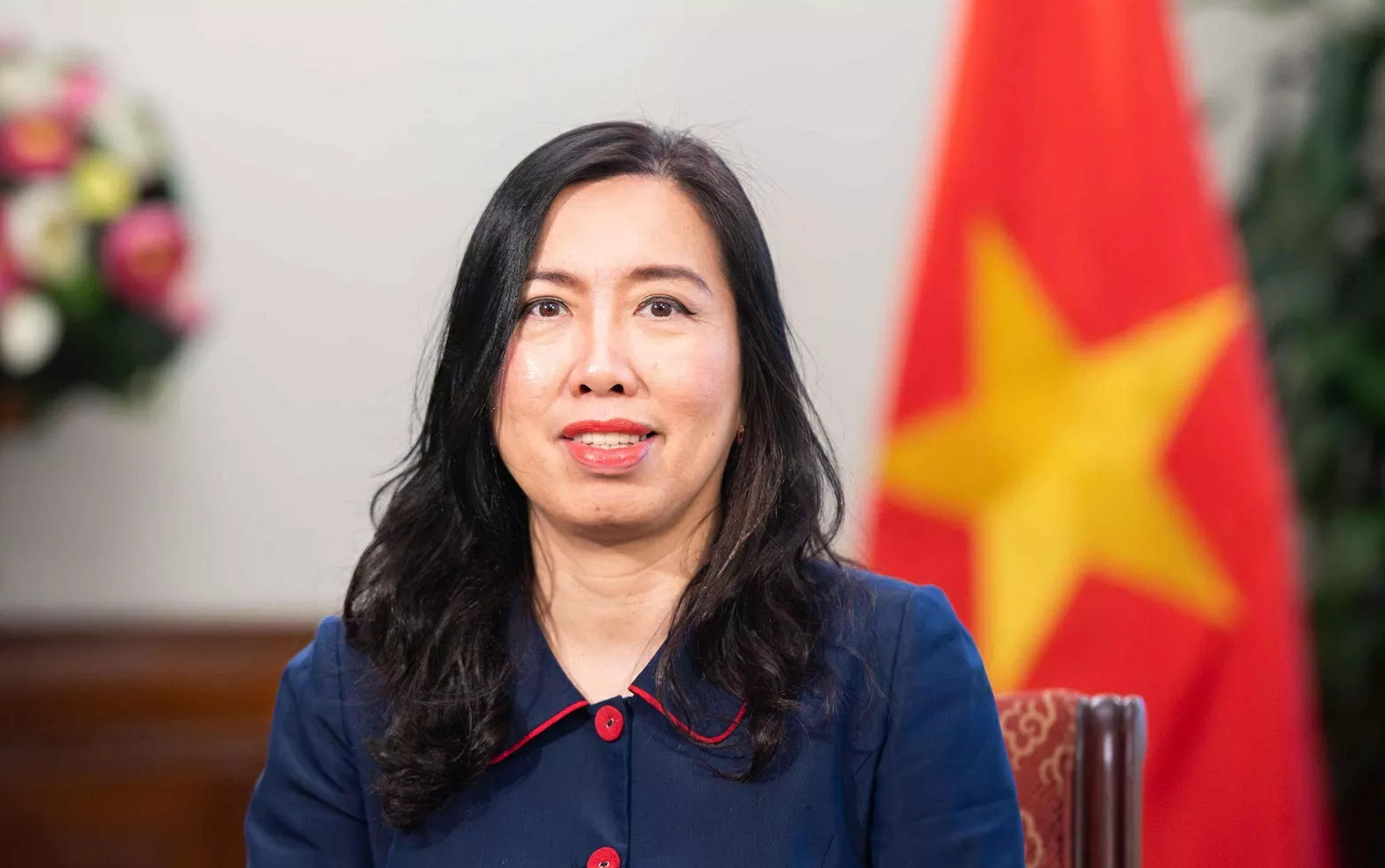 |
| Deputy Minister of Foreign Affairs Le Thi Thu Hang discusses the outcomes of the official visit to Vietnam by Azerbaijan President Ilham Aliyev. (Photo: Bao Chi) |
Could you please share the significance and key outcomes of Azerbaijan President Ilham Aliyev's official visit to Vietnam?
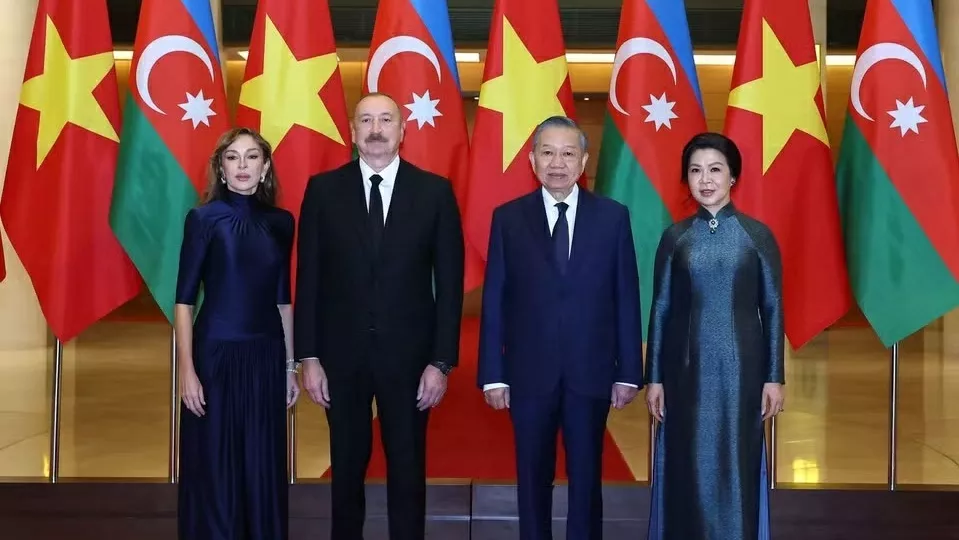
At the invitation of General Secretary of the Central Committee of the Communist Party of Vietnam, President of the Socialist Republic of Vietnam To Lam and his spouse, President of the Republic of Azerbaijan Ilham Aliyev and his spouse paid an official visit to Vietnam from November 20 to 21, 2026. This marks President Ilham Aliyev's second official visit to Vietnam, following his visit in 2014.
The visit took place as the traditional friendship and multifaceted cooperation between Vietnam and Azerbaijan entered a new phase of development, following the establishment of a Strategic Partnership during General Secretary To Lam's state visit to Azerbaijan in May 2025.
This visit underscores the importance both countries' leaders place on bilateral relations and provides additional impetus to concretize high-level commitments, as they approach the 35th anniversary of diplomatic relations in 2027.
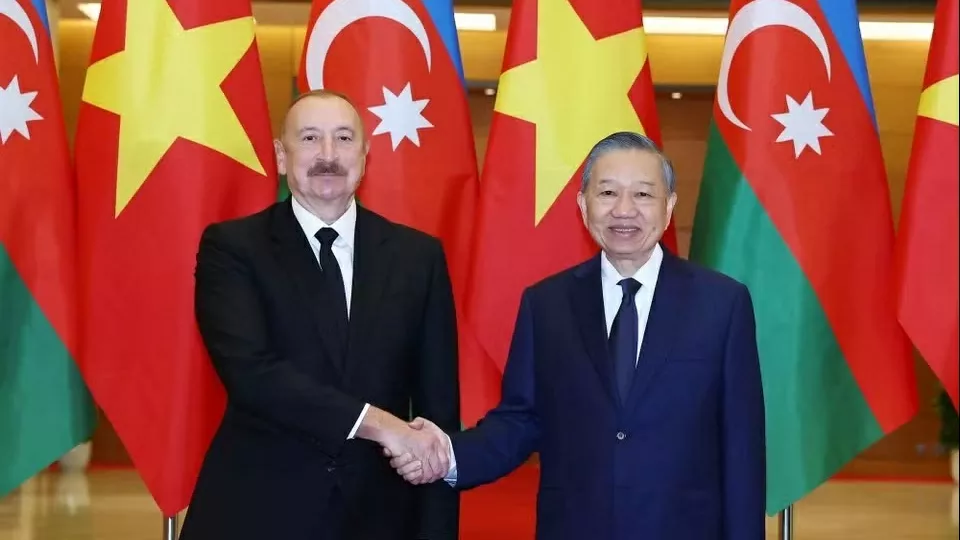
During the visit, President Ilham Aliyev held talks with General Secretary, President To Lam, and met with Prime Minister Le Minh Hung and National Assembly President Tran Thanh Man. In these discussions, both sides extensively exchanged views on measures to strengthen political trust, expand bilateral cooperation, and enhance coordination at international and regional forums.
The most notable outcome was the joint statement issued on November 21, affirming the determination to deepen the Strategic Partnership and outlining cooperation priorities for the future. The joint statement reaffirmed the foundational principles of bilateral relations, including respect for independence, sovereignty, territorial integrity, adherence to international law, and the United Nations Charter. Both leaders also agreed to finalize and approve the Action Plan to implement the Strategic Partnership soon.
Through talks with General Secretary, President To Lam, and meetings with Prime Minister Le Minh Hung and National Assembly President Tran Thanh Man, both sides agreed to enhance high-level exchanges, maintain consultations between the two Ministries of Foreign Affairs, and expand cooperation between the two Parties and National Assemblies. Parliamentary cooperation can directly contribute to improving the legal framework and overseeing the implementation of agreements. Both countries also agreed to strengthen coordination at the United Nations, the Non-Aligned Movement, and the Conference on Interaction and Confidence-Building Measures in Asia (CICA).
In terms of economics, both sides agreed to promote trade and investment commensurate with the stature of the Strategic Partnership, continue to leverage strengths in oil and gas cooperation, and expand into clean and renewable energy. Documents exchanged during the visit concretized a number of cooperation directions, including an agreement between the Azerbaijan Ministry of Energy and a Vietnamese enterprise on assessing, developing, and implementing solar and wind power projects in Azerbaijan, along with agreements on cooperation between the two presidential offices and on fire prevention, firefighting, rescue, and relief.
The visit also opens up prospects for broader connectivity. Vietnam views Azerbaijan as an important partner in the South Caucasus and Caspian region and is ready to serve as a bridge for Azerbaijan to strengthen relations with ASEAN and Southeast Asian countries. As they approach the 35th anniversary of diplomatic relations in 2027, both sides have opportunities to bring the ties between the two countries closer to businesses, people, and the younger generation.
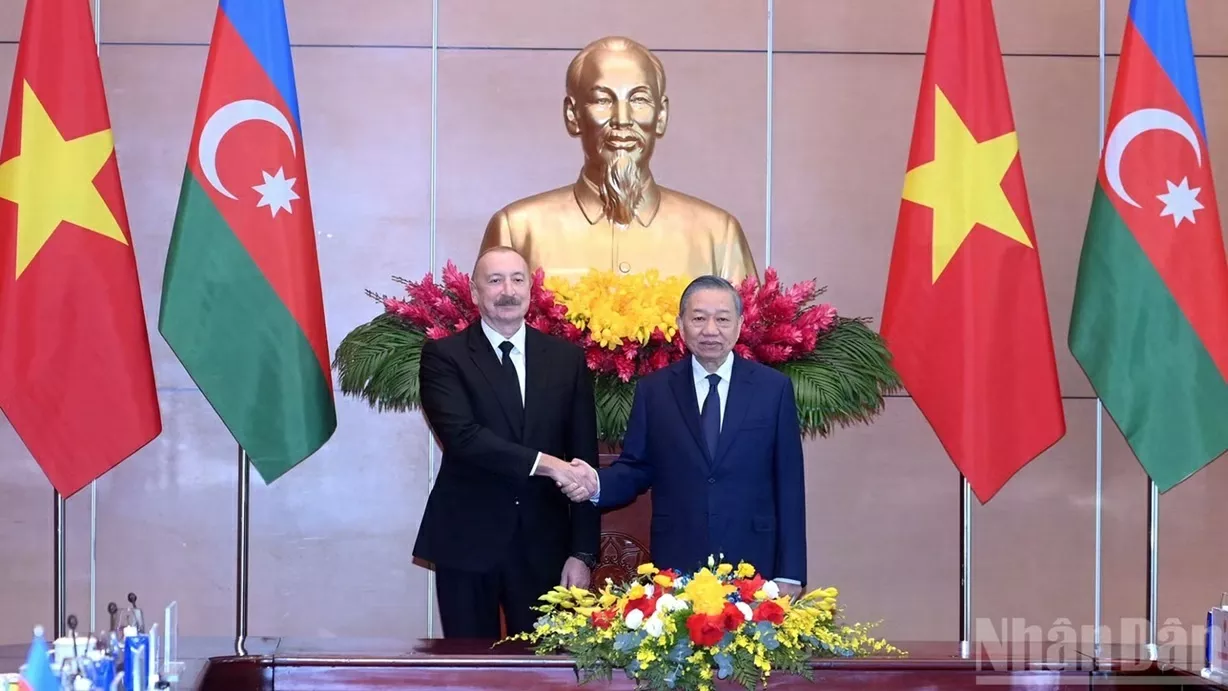 |
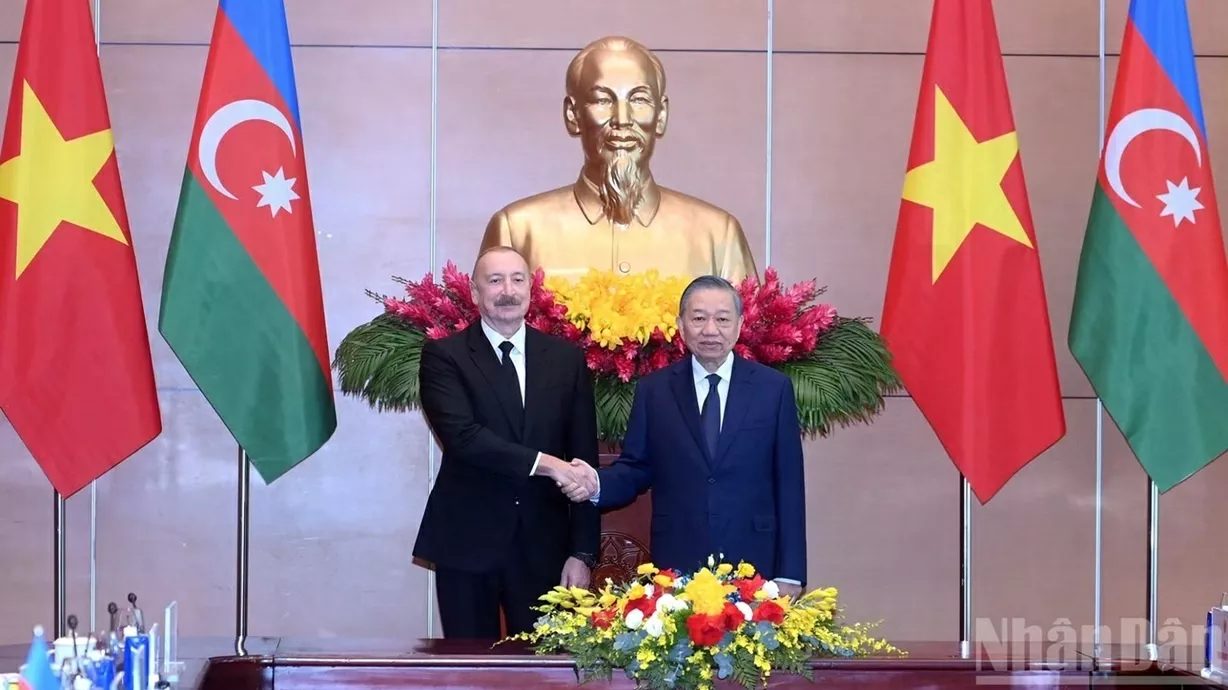
| General Secretary, President To Lam and President of the Republic of Azerbaijan Ilham Aliyev during talks. (Source: Nhan Dan Newspaper) |
According to the Deputy Minister, which areas should the two countries prioritize to effectively implement the Strategic Partnership in the coming period?
The immediate task is to finalize the Action Plan and leverage existing cooperation mechanisms to implement the agreed priorities. Accordingly, in the coming period, both sides will focus on five key areas:
First, continue to strengthen political trust and enhance cooperation across channels. Both sides need to maintain delegation exchanges and high-level contacts while promoting cooperation between Party, National Assembly, Government agencies, ministries, sectors, and localities of the two countries. The Communist Party of Vietnam and the New Azerbaijan Party should further strengthen cooperation, focusing on sharing experiences in Party building and exploring suitable forms of theoretical exchange. The two Ministries of Foreign Affairs should further enhance their advisory, coordination, and promotion roles in implementing the agreements reached.
Second, create substantive changes in trade and investment. The excellent political relations provide a basis for both countries to enhance the scale and quality of economic cooperation. Both sides need to leverage the role of the Intergovernmental Committee, implement decisions agreed upon at the third session, and improve the legal framework to facilitate businesses. In the short term, they can focus on connecting businesses, supporting market access for agricultural, forestry, and fishery products, and promoting feasible investment projects. The joint statement also clearly outlines the direction to support Vietnamese investment projects in Azerbaijan, including renewable energy.
Third, leverage the oil and gas pillar and expand cooperation into clean energy. Both countries can capitalize on accumulated experience to promote cooperation in exploration, extraction, technical services, and oil and gas human resource training. Both sides will also continue to explore the possibility of establishing long-term agreements on crude oil and liquefied natural gas supply. In the field of renewable energy, promoting solar and wind power projects mentioned in the documents exchanged during this visit will create opportunities for businesses from both countries to expand investment cooperation, while contributing to energy security and green growth goals.
Fourth, enhance transport and logistics connectivity. Cooperation in utilizing the Trans-Caspian International Transport Route can provide additional options for Vietnamese goods to access the South Caucasus and further into the European market. Conversely, Vietnam can support Azerbaijani businesses in expanding connections with the ASEAN market. Both sides also agreed to encourage agencies and airlines to expedite the opening of direct flights. If implemented, the direct flight will facilitate travel, investment promotion, tourism, and people-to-people exchanges.
Fifth, expand cooperation between agencies, localities, and people of both countries. In the field of defense and security, both sides can enhance delegation exchanges, professional training, and share experiences in combating transnational crime. In education and science, there is a need to promote student and lecturer exchanges, consider granting scholarships, and implement joint research projects. Cultural Day activities, tourism cooperation, and twinning between localities are also initiatives that can be promoted on the occasion of the 35th anniversary of diplomatic relations. Through these efforts, the younger generations of both countries will have more opportunities to learn about each other and directly contribute to nurturing bilateral relations.
The important task following the visit is to translate the agreed priorities into specific actions by each ministry, sector, locality, and enterprise. The depth of the Strategic Partnership will be reflected in the projects jointly implemented by the two countries, the markets businesses can access, and the additional opportunities for learning, travel, and cooperation available to the people of both countries.