



Chairman of Delta E&C: ASEAN needs a 'strategic push' to win the global capital attraction race
The world is seeking a region that is both stable and bold. Therefore, ASEAN needs a “strategic push” in the next 24 months to make ASEAN the most attractive destination in the global investment capital race.
Latest
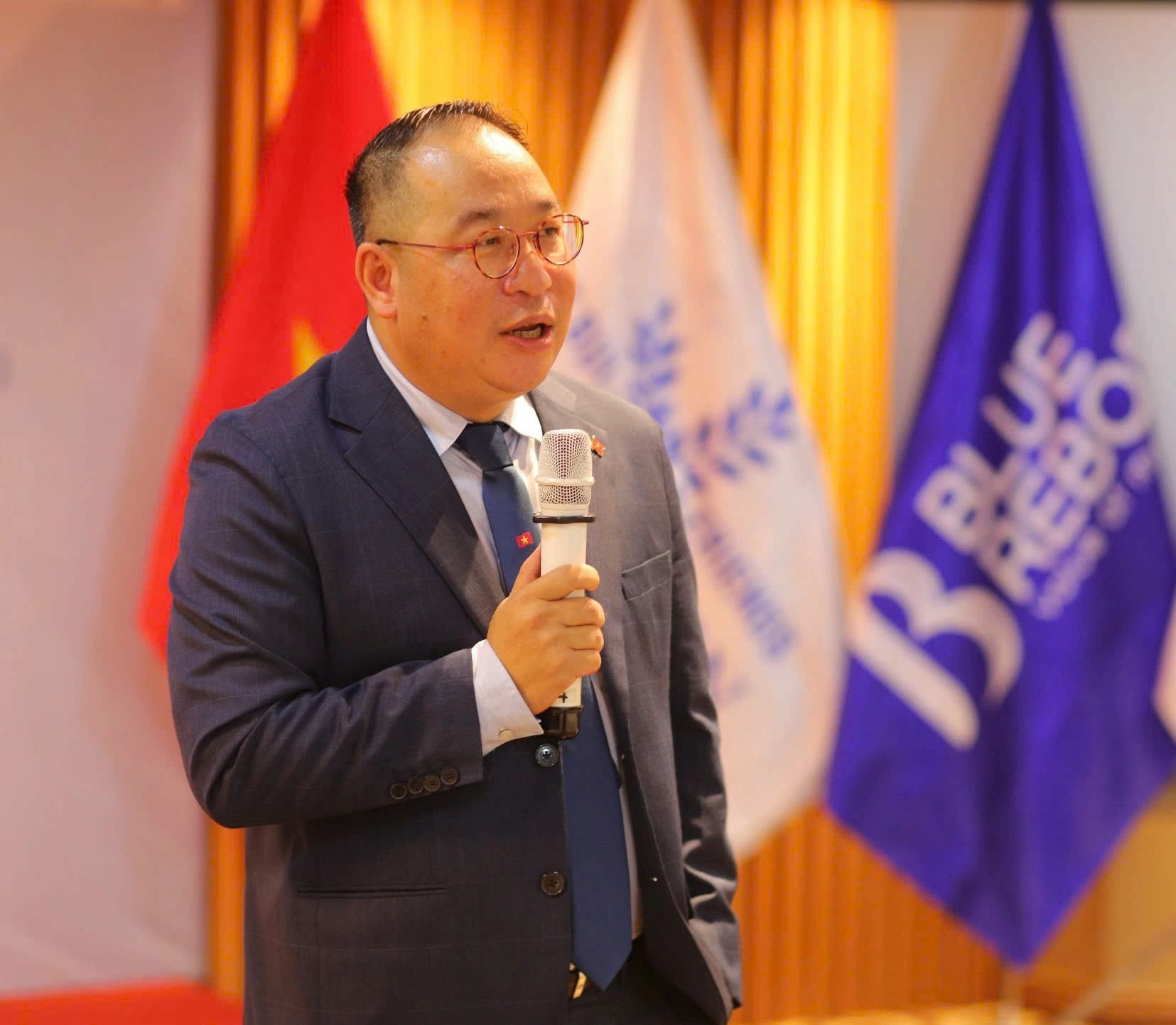 |
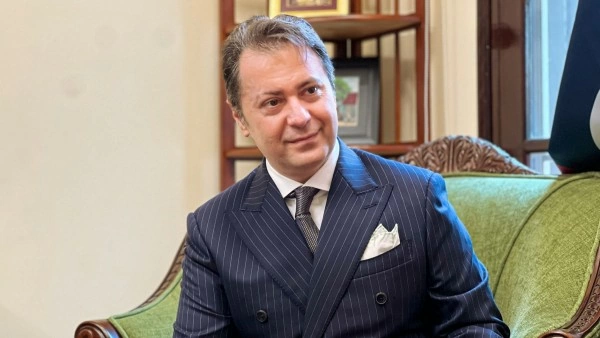
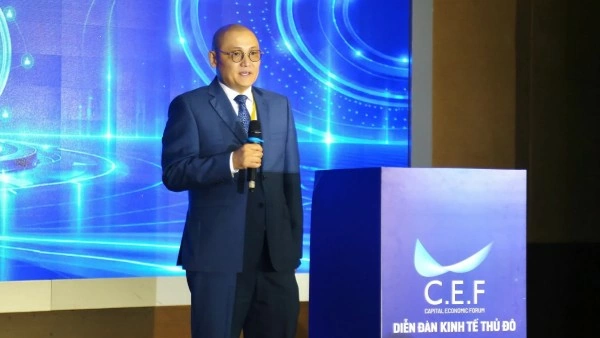
| Mr Steve Bui, Chairman of Delta E&C - an experienced entrepreneur in the high-tech industry and green energy in Vietnam and the region. (Photo: NVCC) |
At the ASEAN Future Forum 2026 (AFF 2026), Mr Steve Bui, Chairman of Delta E&C - an experienced entrepreneur in the high-tech industry and green energy in Vietnam and the region - shared candid insights on opportunities, challenges, and breakthrough solutions to make ASEAN more competitive.
As ASEAN moves towards an increasingly integrated common market, what do you see as the biggest opportunity for Vietnamese businesses in the next five years, as Chairman of Delta E&C?
In my opinion, the biggest opportunity for Vietnamese businesses lies in leveraging the shift in global supply chains to "leapfrog" into higher-value-added stages in the high-tech industry and smart green energy.
Specifically, Vietnamese businesses have three waves of opportunity. First, deeper involvement in the semiconductor and artificial intelligence (AI) value chain – not just in processing but also in chip design. For instance, Semiconductor Vietnam has accounted for 30% of total electronic export turnover as well as infrastructure and data.
Second, pioneering in the development of smart grids and energy connectivity through the ASEAN Power Grid.
Third, taking advantage of new-generation trade agreements such as the Regional Comprehensive Economic Partnership (RCEP) and the Comprehensive and Progressive Agreement for Trans-Pacific Partnership (CPTPP) to expand markets. The most important thing is that businesses must shift their mindset from "chasing short-term opportunities" to "investing methodically in core technology".
Compared to other ASEAN countries, what competitive advantages do Vietnamese businesses have, and what weaknesses need to be addressed to participate more deeply in this market?
Vietnam's biggest advantage is possessing a network of nearly 20 diverse free trade agreements (FTAs). The S-shaped country is the focal point of the "China 1" strategy, with foreign direct investment (FDI) reaching a record of over $27 billion.
Simultaneously, Vietnam has a stable geopolitical position with a GDP growth rate of 8% (in 2025), leading ASEAN.
However, Vietnam's biggest bottleneck is high logistics costs (about 16% of GDP), while Singapore is around 8% and Malaysia about 12%. Another bottleneck is the lack of synchronisation in infrastructure connectivity between seaports, railways, and roads.
The shortage of skilled labour in core technology sectors is also limiting the technological absorption capacity and participation in the global value chain of Vietnamese businesses. We are only participating in simple assembly stages, and if not addressed, we will quickly lose our advantages to other countries.
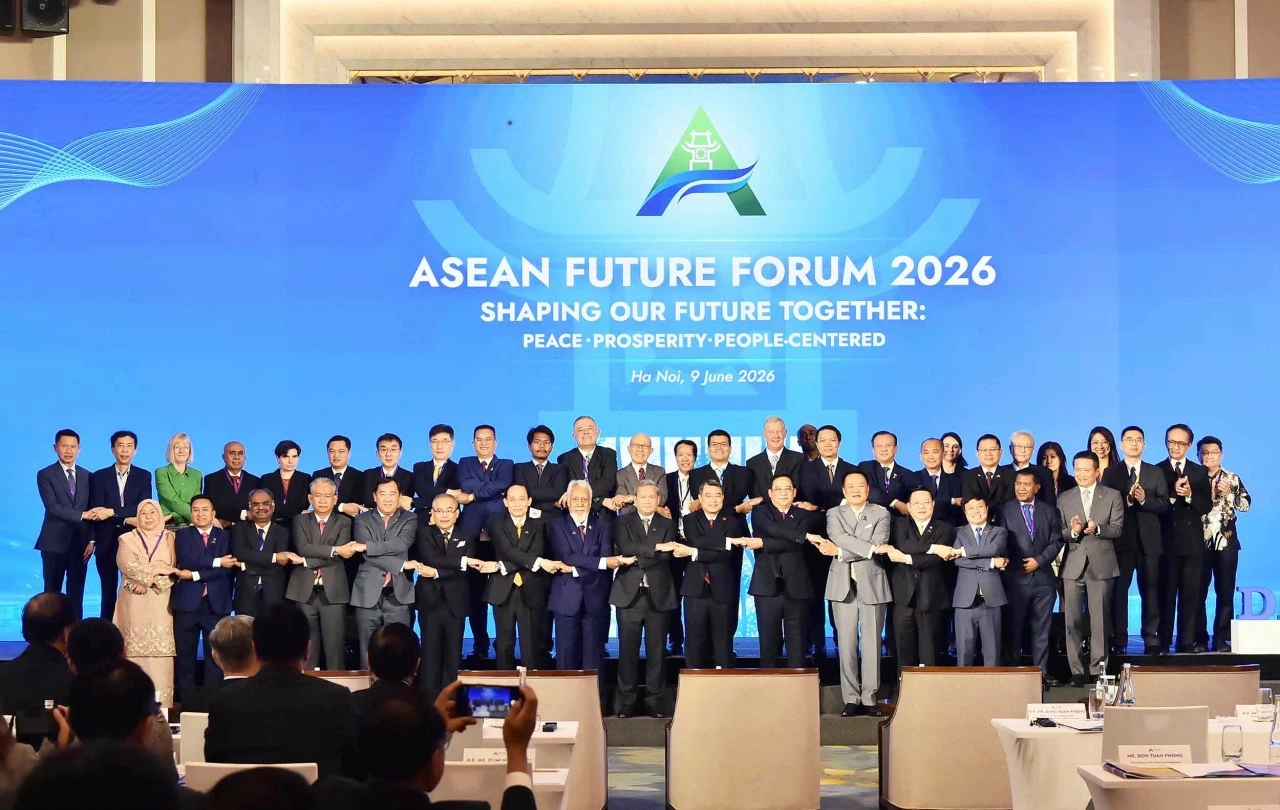 |
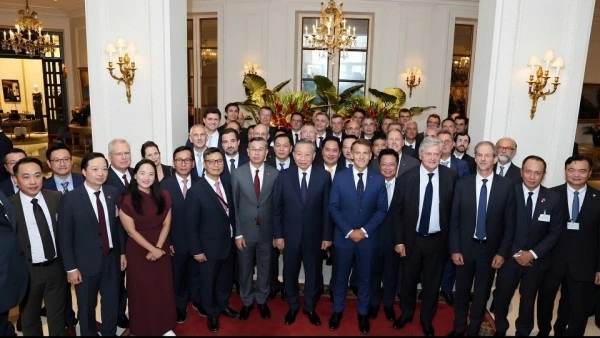
| Delegates take a group photo after the Opening Session of the ASEAN Future Forum 2026 held on June 9 in Hanoi. (Photo: Quang Hoa) |
In your opinion, what are the biggest barriers for Vietnamese businesses when expanding operations to other ASEAN countries?
The biggest barrier is not tariffs - which have been removed - but non-tariff barriers and internal capabilities. These include fragmented technical barriers, as each country has its own standards.
The lack of inter-regional logistics connectivity, leading to higher intra-regional transportation costs, is also a major barrier for Vietnamese businesses.
Particularly, we are severely lacking in cross-border management teams who can work multinationally and deeply understand each country's institutions.
From your experience working with many international partners, what do you find ASEAN investors are most concerned about when seeking opportunities in Vietnam?
Investors from Singapore, Thailand, and Malaysia no longer ask about "cheap prices". They focus on three things: First, the stability of the green supply chain - the ability to provide clean energy, carbon credits, and certified green labour.
Second, digital infrastructure and cross-border data - whether Vietnamese businesses are ready to connect digital management in real-time with partners.
Third, co-creation capacity. ASEAN investors seek partners with a substantive R&D (Research and Development) department, not just simple processing.
How do you assess the role of the overseas Vietnamese business community in connecting Vietnamese businesses with the ASEAN market?
The overseas Vietnamese are a "strategic catalyst", an asset that Vietnam has not fully exploited. They decode cultural and institutional barriers that domestic businesses take years to grasp.
Overseas Vietnamese can provide an integrated service ecosystem - from legal and logistics to partner connections. Many overseas Vietnamese entrepreneurs also directly invest and transfer modern management methods.
To maximise this role, I believe a formal, transparent platform connecting domestic businesses and overseas Vietnamese is needed.
 |
| The Chairman of Delta E&C believes that FTAs and ASEAN mechanisms have opened up, but Vietnamese SMEs need to shift from a sales mindset to a standards compliance mindset. (Photo: NVCC) |
What do Vietnamese small and medium enterprises (SMEs) need to do to effectively leverage trade agreements and ASEAN cooperation mechanisms, sir?
I believe the issue for SMEs is not a lack of opportunities but a lack of a methodical strategy to absorb them. FTAs and ASEAN mechanisms have opened up, but Vietnamese SMEs need to shift from a sales mindset to a standards compliance mindset.
From my experience, SMEs should choose 1-2 key markets in ASEAN and spend 6-12 months building a specific profile for each country. Importantly, businesses should not attempt to export alone but become specialised suppliers in the value chain of a large corporation.
Additionally, minimal digitisation is needed - having a digital order management and logistics platform - to "speak the language" with partners. With just a few hundred USD per month for a multi-channel sales management platform, combined with cloud accounting tools, it is enough to meet the basic requirements of the most demanding partners.
AFF 2026 emphasises people-centred development. In your opinion, how can economic growth, FDI attraction, and technology development avoid creating an increasing gap between labour groups in ASEAN?
| SMEs should choose 1-2 key markets in ASEAN and spend 6-12 months building a specific profile for each country. Importantly, businesses should not attempt to export alone but become specialised suppliers in the value chain of a large corporation. |
This is a very profound question and goes to the core of the "people-centred" spirit at AFF 2026.
In my view, the solution lies in three pillars: First, shifting from "attracting FDI with low costs" to "FDI reallocating opportunities".
In this way, FDI has social responsibility - not only tax incentives for large factories but also encouraging the model of "one central factory combined with many small processing complexes" in provinces, retaining rural labour.
Second, short-term skill regeneration training. FDI projects enjoying incentives must commit to training for 3-6 months to transform unskilled labour into high-tech operators.
Third, a framework for protecting platform economy workers. Drivers and delivery personnel on Grab and Shopee need to enjoy flexible insurance and the right to retraining.
From the perspective of an internationally active entrepreneur, what message would you like to send to the leaders attending AFF 2026 about building a more competitive ASEAN in the global investment capital race?
The investment attraction game has changed. Global investors only ask three questions: Is there stable green energy for 15 years? Is the supply chain digitised across borders? Are there enough engineers and managers meeting ESG (Environmental, Social, Governance) standards within 6 months?
Therefore, I propose three decisive actions:
First, make ASEAN a unified green energy market with the simplest smart grid and carbon credit mechanism.
Second, harmonise customs digitisation under the principle of "submit once, clear customs in 10 countries".
Third, incorporate skill regeneration training into mandatory conditions for all investment incentives.
The world is seeking a region that is both stable and bold. We need a "strategic push" in the next 24 months, not incremental reforms. I believe that the leaders of AFF 2026 have the vision to make this a reality, making ASEAN the most attractive destination in the global investment capital race.
Thank you very much!
| PM Le Minh Hung attends 48th ASEAN Summit, reaffirming ASEAN as a top strategic priority: Deputy FM Dang Hoang Giang WVR - On the occasion of Prime Minister Le Minh Hung attending the 48th ASEAN Summit in Cebu, Philippines from May 7-8, Deputy Minister of ... |
| Chairman of Hanoi People's Committee Vu Dai Thang: The Future of ASEAN will be shaped by its cities Hanoi commits to continuing to be a reliable partner, an active and responsible member in ASEAN cooperation mechanisms. |