



Can Tho tourism: Expanding space, creating momentum for breakthrough
WVR - With over 12.6 million visitors and total revenue exceeding 11,100 billion VND in the first 10 months of 2026, Can Tho tourism is witnessing positive growth strides.
Latest
The development space has expanded post-consolidation, coupled with the advantages of rivers, orchards, seas, culture, and history, providing more room for the city to reposition itself as the tourism hub of the Mekong Delta region. However, to transform potential into competitive advantage, Can Tho needs to continue investing in infrastructure, refreshing products, and enhancing service quality, aiming to make tourism a spearhead economic sector by 2030.
Positive growth, laying the foundation for a new phase
The achievements in 2026 demonstrate the resilience of Can Tho's tourism sector. According to the report from the city's Department of Culture, Sports and Tourism, in the first 10 months of the year, Can Tho welcomed an estimated 12.6 million visitors, a 33% increase compared to the same period in 2025. Among them, international visitors accounted for over 600,000. Overnight stays reached over 4.6 million, up 4%; international overnight stays exceeded 400,000, up 10%. Total tourism revenue surpassed 11,100 billion VND, a 28% increase.
The number of visitors to the city has surpassed the annual target of 12.3 million for 2026 within just 10 months. Total revenue also nearly reached the annual plan, set at over 11,400 billion VND. This is a positive signal, reflecting the attractiveness of Can Tho as a destination and indicating the development potential of this service sector in the new economic context.
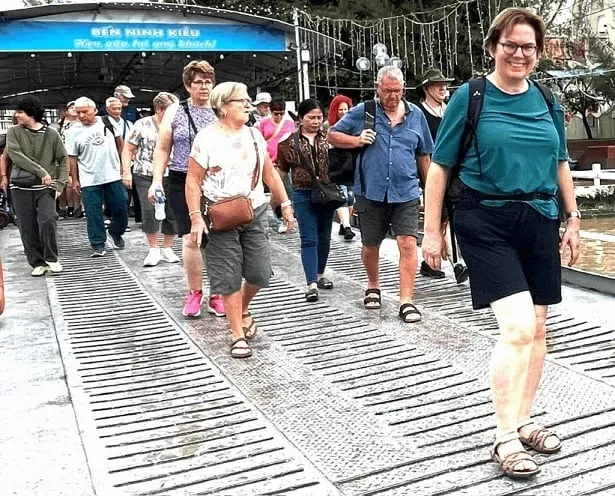 |
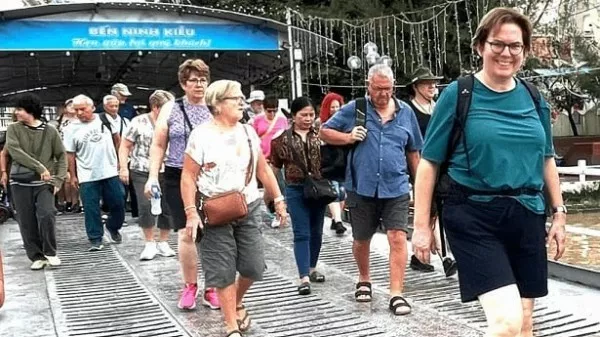
| Foreign tourists visiting Can Tho City. (Photo: Huynh Bien) |
Looking back at 2025, Can Tho's total number of visitors was estimated at over 11.18 million, an 18% increase compared to 2024. Overnight stays reached nearly 4.95 million, with international visitors exceeding 444,000. Total tourism revenue was nearly 9,991 billion VND, a 20% increase. These figures show sustained growth momentum, laying the foundation for the city to set higher goals.
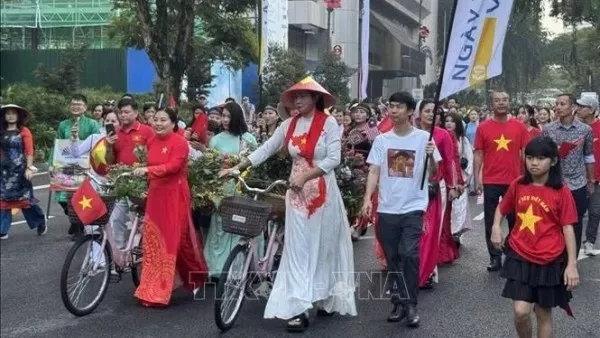
Growth momentum also comes from organizing large-scale cultural, sports, festivals, and events. In 2026, Can Tho continues to leverage the appeal of the 2nd International Vietnam Rice Festival, Vietnam Culture Day on November 24, the Ooc Om Boc Festival - Ngo Boat Race, and the 2nd River Culture Festival. This series of activities not only creates additional experiential products but also contributes to promoting the city's image to domestic and international tourists.
Particularly after consolidation, Can Tho has the opportunity to expand its tourism space, connecting resources from different areas into a rich system of destinations. Previously, the city's tourism image was primarily associated with rivers, floating markets, orchards, and the central urban area. Now, the new development space also adds advantages of the sea, forests, Khmer culture, historical relics, and unique ecological areas.
According to tourism industry information, the city currently has over 100 tourist areas, sites, and gardens, along with more than 860 accommodation facilities with over 14,500 rooms. This is a significant resource for developing diverse tourism types, meeting the needs of various customer segments. However, more important is the ability to connect resources into in-depth journeys, rather than merely increasing the number of attractions.
Exploiting diverse advantages, shaping distinctive products
One of Can Tho's outstanding advantages is its rich natural and cultural tourism resources. The Hau River space, network of canals, fruit orchards, green islets, and the lifestyle of riverine residents create a unique identity.
In the central area, Ninh Kieu Wharf, Cai Rang Floating Market, Binh Thuy Ancient House, Con Son, and ecological tourism gardens continue to be attractive destinations. Among them, Cai Rang Floating Market is not merely a tourist attraction but also a space preserving riverine trading customs, reflecting the lifestyle and distinctive culture of the Mekong Delta's downstream residents.
In addition to sightseeing, experiencing orchard life, enjoying local cuisine, learning traditional crafts, and participating in community activities are contributing to the allure of Can Tho tourism. Models like Con Son community tourism show that locals can directly participate in providing services, introducing indigenous culture, and benefiting from tourism activities.
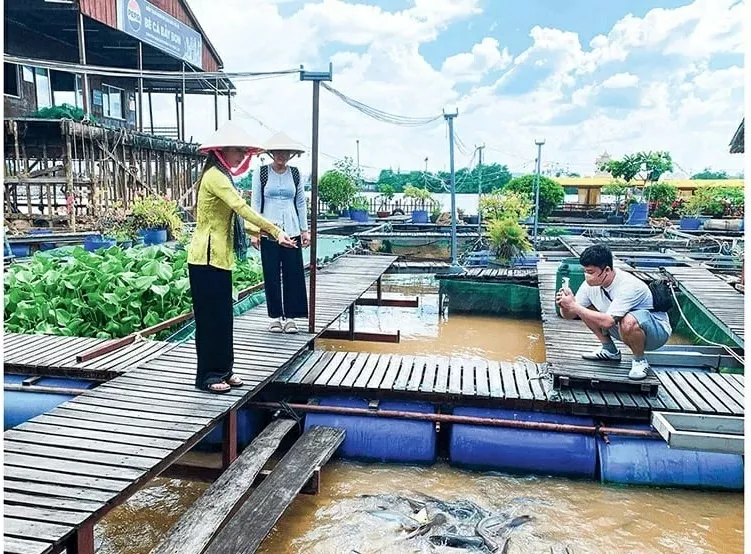 |
| Tourists visiting Bay Bon fish raft, Con Son. (Photo: Kieu Mai) |
The new development space also opens opportunities to exploit cultural, historical, and ecological values in areas previously belonging to Hau Giang and Soc Trang. Historical relics, architectural works, traditional festivals, Southern Khmer culture, forest ecosystems, and coastal areas can become important links in the new product chain.
Particularly, Khmer culture with its distinctive temple architecture, Ooc Om Boc festival, Du ke theater art, and Ngũ âm music offers potential for developing cultural, spiritual, and community experience tourism. Exploiting these values needs to be associated with heritage conservation, respecting cultural subjects, and ensuring livelihoods for local communities.
According to development orientation, Can Tho's tourism space is organized into areas with distinct strengths: the central area develops urban, riverine, and MICE tourism; the coastal area exploits resort and ecological tourism; the western and southern areas focus on agricultural, cultural, historical, and community tourism. This approach allows the city to build continuous tourism routes, rather than exploiting individual destinations.
Tourists can combine floating market and orchard experiences in the central area with journeys exploring Khmer culture, historical relics, coastal ecology, and resort activities. This diversity creates conditions to extend stay duration, increase spending, and expand the customer market.
In the product structure, riverine tourism continues to be identified as an important pillar. This is a recognizable advantage of Can Tho, capable of building a destination brand associated with Mekong River culture. Additionally, MICE tourism, cultural-spiritual tourism, community tourism, agricultural tourism, and resort tourism are identified as priority directions.
The city also has the condition to develop tourism associated with commerce and healthcare, leveraging its role as a service, education, and healthcare center of the Mekong Delta. Combining sightseeing, shopping, healthcare, and trade can expand customer segments, adding value to the service sector.
Realizing the goal of becoming a spearhead economic sector
Resolution No. 18-NQ/TU of the Can Tho City Party Committee on promoting tourism development in the new situation sets the goal of making tourism a spearhead economic sector by 2030, with widespread influence and positive contributions to socio-economic development.
According to the set targets, by 2030, Can Tho aims to welcome about 18 million visitors, with international visitors accounting for 10-15% of the total. The average growth rate for the 2026-2030 period is expected to exceed 10% annually; total tourism revenue is expected to reach about 20,000-22,000 billion VND. Particularly, the tourism sector is expected to contribute 10% or more to the city's GRDP structure.
To realize this goal, one of the important tasks is to complete the tourism infrastructure system. Transportation connecting tourist areas and sites, boat docks, parking lots, accommodation facilities, and support services need to be invested in synchronously. For a city with riverine strengths like Can Tho, developing waterway transportation, upgrading tourist docks, and organizing safe and convenient passenger transport routes are particularly important.
Along with infrastructure, the challenge of developing products and improving service quality also needs to be addressed fundamentally. In reality, rapid visitor growth does not necessarily equate to corresponding effective exploitation.
In the first 10 months of 2026, visitor numbers increased by 33%, but overnight stays only increased by 4%. This gap raises the requirement for more attractive products to encourage longer stays, increased spending, and return visits.
Can Tho needs to focus on developing in-depth experiential products that can be exploited both day and night; creating additional spaces for entertainment, shopping, art appreciation, and cuisine. Riverine tourism products also need to be diversified, from short tours to multi-day journeys connecting destinations within the city and throughout the region.
Another requirement is to strengthen the linkage between authorities, businesses, and the community. Expanding administrative boundaries adds resources but also poses challenges in management, organization, and product connection. If each locality continues to exploit its strengths in its own way, lacking coordination in routes, points, services, and promotion, the advantages of the new space will be difficult to fully exploit.
Therefore, the city needs mechanisms to encourage businesses to invest in high-value-added products, support community tourism models, and create conditions for locals to participate more deeply in the service supply chain. Tourism development also needs to go hand in hand with environmental protection, preserving riverine landscapes, heritage conservation, and controlling negative impacts on community life.
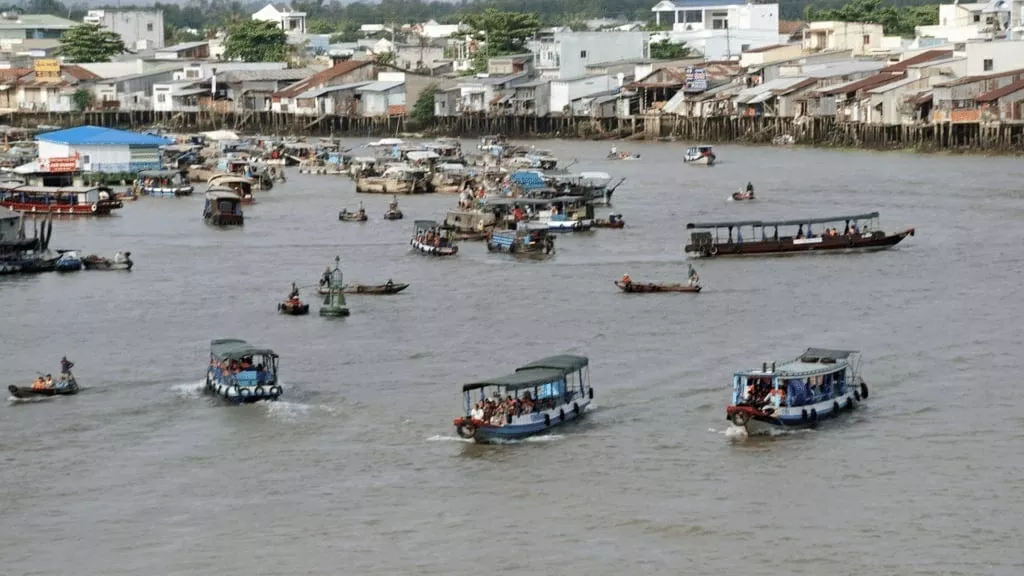 |
| Cai Rang Floating Market, a major attraction for visitors to Can Tho. (Photo: Huynh Bien) |
Digital transformation, destination promotion, and human resource development are also indispensable tasks. Applying technology in management, information provision, service booking, and building digital tourism maps will enhance the visitor experience. The workforce needs training in professional skills, foreign languages, communication skills, and local cultural knowledge to meet the demands of serving more diverse customer markets.
With its advantages in location, resources, and cultural identity, Can Tho has the opportunity to become a central hub connecting exploration journeys in the Mekong Delta. However, the competitiveness of a destination is not only determined by the number of resources or visitors but also depends on product quality, service professionalism, and the ability to create unique experiences.
From the current growth momentum and established development orientation, Can Tho's tourism sector is poised for transformation. Effectively connecting the new space, focused investment, and leveraging the community's role will be decisive factors for the city to realize its goal of becoming a major tourism center in the Mekong Delta, contributing increasingly significantly to the economic structure and enhancing the local position in the new development phase.
Tags: