





Ca Mau Fermented “Ba Khia” Crabs: From Rustic Dish to National Intangible Cultural Heritage
WVR - Ca Mau Province, located at the southernmost tip of the country, has long been renowned for its specialties imbued with the waterways and culture of Southern Vietnam. Among them, fermented ba khia crabs are not only a familiar rustic dish but also a cultural pride, honoured as a National Intangible Cultural Heritage.
Latest
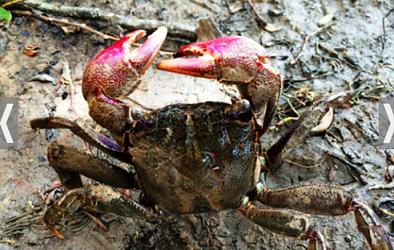 |
| Ba khia crabs in Ca Mau’s wetlands. (Photo: Courtesy by author) |
The craft of fermenting ba khia crabs has been closely tied to the lives of Ca Mau’s residents for generations. It is not only a traditional occupation but also a vital part of the southward expansion journey of Vietnamese ancestors.
With abundant natural resources, Ca Mau’s environment provided favorable conditions for this craft to flourish into a distinctive cultural feature of the region.
This traditional craft vividly reflects the community’s efforts to conquer nature and establish life in the Mekong Delta.
Materially, it has been an important livelihood, creating jobs and income for coastal residents.
Spiritually, it represents a unique culinary art deeply embedded in the rich cultural life of Southern Vietnam — appearing in folk songs, Southern folk music, and literature about the riverine region.
For generations, fermented ba khia has been a rustic, familiar dish in Ca Mau. In the past, whenever locals went into the forests or rice fields, they would bring along a few fermented crabs or crab salad to eat with rice — both convenient and deeply flavored with the taste of home.
According to local residents, during the ba khia season (around the 7th–9th lunar months), crabs were caught in such abundance that they couldn’t be consumed immediately. To preserve them longer, people came up with the idea of fermenting them, which eventually developed into a distinctive trade.
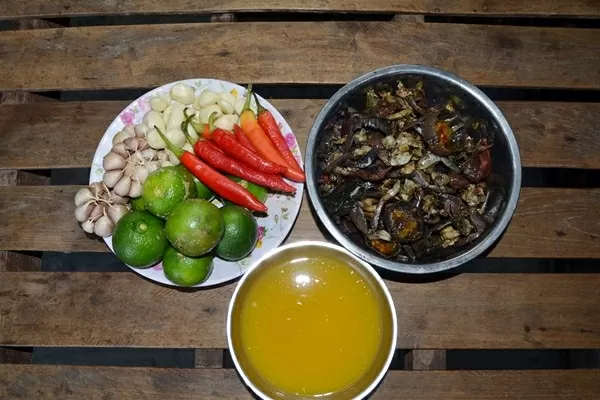 |
| Spices used in preparing fermented ba khia. (Source: Van hoa Newspaper) |
Over time, fermented ba khia evolved from a daily food to a famous specialty of Ca Mau.
Technically, this craft embodies rich folk knowledge in cuisine — from cleaning the raw crabs, salting techniques, to preparation methods.
The skill of the ba khia fermenters is reflected in their expertise in balancing the salinity of the brine: too mild, and the crabs spoil; too salty, and their claws fall off, the shells darken, and the flesh tastes bitter; if rainwater mixes into the brine, the crabs turn foul.
Today, the craft thrives in coastal communes of Ca Mau Province, notably in Phan Ngoc Hien Commune, famous for its “Rach Goc ba khia” brand.
Ba khia crabs from Rach Goc benefit from an ideal natural habitat — clean water, nutrient-rich silt, and natural forest food sources. As a result, the crabs here are particularly flavorful, firm, and aromatic, setting them apart from those in other regions.
From a rustic dish tied to daily labor, fermented ba khia has now become a sought-after delicacy among both domestic and international diners.
On December 20, 2019, the Minister of Culture, Sports and Tourism signed Decision No. 4612/QĐ-BVHTTDL recognizing the craft of fermenting ba khia in Rach Goc Town, Ngoc Hien District (now Phan Ngoc Hien Commune), Ca Mau Province, as a National Intangible Cultural Heritage.
This recognition has motivated the local community to preserve and further develop the craft, expand its market reach, and at the same time protect natural resources and maintain the unique products of Vietnam’s southernmost region.