



Building ideological resilience in youth as ‘shields’ against toxic information in cyberspace: Scholar
WVR - To build “ideological resilience” for young people, political and ideological education, together with the cultivation of ethics and lifestyle, must be implemented comprehensively, creatively, and in ways that suit the specific characteristics of the new generation.
Latest
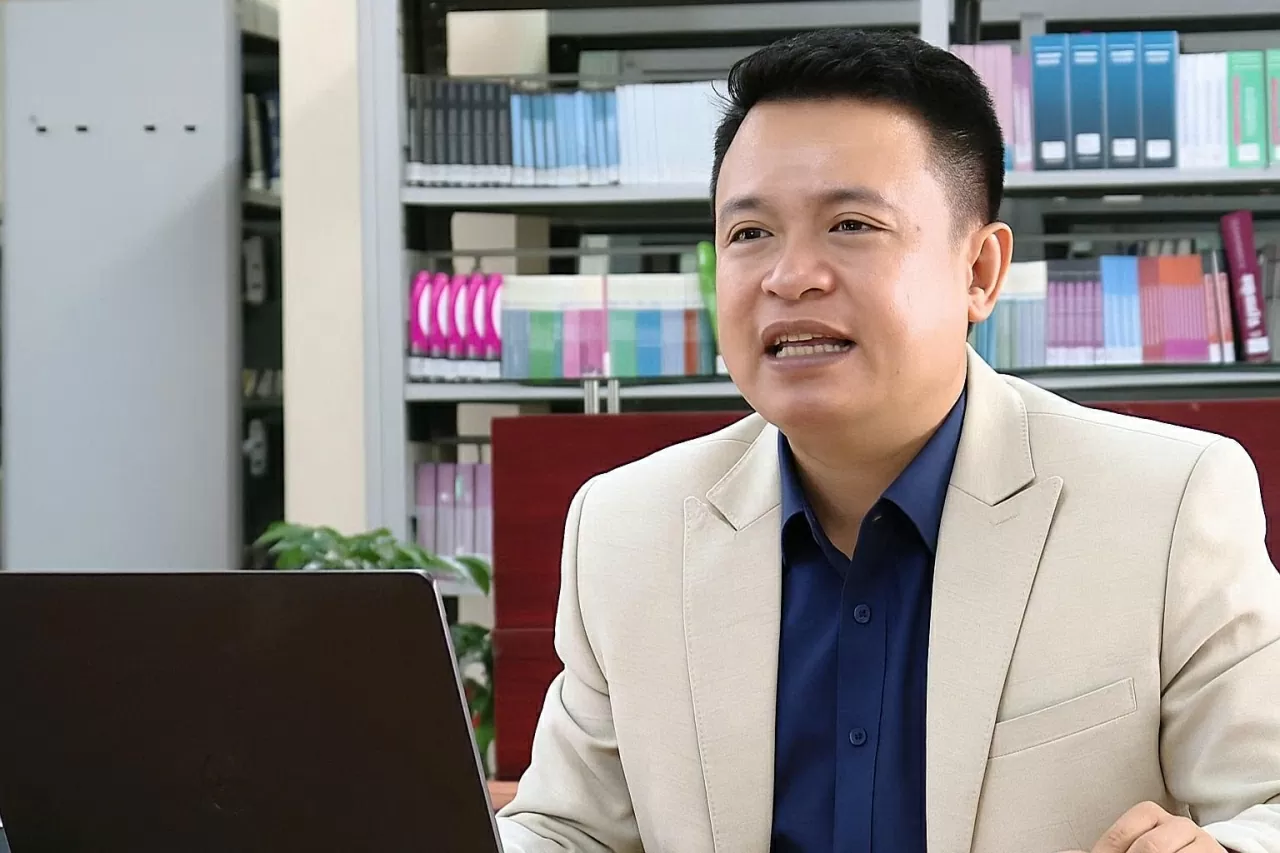 |
| According to Dr. Pham Hoang Manh Ha, the youth should be equipped with "resistance" against harmful information. (Photo: courtesy by author) |
Dr. Pham Hoang Manh Ha, lecturer at Thanh Hoa University of Culture, Sports and Tourism, noted that in the context of globalization and the explosion of digital media, youth—the vanguard in the cause of nation-building and defense—are also the group most susceptible to misleading information. To ensure that young people develop “resistance” against toxic content while maintaining their faith in revolutionary ideals, he emphasized that a coordinated effort from three key institutions is required: the family, the school, and social organizations.
Identifying the "Colour revolution" plot
What are your views on the methods typically used in "colour revolutions", especially in attracting and influencing the youth?
Firstly, it is important to recognize that the essence of a "colour revolution" is a high-level "peaceful evolution" strategy, employing "non-armed" tools to gradually weaken, disintegrate, and potentially change the political regime. The key point is not to conduct it through conventional warfare but through psychological, media, cultural, and social media warfare. Therefore, it infiltrates and easily impacts sensitive social groups, especially the youth.
To carry this out, hostile forces often use sophisticated tactics, combining both “soft” and “hard” approaches. The first step is ideological influence—shaping perceptions. Through social media, websites, and forums, so-called “democrats” spread ideas of “absolute freedom” and “Western democracy,” with the goal of “softening” perceptions and creating the illusion among some young people that regime change is “inevitable.”
Next, hostile actors exploit sensitive social issues such as the environment, land, corruption, or other negative events to exaggerate, distort, and incite discontent and mistrust. In this “psychological warfare,” cyberspace becomes the main “battlefield.” Youth are lured into closed groups on Facebook, Telegram, Zalo… Numerous short-form videos (TikTok, YouTube Shorts) with youthful language and entertaining formats conceal anti-state messages. Opposing forces even create “virtual idols” with opposing political stances to sway young audiences.
| "The family is the starting point, laying the foundation; schools develop and systematize knowledge and ideals; organizations turn knowledge and ideals into practical actions". |
To increase their influence, some students and young intellectuals are invited to participate in overseas courses and exchange programs under the guise of "scholarships" and "social skills training". There, they are indoctrinated with opposing political ideologies and trained in methods of "organizing peaceful protests" and "civil disobedience".
Finally, when social conflicts escalate, they incite easily influenced individuals to take to the streets in protest, using social media to spread slogans and images that create a crowd effect. Therefore, it can be affirmed that "color revolutions" do not stem from national interests but are products of "peaceful evolution". They operate through media, digital technology, social media, and crowd psychology to undermine political trust.
Why do hostile forces target the youth as a primary focus in their "color revolution" strategy?
The global "colour revolution" developments show that youth and students are always prioritized targets for hostile forces. This stems from the unique psychological and social characteristics of the youth and their strategic role in each country's development.
First, young people are energetic, ambitious for change, and eager to prove themselves. While positive, this energy can easily be exploited to ignite extremism, turning aspirations for reform into anti-establishment actions.
Second, youth are the “digital generation,” constantly exposed to the internet and social media. In an environment of multidimensional information, lacking ideological grounding and critical skills, they are easily swayed by fake news and distorted arguments. Hostile forces exploit short clips and influencers with opposing views to inject political messages, causing many young people to unwittingly spread them further.
Third, young people are highly sensitive to social issues like corruption, pollution, or injustice. When these frustrations are exaggerated, they become “fuel” to mobilize youth into protests. Crowd psychology amplifies the effect, creating the image of “youth leading the way” to exert political pressure.
Fourth, more worryingly, youth are the future successors of the nation. If they absorb distorted ideologies, the consequences will be profound. Thus, targeting youth is essentially targeting a country’s future.
From this reality, the task is to enhance the “ideological immunity” of youth through political education and digital literacy, while also creating environments for them to contribute, grow, and affirm themselves. Only when provided opportunities for development, anchored to revolutionary ideals, can young people become the vanguard of national defense rather than being “targets” of subversive scenarios.
 |
| Youth Union of the Ministry of Foreign Affairs visiting the Ta Thiet Revolutionary Base, Dong Nai Province. (Photo: Dieu Linh) |
What signs in lifestyle and social media usage indicate a risk of being influenced by the "colour revolution" plot, in your opinion?
In the context of integration and information explosion, hostile forces often exploit lifestyle and social media to sow and lead the youth, gradually preparing for "colour revolution" scenarios. I believe the following signs are susceptible to "colour revolution" influence.
Regarding lifestyle, there is a trend of foreign worship, denial of traditional values, and disregard for national culture. Additionally, there is political apathy, believing that building and defending the nation is unrelated to oneself, making it easy to accept false viewpoints. Social dissatisfaction, viewing issues one-sidedly and extremely without a comprehensive and constructive perspective, is also easily influenced and controlled. Naturally, we cannot overlook the pragmatic lifestyle, emphasizing individualism and neglecting community responsibility. Those with such thoughts are often exploited to promote a "total freedom" lifestyle.
Regarding social media usage, those easily drawn into "colour revolutions" frequently share, comment, and "like" content with opposing tendencies, distorting history, and denying revolutionary achievements; participate in closed groups and forums on "democracy" and "human rights" with extreme criticism and incitement of "civil disobedience"; are captivated by short clips and livestreams with youthful language but embedded with subversive messages, unintentionally becoming "spreaders"; often exhibit extreme behavior online, such as sharing unverified information, attacking state agencies, and one-sided political criticism.
If these signs are not identified and guided promptly, they can lead to changes in perception, weakening the political faith of a significant portion of the youth.
Soft shield against toxic information
How should political, ideological education and moral, lifestyle cultivation for the youth be implemented to help them have "resistance" against toxic information?
In the context of globalization and the explosion of digital media, the youth, as the vanguard in the nation's construction and defense, are also the group most susceptible to misleading and hostile information. To establish "ideological resistance" for the youth, political, ideological education and moral, lifestyle cultivation need to be implemented comprehensively, creatively, and in line with the characteristics of the new generation.
| "The youth are the largest social media users, so they must know how to filter sources, analyze, compare, and verify information instead of passively receiving it. Critical thinking skills help the youth identify and refute false arguments with scientific and persuasive reasoning". |
First, innovate the content of political and ideological education. It should not only convey one-sided theories but also link revolutionary ideals with relatable current issues: Entrepreneurship, environmental protection, digital transformation, and international integration. When the youth see their role in the country's major goals, they will form a stronger political belief.
Additionally, focus on modern communication methods. Today's youth primarily receive information through the internet and social media. Therefore, it is necessary to promote communication through short clips, podcasts, infographics, and online talk shows... Official information must be attractive, easy to understand, and youthful to compete with harmful information streams.
Moreover, combine moral and lifestyle education with practical experiences. Volunteer activities, entrepreneurship, creativity, cultural-artistic, and community sports not only help the youth develop life skills but also cultivate social responsibility and patriotism. This is the "soft shield" against the selfish and pragmatic ideologies that hostile forces often sow.
Furthermore, enhance the role of Youth Union - Association and family - school. The Youth Union and Student Association should become a bridge to guide public opinion and spread positive messages. Families and schools must care, accompany, and build a healthy cultural environment so that the youth do not feel isolated and easily fall into "traps" in cyberspace.
In summary, political, ideological, and moral education should not stop at "transmission" but become a process of building courage, aspirations, and ideals for the young generation.
 |
| The responsibility of the youth in the digital age is extremely important. (Source: Thanh nien Newspaper) |
How do you assess the role of family, school, and social organizations in raising awareness and building a strong spiritual foundation for the youth?
To ensure the youth have "resistance" against harmful information and maintain faith in revolutionary ideals, I believe a coordinated effort from three fundamental institutions is required: family, school, and social organizations.
In this coordination mechanism, the family plays the role of the initial foundation for personality and political awareness. Parents should not only nurture but also be role models in ethics, lifestyle, and social responsibility. Family care and guidance help the youth avoid being drawn in, maintaining their courage against temptations and harmful information.
The school serves as an educational environment for knowledge, ideals, and skills. Besides providing the youth with a scientific foundation, schools also cultivate ideals aligned with the goals of national independence and socialism.
Civic education, history, politics, and digital skills must be implemented in a modern, engaging manner, combining theory with practice. A knowledgeable youth with scientific critical thinking is less likely to be swayed by distorted arguments. Social organizations act as a bridge between the youth and society and revolutionary ideals. The Youth Union, Student Association, and Youth Federation provide an environment for the youth to train, contribute, and mature. Through volunteer movements, entrepreneurship, creativity, culture, and sports, social organizations help the youth nurture ideals and proactively participate in refuting false information, protecting the Party's ideological foundation right in cyberspace.
| "The youth need to actively spread positivity, not only defending but also counterattacking in cyberspace. Every share, every post conveying human values, patriotism, and faith in the Party and regime is a brick building a 'community shield', contributing to neutralizing the plot to disrupt information". |
In other words, family, school, and social organizations form a "three-legged stool", creating a comprehensive educational ecosystem to build a "spiritual shield" for the youth. In this "protective triangle", the family is the starting point, laying the foundation; schools develop and systematize knowledge and ideals; organizations turn knowledge and ideals into practical actions.
These three elements complement each other; if one "side" is missing, the triangle becomes unbalanced, and the youth are easily influenced by false ideologies. When these three institutions are connected and coordinated, they create a combined strength that helps the young generation have the courage, intelligence, and patriotism to withstand all impacts from "peaceful evolution" and "color revolution" plots, contributing to firmly protecting the Party's ideological foundation and the nation's future.
Vanguar in defending the party's ideological foundation
In the digital age, what needs to be done for each young person to become a "self-shield", actively receiving positive information while being alert enough to refute and neutralize "colour revolution" plots?
It is not difficult to see that in the current era of strong digital technology development, cyberspace is becoming a "soft front" that hostile forces exploit to sow false ideologies and incite "colour revolutions". Therefore, for each young person, building a strong will is a particularly important task.
To achieve this, enhancing political and ideological awareness should be considered the foundation. The youth need to understand the nature, plots, and tactics of "colour revolutions" while firmly grasping the values of national independence and socialism. With strong political will, they will not easily waver in the face of distorted information.
Besides, it is necessary to cultivate digital skills and form critical thinking. The youth are the largest social media users, so they must know how to filter sources, analyze, compare, and verify information instead of passively receiving it. Critical thinking skills help the youth identify and refute false arguments with scientific and persuasive reasoning.
Moreover, the youth need to cultivate healthy ethics and lifestyles as they are the "spiritual fence" for each young person. A young person living with kindness, connected to family and community, and rich in social responsibility is less likely to be drawn into extreme and anti-cultural trends.
Finally, the youth need to actively spread positivity, not only defending but also "counterattacking" in cyberspace. Every share, every post conveying human values, patriotism, and faith in the Party and regime is a brick building a "community shield", contributing to neutralizing the plot to disrupt information.
Thus, in the digital age, the "self-shield" of the youth must be formed from the combination of three pillars: "political will - digital intelligence - cultural ethics", so that each young person is both resilient against negative impacts and becomes a pioneering soldier in protecting the Party's ideological foundation.