







A strong position to escape the middle-income trap: Scholar
WVR - Having been associated with Vietnam for about two decades, Prof. Dr. Andreas Stoffers from FOM University of Applied Sciences (Germany) highly values the country's potential to overcome the middle-income trap.
Latest
 |
| Prof. Dr. Andreas Stoffers at FOM University of Applied Sciences (Germany). (Photo courtesy of au) |
What is your assessment of Vietnam's economic growth momentum in recent months? The government is steadfast in its goal to achieve a growth rate of 8.3-8.5% in 2025, considering it a foundation for breakthrough development. Is this growth target feasible?
In my opinion, Vietnam is still maintaining strong economic growth momentum. In the first half of this year, the Gross Domestic Product (GDP) increased by 7.52%. There is a basis to believe that the GDP growth target of 8.3-8.5% in 2025 is entirely achievable. Even if the growth rate is slightly lower than the target, it remains an impressive indicator of Vietnam's economic strength.
In the global context, the International Monetary Fund (IMF) recently adjusted its global growth forecast for 2025 to 3% and for 2026 to 3.1%. Looking at the growth picture, one cannot help but appreciate the S-shaped country. Currently, there are many drivers of Vietnam's economic growth. One of them is the increase in production. The industrial production index rose by 10% in 2024 and by 9.2% in the first six months of 2025. Additionally, the increase in consumption and export turnover are positively contributing to the economy's performance.
The country's prudent fiscal and monetary policies are also key factors supporting this growth momentum. Notably, in recent months, Vietnam has demonstrated that breakthrough and correct decisions can further boost strong economic growth. Therefore, in my view, the growth targets above 8% set by Vietnam, though ambitious, are entirely realistic and achievable.
With many years of researching Vietnam's economy, how do you assess the country's prospects of escaping the middle-income trap and realizing high growth targets?
The middle-income trap is indeed a significant obstacle for many countries on their path to becoming industrialized nations. Having been associated with Vietnam for about two decades, worked here for eight years, and closely followed developments in countries with similar conditions, I assess that Vietnam's potential to overcome the middle-income trap is very high.
The key point in Vietnam is that since the Doi Moi reforms in 1986 and subsequent steps such as the U.S. lifting the trade embargo in 1994, signing the Bilateral Trade Agreement with the U.S. in 2001, joining the World Trade Organization (WTO) in 2007, signing multiple free trade agreements, and deeply integrating into the global value chain, a solid foundation for sustainable development has been established. Vietnam is committed to pursuing free trade, a market economy, and investor protection. At the same time, it remains steadfast in pursuing a balanced foreign policy in the current complex geopolitical context.
Vietnam's international reputation is increasingly recognized globally and is also acknowledged in my homeland, Germany. Positive feedback from the German business community in Vietnam has proven this. A notable example is the recent investment of 150 million USD by SAP (Germany) in research and development activities in Vietnam.
Notably, the reforms initiated by the Vietnamese Government in the past year are seen as a historic step for the country's development. These reforms are reflected in four Politburo Resolutions, including Resolution No. 57-NQ/TW on breakthroughs in science, technology, innovation, and national digital transformation; Resolution No. 59-NQ/TW on international integration in the new context; Resolution No. 66-NQ/TW on reforming the construction and implementation of laws to meet development requirements in the new era; and Resolution No. 68-NQ/TW on private economic development.
Recently, two additional important documents were added, including: Resolution No. 70-NQ/TW dated August 20, 2025, on ensuring national energy security until 2030, with a vision to 2045; and Resolution No. 71-NQ/TW dated August 22, 2025, on developing the national education system.
I am truly impressed by the decisiveness and comprehensiveness of this reform step. I can affirm that Vietnam has established a solid position to escape the middle-income trap.
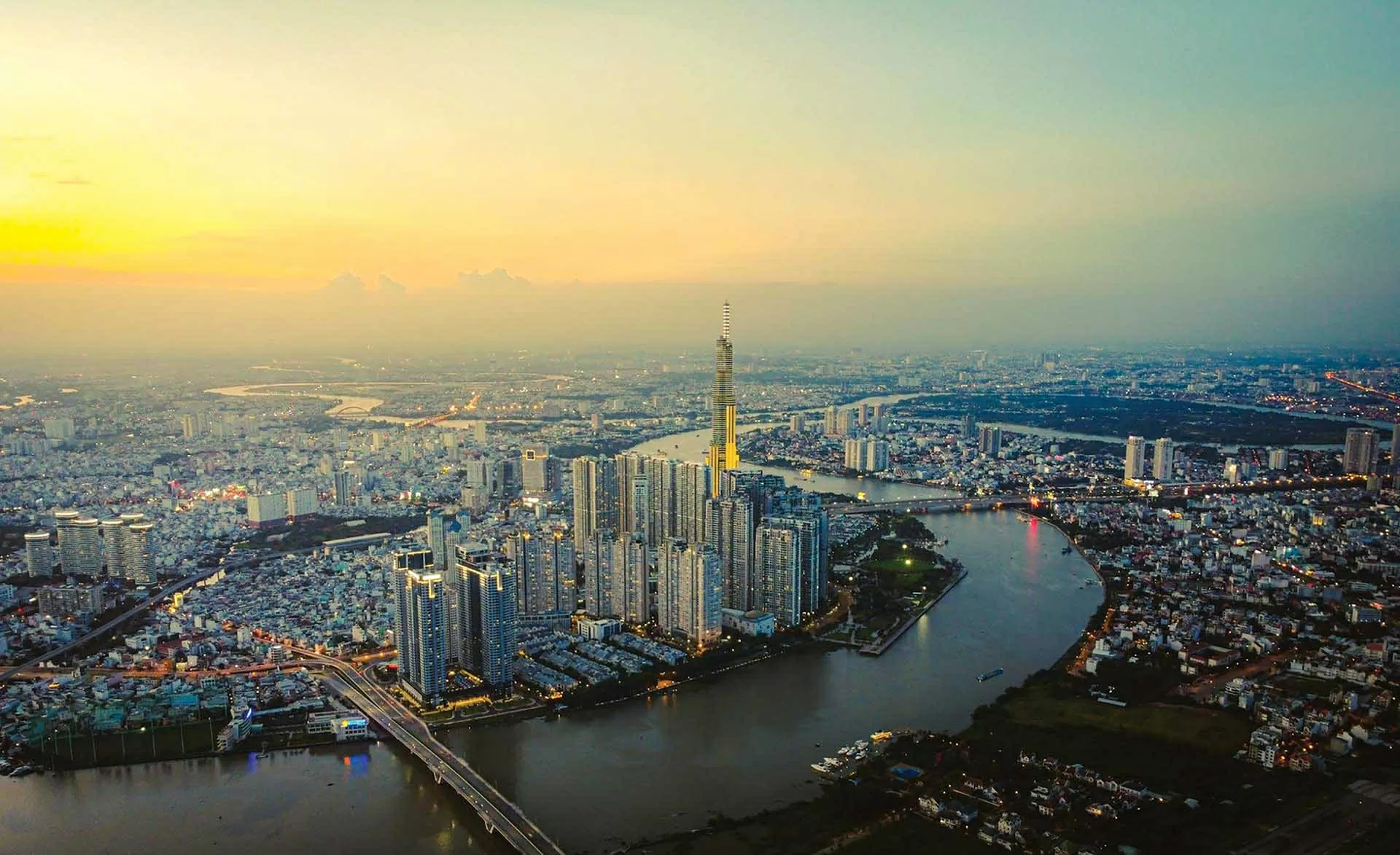 |
| A prosperous Vietnam will bring substantial meaning to the country's slogan "Independence - Freedom - Happiness". (Source: Pexels) |
What opportunities and challenges does Vietnam face in its goal to become a high middle-income country by 2030 and a high-income country by 2045?
The opportunities Vietnam can achieve by becoming a high middle-income country by 2030 and a high-income country by 2045 are clear. A prosperous Vietnam will bring substantial meaning to the country's slogan "Independence - Freedom - Happiness". The people will enjoy a high-quality life, playing a more active role in the global market, not only as a destination for foreign direct investment (FDI) but also as an investor abroad. At the same time, Vietnam's international standing, including passport value, will be significantly enhanced. To me, achieving this goal is both a major challenge and an affirmation of Vietnam's development achievements.
However, the road ahead is not simple. The country needs to focus on several strategic priorities:
First, enhance private economic development. Resolution 68-NQ/TW needs to be fully and effectively implemented. Reforms for state-owned enterprises need to be accelerated, aiming to increase transparency and promote healthy competition. Tax policies and regulations should prioritize small and medium-sized enterprises and start-ups. The administrative apparatus, especially in areas such as licensing, customs, and land management, needs to be streamlined and reformed.
Second, promote digital transformation. Vietnam needs not only to lead in innovation but also to pioneer in building an advanced legal framework. The newly passed Digital Technology Industry Law in June 2025 is a significant milestone, providing a legal foundation for digital assets, artificial intelligence (AI), and blockchain technology. To advance further, Vietnam needs to continue refining regulations on digital identity, data privacy, and financial technology (fintech).
Third, reform education. Vietnam's education system needs modernization. Digital skills, knowledge of AI, and platform economics need to be integrated into the national curriculum. The gap between top universities and weaker educational institutions also needs to be narrowed.
Fourth, expand legal experimentation mechanisms to support innovation. To promote breakthrough technologies like fintech, blockchain, and AI, Vietnam should expand innovation sandbox models (controlled testing mechanisms).
Fifth, aim for green growth. Vietnam is vulnerable to natural disasters, but green development strategies need to align with local realities. The government should encourage market solutions in the environmental sector, especially in renewable energy, green logistics, and sustainable agriculture. ESG (Environmental - Social - Governance) standards need to be localized and adjusted to be feasible, ensuring environmental protection does not hinder economic growth.
Sixth, stabilize geopolitical and macroeconomic conditions. The country needs to maintain macroeconomic credibility – this requires prudent fiscal policy, inflation control, and a stable banking system. In foreign affairs, "bamboo diplomacy" continues to play a key role: Flexible, independent, and prioritizing national interests.
Seventh, breakthrough through International Financial Centres. The international financial centres being planned in Ho Chi Minh City and Da Nang can become crucial turning points to attract global capital, promote innovation in fintech, and elevate Vietnam's position.
The above points help Vietnam outline a clear roadmap for the future, becoming a high middle-income country by 2030 and a high-income country by 2045.


