


Bridges of knowledge between Vietnam and Australia
WVR - On August 10, in Sydney, during the State visit to Australia, General Secretary and President To Lam attended and delivered a speech at the Vietnam - Australia Tech Connect Forum at the University of Technology Sydney (UTS).
Latest
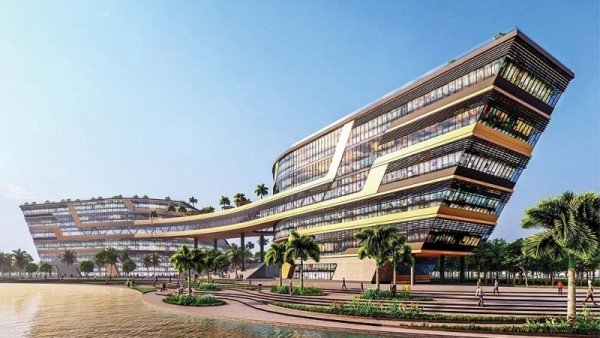
Held at UTS, one of Sydney's prominent higher education and technology centers, the forum marks a new shift in Vietnam-Australia relations, transitioning from traditional cooperation fields to partnerships increasingly based on knowledge, technology, innovation, and human resources.
The forum gathered representatives from governments, universities, research institutes, businesses, investment funds, startups, and experts from both countries. The program included a plenary session, thematic sessions on science and technology, education and training, document exchanges, the announcement of new initiatives, and business networking following the "Triple Helix" model involving the state, universities/research institutes, and businesses.
The organizers reported over 400 delegates, more than 150 businesses participating in networking, and about 300 pre-arranged B2B meetings. Notably, the presence of General Secretary and President To Lam at the Forum underscores that science, technology, innovation, and human resource development are increasingly becoming vital pillars in the comprehensive strategic partnership between Vietnam and Australia.
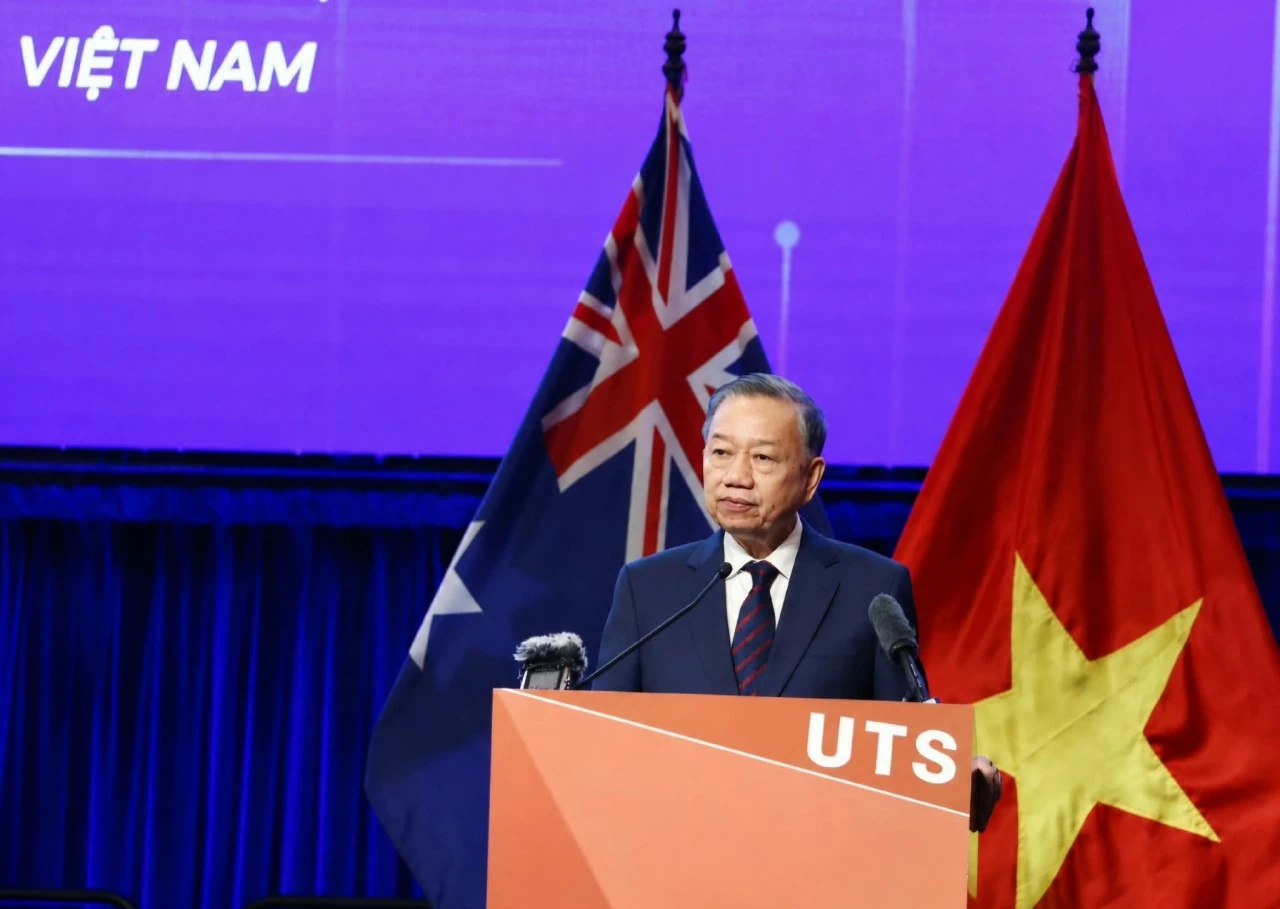 |
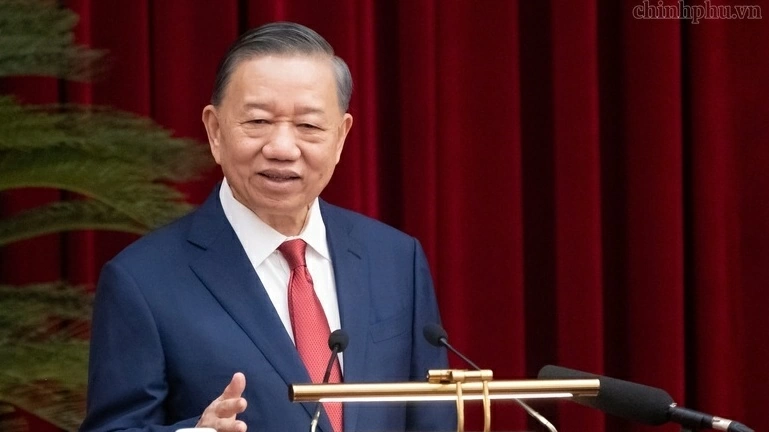
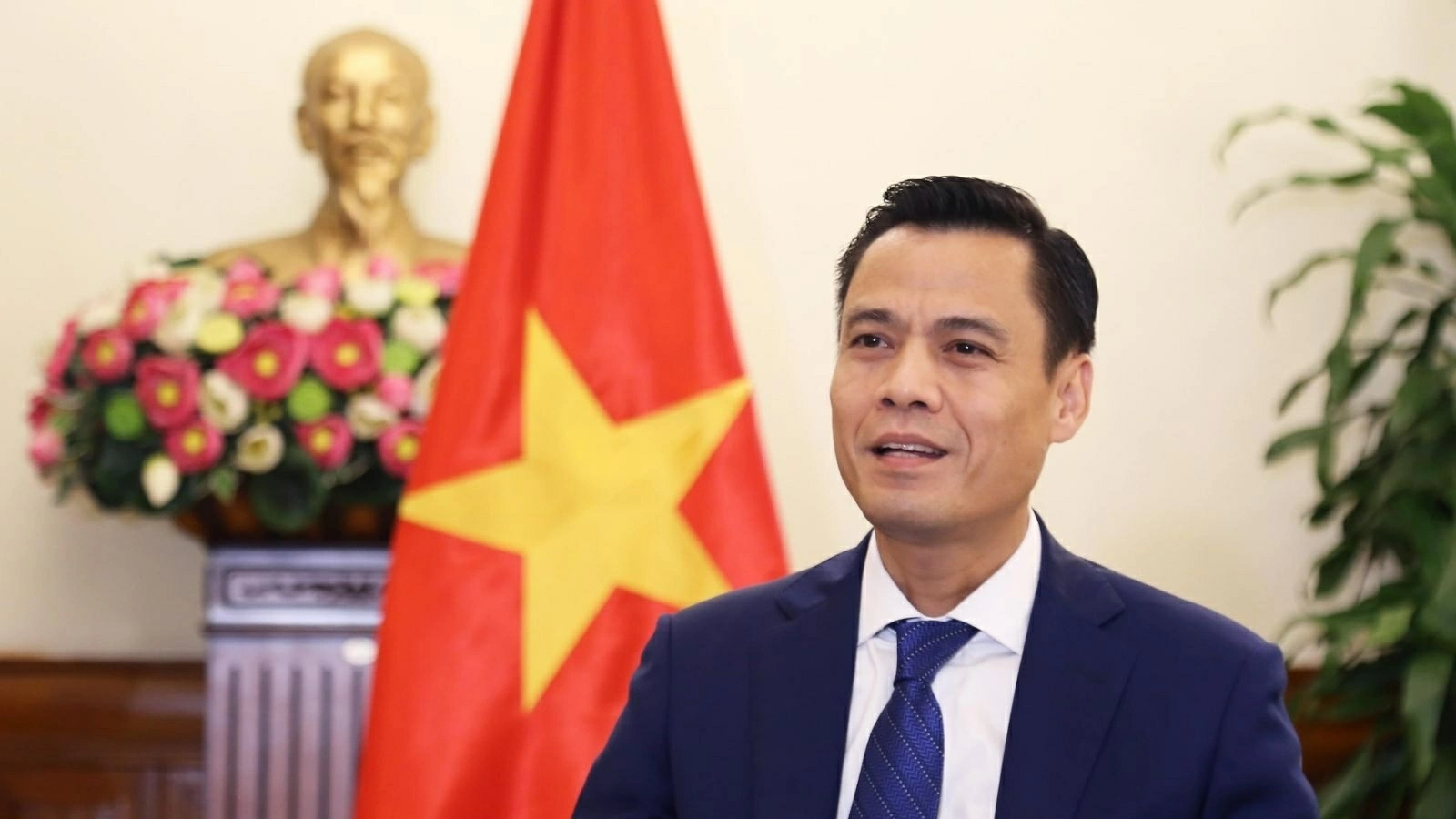
| General Secretary and President To Lam speaking at the forum. |
In his speech, General Secretary and President To Lam emphasized that for Vietnam, the development of science, technology, innovation, and high-quality human resources is no longer a choice but a necessary requirement to realize the aspiration of becoming a developed, high-income nation by 2045.
Vietnam identifies knowledge, science, technology, innovation, digital transformation, and international integration as primary growth drivers. The country is shifting from attracting investment to co-development, from technology reception to co-creation, and gradually participating more deeply in high-value-added segments of the global value chain.
Recognizing Australia as a partner with many complementary strengths for Vietnam, General Secretary and President To Lam expressed a desire for the two countries to build a new type of partnership in science, technology, innovation, and human resource development; from cooperation to co-creation, from transfer to joint research and development, aiming to form a regional innovation ecosystem.
From ideas to concrete collaborations
A notable aspect of the forum is how ideas are connected with projects, businesses, and specific initiatives. The exhibition area at UTS showcased achievements and collaborative results between Vietnam and Australia in science and technology, innovation, investment, and education, demonstrating that bilateral relations are expanding into high-knowledge-content fields.
The Australian side emphasised that science and technology are central to human progress, economic growth, productivity, health, and quality of life. Alongside scientific capability, collaboration is indispensable.
The story of Isaac Newton and Gottfried Wilhelm Leibniz, two mathematicians who independently developed calculus, was cited as a lesson on the value of collaboration. Debates over the priority of scientific works once created divisions between the British and European mathematical communities. The message conveyed is that great minds can create more value through collaboration rather than isolated competition.
This message is even more significant as current major challenges, from climate change, energy transition, food security to AI, big data, semiconductors, and quantum technology, exceed the capacity of any single nation or organization to address.
Australia is investing in scientific and research capabilities, while seeking collaborative directions in developing essential minerals, green steel production, emission reduction in heavy industries, and enhancing competitiveness in strategic areas such as artificial intelligence (AI), quantum technology, and critical technologies.
Meanwhile, Vietnam is advancing science, technology, innovation, and digital transformation as central development drivers. This orientation is clearly reflected in Resolution 57-NQ/TW, aiming for breakthroughs in science, technology, innovation, and digital transformation.
These similar orientations open up many intersections. In agriculture, AI and digital technology are being applied to address practical issues, from efficient water use, emission reduction, productivity enhancement to improving market access.
This is also the spirit of Aus4Innovation, a 10-year cooperation program between Australia and Vietnam, with a total budget of 33.5 million AUD, implemented from 2018 to 2028 through DFAT, CSIRO, and the Ministry of Science and Technology of Vietnam. The program aims to strengthen the innovation ecosystem, test new cooperation models, and promote the commercialization of scientific research.
Recent projects have utilized AI and digital platforms to support traceability, product certification, and enhance farmers' capabilities. A collaborative project between the University of Queensland and Vietnamese partners in 2026 also uses AI and insect monitoring systems to improve pollination efficiency and sustainable fruit production.
These examples demonstrate the forum's value in connecting ideas with action, research with the market, universities with businesses, and knowledge with the community's real needs.
Humans at the centre of innovation
Education and human resource development are other important topics of the forum. In the context of rapid technological change, a nation's advantage increasingly depends on its ability to train, attract, and leverage high-quality human resources.
Australia has a strong university and research system, while Vietnam possesses a dynamic young generation eager to learn, research, and engage more deeply in the digital economy. The combination of Australia's research capabilities with Vietnam's young workforce and growing market can open up new innovation ecosystems in the region.
Technology may change learning and working methods, but humans remain at the center of innovation. AI can support thinking, analysis, and creativity, but a sustainable technology ecosystem requires people capable of questioning, collaborating, adapting, and taking responsibility for what they create.
A notable highlight of the event was the participation of the Vietnam-Australia Scholars & Experts Association (VASEA). This organization plays a role in connecting the Vietnamese scholarly and expert community in Australia with agencies, universities, research institutes, and businesses in both countries.
According to its official introduction, VASEA was established to create a network connecting scholars and experts of Vietnamese origin in Australia to exchange knowledge, skills, and experiences; support initiatives in education, science, technology transfer, healthcare, and social fields; and serve as a bridge for information, solutions, and technology between Australia and Vietnam.
VASEA focuses on education, training, and international relations; science and technology transfer; policy, trade, and investment; environment, society, governance, and sustainable development; and health sciences.
From the event's perspective, VASEA's role lies in transforming knowledge resources into specific connections: Vietnamese scientists in Australia connecting with domestic laboratories; professors launching joint research programs; technology experts supporting businesses; universities connecting with startups.
In recent years, VASEA has participated in numerous activities promoting Vietnam-Australia knowledge exchange on innovation, digital transformation, environment, agriculture, and sustainable development. In 2026, VASEA continues to promote Australia-Vietnam research cooperation programs. Through this, the Vietnamese intellectual community in Australia is increasingly directly involved in fields that create competitiveness, knowledge, and economic value for both countries.
Building with knowledge and trust
In addition to discussions on technology and education, the signing of cooperation documents between Vietnam and Australia was a highlight of the forum, demonstrating a desire to translate high-level commitments into more specific cooperation programs.
Alongside this was the announcement of the opening of a flight route to Western Sydney International Airport by Vietjet Air, with plans to commence international passenger operations by the end of 2026. Air connectivity with Vietnam is expected to enhance exchanges among communities, businesses, students, researchers, and tourists from both countries.
At UTS, the spirit of cooperation was evident not only through speeches but also through exchanges between scientists, businesses, universities, and organizations, indicating a growing demand for substantive collaboration opportunities.
The forum posed the question: What can Vietnam and Australia achieve together that each side may find challenging to accomplish alone? Potential fields include AI, semiconductors, quantum technology, clean energy, essential minerals, high-tech agriculture, healthcare, education, digital transformation, and the green economy. However, the deeper foundation remains trust and long-term human-to-human collaboration networks.
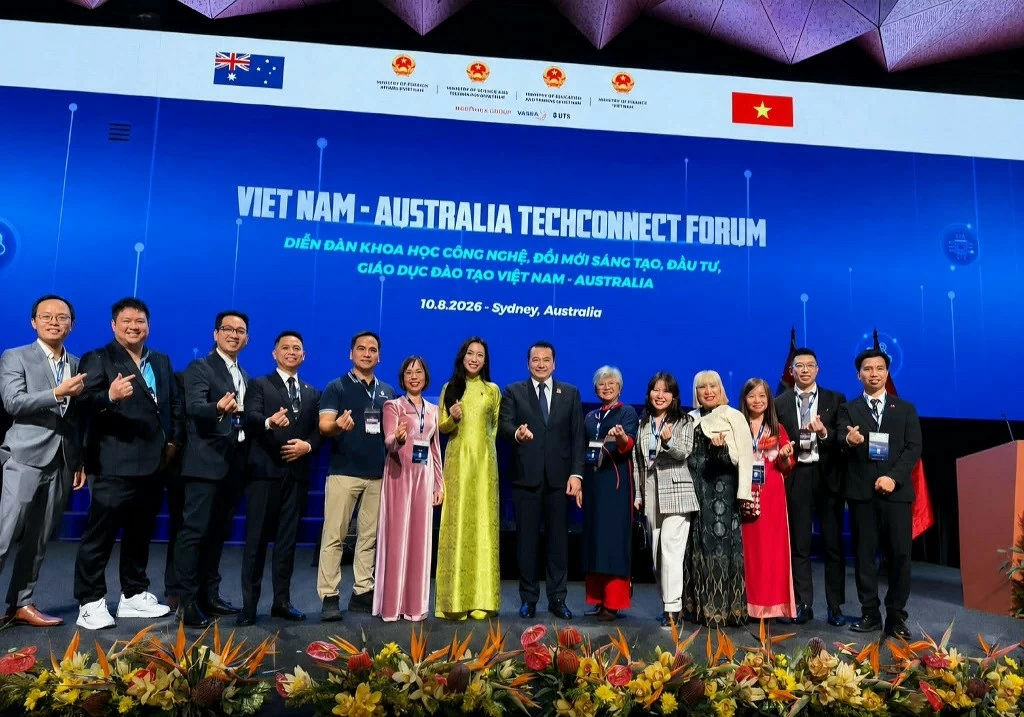 |
| Vietnamese Consul General in Perth Pham Hai Anh (seventh from right) with a team of Vietnamese experts and intellectuals in Australia attending the forum. |
For the Vietnamese community in Australia, intellectuals, scientists, engineers, doctors, technology experts, entrepreneurs, and educators possess a unique resource: an understanding of both societies.
VASEA contributes to connecting this resource into a knowledge network, where universities create research, businesses transform research into products, governments create policy environments, and expert communities connect capabilities. This is also the spirit of the "Triple Helix" model that Tech Connect aims for and represents a collaborative direction that can have a long-lasting impact on Vietnam-Australia relations.
At the event, Vietnamese Consul General in Perth Pham Hai Anh also participated with the Vietnamese delegation, contributing to showcasing the role of diplomacy, community connection, and promoting bilateral cooperation, especially in education, science and technology, innovation, and human resource development.
Standing in the University of Technology Sydney among scientists, educators, businesses, and experts from both nations, one can clearly feel the Vietnam-Australia bridge being built not only through diplomatic documents but also through knowledge, trust, and individuals committed to shaping the future.