





Beyond the Map: Scholar highlights cultural stakes of preserving tourism brands amid administrative restructuring
WVR - According to Dr. Trinh Le Anh from the Faculty of Tourism Studies, University of Social Sciences and Humanities, Vietnam National University, Hanoi, in the wake of administrative restructuring, keeping the spirit of local tourism brands alive requires one essential move: turning local communities into the first and most passionate ambassadors
Latest
 |
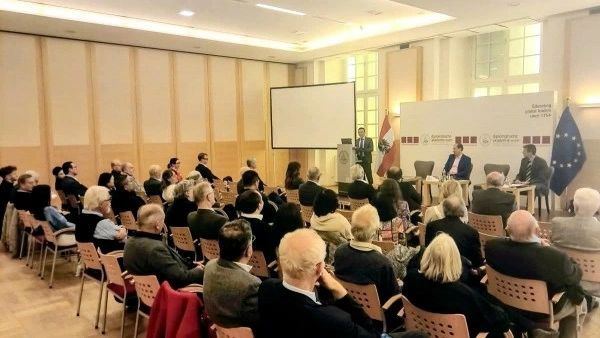
| Dr. Trinh Le Anh emphasizes that protecting and developing tourism brands after national restructuring is a matter of great importance. (Photo courtesy of the source) |
Dr. Anh emphasized that safeguarding and developing a tourism brand during a period of administrative restructuring presents a significant challenge, but also a valuable opportunity if guided by the right strategy. He describes the protection of local tourism brands amid Vietnam’s recent administrative restructuring as both a serious challenge and a unique opportunity. According to him, what is at stake is not merely a name on the map, but the cultural essence that defines a place, the very “soul” of its identity.
Brands like Xu Doai, once associated with the former Ha Tay Province, are not mere labels. They are the product of long-standing histories, distinct cultures, and a deep sense of local pride.
When regions are merged, three major risks emerge.
First is the loss of clear positioning. A strong, recognizable brand can become vague within a larger administrative unit. Visitors may feel confused, and even residents may hesitate to name and take pride in the unique identity of their homeland.
Second is a crisis of cultural identity. While a new administrative name may serve governance, it may not accurately reflect the complex heritage of each contributing region. In some cases, dominant cultural narratives risk overshadowing the voices of smaller communities.
Third, and perhaps most concerning, is the emotional disconnect of local communities. When people feel that their cultural story is being sidelined, the pride that once fueled preservation and tourism efforts begins to fade.
“We must not let the sub-brands disappear”, Dr. Anh urges. “Each is a gem with its beauty, its own story. When we lose that, we lose more than a name, we lose the spirit that brings places to life”.
Renewing without erasing
As Vietnam undergoes administrative restructuring, protecting the cultural identity of local tourism brands has become both a pressing challenge and a timely opportunity. According to Dr. Trinh Le Anh, the real danger lies not in changing names on a map, but in diluting or losing the “soul” of a place: the distinct identity that communities have nurtured over generations.
Local brands like Xu Doai, once associated with the former Ha Tay Province, are more than labels. They embody history, culture, and pride. When regions are merged, three risks often arise: loss of brand clarity, overshadowing of smaller cultures by dominant narratives, and emotional disconnect among local communities.
“We must not let sub-brands fade away”, Dr. Anh says. “Each is a precious gem, with its beauty and story”.
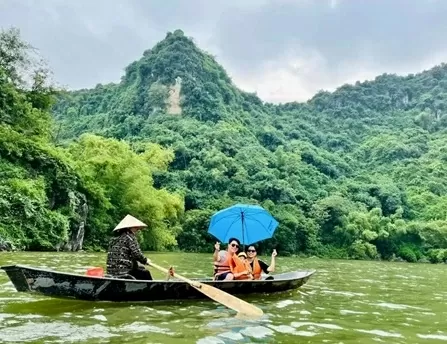 |
| Beyond the Map: Green tourism is increasingly favored by many travelers. (Photo courtesy of the source) |
Rather than choosing between rigid unification or fragmented development, he proposes a smart brand architecture, a “Mother Brand and Sub-brands” model. The Mother Brand offers a cohesive identity, setting standards and shared values. For example, “Hanoi – The Thousand-Year Capital, Creative City” provides a unified direction.
Under this umbrella, local sub-brands like “Cultural Tourism in Xu Doai”, “Ecotourism in Ba Vi” and “Craft Villages of Thuong Tin” must be maintained and empowered. These stories enrich the whole, offering travellers a multilayered experience within a single destination.
At the heart of this strategy is storytelling. The goal is not to list attractions, but to weave narratives that highlight diversity as a strength. A journey like “From the Heart of Thang Long to the Heritage Lands of Xu Doai” illustrates how expanded geography brings cultural depth, not confusion.
Putting communities at the heart of tourism
According to Dr. Anh, local communities are not just a component of tourism, they are its living soul. Without their presence, even the most scenic destination becomes a “shell without a spirit”.
In the post-merger context, this role becomes more critical than ever. Communities, he notes, are the keepers of heritage, sustaining local customs, festivals, and craft traditions. If branding efforts feel disconnected, the cultural flame they carry may fade.
“Creating culturally distinct sub-brands is the best way to enrich the shared identity and ensure no value is forgotten”, he affirms.
They are also the most genuine ambassadors. A smile, a story, or a warm greeting from a local often leaves a deeper impression than any campaign. And more than that, communities continuously create and renew brand value, offering homestays, unique cuisine, and handmade crafts that keep tourism experiences fresh and meaningful.
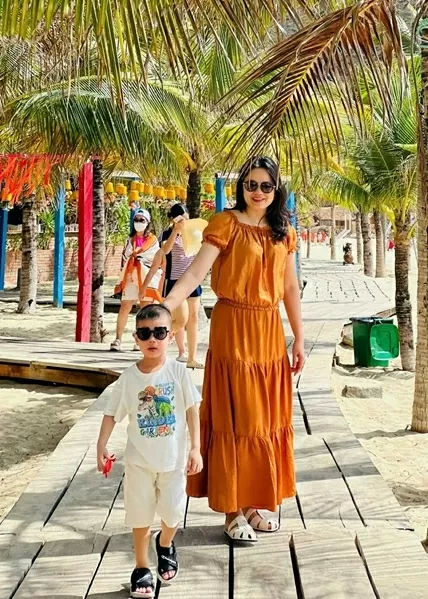 |
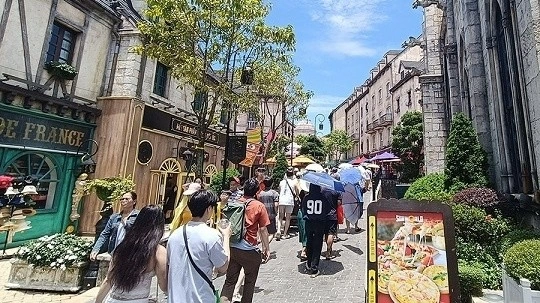
| Beyond the Map: Visitors are always in search of unique and memorable experiences. (Photo: Thu Hao) |
For these reasons, Dr. Anh insists that every branding strategy must put communities at the center, not only by listening and empowering them, but by ensuring they benefit directly and fairly from tourism on their land.
He cites Provence (France) as a compelling model: a strong “mother brand” with culturally defined sub-brands like Luberon or Camargue, built not on administrative lines but on authentic landscapes and stories.
Vietnam, he adds, has promising examples, like the Central Heritage Road or the Dong Van Karst Plateau, which both transcend provincial boundaries through narrative strength. Future initiatives could include “Back to the Heritage Lands of Xu Doai” or “The Red River Craft Route”, linking historic villages into cohesive tourism journeys rich in identity.
In short, Dr. Anh advocates for a branding mindset that goes beyond geography to capture cultural essence, where community is not just involved, but leads the way.