




Can Tho eyes opportunities from APEC 2027
The Asia-Pacific Economic Cooperation (APEC) 2027 presents a particularly significant opportunity for Vietnamese businesses and localities, including Can Tho, to connect with the global value chain alongside more than 20 leading global economies.
Latest
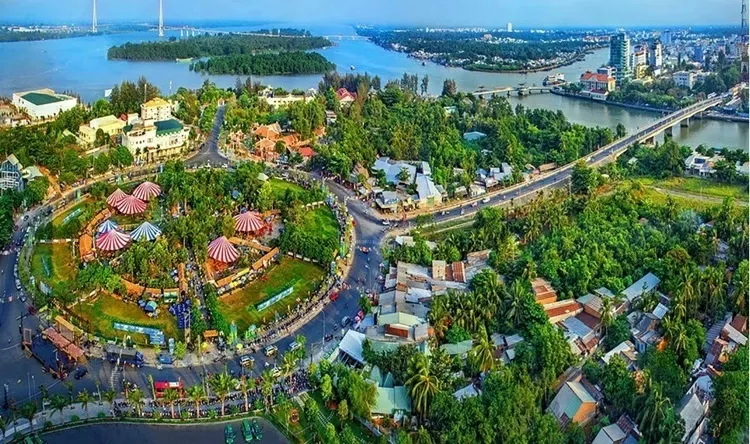 |
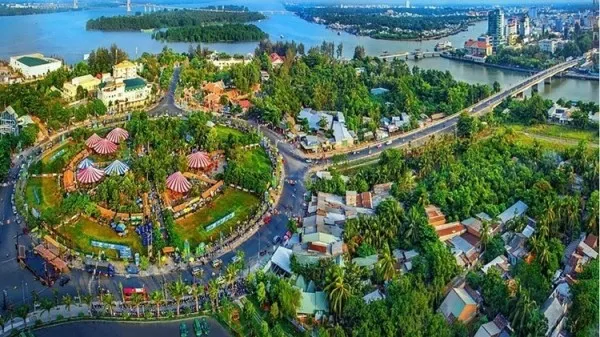
| An aerial view of Can Tho City. (Photo: Vietnam Pictorial) |
The Mekong Delta city of Can Tho covers a natural area of approximately 6,360 km² with 72 km of coastline and 103 administrative units at the commune level. Can Tho is one of the six centrally governed cities in Vietnam, serving as the central hub of the Mekong Delta region - a key area for rice, fruit, and seafood production in the country.
Following the administrative unit merger on July 1, 2025, the new Can Tho city began operations by reorganizing the entire natural area and population scale of Can Tho city, the former Soc Trang province, and the former Hau Giang province. This new context, position, and development space will be a crucial foundation for the city to soon become a national growth pole, aiming for a modern, ecological, and smart urban area. This expansion also opens up numerous opportunities for international cooperation in the future.
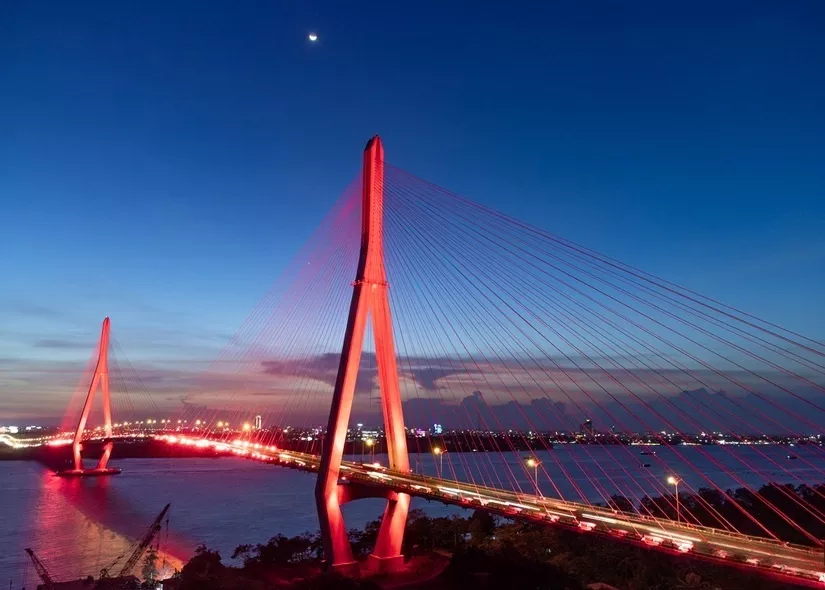 |
| Can Tho bridge plays a pivotal role as a key transportation project, significantly impacting the socio-economic landscape of the Mekong Delta region. (Photo: Can Tho Newspaper) |
Creating a breakthrough in multimodal transportation infrastructure
As the central urban area of the region, Can Tho holds a strategic geo-economic position at the intersection of corridors connecting the West with Ho Chi Minh City and major economic centers. The transportation infrastructure landscape of Can Tho and the Mekong Delta is witnessing transformative changes. Accelerating the implementation of numerous national key transportation projects lays the groundwork for Can Tho to leap forward, becoming the logistics and multimodal transportation hub of the region.
The inter-regional infrastructure system is gradually taking shape through the connection of vertical and horizontal expressways such as the eastern North-South expressway, the Chau Doc - Can Tho - Soc Trang expressway, Can Tho international airport, the inland waterway system, and Tran De deep-water seaport.
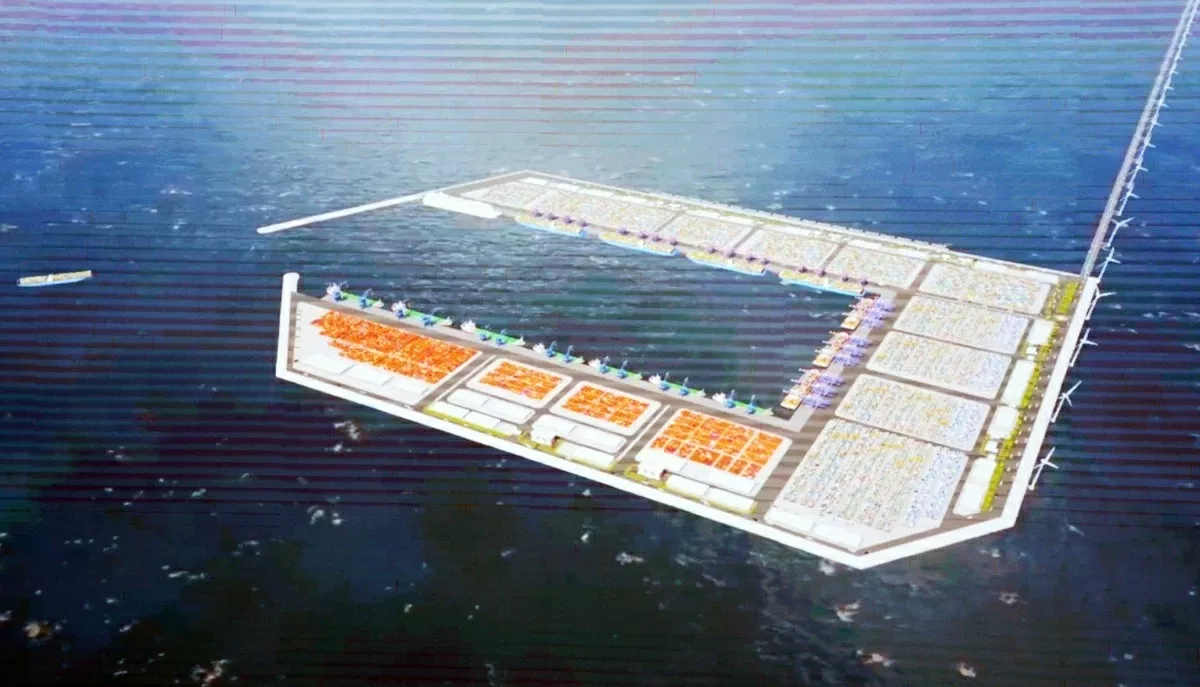 |
| Perspective of Tran De deep-water seaport. (Photo: VnEconomy) |
Additionally, the Ministry of Construction is researching and preparing to invest in the Ho Chi Minh City - Vinh Long - Can Tho - Ca Mau expressway (CT.33) and the Ha Tien - Rach Gia - Bac Lieu expressway (CT.35).
Notably, the Ho Chi Minh City - Can Tho railway project is being developed with a pre-feasibility study report by the Ministry of Construction. The route spans approximately 175.2 km, passing through five provinces and cities, including Ho Chi Minh City, Tay Ninh, Dong Thap, Vinh Long, and Can Tho.
Once the railway is implemented and connected with logistics centers, seaports, airports, expressways, and waterways, Can Tho will gain an essential “pillar” to establish a multimodal transportation system, thereby enhancing connectivity and reducing freight transportation costs.
The APEC 2027 event, held in Phu Quoc, is anticipated to provide a significant opportunity for Can Tho airport to restore its role as the “aviation hub” in the West. As Phu Quoc becomes the focal point of a major diplomatic event, the travel demand of delegates, entrepreneurs, investors, experts, and tourists is expected to rise significantly.
This is also an occasion to promote the Mekong Delta's image, expand tourism programs in conjunction with Phu Quoc, Can Tho, the riverine region, and the distinctive destinations of the West. Can Tho Airport should not merely aim to receive a few international flights during APEC. More importantly, it should leverage this opportunity as a foundation to maintain effective flight routes post-event.
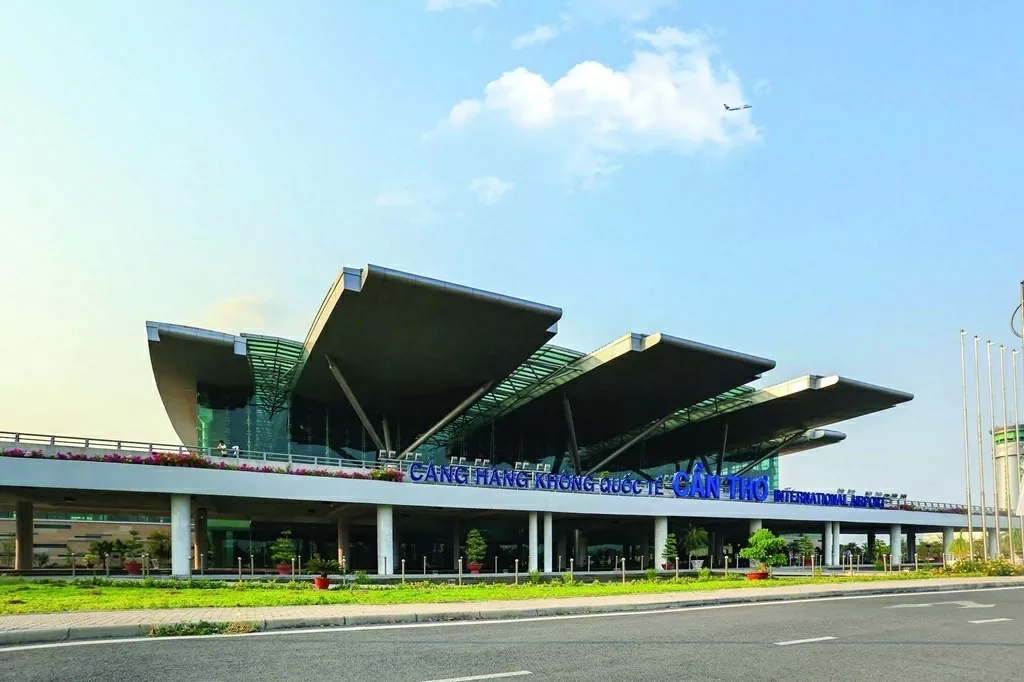 |
| Can Tho International Airport. (Photo: VnEconomy) |
Shaping 6 economic corridors
According to the City Planning for the period 2021 - 2030, with a vision to 2050, Can Tho aims to establish 6 key economic corridors with distinct strategic roles.
Serving as the main driving axis towards the Southeast, the Chau Doc – Can Tho – Soc Trang economic corridor connects the central urban area of Can Tho with the seaport system and coastal economic zones. This is identified as a comprehensive transportation and economic corridor, focusing on industrial parks, logistics, urban areas, and export-import support services, closely linked to the Tran De deep-water seaport.
Simultaneously, the Hau River economic corridor is shaped as an important urban-service riverfront axis, leveraging the riverine landscape and riverbank land to develop urban areas, services, logistics, eco-tourism, passenger ports, commerce, and riverfront services; creating a continuous development belt from the city center to the river mouth and coastal areas.
In the East-West direction, the economic corridor along the CT.02 expressway is a strategic axis connecting the urban center with new urban areas, industrial-service zones, and external transportation hubs. This corridor is oriented for development following the “urban, industrial-service axis” model, arranging industrial parks, warehouses, logistics, and commercial-service centers.
Playing the role of a national driving axis passing through Can Tho, the North-South CT.01 Economic Corridor connects the urban chain and economic spaces of Vinh Long - Can Tho - Ca Mau with the coastal provinces of the Mekong Delta; simultaneously connecting the northern socio-economic region, the central socio-economic region, and the southern socio-economic region. The corridor is prioritized for mixed urban development, service-commercial centers, clean industrial zones, and logistics areas…
Meanwhile, the CT.33 Coastal economic corridor serves as a marine-oriented development axis, associated with the coastal economic zone and Tran De deep-water seaport. This driving route focuses on developing specialized economic zones for marine economy, processing industry, port logistics, non-tariff zones, urban areas, and coastal resort tourism…
Finally, the Can Tho - Ha Tien - Rach Gia - Bac Lieu economic corridor is oriented to become a new export-import logistics axis, connecting the Vinh Chau, Vi Thanh, and coastal Can Tho areas with the Long Xuyen Quadrangle and the West Sea.
When placed on the foundation of an increasingly complete system of expressways, railways, waterways, seaports, and aviation, these economic corridors will not only expand urban space but also facilitate the formation of industrial, logistics, commercial, service, and new urban hubs. This is the potential for Can Tho to maintain its role as the central urban area of the region, becoming a key economic-logistics linkage hub.
Golden opportunity to promote investment environment
The APEC 2027 event draws the attention of leaders from 21 member economies along with thousands of leading global corporations and businesses. As the central urban area of the region, this will be a golden opportunity for Can Tho to promote its investment environment:
After the administrative unit merger, Can Tho City has developed a development strategy with a new space. The city aims to foster cooperation with foreign partners, shifting from traditional investment attraction to new-generation foreign investment (FDI), focusing on sectors such as: High technology & Digital cconomy: Information technology, telecommunications, semiconductors, artificial intelligence (AI), digital economy; Green economy & Clean energy: Developing renewable energy, green growth, and applying clean technology in production; Deep processing: Applying high technology in agricultural and aquatic product processing and food; Infrastructure & Logistics: Developing logistics systems, seaports, and strategic transportation connections to deeply integrate into the global supply chain.
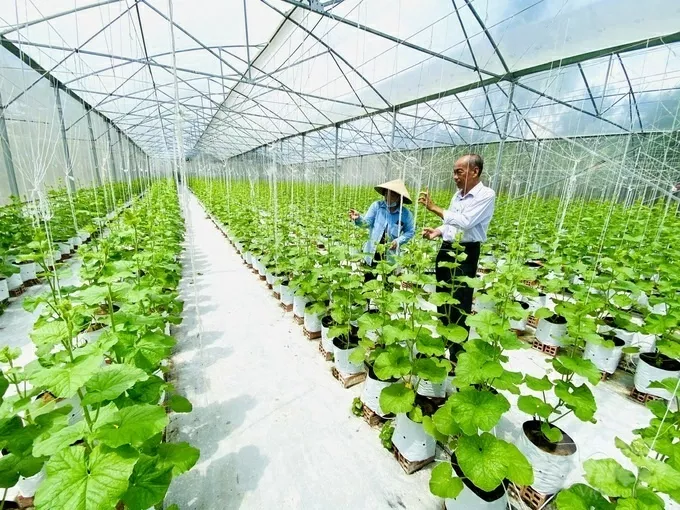 |
| High-tech agriculture is one of the fields that Can Tho city is actively attracting international investment. (Photo: Can Tho Newspaper) |
Simultaneously, further enhancing cultural-artistic exchanges, education, and promoting tourism development. With a vision to 2045, Can Tho aims for FDI sector in the area to develop sustainably, closely linked with the domestic economy, and deeply participate in regional and global value chains. The city aims to become a highly competitive center for production, services, logistics, and innovation in the entire region.
To achieve these goals, Can Tho has outlined several key tasks and solutions; focusing on renewing thinking and raising awareness of the political system and community about the role of the FDI sector; encouraging FDI enterprises to enhance social responsibility, link, and transfer technology to domestic enterprises.
Additionally, the city focuses on significantly improving the investment and business environment; reviewing and abolishing conflicting and overlapping regulations; promoting digital transformation and applying artificial intelligence in administrative procedure processing; implementing the National Investment One-Stop Portal based on the principle of “one-time declaration, multiple uses”. The city maintains regular dialogues to promptly address difficulties for investors…
Generally, APEC 2027 is not only a major diplomatic event for the nation but also a crucial impetus helping the Western Capital affirm its role as a central driving force, spreading economic momentum throughout the entire Southwest region.