






Germany-Vietnam strategic partnership: 15 years of building trust
On 11th October 2011, Germany and Vietnam signed the Hanoi Declaration establishing their Strategic Partnership. To mark this 15th anniversary, on 14th October 2026, the German-Vietnamese Association (DVG) and Asienbrücke helt a conference in Berlin.
Latest
 |
| The relationship with Germany has increasingly developed into a partnership among equals, as reflected in the Strategic Partnership over the last 15 years. (Source: Hanoi Times) |
Germany can be a partner to Vietnam on its own path of reform
In 2011, as a Board Member of Deutsche Bank Vietnam, I was able to follow the events first-hand. I still remember very clearly the ceremonial event at the Metropole Hotel, where I had the honour of personally welcoming our Chancellor, Angela Merkel, in my capacity as Vice-Chair of the German Business Association in Vietnam (GBA).
The occasion could not have been more fitting: after German-Vietnamese relations had grown steadily in intensity following the establishment of diplomatic relations in 1975, Prime Minister Nguyen Tan Dung and our Chancellor now ushered in a significant new chapter: The ‘Hanoi Declaration’, signed by both leaders, laid the foundations for both countries to commit to strategic partnership in the areas of political dialogue, trade, development, the rule of law, environmental protection, culture and education.
One example of the Declaration’s success is the ‘Deutsches Haus’ project in Ho Chi Minh City, which was opened in 2017 and ceremonially inaugurated in 2019. This striking building is a visible flagship project showcasing German culture and business in Vietnam.
In the past, Vietnam was all too often perceived merely as a low-cost manufacturing country, as an industrial location within the ‘China +1 strategy’. In my view, Vietnam must no longer serve solely as a destination for FDI. Rather, Vietnam must seek to increase the specific Vietnamese value added within each product.
Resolution 10 is a step in exactly the right direction; within the context of FDI, greater attention should be paid to ensuring that Vietnamese companies are strengthened through localisation and that knowledge transfer takes place. German companies, in particular, can be of great assistance here.
The basis is already strong: Germany is Vietnam’s most important trading partner in the EU, with bilateral trade exceeding EUR 21 billion in 2025. More than 500 German companies are active in Vietnam.
In Germany, small and medium-sized enterprises (SMEs) form the backbone of German industry. With their contacts in Vietnam, they can help to strengthen Vietnamese SMEs and facilitate the transition from simple production to higher-value-added supply chains. The EVFTA was a milestone, but implementation remains essential. German engineering and management expertise, particularly in the fields of mechanical engineering, automation, environmental technology, medical technology, logistics and industrial services, can support Vietnam.
 |
| While these impressive figures reflect the economy’s resilience, they do not signify that the tasks of structural reform are complete. (Source: Getty Images) |
After many years in bank management, education has now become the core of my work. In this context, I believe that the relationship between Germany and Vietnam must not be reduced solely to FDI and trade. Rather, human capital today is comparable to physical infrastructure. Without a skilled workforce, Vietnam will not succeed in achieving its ‘2045 Ambition’.
I see the German dual vocational training system and the highly practical German university education at “universities of applied sciences” in particular as a source of inspiration for Vietnamese education policy and educational institutions. Of course, this model should not be copied wholesale, but needs to be adapted to the specific Vietnamese context. Institutions such as FOM can contribute through practice-oriented, applied education models.
I also view skilled worker partnerships positively. However, they must definitely be structured fairly to prevent a brain drain from Vietnam.
With the groundbreaking reforms it has implemented in recent years to promote digital transformation, science, technology and innovation (in particular Resolutions 57, 68 and 10), Vietnam is already on the right track. Over the coming years, however, Vietnam will require not only capital but also the capacity to absorb it.
The foundations laid over the last 15 years of the strategic partnership between Vietnam and Germany provide an excellent basis for Germany to support Vietnam. The good relations between the two countries should be used much more strategically.
What Vietnam needs now is to further strengthen private enterprises, competition, entrepreneurship and sound institutions. The relationship with Germany has increasingly developed into a partnership among equals, as reflected in the Strategic Partnership over the last 15 years. Germany can be a partner to Vietnam on its own path of reform. Vietnam has never lacked ambition in the past. What is crucial now, however, is prioritisation, implementation and institutional quality.
People are the most enduring bridge in the Vietnam-Germany partnership
As a Vietnamese woman who has had the opportunity to study, conduct research, and work in Vietnam, the United States, and Germany, I have observed that for many Vietnamese people, Germany is often associated with qualities such as superior technical standards, reliability, an advanced education system and cutting-edge technology. In particular, my time spent researching behavioural finance in Germany provided me with a deeper understanding of what makes international academic cooperation work.
Such partnerships grant Vietnamese scholars access to advanced research methodologies, global academic networks, and state-of-the-art research technologies. Based on this experience, I believe the greatest value of educational and research cooperation between Vietnam and Germany lies not merely in the transfer of knowledge, but in the transfer of the very methods used to generate that knowledge.
Through the implementation of international programs in Vietnam, as well as field trips with students to foreign-invested financial institutions and manufacturing enterprises, one thing has become clear to me: businesses invest not only in machinery, equipment, or production capacity but also in people.
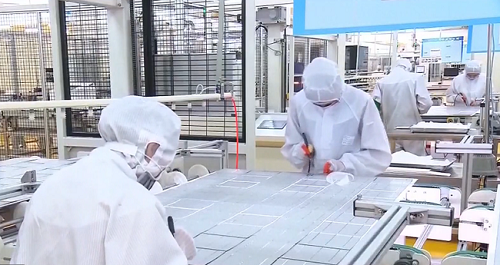 |
| For Vietnamese small and medium-sized enterprises (SMEs), participating in German and European supply chains requires a range of prerequisites—such as capital, professional management expertise, standardized certifications, language proficiency, and technical quality management systems. (Source: VTV) |
For Vietnamese small and medium-sized enterprises (SMEs), participating in German and European supply chains requires a range of prerequisites—such as capital, professional management expertise, standardized certifications, language proficiency, and technical quality management systems. The real challenge lies in effectively connecting the procurement and training channels of foreign investors with capable local suppliers. This, in turn, enables Vietnamese businesses to learn, meet required standards, and advance into segments with higher value-added potential.
As a university lecturer who frequently works with young Vietnamese people, I have observed the strong appeal of study, training, and career pathways in Germany. Having personally experienced the research environment there, I have come to better appreciate the value of cross-border knowledge mobility. However, the success of educational cooperation lies in the ability to translate international experiences into long-term development capacity for both nations. When designed effectively, the movement of human capital can shift from a “brain drain” risk to “brain circulation”—creating value for both the country of origin and the host country.
People serve as the most enduring bridge in this partnership. According to German government data, over 200,000 Vietnamese people live in Germany. This figure underscores the depth of the educational, linguistic, and professional ties between the two nations. Consequently, I believe the next phase of Vietnam-Germany relations should evolve toward building transnational networks of competence. This requires more flexible cooperation mechanisms—involving universities, research institutes, businesses, and professional communities from both countries—to ensure that knowledge is not just acquired, but also co-developed and applied.
In my view, innovation in Vietnam extends well beyond the mere importation of high-tech equipment. More critical is the capacity to absorb, apply, and derive value from such technology. Through my experience in teaching and corporate consulting, I have observed that the success of a technological transformation does not hinge on the sophistication of hardware or software, but rather on human capability and an organization’s capacity to learn. Employees must possess the skills to operate, adapt to, and improve upon technology, while organizations must establish processes that foster continuous learning.
The young people I encounter are highly receptive to technology; the challenge, however, lies in helping them define meaningful goals and transforming their curiosity into practical skills capable of addressing real-world problems.
Vietnam can take pride in the progress it has achieved recently; however, the journey toward 2045 will demand deeper transformations in institutional frameworks, corporate capabilities, and the quality of human capital. According to estimates from the General Statistics Office, GDP grew by 9.95% year-on-year in the third quarter of 2026, with a 9.01% increase recorded for the first nine months of the year.
While these impressive figures reflect the economy’s resilience, they do not signify that the tasks of structural reform are complete. The core challenge lies in whether this growth can translate into higher productivity, the expansion of Vietnamese enterprises, the creation of quality employment opportunities, and an enhanced capacity to adopt and adapt to new technologies.
The conference held in Berlin in October 2026 to mark the 15th anniversary of the “Hanoi Declaration” sets exactly the right tone. The first fifteen years built trust. The next fifteen years should turn trust into transformation.
* The article offers perspectives from a German and a Vietnamese author on the occasion of the 15th anniversary of the establishment of the Vietnam-Germany Strategic Partnership (2011-2026).


