



Vietnam’s position after 40 years of Doi Moi (Part II): Beyond growth to a country where people want to live
WVR - I myself have been familiar with Vietnam for many years. It is not just a matter of figures, but also of observing the visible transformation that the country has undergone in recent years and will continue to undergo in the years to come.
Latest
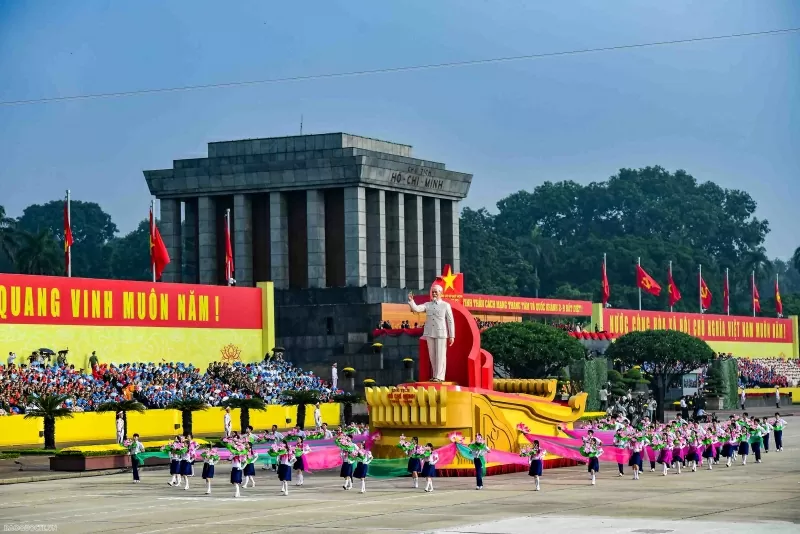 |
| Today, in 2026, 40 years after the start of the Doi Moi reforms, it is worth taking a moment to give thanks, whilst at the same time looking ahead. (Photo: Nguyen Hong) |
Today, in 2026, 40 years after the start of the Doi Moi reforms, it is worth taking a moment to give thanks, whilst at the same time looking ahead.
A joyful reunification and a difficult new beginning
Many people in the West think of Vietnam primarily in terms of the history of the last 150 years: the era of colonialism, the terrible war of the 20th century, the division of the country and, ultimately, its happy reunification. Yet Vietnam’s culture has much more to offer. Vietnam’s history of resilience stretches back many thousands of years.
| More from WVR |
 40 Years of Renewal: Vietnam's economic leap 40 Years of Renewal: Vietnam's economic leap |
During this time, the country has had to overcome many challenges. It is this rich history that has given Vietnam the strength to rise again following the devastation of the American War, leading to its reunification. In the years following 1975, Vietnam was among the poorest countries in the world. The economy and infrastructure lay in ruins, many people had been displaced, hardship was palpable everywhere, and the country was largely isolated in terms of economic policy.
Looking ahead – the Doi Moi reforms of 1986
It was against this backdrop that the Đổi Mới reforms were introduced in 1986. Naturally, this date is significant, as these reforms were set in motion at the 6th Congress of the Communist Party of Vietnam (CPV). However, it is also worth noting that these reforms did not come out of the blue. Practical solutions and economic initiatives driven by the people had already emerged at grassroots level before 1986. In this respect, Vietnam’s leadership at the time acted prudently by seizing upon these impulses and institutionalising them politically.
Doi Moi (Renewal) did not simply mean opening up the market, but a complete shift in mindset characterised by pragmatism, initiative, private enterprise and openness to the world. My first Vietnamese teacher, Ms Vũ Thị Thoa, once aptly said: ‘We Vietnamese may not forget, but we can forgive.’ In my view, this epitomises the courage of the Vietnamese people to extend a hand even to former adversaries.
To be fair, it must be said that the former wartime adversaries, foremost among them the USA, were also prepared for reconciliation. The lifting of the trade embargo in 1994, the bilateral trade agreement with the US in 2001 and the support for Vietnam’s accession to the WTO in 2007 are clear evidence of this.
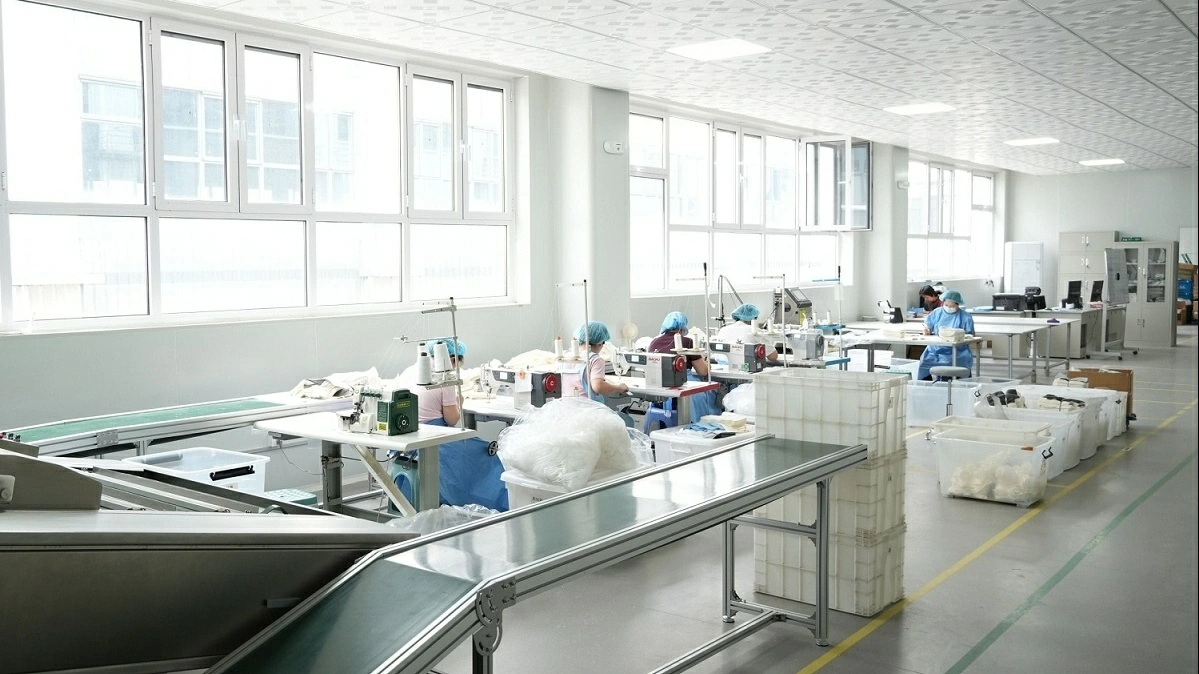
| As the legacy of Doi Moi, Vietnam will need not only large “champions”, but also a broad middle class comprising internationally competitive suppliers, technologically skilled employees and more Vietnamese companies recognised worldwide as ‘hidden champions’. |
A rocky road to success
The path of reform was certainly not an easy one. It is true, then, that things did not take a straight upward trajectory immediately after 1986. Reforms take time and simply do not take effect overnight. Even in the years following 1986, there were still severe food shortages.
One of my long-standing Vietnamese teachers, Nguyễn Trọng Hòa, who had experienced both the war and the reforms first-hand, told me a great deal in countless conversations about this difficult period, which was characterised on the one hand by scarcity, and on the other by a strong determination to move his country, his family and himself forward. Older Vietnamese people still remembered ration cards and the struggle to make ends meet.
My teacher, for example, told me the story of how he and a fellow student at university shared a total of three pairs of trousers between them. One pair was always in the wash, whilst the other two were worn by them and swapped round repeatedly with the new pair. Vietnam was poor, but ambitious. Teacher Hòa vividly described to me how, particularly after 1986, everything slowly but surely began to improve.
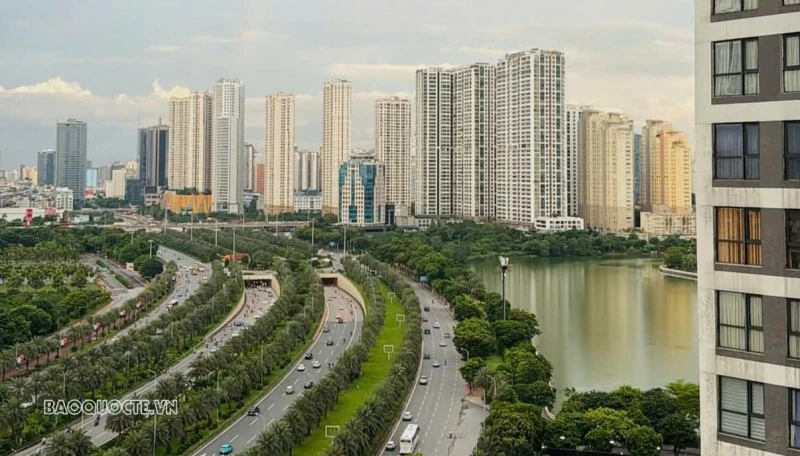 |
| GDP growth in 1H 2026 stands at 8.18%. (Photo: Gia Thanh) |
The foreign perspective on Doi Moi
Looking back from a foreign perspective, the overall assessment of Doi Moi is very positive. In the years that followed, Vietnam moved from poverty and isolation towards integration and self-confidence. Key indicators of this include, amongst other things, the country’s many free trade agreements: CPTPP, EVFTA and now – most recently – the conclusion of negotiations with the EFTA countries on 2 July 2026.
Certainly, factors contributing to this success have included pragmatism, stability, education, the traditional work ethic, openness, the ability to implement policy and, in recent years, ‘bamboo diplomacy’, which seeks to maintain good relations with all nations in the national interest.
Although this article aims to avoid citing too many figures, a few are worth mentioning: GDP per capita rose from under USD 700 in 1986 to nearly USD 4,500 in 2023. Extreme poverty, measured at the lower-middle-income line, fell from 14% in 2010 to under 4% in 2023.
Currently, GDP growth in 1H 2026 stands at 8.18%. Industrial production grew by 11.4% in the first seven months of 2026, the highest seven-month growth rate in nine years. Implemented FDI amounted to USD 15.2 billion, up 11.8%. Vietnam has moved from a low-cost economy into a diversified manufacturing hub and is now moving towards high-tech, electronics, semiconductors, data, AI and modern services.
What is particularly fascinating from an outside perspective is that this growth has also reached a large number of Vietnamese people. Of course, there is still room for further development. And not every family or region in Vietnam has reached a stage where one can be satisfied.
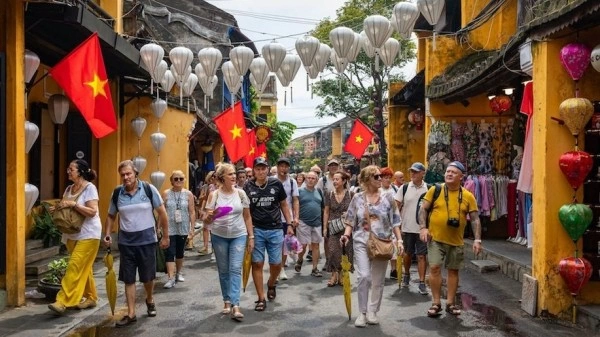
But the trend is positive. I have seen the transformation in the family of my Vietnamese wife, Le Thi Mao: hard work and new opportunities have brought a visibly better life. And – as someone who has lived in Vietnam for many years, I can rightly say – reunification has now also taken place in the hearts of the people. From Quang Ninh in the north to Ca Mau in the far south, the Vietnamese feel they are one people. The Doi Moi reforms have certainly played a part in this, having created the material conditions that have made Vietnam once again a country where people enjoy living.
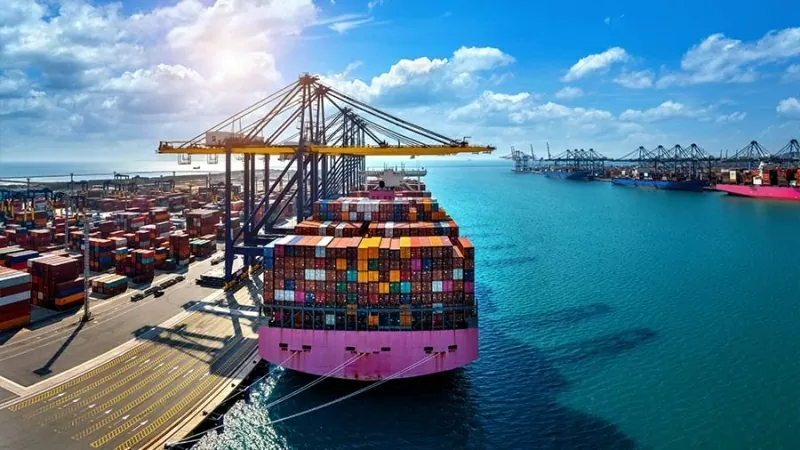 |
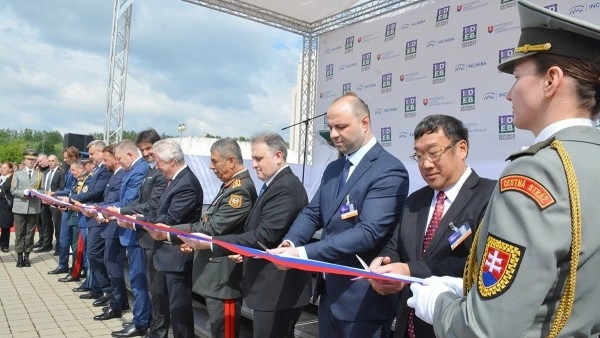
| Looking back on the successful reforms of the 1986 Doi Moi, what matters now is to look ahead and take the next step with determination. (Photo: ASEAN Briefing) |
What matters now?
Looking back on the successful reforms of the 1986 Doi Moi, what matters now is to look ahead and take the next step with determination. I like to refer to this as “Doi Moi 2.0”. It will be important to focus no longer primarily on quantitative growth, but on better growth. This means productivity, innovation, institutions, human capital, the capital market, technology and local value creation.
From low labour costs to higher productivity, from more FDI to better FDI, from export volume to local value creation, from growth at any price to quality growth. Doi Moi 2.0 means placing a stronger focus on Vietnamese companies themselves and, particularly in the SME sector, creating home-grown champions, so that Vietnam does not remain merely a production base for others, but develops its own capabilities and brands. These new Đổi Mới 2.0 reforms do not represent a departure from 1986.
On the contrary: they are a continuation of that process under new global conditions. Just as Đổi Mới 1.0 led Vietnam out of poverty and isolation, so Doi Moi 2.0 can lead Vietnam out of the danger of the middle-income trap and bring it closer to the goal of becoming an ‘industrialised nation by 2045’. After all, the previous model - based on low costs, export orientation and FDI - was certainly sensible, but is no longer sufficient on its own for ‘Vision 2045’. Local value creation and links with FDI are particularly important in this regard.
Vietnam’s current reforms, which are being followed with favourable interest from abroad, should not be viewed in isolation, but rather as a mosaic of various elements that form an overall picture.
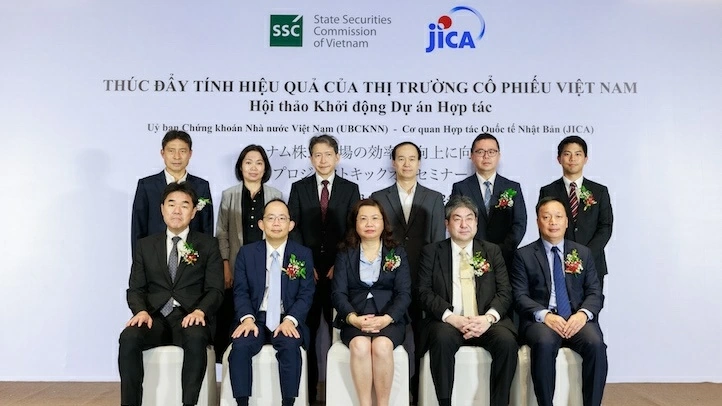
Take, for instance, the current Resolution 10-NQ/TW, which aims to steer the country towards high-quality FDI, emphasise technology and spillover effects, strengthen local supply chains, develop capital markets and establish strategic self-reliance. Or, for example, Resolution 68-NQ/TW, which emphasises the importance of the private sector as the driving force behind the Vietnamese economy, or Resolution 57-NQ/TW, which focuses on breakthroughs in science, technology, innovation and digital transformation, with the ultimate aim of linking AI, semiconductor technology, digital infrastructure, research, universities and businesses.
What Vietnam certainly needs now is to maintain macroeconomic stability, which, in my view, entails further qualitative growth, combating inflation, maintaining exchange rate stability, improving credit quality and effectively managing financial market risks. In the next phase of development, legal certainty, predictability, efficient administration and transparent rules will be just as important as low wages and FDI were in the past.
As the legacy of Doi Moi, Vietnam will need not only large “champions”, but also a broad middle class comprising internationally competitive suppliers, technologically skilled employees and more Vietnamese companies recognised worldwide as ‘hidden champions’.