



Ambassador Ito Naoki: Prime Minister Takaichi Sanae's visit will elevate Vietnam-Japan relations to new heights
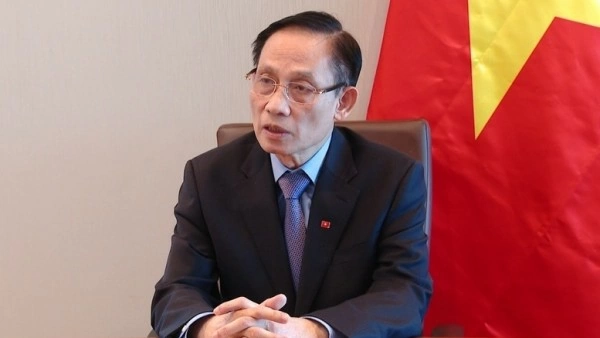
WVR - On April 28, ahead of Japanese Prime Minister Takaichi Sanae's visit to Vietnam (May 1-3), Japanese Ambassador to Vietnam Ito Naoki spoke to the press about the significance and expectations surrounding this important event.
Latest
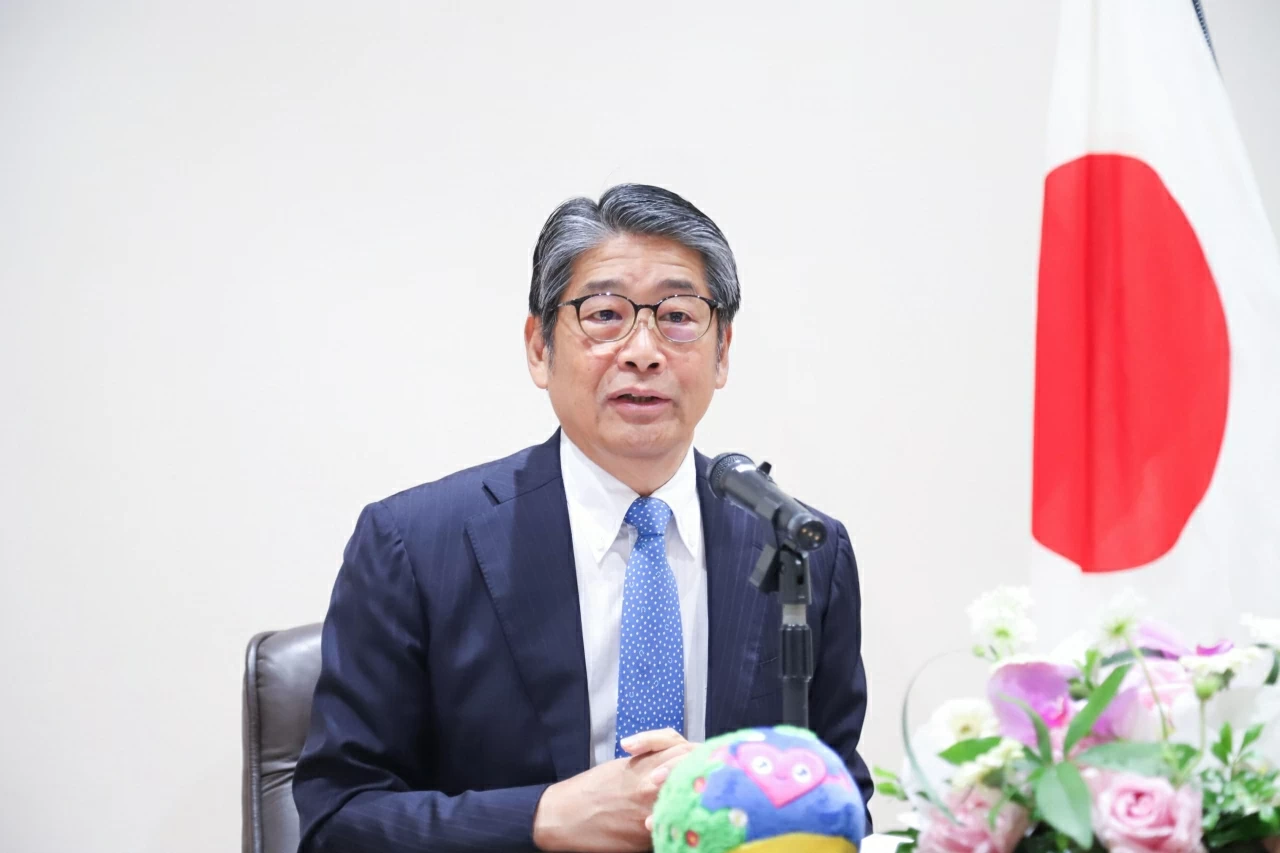 |
| On the morning of April 28, Ambassador Ito Naoki speaks at the press conference, ahead of Japanese Prime Minister Takaichi Sanae's visit to Vietnam. (Photo: Tran Thuong) |
A highly important partner
According to Ambassador Ito Naoki, in the context of the Vietnamese Government having just restructured its leadership, this visit demonstrates the special regard Prime Minister Takaichi Sanae and the Japanese Government have for bilateral relations, while also appreciating the role of Vietnammm in international forums. This is Takaichi's second visit to Vietnam, following her visit in January 2020 as Japan's Minister of Internal Affairs and Communications.
During this visit, Prime Minister Takaichi Sanae is expected to hold high-level meetings and talks with General Secretary, President To Lam, Prime Minister Le Minh Hung, and National Assembly Chairman Tran Thanh Man; thereby building and strengthening the trust between the leaders of the two countries. In these high-level talks, the two sides will review the comprehensive strategic partnership between Vietnam and Japan in recent times and discuss extensive cooperation areas in the future such as the economy, energy, particularly economic security, critical minerals, and people-to-people exchanges.
Notably, Ambassador Ito Naoki stated that within the framework of this visit to Vietnam, Prime Minister Takaichi is expected to deliver a policy speech at the Vietnam National University, focusing on the Free and Open Indo-Pacific strategy (FOIP). The most recent similar event was six years ago, in October 2020, when Prime Minister Suga Toshihide delivered a policy speech at the Vietnam-Japan University.
According to Ambassador Ito Naoki, FOIP is a concept proposed by the late Prime Minister Shinzo Abe about 10 years ago. At that time, the leader recognized that the Indo-Pacific region would become a focal area for global development and needed to be maintained as a free and open space to contribute to the world's overall development.
“It can be said that in the approximately 10 years since this vision was proposed, the world has seen significant changes. In the field of science and technology, breakthroughs have emerged, particularly the development of artificial intelligence (AI), along with considerable geopolitical shifts. In this context, the Japanese government believes it is necessary to continue upgrading the Free and Open Indo-Pacific strategy to align with the changes of the era. This is also the direction that Prime Minister Takaichi is expected to address in this policy speech,” emphasized Ambassador Ito Naoki.
Additionally, the Japanese Ambassador pointed out that for many countries worldwide today, economic security, particularly the construction of robust supply chains capable of responding to the era's fluctuations, is one of the key issues. Therefore, by upgrading and promoting cooperation based on the Free and Open Indo-Pacific vision, Japan aims to demonstrate and enhance its role on the international stage, meeting the expectations of countries.
“In the process of implementing and elevating this strategic vision, Japan identifies Vietnam as a highly important partner. We wish to strengthen the connection between Japan and Vietnam, as well as between Japan and ASEAN countries, thereby promoting regional integration in Southeast Asia,” affirmed Ambassador Ito Naoki.
He also mentioned that Vietnam is a nation that values peace and development based on respect for peace; thus, Japan wishes to closely cooperate with Vietnam to contribute to building a peaceful, stable, and co-developing region.
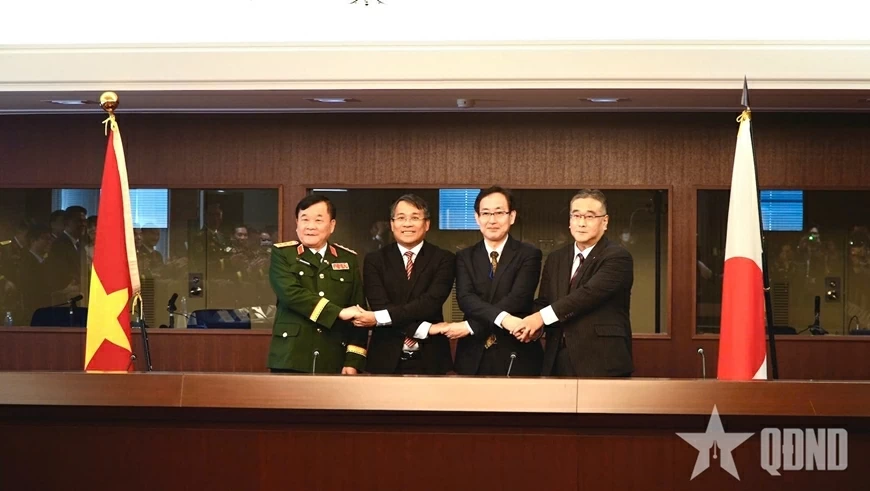 |
| Lieutenant General Hoang Xuan Chien, Deputy Minister of National Defense; Permanent Deputy Minister of Foreign Affairs Nguyen Minh Vu; Japanese Deputy Foreign Minister Namazu Hiroyuki and Japanese Deputy Defense Minister Kano Koji at the first Deputy Ministerial-Level Foreign Affairs - Defense Dialogue (2+2), December 2025. (Source: People's Army) |
Key areas of cooperation
According to Ambassador Ito Naoki, the Japanese Government welcomes the strong reforms under the leadership of General Secretary, President To Lam, and supports the visions and development goals set by Vietnam for 2030 and 2045. To support these goals, both the government and the public-private sector of Japan will coordinate and wholeheartedly assist Vietnam in building and developing according to a new growth model.
Therefore, during this visit, with the aim of deepening and further developing the comprehensive strategic partnership, the two sides are expected to achieve specific outcomes with four key focuses as follows:
First is cooperation in the fields of innovation, green transition, digital transformation, semiconductors, and science and technology. These are new focal areas in bilateral cooperation, identified from Prime Minister Shigeru Ishiba's visit to Vietnam in 2025, and since then, there have been certain advancements. In this visit, both sides expect to continue achieving results that promote deeper cooperation.
Specifically, on March 20, the Japanese Government signed an exchange note on a loan for green transition and climate change for Vietnam, valued at 330 million USD. In the future, the two countries wish to implement projects that apply Japanese business technology and knowledge in disaster prevention and climate change response. Ambassador Ito Naoki shared that through this program, Japan hopes to support Vietnam in promoting a low-emission society and enhancing disaster prevention capabilities.
In the semiconductor field, Japan has also announced a policy to accept about 250 Vietnamese doctoral researchers. Recently, various research activities have been conducted between the two countries, especially among five universities in Japan and Vietnam. The first doctoral recruitment selected 63 researchers; the second round is expected to start this month with about 10 research topics chosen. Notably, the Vietnam-Japan University, a symbolic project for bilateral cooperation, launched a bachelor's program in semiconductor chip engineering in October 2025, with 106 students enrolled. Ambassador Ito Naoki hopes this program will promote joint research activities.
Second is cooperation on energy security and strategic infrastructure. Within this framework, on April 15, the Asia Zero Emission Community (AZEC) online Summit was held under the chairmanship of Prime Minister Takaichi, with the participation of Prime Minister Le Minh Hung and leaders from eight Asian countries. At the conference, Prime Minister Takaichi proposed the Power Asia initiative to strengthen the supply chain's power in the region. Accordingly, Japan commits to supporting a budget of 10 billion USD for Southeast Asian countries affected by rising crude oil prices due to the Middle East situation and proposes upgrading the AZEC cooperation framework to AZEC 2.0.
Additionally, in the context of Vietnam pushing for strong reforms to achieve high growth, Japan also wishes to support the S-shaped country in achieving this goal by utilizing new-generation ODA and promoting Japanese private enterprise investment in Vietnam.
“The green transition and climate change loan program can be considered a new-generation ODA aid program,” Ambassador Ito Naoki clarified. Furthermore, Japan also wishes to support Vietnam in developing strategic infrastructure projects such as the No. 2 urban railway line in Hanoi and the No. 1 line in Ho Chi Minh City extending to Binh Duong. Both sides are actively discussing these projects.
In terms of trade, in 2025, bilateral trade turnover exceeded 50 billion USD for the first time. From January to March 2026, it grew by 12.7% compared to the same period last year. Ambassador Ito Naoki hopes that this year, the trade turnover between the two countries will reach 60 billion USD.
Third is cooperation in diplomacy, security, and defense to contribute to regional peace and stability. According to the Ambassador, Japan welcomes Vietnam's policy of promoting strategic autonomy and international integration, and supports enhancing Vietnam's role on the international stage, as Vietnam is expected to assume the role of CPTPP Chair, host the NPT Review Conference, and host the APEC Summit next year.
The Japanese Ambassador also mentioned that in December 2025, the two countries held the first Deputy Ministerial-Level Foreign Affairs - Defense Dialogue (2+2), opening up significant opportunities for multilateral cooperation.
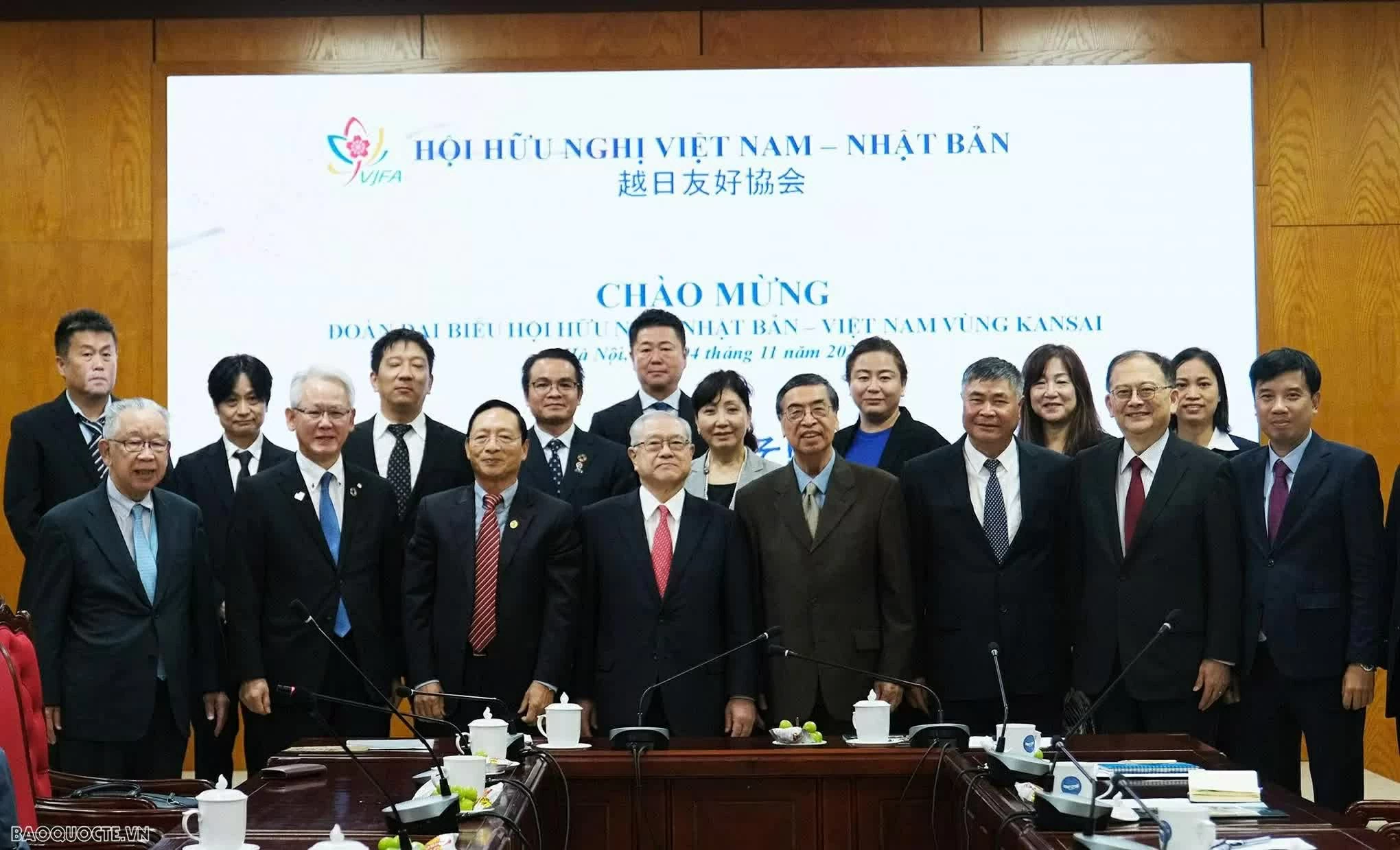 |
| The Kansai Japan-Vietnam Friendship Association visited Vietnam and worked with the Vietnam Union of Friendship Organizations (VUFO) in November 2025. (Photo: Ngoc Anh) |
People-to-people exchanges continue to be a crucial foundation of bilateral relations. In Q1/2026, the number of Vietnamese tourists to Japan reached 200,000, an increase of 14%; March alone saw 92,000 visits, primarily for cherry blossom viewing. In 2025, the total number of Vietnamese tourists to Japan reached 810,000, an increase of 14% compared to the previous year.
“We hope that Prime Minister Takaichi's visit will further promote people-to-people exchanges, with the goal of reaching 2 million tourists traveling between the two countries by 2030,” emphasized the Japanese Ambassador.
According to Ambassador Ito Naoki, approximately 680,000 Vietnamese are currently living, studying, and working in Japan. To facilitate Vietnamese workers and students in Japan, the Japanese Government is striving to improve the living environment and labour acceptance mechanisms. From April 2027, Japan will implement a human resource training and development mechanism, allowing foreign workers to have longer-term job opportunities. Recalling that Prime Minister Le Minh Hung studied in Japan at Saitama University (now GRIPS) 30 years ago and is a representative leader of “Vietnam of the new era,” Naoki emphasized that in the development of bilateral relations, Prime Minister Le Minh Hung, along with Vietnamese students in Japan, have played a very important role. Therefore, in the future, Japan hopes to welcome more Vietnamese students to study in Japan and become a bridge between the two countries.
Additionally, in the cultural field, Ambassador Naoki happily shared that at the 19th International Manga Award ceremony in Japan in March 2026, two authors, Vu Dinh Lan and Luong Minh Quang, won the Silver Award with the work "Bong Bong Bang Bang"; and singer Tung Duong received an international music award in Japan in 2025 and actively participated in musical exchange activities between the two countries. Therefore, the Ambassador hopes that through these exemplary individuals in the arts, cultural and artistic exchanges between the two countries will be increasingly promoted.
“April 30 is Vietnam's Reunification Day. I would like to extend my early congratulations to the Government and people of Vietnam. Half a century since reunification, I express my deep respect for the remarkable economic growth achievements Vietnam has attained, as well as the peaceful development path that has contributed to these achievements. The very next day, starting May 1, Prime Minister Takaichi will visit Vietnam, and I am confident that this visit will elevate the relations between the two countries to a new height,” affirmed Ambassador Ito Naoki.