


Japanese PM Takaichi Sanae's visit to Vietnam highlights special bilateral tradition: Ambassador Pham Quang Hieu
WVR - “Prime Minister Takaichi chose Vietnam as the first country in the region to visit, indicating Vietnam's extremely important position in Japan's regional policy,” emphasized Vietnamese Ambassador to Japan Pham Quang Hieu in an interview with The World and Vietnam Report regarding Prime Minister Takaichi Sanae's visit to Vietnam (May 1-3).
Latest
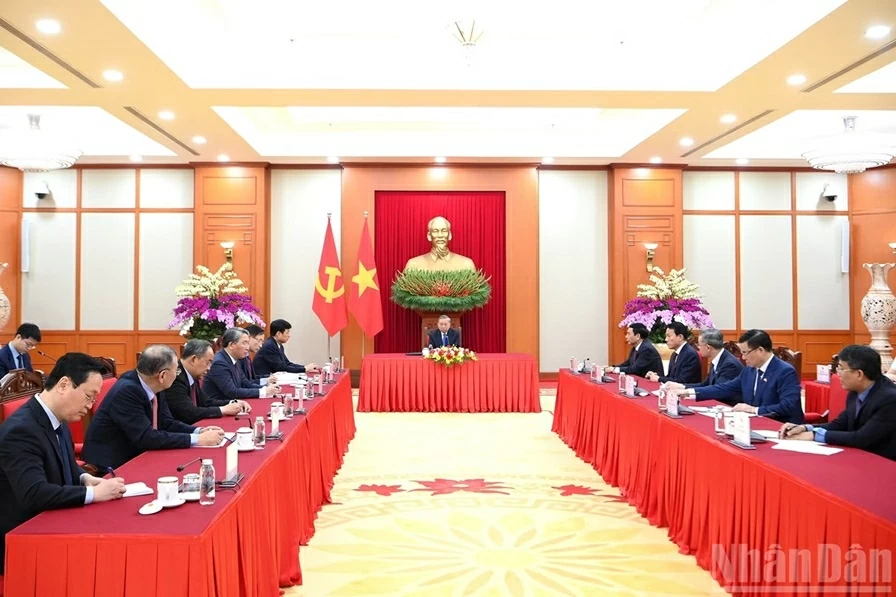 |
| General Secretary, President To Lam had a phone call with the President of the Liberal Democratic Party of Japan, Prime Minister Takaichi Sanae on April 13. (Source: Nhan Dan Newspaper) |
Ambassador, could you elaborate on the significance and main focuses of Japanese Prime Minister Takaichi Sanae's visit to Vietnam this time?
This visit by Japanese Prime Minister Takaichi Sanae to Vietnam is of utmost importance, vividly demonstrating Japan's high regard for the Comprehensive Strategic Partnership between Vietnam and Japan as both countries enter a new phase of development. Vietnam is the first country in the region that Prime Minister Takaichi Sanae visits after being re-elected as Japan's Prime Minister this past February.
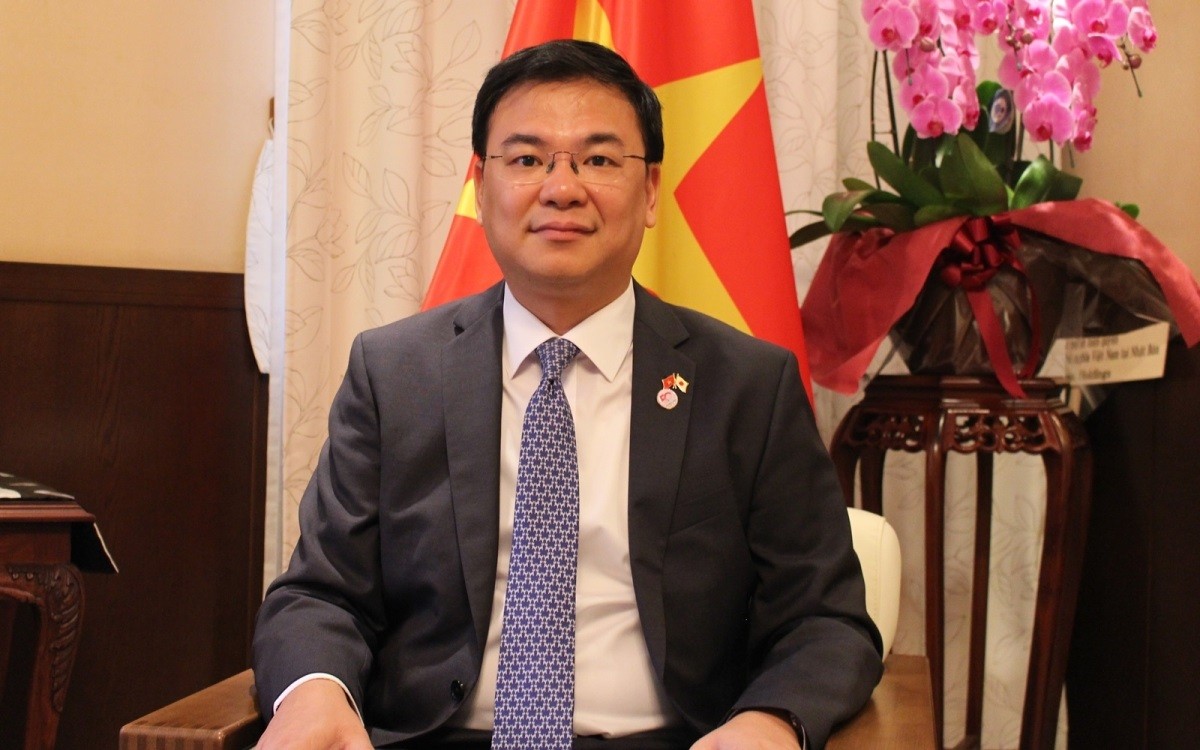 |
| Vietnamese Ambassador to Japan Pham Quang Hieu. (Source: VOV) |
This is an opportunity for both sides to continue strengthening political trust, enhancing strategic exchanges at high levels, and creating new momentum for bilateral cooperation to become more profound, substantial, and effective. In the context of the complex regional and global situation, the visit holds special significance in affirming the determination of both countries to work together for peace, stability, and development, especially after Vietnam successfully organized the 14th National Party Congress and the ruling Liberal Democratic Party achieved a significant victory in the House of Representatives election in February 2026. Both countries are implementing major policies that are crucial for their development in the coming years.
The visit is expected to focus on areas that align with the priorities and complementary strengths of both Vietnam and Japan in essential fields today, primarily economics, science and technology, innovation, ensuring energy and food security, semiconductor production cooperation, AI, green transition, high-quality human resource development, tourism, local cooperation, cultural exchange, and people-to-people exchange, as well as closer coordination on regional and international issues of mutual concern.
Similar to previous high-level visits between the two countries, this visit will deepen and identify new, important pillars in the relationship, contributing to creating new cooperation spaces that meet the practical interests of the people of both countries. Along with cooperation in science and technology, energy cooperation, smart agriculture, and high technology, infrastructure, and strengthening supply chains to enhance resilience are areas of mutual interest.
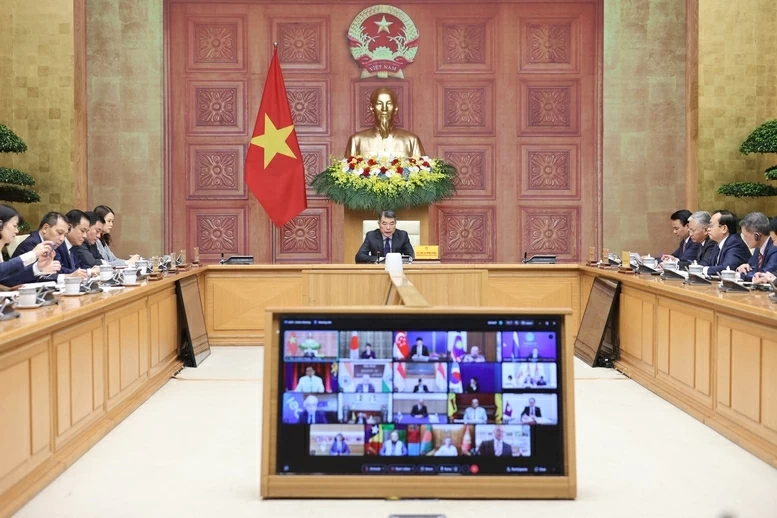 |
| Prime Minister Le Minh Hung attended the expanded AZEC Summit on energy autonomy on April 15. (Source: VGP) |
This high-level visit to Vietnam comes exactly one year after the visit of Japanese Prime Minister Ishiba (April 2025). How do you assess the frequency of high-level exchanges between the two countries and the importance of Vietnam in Japan's regional policy?
The regular exchange of high-level delegations between Vietnam and Japan is a clear testament to the very high level of political trust and the increasingly deep bond between the two countries. These high-level contacts not only contribute to enhancing understanding and consolidating the foundation of bilateral relations but also help both sides exchange major strategic directions for the bilateral relationship and specific, effective measures to address arising issues in the rapidly changing and complex global and regional context.
Following the tradition of previous Japanese Prime Ministers visiting Vietnam soon after taking office, less than three months after firmly establishing his ruling foundation in February 2026, Prime Minister Takaichi chose Vietnam as the first country in the region to visit, indicating Vietnam's extremely important position in Japan's regional policy.
Earlier, on April 13, Prime Minister Takaichi, President of the LDP, had a phone call with General Secretary, President To Lam, being the first foreign leader to call and congratulate after General Secretary To Lam was elected as President. Two days later, Prime Minister Le Minh Hung attended the expanded online AZEC Summit on energy autonomy chaired by Prime Minister Takaichi.
With its increasingly prominent role in the economic structure, regional supply chain, and efforts to promote stability, cooperation, and sustainable development in the Asia-Pacific, Vietnam is a reliable partner with great potential and increasingly strategic significance for Japan. The excellent relationship between the two countries not only serves the common interests of the people of both nations but also contributes positively to the peace, stability, and prosperity of the region and the world.
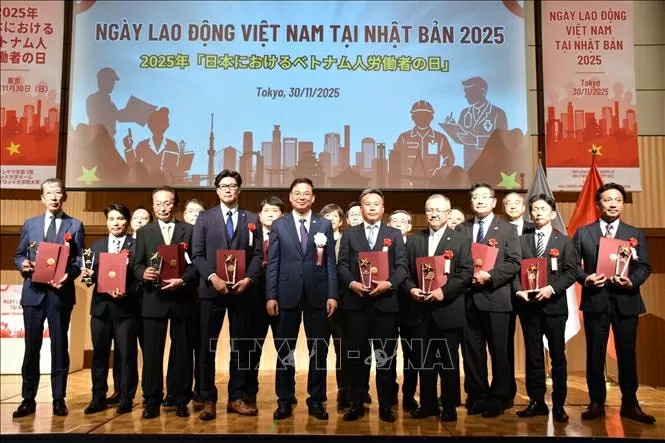 |
| The Vietnam Labour Day event in Japan opens up expectations for human resource cooperation between the two countries. (Source: VNA) |
Most recently (April 13), during the phone call between General Secretary, President To Lam and the President of the Liberal Democratic Party (LDP), Japanese Prime Minister Takaichi Sanae, the two leaders emphasized promoting economic cooperation between the two countries, especially in the fields of science and technology, digital transformation, green transition, energy security, and strengthening supply chains... How do you assess the potential for cooperation between the two countries in these key areas in the future?
I believe the potential for cooperation between Vietnam and Japan in the fields of science and technology, digital transformation, green transition, energy security, and strengthening supply chains is vast and is opening up very positive prospects.
Japan has outstanding strengths in advanced technology, modern management, semiconductor industry, artificial intelligence, clean energy, green finance... and is addressing the issue of labor shortages; meanwhile, Vietnam has a dynamic economic environment, a young workforce increasingly well-trained, with many considered highly skilled, and a strong spirit of innovation with aspirations for advancement. This complementarity creates a very favorable foundation for both sides to expand cooperation in the future.
In the coming time, the two countries can strengthen cooperation in several major directions, including promoting technology transfer and innovation, especially the young, eager-to-learn, and ready-to-innovate human resources of Vietnam; enhancing training, developing high-quality human resources to participate in joint scientific research projects between the two countries, where Vietnamese IT engineers, semiconductor experts, and other industries are actively operating in Japan; expanding cooperation in green projects, energy transition, digital infrastructure, and sustainable finance.
Energy security is also an important content in the context of the global energy market being significantly affected by geopolitical issues. Vietnam highly appreciates Prime Minister Takaichi's initiative to expand AZEC, supporting Asian countries, including Vietnam, with 10 billion USD to ensure energy security.
Vietnam and Japan have much room to enhance coordination to ensure energy security, diversify supply sources, develop renewable energy, improve energy efficiency, and strengthen the resilience of supply chains. Both sides can also boost cooperation in areas such as digital technology for energy management, green infrastructure, carbon markets, and sustainable growth models, thereby contributing to consolidating a stable, safe, and long-term development foundation.
On a broader scale, the coordination between Vietnam and Japan also has a positive significance for regional and global peace and stability. With a high level of political trust, similar strategic interests, and a shared commitment to multilateralism and international law, with the potential and strengths of each side, I am confident that the two countries can indeed be a model of cooperation in new fields such as semiconductors, AI, energy security, digital transformation, innovation... for the benefit and development of both countries, contributing positively to peace, stability, cooperation, and development in the region and the world.
Thank you very much, Ambassador!